Meißner Fummel
A fragile hollow pastry from Meißen, Saxony, born of a legend about a thirsty courier
- Vegetarian
- Local name
- Meißner Fummel
- Served with
- Coffee
- Best eaten at
- A Meißen bakery-Konditorei
- Pairs with
- Saxon white wine
What it is
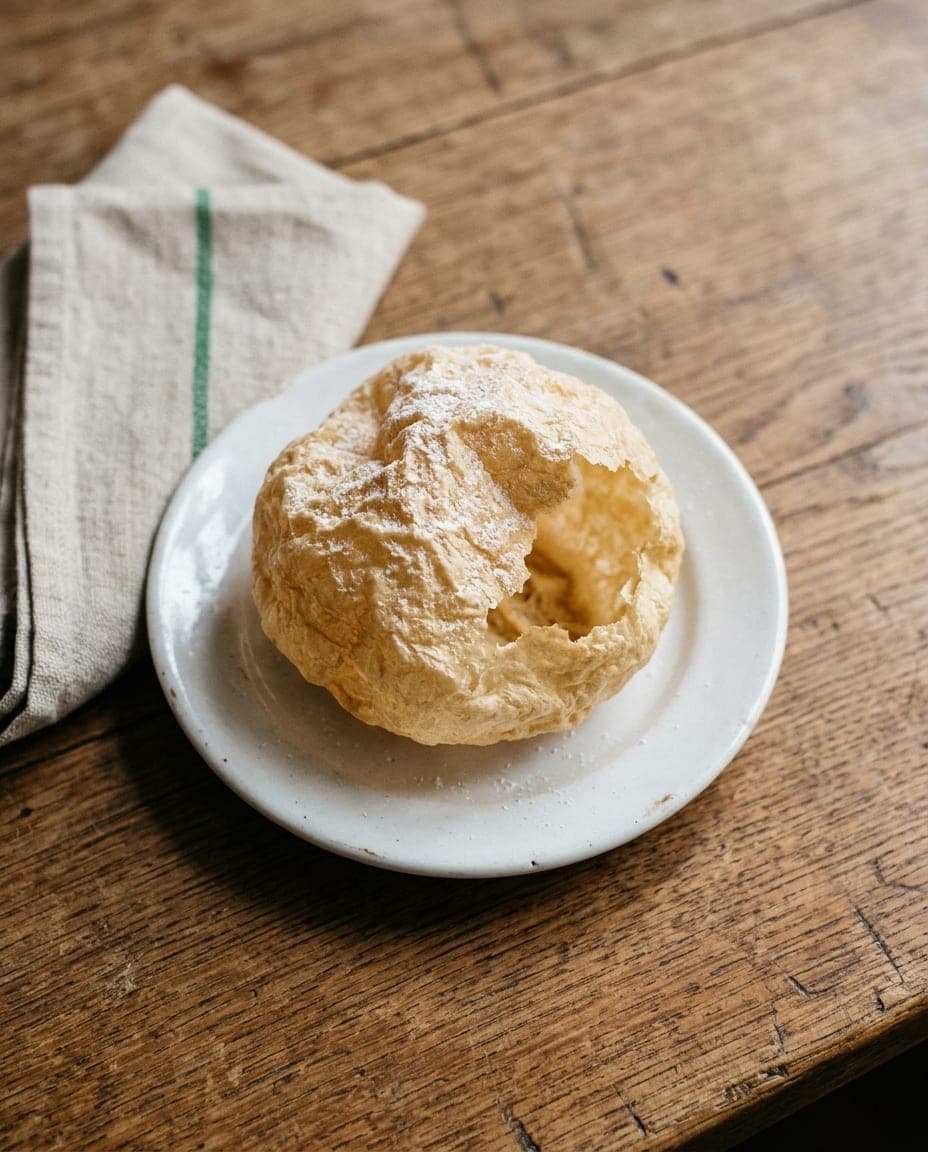
The Meißner Fummel is a fragile, hollow pastry bubble from the porcelain town of Meißen in Saxony. It is made from an extremely thin, lightly sweetened dough that puffs up into an irregular, balloon-like shell during baking and is dusted with icing sugar. The result is almost weightless and nearly tasteless in its own right, so delicate that it breaks under the slightest pressure. This fragility is not a flaw but the defining feature of the item.
Unlike many pastries where texture and flavour are paramount, the Fummel is valued above all for its story. It is sold primarily as a local curiosity tied to the identity of Meißen alongside its famous porcelain manufactory. Visitors often buy them as souvenirs, knowing that carrying one home intact is a small challenge in itself.
The story of the courier and the wine
The tale most commonly told about the Meißner Fummel involves Augustus the Strong, Elector of Saxony and King of Poland in the early 18th century. According to local tradition, a royal courier who travelled regularly between Dresden and Meißen was far too fond of Meißen wine and lingered in the town's taverns, arriving late and unsteady. In some versions of the story, the couriers were carrying fragile Meißen porcelain, which suffered on the way.
The Elector, wishing to put a stop to this, supposedly ordered the Meißen bakers to create a pastry so fragile that it would break at the slightest rough handling. The courier had to carry one on each journey and hand it over intact. If the pastry arrived whole, the rider must have stayed sober and ridden steadily; if it was shattered, the cause was obvious, since on the roads of the time a drunken rider could hardly keep it in one piece.
Historians cannot verify this account, but the story is repeated in Meißen and is part of the town's lore. The pastry itself is documented in the 18th century: a mention from 1747 records Meißen's council presenting pastries called "Fommel", together with wine, to the Saxon princess Maria Josepha as she travelled to her wedding. The origin of the name is uncertain; one suggestion links it to the French fumée, smoke. Whether the Elector actually issued his decree or not, the Fummel has long been associated with the road between Dresden and Meißen.
How it is made
The dough for a Meißner Fummel is a simple mixture of flour, a little sugar, salt and a small amount of butter, not unlike a plain pasta dough. It is rolled out extremely thinly, two sheets are joined and their edges sealed, and air is blown in so that the shape puffs up. Baked at moderate heat, it sets into a hollow, irregular body. The baking must be precise enough to create the thin, blistered surface without letting it collapse.
The finished pastry is pale and brittle, and is dusted with icing sugar. It breaks easily under pressure, crumbling into shards when bitten or dropped. Locals and visitors usually break it open and eat the pieces with a cup of coffee, though for most buyers the Fummel is more a keepsake than a dessert.
Where to eat it
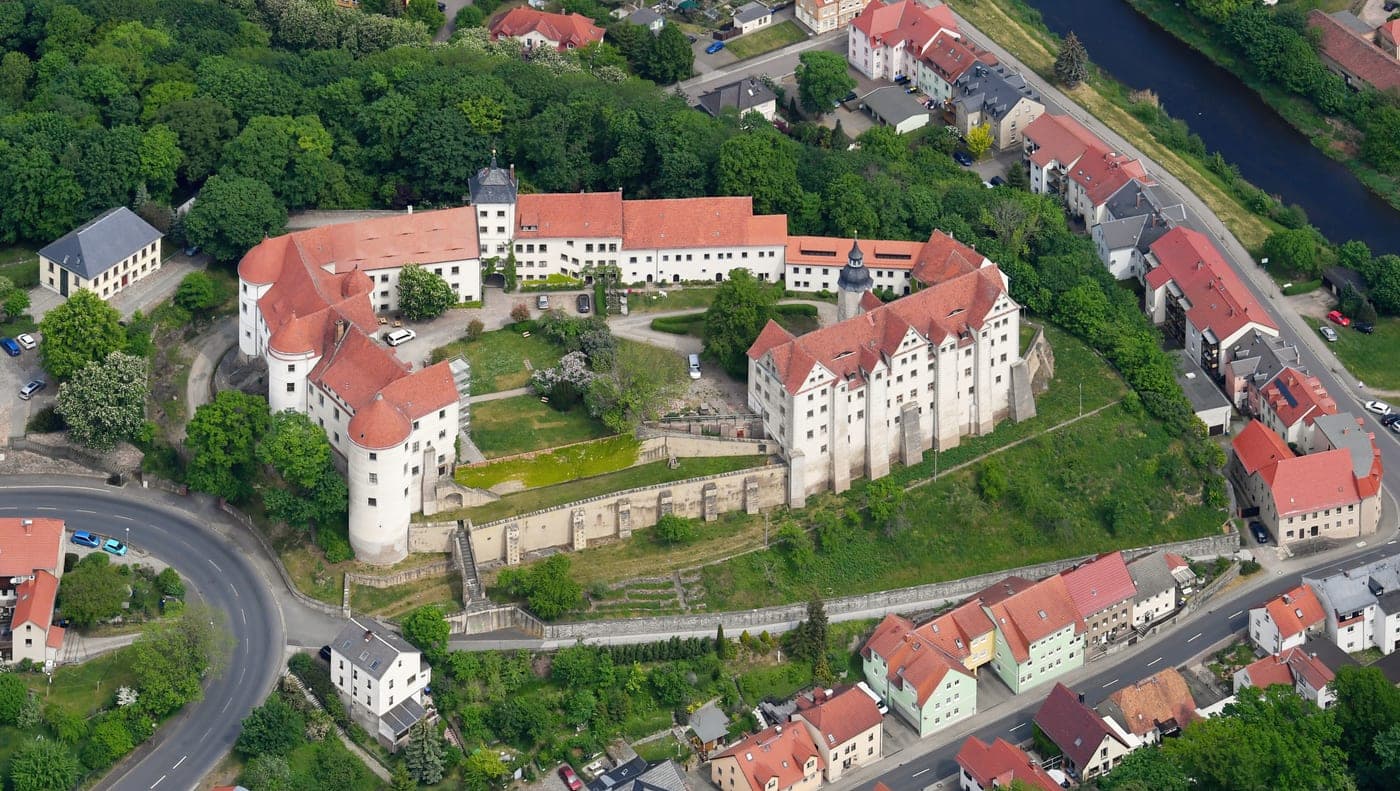
The Meißner Fummel is best experienced in Meißen itself, where it is still baked in the old town below the Albrechtsburg castle. The pastry is sold over the counter as a regional speciality and souvenir, and the experience feels most authentic when it is bought there and carried carefully through the cobbled streets.
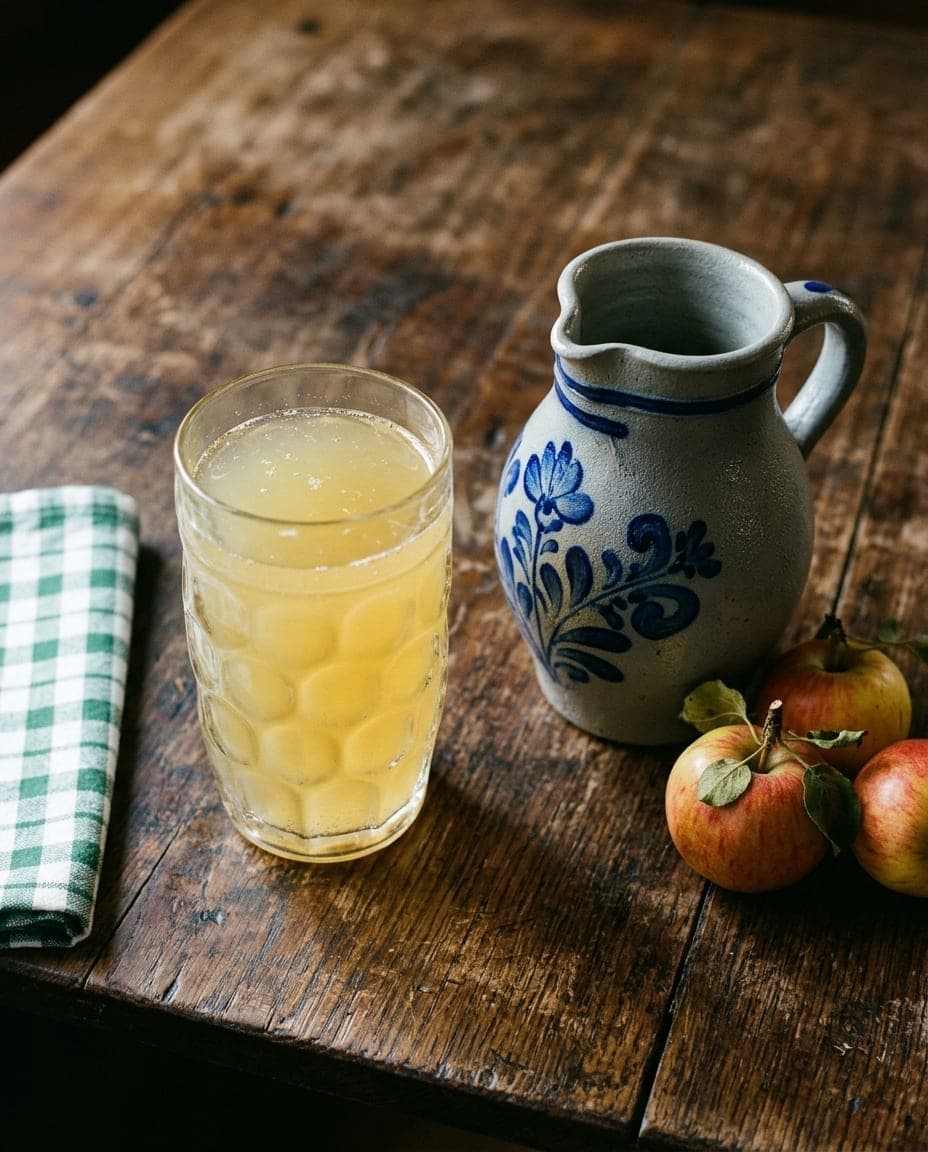
Pairing it with a glass of Saxon white wine from the vineyards along the Elbe is a natural choice given the story behind the pastry. The crisp wine and the plain, sugar-dusted shell make an unpretentious combination, and the courier of the legend would no doubt have approved.
Curious facts
- A test of sobriety. The traditional tale says the Fummel was used to check whether a wine-loving courier had ridden steadily, linking the pastry directly to the Saxon court.
- Hollow inside. Unlike most baked goods, which are solid or filled, the Fummel is entirely hollow, created by air sealed inside two thin sheets of dough before baking.
- An 18th-century record. A pastry called "Fommel" is mentioned in Meißen in 1747.
- A wedding gift. Couples who marry in Meißen are reportedly sometimes given a Fummel as a symbol of how fragile love can be.
- Hard to transport. Due to its extreme brittleness, the Meißner Fummel is rarely seen outside the town and needs very careful packing to survive any journey.
Where to try it
1 destination
1 region
 Camper Van Rentals3 destinations
Saxony
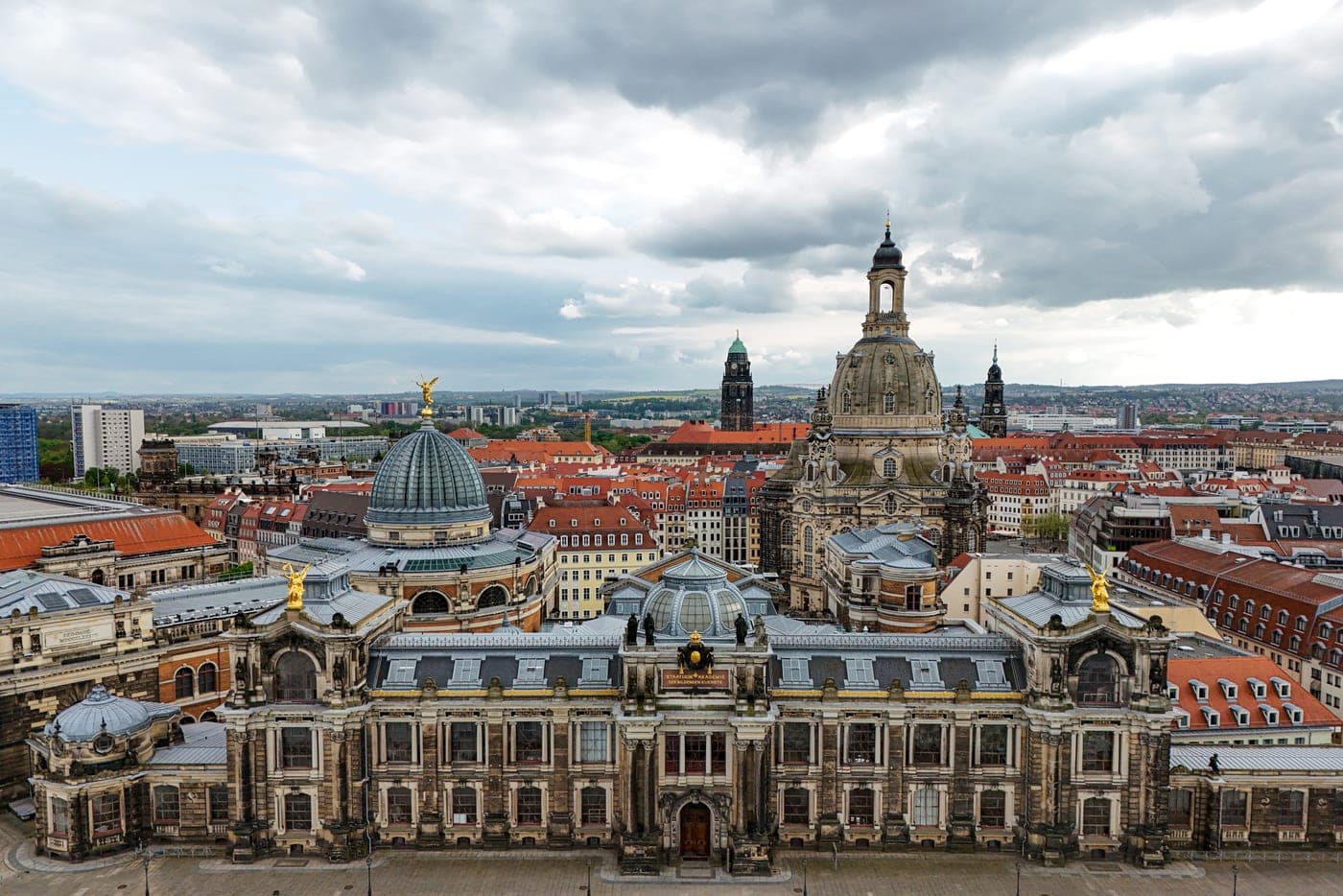
Saxony sits in the eastern corner of Germany, where the Elbe river cuts through sandstone cliffs before opening onto vineyard slopes, old market squares and quiet river towns. Its landmarks stand close enough together that a slow route through the region tends to follow the water itself, from wine terraces near Meißen to the rock plateaus above Dresden and the old craft towns further east. Between Pirna and Meißen the Elbe valley softens into one of Germany's smallest wine regions, a narrow band of terraced vineyards known locally as the Sächsische Weinstraße. Riesling and Müller-Thurgau grow on steep slopes above the river, alongside Goldriesling, a grape found almost nowhere else. Small wineries around Radebeul and Diesbar-Seußlitz open their cellars for tastings, and cycling paths thread through the vines past baroque villas and old wine presses built into the hillside. Dresden's rebuilt old town gathers around the Elbe's curve. The Frauenkirche's stone dome rises over a square lined with baroque facades, the Zwinger holds courtyards once used for royal festivities, and the Semperoper stages opera beside collections of old master paintings and porcelain built up by Saxony's electors. The riverside terraces on either bank give a clear view of the skyline and are used for walking rather than for any particular sight. A short stretch upstream, Meißen has made porcelain since 1710, and its manufactory still marks pieces with the blue crossed swords first used to guard the recipe. Workshops there remain open for viewing, and the town's own hilltop cathedral and castle look down over the river from above the vineyards. West of the Elbe, the wooded Erzgebirge hills carry a different craft tradition: turners and carvers in towns such as Seiffen have shaped nutcrackers, incense smokers and candle pyramids for generations, work that fills the region's Christmas markets each winter. South-east of Dresden, the sandstone plateaus of Saxon Switzerland rise straight out of the forest. Deep gorges cut between the flat-topped hills, and paths climb to viewpoints such as the Bastei, where the sandstone has weathered into towers, arches and narrow ridges. Painters of the German Romantic period worked from these same outcrops, and the light across the plateau still shifts through the day in a way that made the landscape famous long before it became a national park. West of Dresden, Leipzig tells a different part of Saxony's story. Bach directed music at the Thomaskirche for almost three decades, and the church still holds regular concerts drawing on that tradition. The city built its wealth on trade fairs and publishing rather than a royal court, and that older commercial energy now shows in a large student population, independent bookshops and cafes, and former cotton mills and rail yards converted into galleries and studios. Further east, Bautzen keeps its old town wall and a line of towers above the Spree river, and remains one of the centres of Sorbian culture, a Slavic minority whose language, dress and Easter egg traditions are still visible around the town, especially at Easter. Near the Polish border, Görlitz preserves long streets of Gründerzeit and older facades that survived the twentieth century largely undamaged, giving its old town an unusually complete and continuous look. Festivals mark the Saxon year in different corners of the region: organ and choral concerts fill Dresden's and Leipzig's churches, autumn wine festivals bring open cellars to the Elbe valley towns, and lit wooden pyramids and carved figures fill Erzgebirge markets through December. Moving between the wine slopes, the sandstone hills and the old craft and university towns, Saxony reads less like a single sight and more like a set of related landscapes, each shaped by a particular trade or river bend, and each within easy reach of the next.
Camper Van RentalsHikingCabins