Lübecker Marzipan
Lübeck's high-almond marzipan, a Hanseatic sweet with a protected status
- Vegetarian
- Local name
- Lübecker Marzipan
- Served with
- Coffee
- Best eaten at
- A Lübeck marzipan café
- Pairs with
- Coffee
What it is
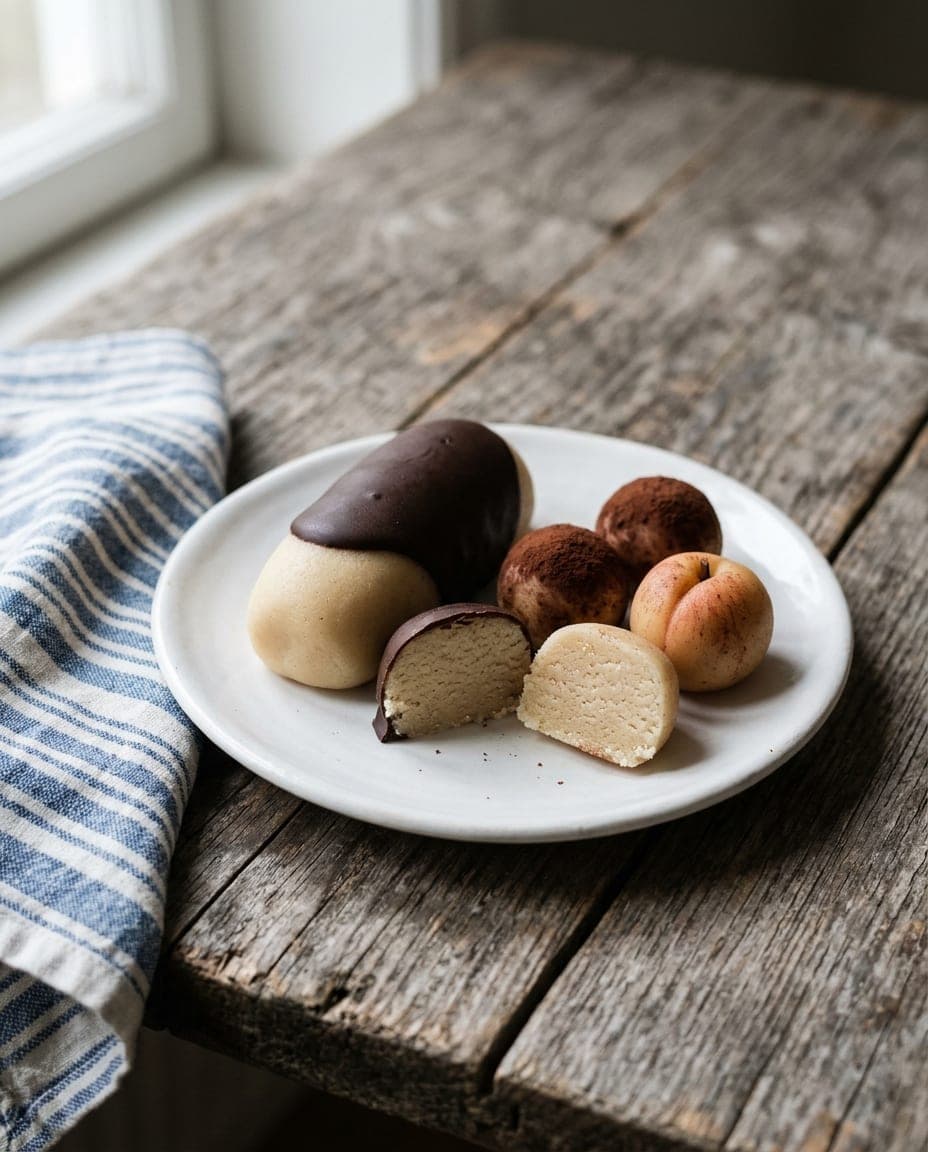
Lübecker Marzipan is a sweet paste made primarily from ground almonds and sugar, produced in the Hanseatic city of Lübeck on the Baltic coast. It differs from many other marzipans by the unusually high proportion of almonds to sugar, giving it a dense, oily texture and a deep, nutty flavour that remains distinct even when mixed with chocolate or shaped into elaborate figures. The city has long guarded this reputation as a matter of local pride, and the name now carries EU protected geographical indication status, meaning only marzipan made in Lübeck and adjoining parts of Stockelsdorf and Bad Schwartau can bear the label.
The sweet is not merely a confection but a product of the city's history as a trading hub. For centuries, Lübeck merchants handled almonds and sugar arriving through the Baltic and North Sea trade, creating an ideal environment for the development of this specific style of almond paste. Today, the result is sold in various forms: as simple loaves, as intricate moulded fruits and animals, or as chocolate-covered bars. During the Christmas season, it appears in decorated boxes and tins filled with small figures, a tradition that has endured for generations.
The trade route behind the taste
The story of Lübecker Marzipan is rooted in commerce rather than scarcity. A popular legend claims that during a famine around 1407, when the city's granaries were empty, the Senate told the bakers to make bread from the almonds and sugar held in the warehouses. The tale is only loosely documented, and a more straightforward origin seems likely. The merchants of the Hanseatic League were accustomed to handling exotic goods from the south, including almonds and sugar, which naturally found their way into the work of local apothecaries and confectioners, evolving over time into a distinctive paste that the city could claim as its own.
Marzipan-making in Lübeck grew into a recognised trade around the turn of the 19th century, when the city's confectioners began producing it on a larger scale. The trade explanation is supported by the fact that the city possessed the necessary logistics to import almonds consistently, whereas a famine would have been a temporary crisis rather than the foundation of a centuries-old tradition.
How it differs from other marzipans
The defining characteristic of Lübecker Marzipan is its almond content. While many manufacturers elsewhere use a higher ratio of sugar to keep costs down or to create a sweeter, softer texture, Lübeck's rules are strict: Lübecker Marzipan may contain no more than 30 parts sugar to 70 parts almond paste, and Lübecker Edelmarzipan no more than 10 parts sugar to 90. This results in a paste that is less sweet and more aromatic, with a distinct oiliness that comes from the nuts themselves.
Rose water belongs to the historical recipe; Thomas Mann, born in Lübeck, described the city's marzipan as a mixture of almonds, rose water and sugar. Where it is used, it adds a delicate floral scent that complements the deep almond flavour. The texture is also notable; it is firm enough to hold intricate shapes yet soft enough to melt on the tongue without leaving a gritty residue.
The art of shaping and decorating
Marzipan from Lübeck is famous for its versatility in form. It is often sold as plain loaves, but the city's confectioners are well known for their ability to mould it into complex figures. These include fruits, vegetables, animals and small scenes that reflect the city's heritage. The skill required to shape the paste without cracking or losing detail has been passed down through generations of artisans.
During the Christmas season, the tradition reaches its peak. Boxes and tins filled with small, carefully crafted figures become a staple gift. They often feature seasonal themes, from festive animals to traditional Christmas motifs, all rendered in marzipan and sometimes covered in chocolate. The figures are not just sweet treats but miniature works of craftsmanship from the local makers.
Where it is eaten
Lübeck's marzipan shops and cafés, mostly in the historic old town on its island between the Trave and the canals, offer a variety of products ranging from simple loaves to elaborate chocolate-covered creations, and some serve marzipan cakes and tortes alongside the paste itself.
The sweet is traditionally served with coffee. A strong cup of black coffee provides a sharp contrast to the richness of the marzipan, cleansing the palate between bites. This pairing has become a standard ritual for locals and visitors alike, often enjoyed in the afternoon. The combination is simple yet effective, highlighting the depth of the almond flavour while balancing its sweetness.
Curious facts
- Protected status. The name Lübecker Marzipan is an EU protected geographical indication, so only marzipan produced in Lübeck and its immediate neighbours Stockelsdorf and Bad Schwartau can use the label.
- Two grades. Lübecker Marzipan allows at most 30 per cent added sugar; Lübecker Edelmarzipan allows only 10 per cent.
- A famine legend. The story of bakers turning to almonds during the famine of 1407 is popular but unproven.
- A literary sweet. Thomas Mann, Lübeck's most famous son, wrote about the city's marzipan and linked it to the confections of the Orient.
- Seasonal gifts. During Christmas, boxes of small marzipan figures become a popular gift and a symbol of local craftsmanship.
How to try it
The true character of this sweet is best experienced in a marzipan café in the historic centre of Lübeck, ideally with a cup of coffee, which allows the nutty richness of the marzipan to shine without being overwhelmed by sugar. Visitors during the Christmas season will find the seasonal boxes and figures, whose designs often change from year to year.
Marzipan made elsewhere may be perfectly good, but it cannot carry the Lübeck name. The experience is best when it comes directly from the source, where the history of trade and craft is evident in every bite.
Where to try it
1 destination
 Camper Van Rentals
Lübeck
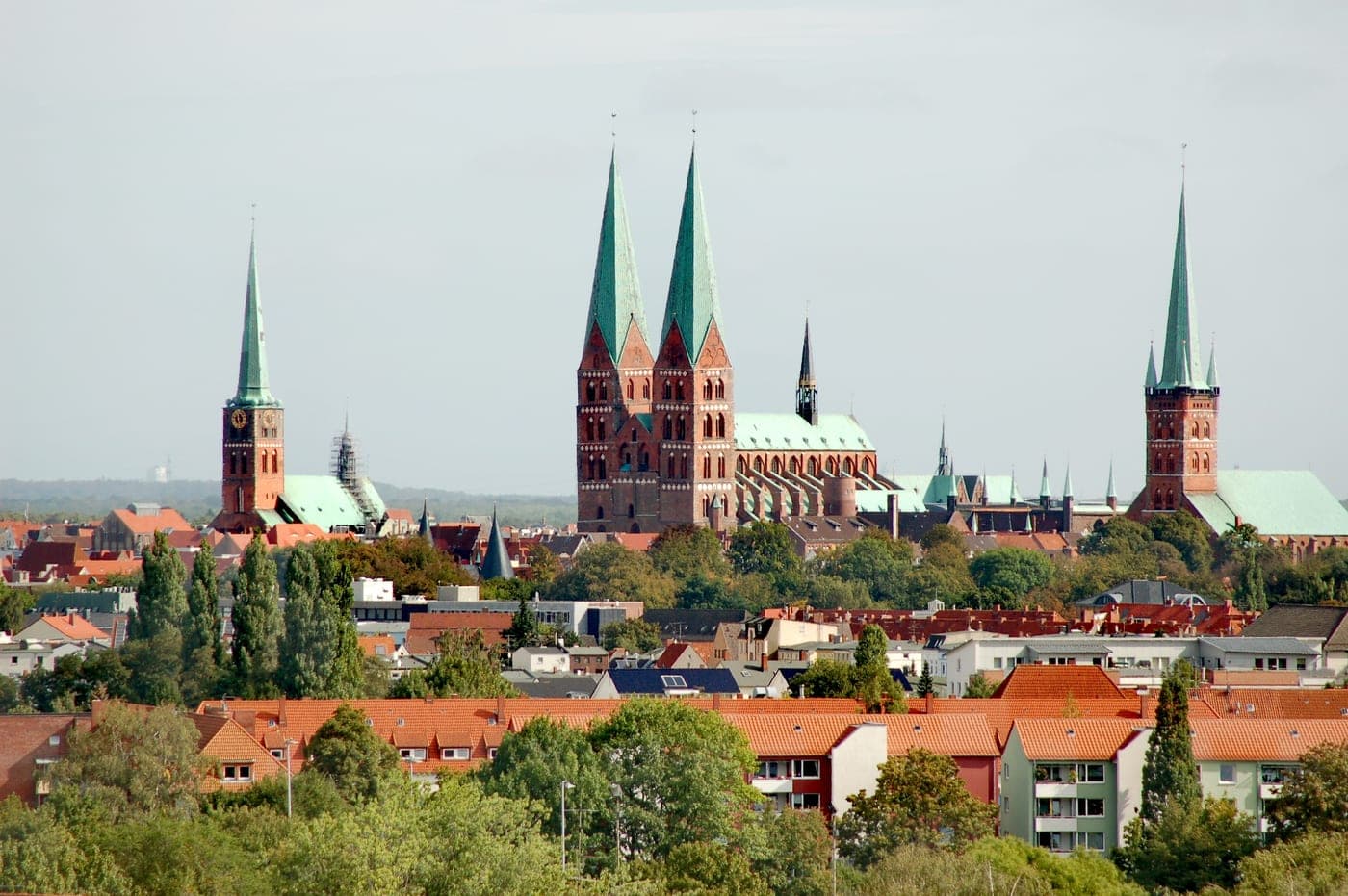
UNESCO Hanseatic city with brick Gothic architecture and marzipan.
Camper Van RentalsHikingBoat RentalsLocal Cuisine
1 region
 Boat Rentals6 destinations
Schleswig-Holstein
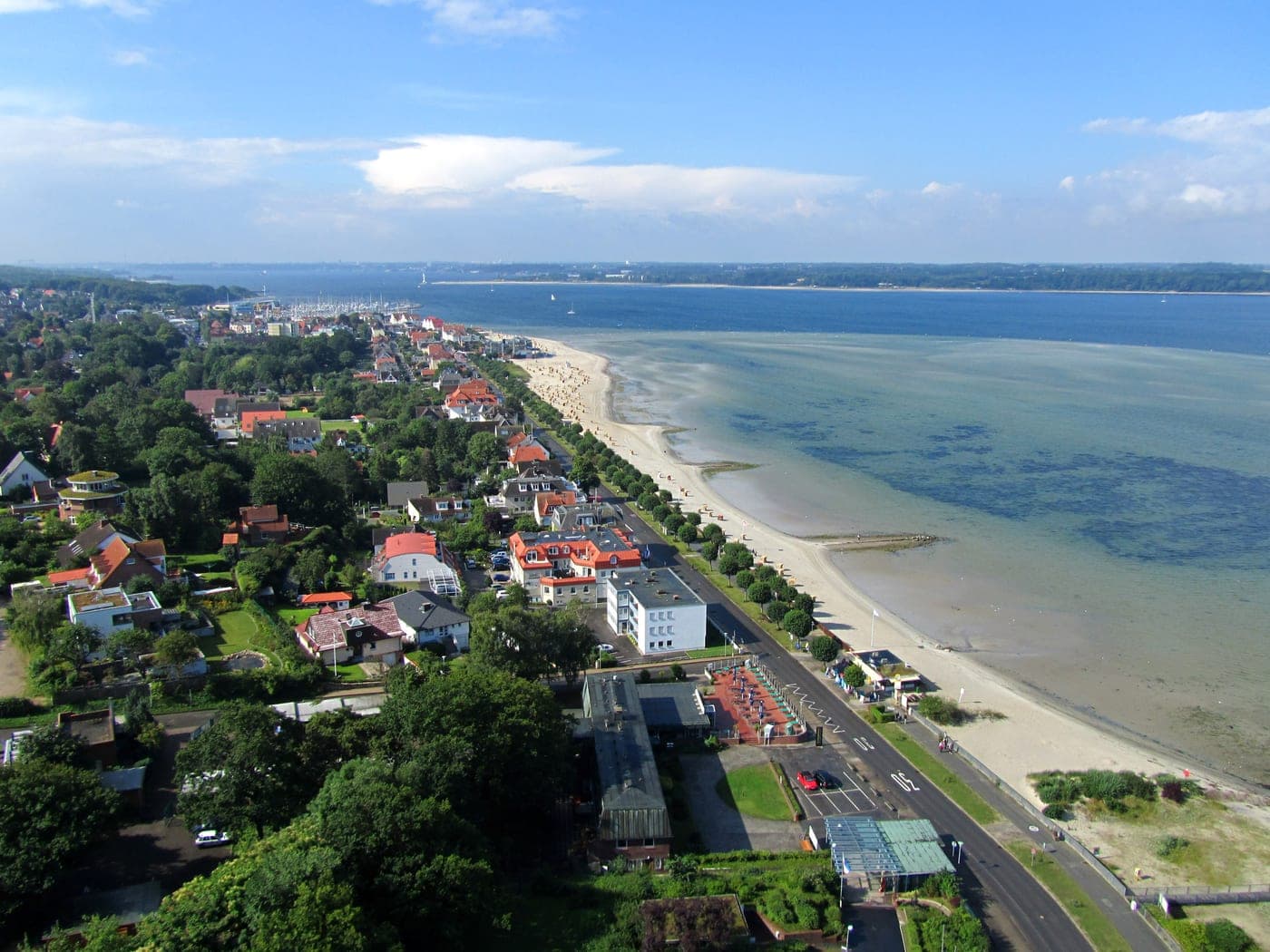
Schleswig-Holstein sits between two seas, and that fact shapes everything about its pace. On the west side, the Wadden Sea pulls back twice a day, leaving wide flats of mud and sand where oystercatchers and seals gather. On the east, the Baltic keeps a calmer shoreline, cut by narrow fjords called Förden that reach inland past reed beds and small fishing harbors. Between the two coasts lies a quieter inland belt of moraine hills, beech woods and lakes known as Holsteinische Schweiz, where the land rolls gently toward small lakes rather than open sea. Lübeck is the region's best-known town, its old core built by Hanseatic merchants and still arranged around brick gabled houses, a river harbor and the twin towers of the Holstentor gate. Marzipan making has been a local craft here for generations, and the smell of almond paste still drifts from shopfronts near the market square. A short distance north, Flensburg carries a different character: its harbor front and old rum warehouses point to centuries of trade with Norway and Denmark, and Danish is still spoken by a minority in town. Schleswig, at the head of the Schlei fjord, keeps an old layer of the region's history, with Gottorf Castle, now home to the state museums, facing the cathedral across the water. Villages in Schleswig-Holstein tend to sit low against the horizon, red brick and thatched roofs blending into flat fields or dike grass. Along the North Sea coast, dikes double as footpaths and cycling routes, running for long stretches with the sea on one side and grazing sheep on the other. The flatness of the land makes cycling an easy way to move between villages, small harbors and the ferry piers that link the mainland to the islands. Sylt, Föhr and Amrum lie offshore within the Wadden Sea National Park, each with its own character: Sylt is known for its dune landscape and thatched Frisian houses, Föhr keeps a quiet, agricultural feel around village greens and old churches, and Amrum holds an extensive dune area. Inland, the lake district around Plön and Eutin offers a different kind of water travel. Small passenger boats cross the lakes between beech forests, and Plön sits below its own castle, overlooking the water from a wooded hill. Eutin keeps a baroque palace and gardens open for slow walking. Further west, the town of Husum sits by its own tidal harbor, and each spring the palace garden there fills with crocus blooms. Kiel, the state capital, faces the Baltic directly and turns into a sailing city every summer during Kieler Woche. Things to do in Schleswig-Holstein tend to build from the coastline itself: watching the tide uncover the Wadden Sea flats, following a dike path between two fishing harbors, crossing an inland lake by small boat, or walking a fjord town's quay while gulls work the fish stalls. Herring and eel appear often on menus near the coast, and Labskaus, a hearty dish of corned beef, potato and beetroot, remains a Baltic port staple. The region rewards attention to weather and tide as much as to any single sight — mudflats change completely between low and high water, and light on the Baltic coast shifts quickly with the wind. Markets, harbor cafés and small guesthouses set the rhythm here more than any schedule does. Whether the starting point is Lübeck's brick lanes, Flensburg's Danish-flavored harbor, or a quiet island church on Föhr, Schleswig-Holstein holds together as one landscape of tide, wind and water, best taken in a village or a shoreline at a time.
Boat RentalsHikingCamper Van RentalsLocal Cuisine