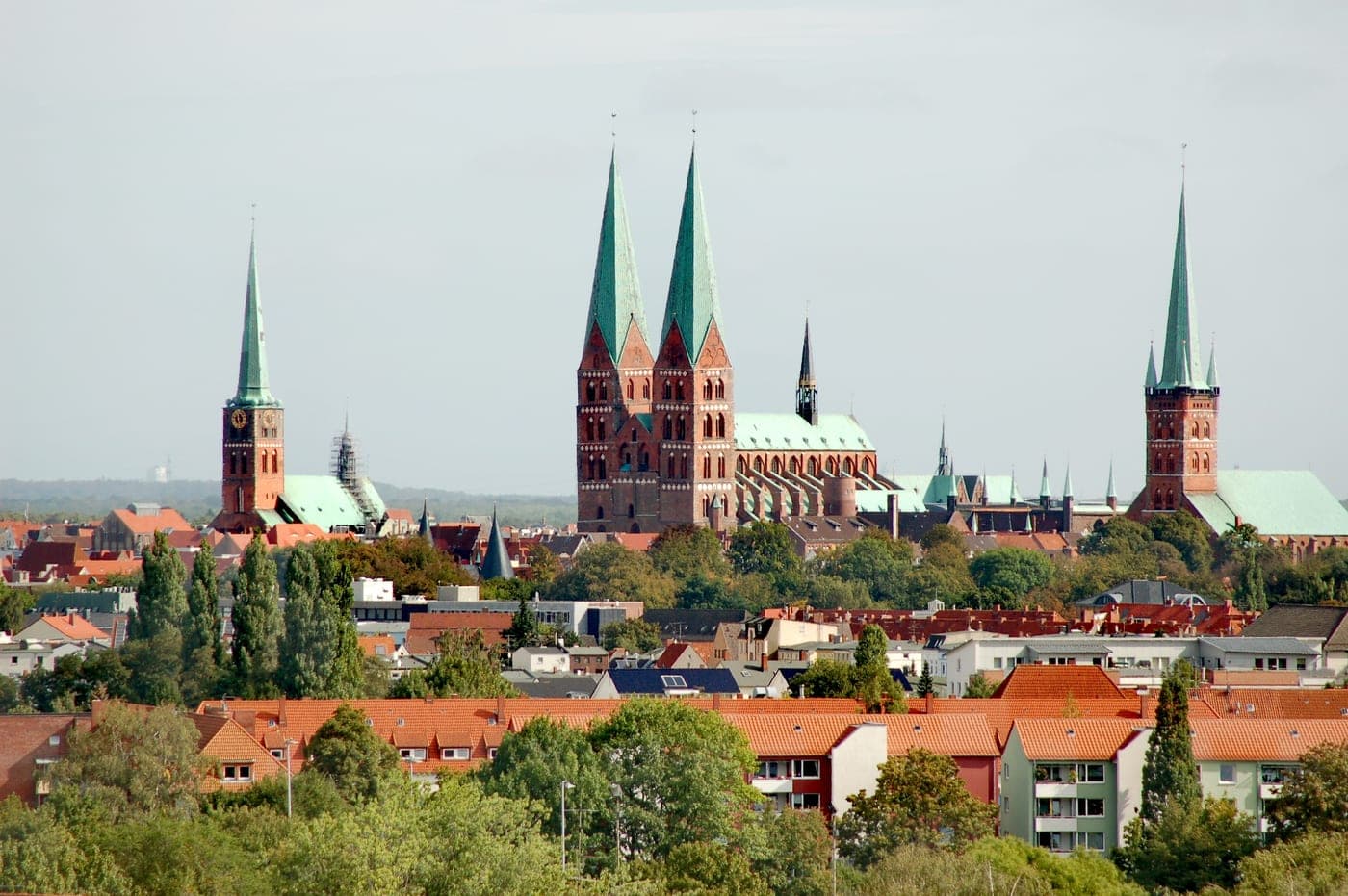
Photo by Oleg Dejan · license: CC BY 3.0
Brick Gothic capital of the Hanseatic League
Lübeck grew wealthy as capital of the Hanseatic League, the trading network that once ruled commerce across the Baltic and North Seas, and its old town still reads like a merchant republic frozen in brick. The Holstentor gate, with its twin round towers and tilted walls, guards the approach to an island core wrapped by the Trave river. Inside, St. Mary's Church rises in soaring brick Gothic, a style that spread from here to churches across the Baltic coast, and its spires share the skyline with other medieval church towers. Narrow lanes wind past gabled merchant houses and hidden courtyard dwellings once built for the city's craftsmen and workers. Lübeck is also where marzipan became a local specialty: Niederegger has made it here for generations, and its café still draws people for cake and coffee. Thomas Mann grew up in the city and set his novel Buddenbrooks among its merchant families, a connection kept alive at the Buddenbrookhaus. The old town's salt-trade history, its brick architecture, and its marzipan tradition together give Lübeck a character distinct from any other Baltic port.
 16 km
Historic seaside resort known for its grand architecture and sandy beaches.
Drop the places you like into one list. The planner orders them by day and works out the distances.
Get slow travel tips delivered to your inbox
A short message when something worth the trip lands. Reply STOP anytime.
By subscribing, you agree to be contacted via WhatsApp. Privacy policyOccasional letters in your inbox — with recommendations, maps and routes.
By subscribing to newsletter, you agree to our privacy policy.