Leipziger Lerche
A shortcrust tart in Leipzig with marzipan, jam and a pastry cross
- Vegetarian
- Local name
- Leipziger Lerche
- Best eaten at
- A Leipzig café
- Pairs with
- Coffee
What it is
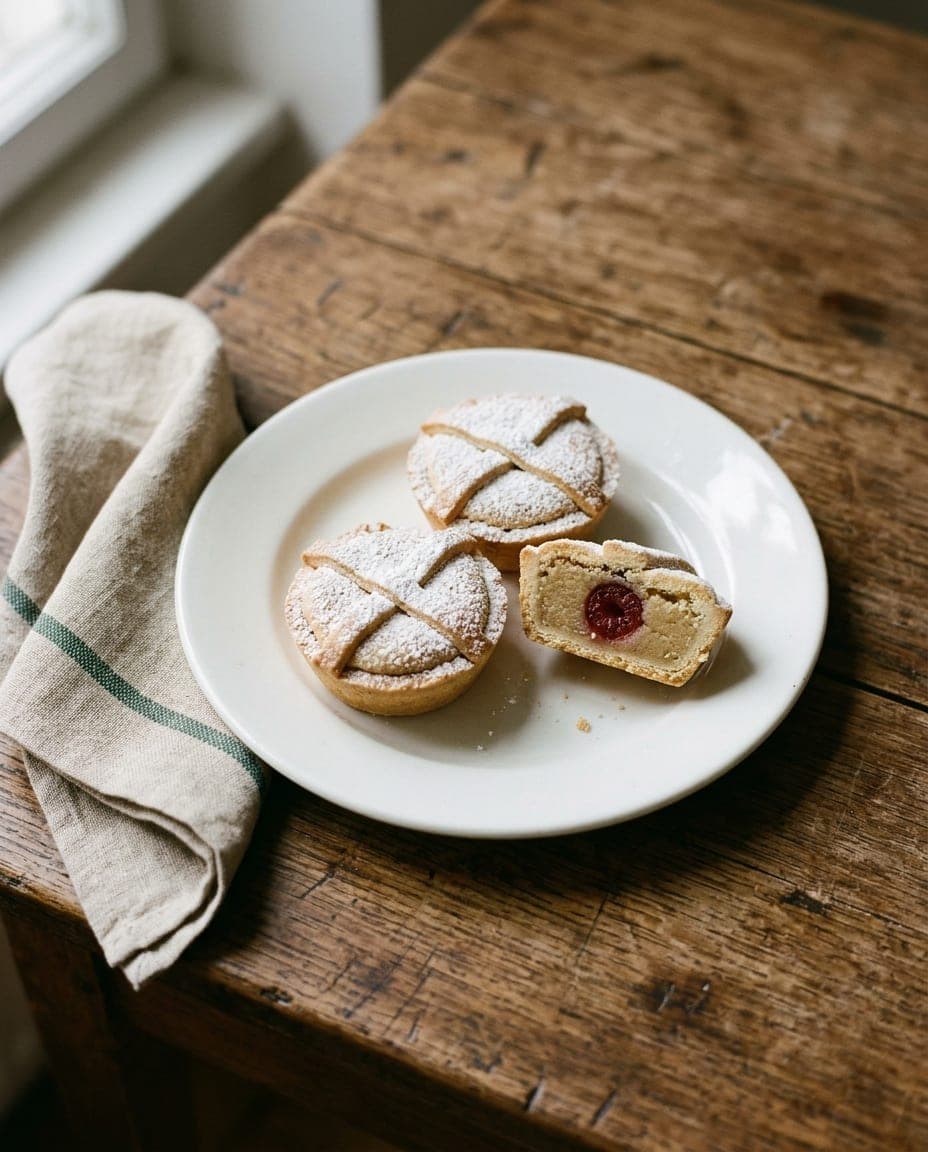
The Leipziger Lerche, or Leipzig lark, is a small round tart from the city of Leipzig in Saxony. It consists of a shortcrust case with a thin layer of jam at the bottom, filled with a sweet almond and marzipan mixture. Hidden inside is a single cherry, said to stand for the bird's heart. The most distinctive feature is the pattern on the surface: two thin strips of pastry are laid across the top in a cross, recalling the string once used to tie the birds.
This is not a mass-produced item found in every German bakery. It is a regional speciality tied closely to Leipzig and its bakeries and cafés. The tart is served as a sweet treat alongside coffee, often during a morning break or the afternoon coffee hour. While the recipe varies slightly from one bakery to another, the combination of almond filling, jam and the cross-topped pastry remains constant.
The story of the lark ban
The history of the Leipziger Lerche is rooted in a specific event in 1876. For centuries, Leipzig was famous for its larks. These small songbirds were caught in large numbers and baked into savoury pies or roasted as a city speciality, and they were sent to customers well beyond the city. The trade provided income for local bird-catchers and a celebrated delicacy for the city's diners.
In 1876, King Albert of Saxony banned the hunting of larks and other songbirds, following public concern for the birds and their usefulness to agriculture. This ended the traditional trade. According to the usual story, Leipzig's bakers then created a sweet pastry in place of the savoury lark pie. The two strips of pastry on top are said to represent the string with which the birds had been tied.
The name Leipziger Lerche has been protected since 1998 on behalf of Saxony's bakers, so that only tarts meeting the traditional standard can bear the title. The pastry stands as a culinary record of a time when the birds were eaten and the trade was a notable part of the local economy.
What goes into it
The composition of the tart is simple but precise, relying on the quality of the filling rather than complex technique.
- Shortcrust pastry: A buttery base that holds the filling without becoming soggy.
- Almond and marzipan filling: The main filling, made from ground almonds, marzipan, sugar and eggs, sometimes flavoured with bitter almond and a little rum.
- Jam: A thin layer of fruit preserve, often strawberry, spread on the base beneath the filling.
- Cherry: A single cherry hidden in the filling, representing the lark's heart.
- Pastry strips: Thin ribbons of dough laid in a cross over the top.
The result is a sweet, nutty tart with a hint of fruit. It is not a light snack; the marzipan and pastry provide a substantial texture that pairs well with hot drinks.
How to eat it
The Leipziger Lerche is best enjoyed in a Leipzig café or bought from a local bakery. The city is home to many traditional coffee houses where the tart is a staple on the menu.
The tart is usually served whole and can be eaten with the hands, though a fork is useful if the pastry is crumbly. The combination of nutty marzipan and sweet jam complements the bitterness of black coffee or the warmth of tea.
Curious facts
- The cross is deliberate. The two strips of pastry are not decorative accidents but a reference to the string used to tie the larks.
- A hidden heart. The cherry tucked inside the filling stands for the heart of the bird.
- A protected name. The name Leipziger Lerche has been protected for Saxony's bakers since 1998, safeguarding the city's culinary identity.
- The ban changed the menu. The 1876 hunting ban turned a savoury delicacy into a lasting sweet tradition.
- A regional focus. While known throughout Germany, the tart is most strongly associated with Leipzig and its café culture.
Where to try it
1 destination
 Camper Van Rentals
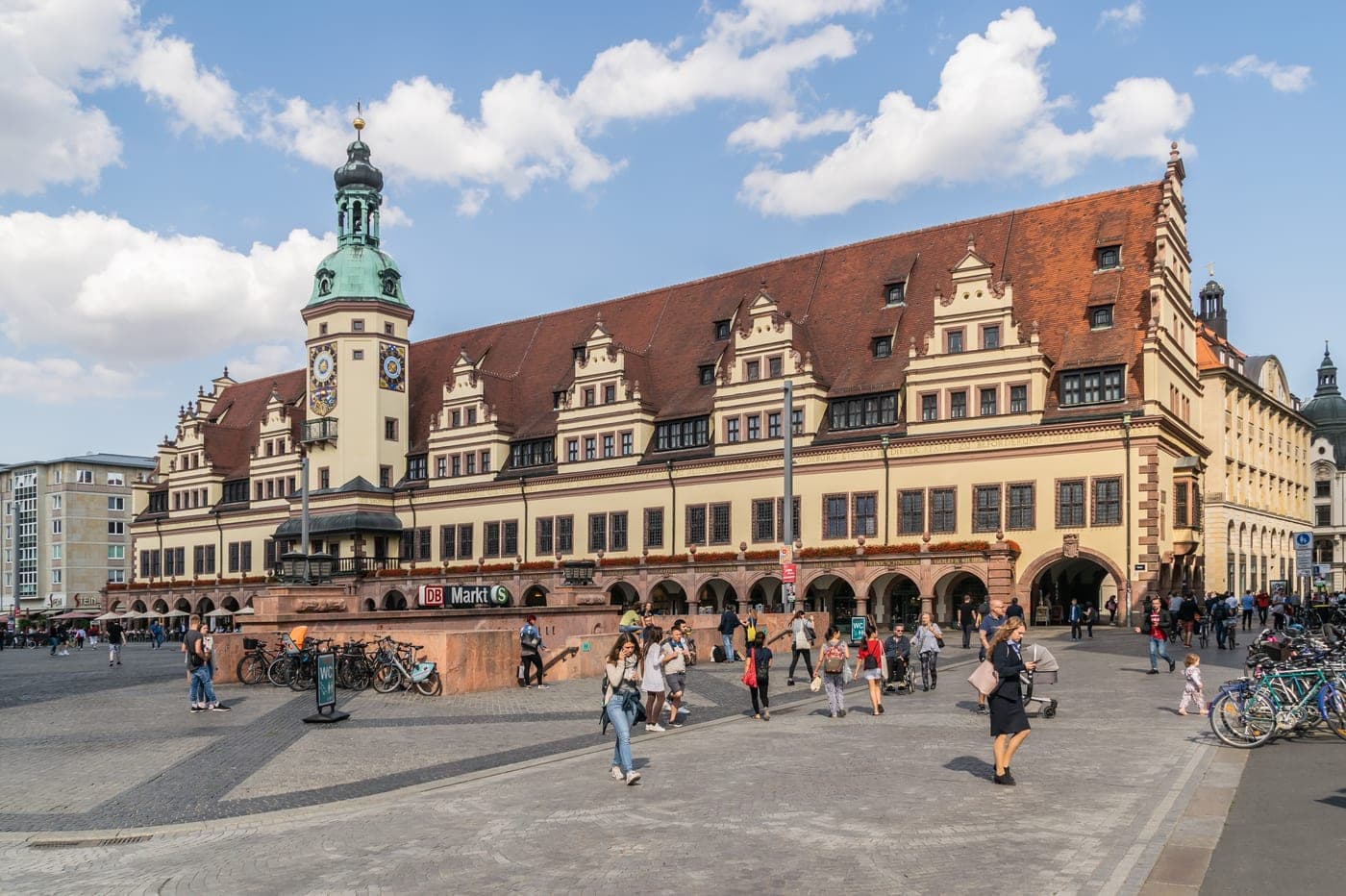
Leipzig
Saxony's creative city with Bach heritage and vibrant arts scene.
Camper Van RentalsHiking
1 region
 Camper Van Rentals3 destinations
Saxony
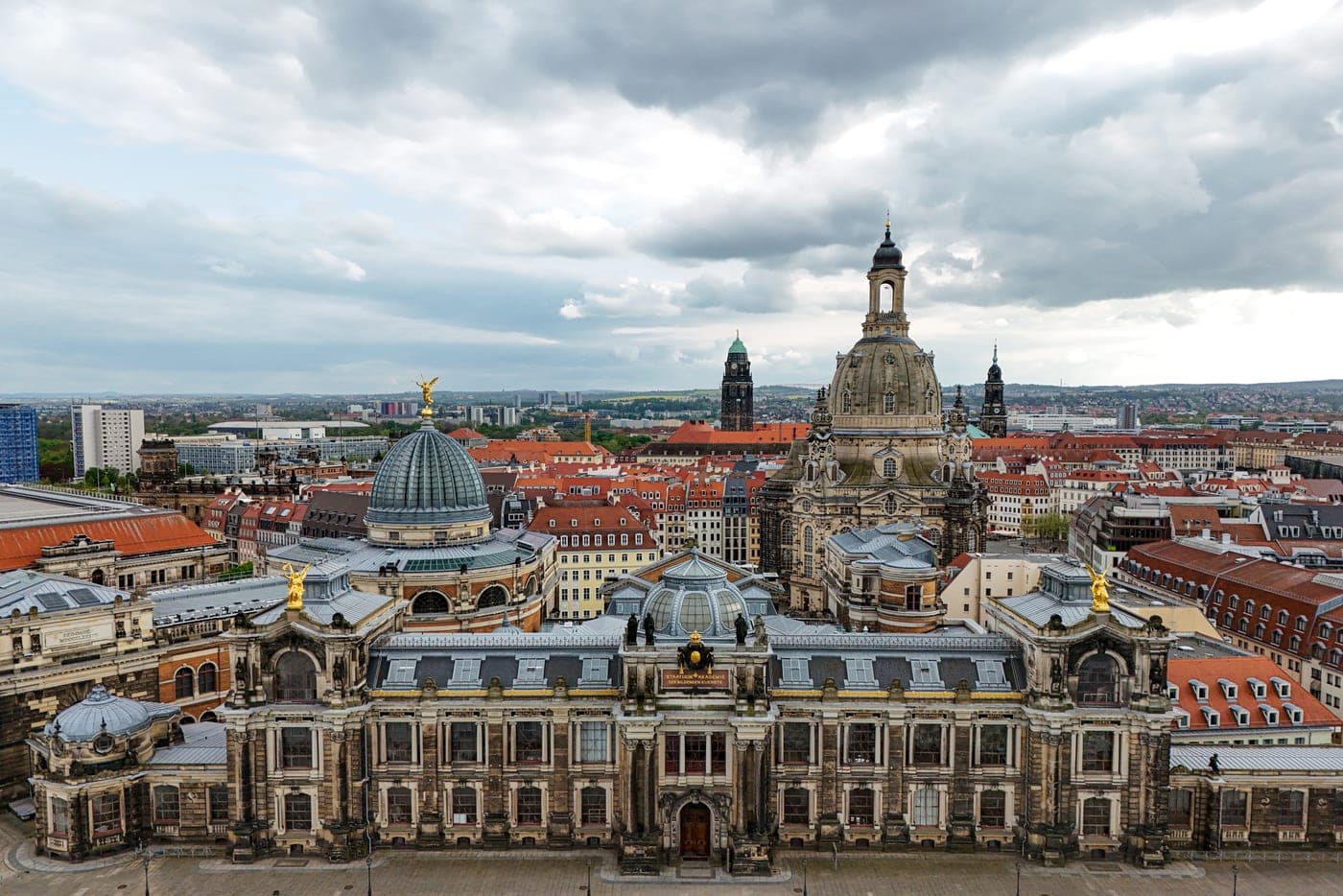
Saxony sits in the eastern corner of Germany, where the Elbe river cuts through sandstone cliffs before opening onto vineyard slopes, old market squares and quiet river towns. Its landmarks stand close enough together that a slow route through the region tends to follow the water itself, from wine terraces near Meißen to the rock plateaus above Dresden and the old craft towns further east. Between Pirna and Meißen the Elbe valley softens into one of Germany's smallest wine regions, a narrow band of terraced vineyards known locally as the Sächsische Weinstraße. Riesling and Müller-Thurgau grow on steep slopes above the river, alongside Goldriesling, a grape found almost nowhere else. Small wineries around Radebeul and Diesbar-Seußlitz open their cellars for tastings, and cycling paths thread through the vines past baroque villas and old wine presses built into the hillside. Dresden's rebuilt old town gathers around the Elbe's curve. The Frauenkirche's stone dome rises over a square lined with baroque facades, the Zwinger holds courtyards once used for royal festivities, and the Semperoper stages opera beside collections of old master paintings and porcelain built up by Saxony's electors. The riverside terraces on either bank give a clear view of the skyline and are used for walking rather than for any particular sight. A short stretch upstream, Meißen has made porcelain since 1710, and its manufactory still marks pieces with the blue crossed swords first used to guard the recipe. Workshops there remain open for viewing, and the town's own hilltop cathedral and castle look down over the river from above the vineyards. West of the Elbe, the wooded Erzgebirge hills carry a different craft tradition: turners and carvers in towns such as Seiffen have shaped nutcrackers, incense smokers and candle pyramids for generations, work that fills the region's Christmas markets each winter. South-east of Dresden, the sandstone plateaus of Saxon Switzerland rise straight out of the forest. Deep gorges cut between the flat-topped hills, and paths climb to viewpoints such as the Bastei, where the sandstone has weathered into towers, arches and narrow ridges. Painters of the German Romantic period worked from these same outcrops, and the light across the plateau still shifts through the day in a way that made the landscape famous long before it became a national park. West of Dresden, Leipzig tells a different part of Saxony's story. Bach directed music at the Thomaskirche for almost three decades, and the church still holds regular concerts drawing on that tradition. The city built its wealth on trade fairs and publishing rather than a royal court, and that older commercial energy now shows in a large student population, independent bookshops and cafes, and former cotton mills and rail yards converted into galleries and studios. Further east, Bautzen keeps its old town wall and a line of towers above the Spree river, and remains one of the centres of Sorbian culture, a Slavic minority whose language, dress and Easter egg traditions are still visible around the town, especially at Easter. Near the Polish border, Görlitz preserves long streets of Gründerzeit and older facades that survived the twentieth century largely undamaged, giving its old town an unusually complete and continuous look. Festivals mark the Saxon year in different corners of the region: organ and choral concerts fill Dresden's and Leipzig's churches, autumn wine festivals bring open cellars to the Elbe valley towns, and lit wooden pyramids and carved figures fill Erzgebirge markets through December. Moving between the wine slopes, the sandstone hills and the old craft and university towns, Saxony reads less like a single sight and more like a set of related landscapes, each shaped by a particular trade or river bend, and each within easy reach of the next.
Camper Van RentalsHikingCabins