Fränkisches Schäufele
Roast pork shoulder with crackling, potato dumplings and dark beer gravy from Franconia
- Local name
- Fränkisches Schäufele (Schäuferla)
- Served with
- Potato dumplings, dark beer gravy
- Best eaten at
- A Franconian brewery inn
- Pairs with
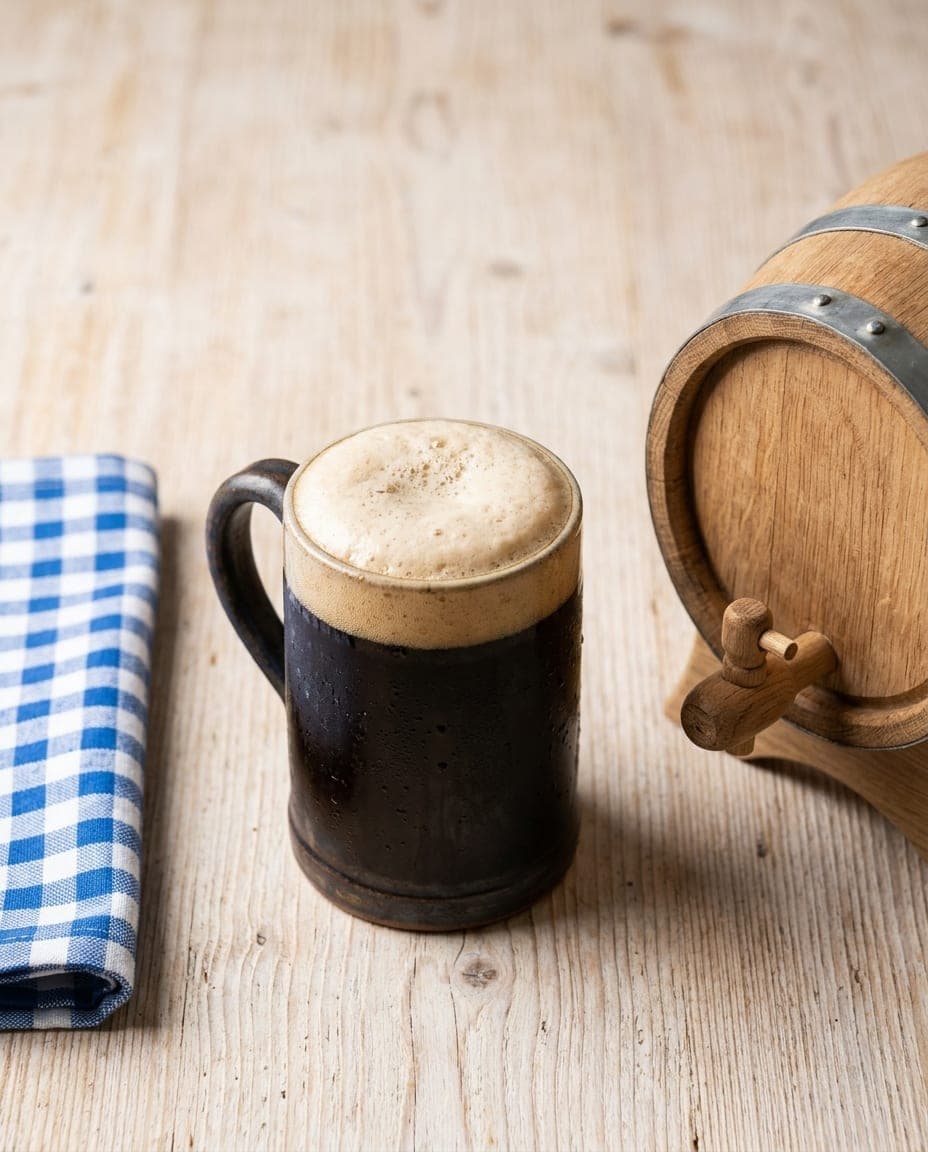
- Franconian dark lager
What it is
Fränkisches Schäufele, the roast pork shoulder from Franconia in northern Bavaria, is one of the most substantial meals in German regional cooking. The name translates to "little shovel", a reference to the shape of the shoulder blade bone that remains in the meat when the joint is roasted. Unlike many European roasts where the bone is removed before serving, the Schäufele arrives at the table with the flat blade bone still embedded in the flesh.
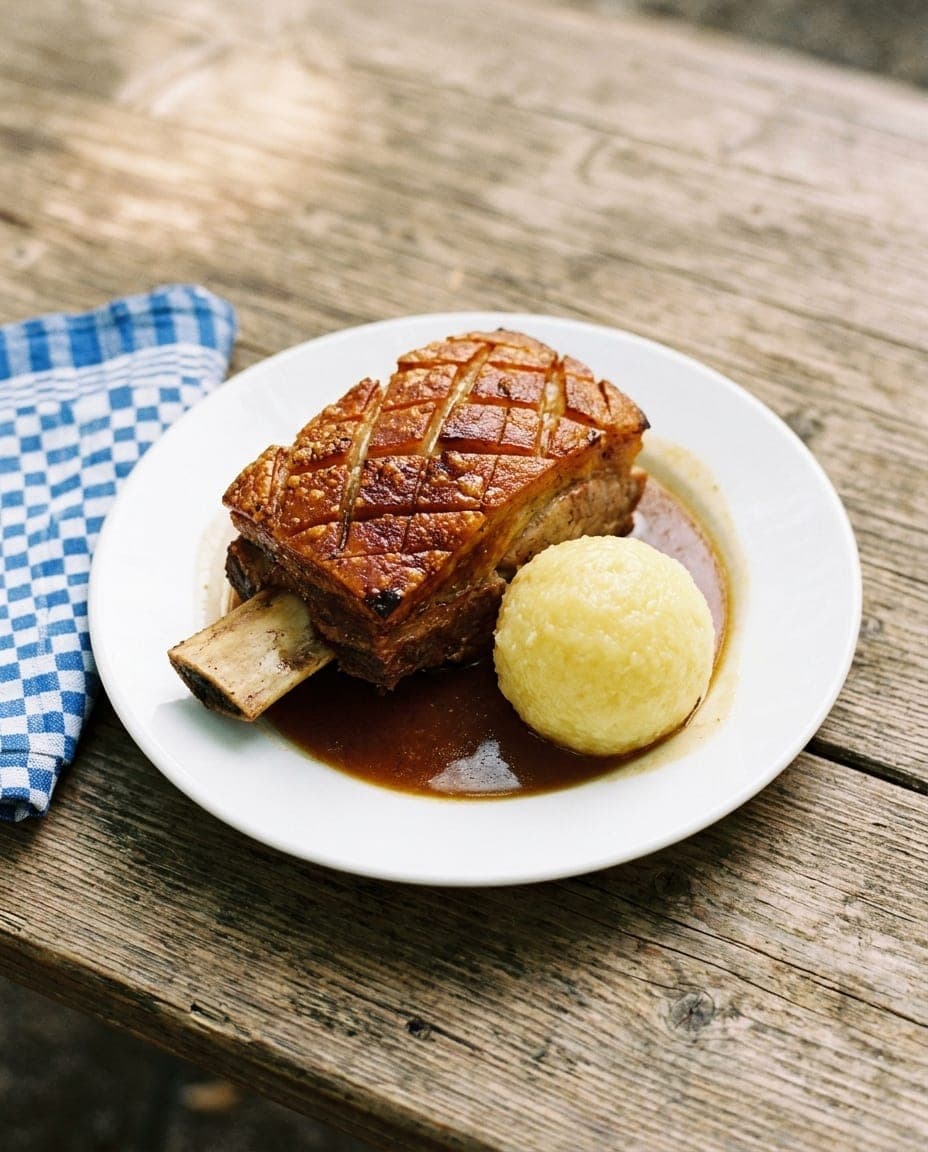
The defining feature of the dish is the rind. The skin is scored in a diamond lattice pattern, rubbed with salt, pepper and often caraway, and roasted until it becomes a hard, golden-brown sheet of crackling that shatters when bitten. Beneath this crisp layer lies meat that has been roasted for two to three hours on a bed of root vegetables and onions and doused with beer. The result is a texture contrast between the brittle crust and the soft flesh, which pulls easily away from the bone.
It is not a dish for those seeking lightness. A single portion is large enough to satisfy a hungry appetite after a day of walking through the countryside or exploring the historic streets of Bamberg or Nuremberg. The roast is classically accompanied by potato dumplings and a dark, rich gravy made from the roasting juices and beer, creating a complete meal that relies on fat, starch and deep savoury flavour rather than delicate seasoning.
The origin of the name and the cut
The term Schäufele appears in various dialects across southern Germany, but the Franconian version is distinct from its cousins in Baden or Switzerland. In Baden, a Schäufele is cured and smoked before being simmered in a seasoned broth and served with potato salad, whereas the Franconian version is roasted fresh with the rind intact. This distinction matters to locals, for whom only the roasted shoulder with its bone and crackling truly carries the title in Franconia.
The name derives from the shape of the scapula, or shoulder blade, which resembles a small shovel (Schaufel). When the butcher cuts the joint for the oven, the blade is left in, which helps the meat hold together during the long cooking time while the fat renders slowly and keeps the meat moist.
The dish is a regional speciality rather than a nationwide standard. While pork roasts are common throughout Germany, the specific combination of the beer-roasted shoulder, the potato dumplings and the dark gravy is characteristic of Franconia, where it is a classic of the Sunday table.
The role of the brewery inns
A natural home of the Fränkisches Schäufele is the brewery inn, which combines the production of beer with the serving of food. Franconia possesses an exceptional density of small village breweries, many of which have operated for generations and still brew their own lagers on the premises. In a typical Franconian brewery inn, the kitchen roasts the Schäufele in batches in large ovens, and the beer that goes into the roasting pan may well come from the brewhouse next door. The connection between the food and the drink is direct: the gravy is made from the roasting juices deglazed with beer, often the same style served in the glass. The focus remains on the quality of the roast and the beer rather than on formality.
What goes into it
The composition of the dish is straightforward:
- Pork shoulder blade, roasted with the rind and bone left in, the rind scored in a diamond pattern.
- Beer, often a local dark lager, poured into the roasting pan and used as the base for the gravy.
- Potato dumplings, the Franconian Klöße made from raw and cooked potato, often with croutons in the centre, cooked gently in hot water.
- Roasting juices and vegetables, reduced with beer into a thick, dark gravy that coats the meat and dumplings.
The potato dumplings are essential to the dish. Their mild, starchy flavour acts as a neutral base for the intense savoury notes of the roast and the bitter-sweet depth of the dark gravy. Sauerkraut, red cabbage or a simple salad often completes the plate. The gravy is poured generously over the dumplings and meat so that every bite is coated.
How it is eaten
The meal is typically served on a wide plate, with the potato dumplings placed alongside the roast and the gravy poured over both. Diners eat it with knife and fork, cutting the meat away from the flat bone and breaking the crackling into shards. The starchy dumplings absorb the gravy and balance each bite of meat.
A glass of Franconian dark lager is a common companion, its carbonation cutting through the fat of the pork. The setting encourages a slow pace; it is a meal that demands attention and appetite.
Curious facts
- The bone stays in. The shoulder blade that gives the dish its name is served in the meat, a visible sign that this is a genuine Schäufele.
- A regional rivalry. While Baden also serves a Schäufele, its version is cured, smoked and simmered, making the Franconian roasted style distinct.
- The gravy is the glue. In Franconia it is said that the dumpling needs sauce – "der Kloß braucht Soß'" – and the dumplings are there to soak up the dark beer gravy.
- Brewery roots. The dish is closely linked to Franconia's network of small village breweries and their inns.
- Christmas in Baden. In the southern part of Baden, the cured Schäufele with potato salad is a traditional Christmas Eve supper.
Where to try it
The best place to eat Fränkisches Schäufele is at a traditional Franconian inn, particularly in the brewery villages around Bamberg and in the inns of Nuremberg and its surroundings. Many village brewery inns still roast the pork shoulder in the traditional manner, often to long-standing family recipes, and it is a fixture of Sunday menus.
The key is to seek out an inn that serves its own beer and cooks for the local regulars, and to come at lunchtime, when the roast is fresh from the oven. It is a dish best savoured in the region where it was created.
Where to try it
2 destinations
 Cabins
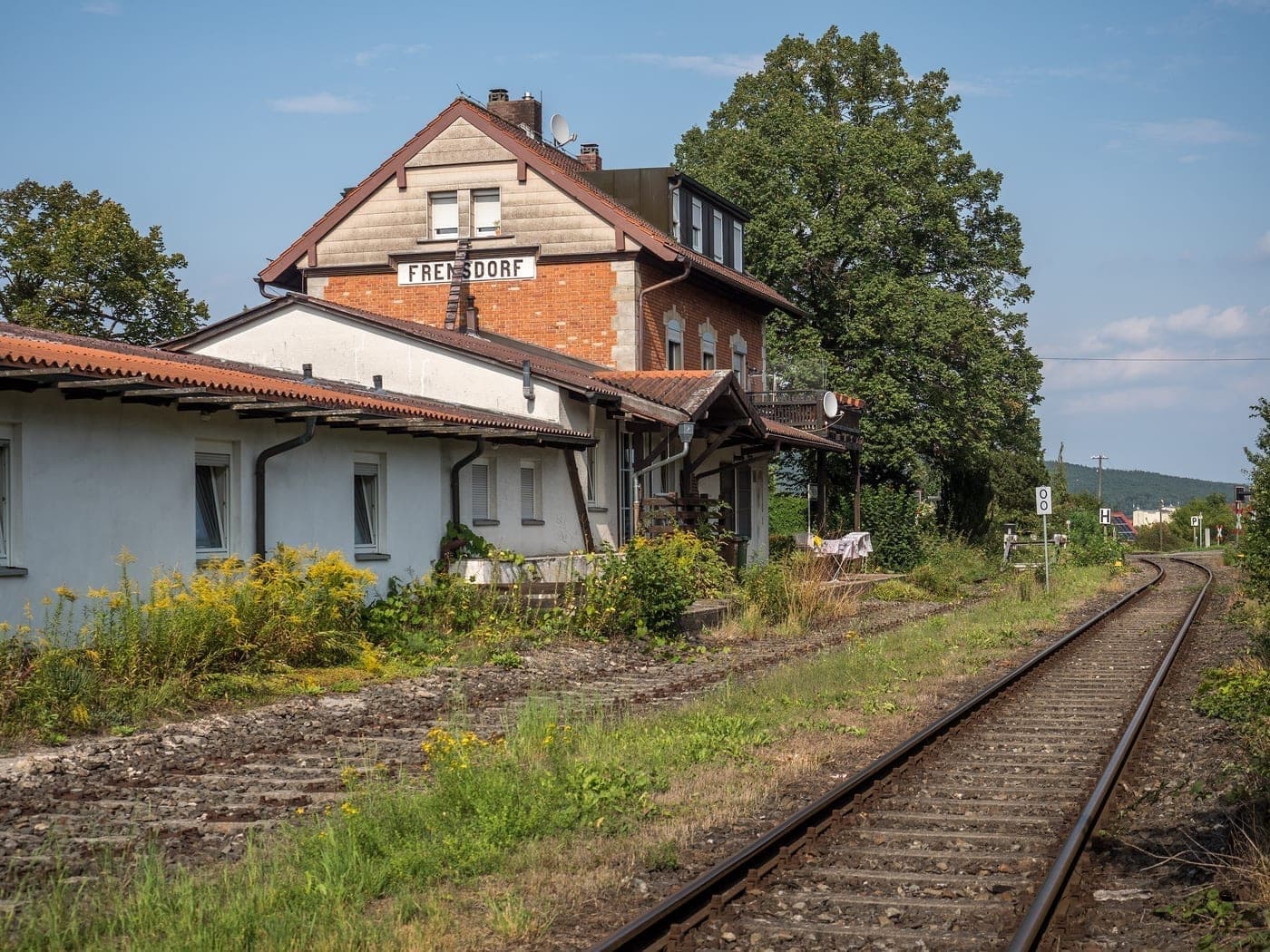
Frensdorf
Charming village known for its historic buildings and local craftsmanship.
CabinsHiking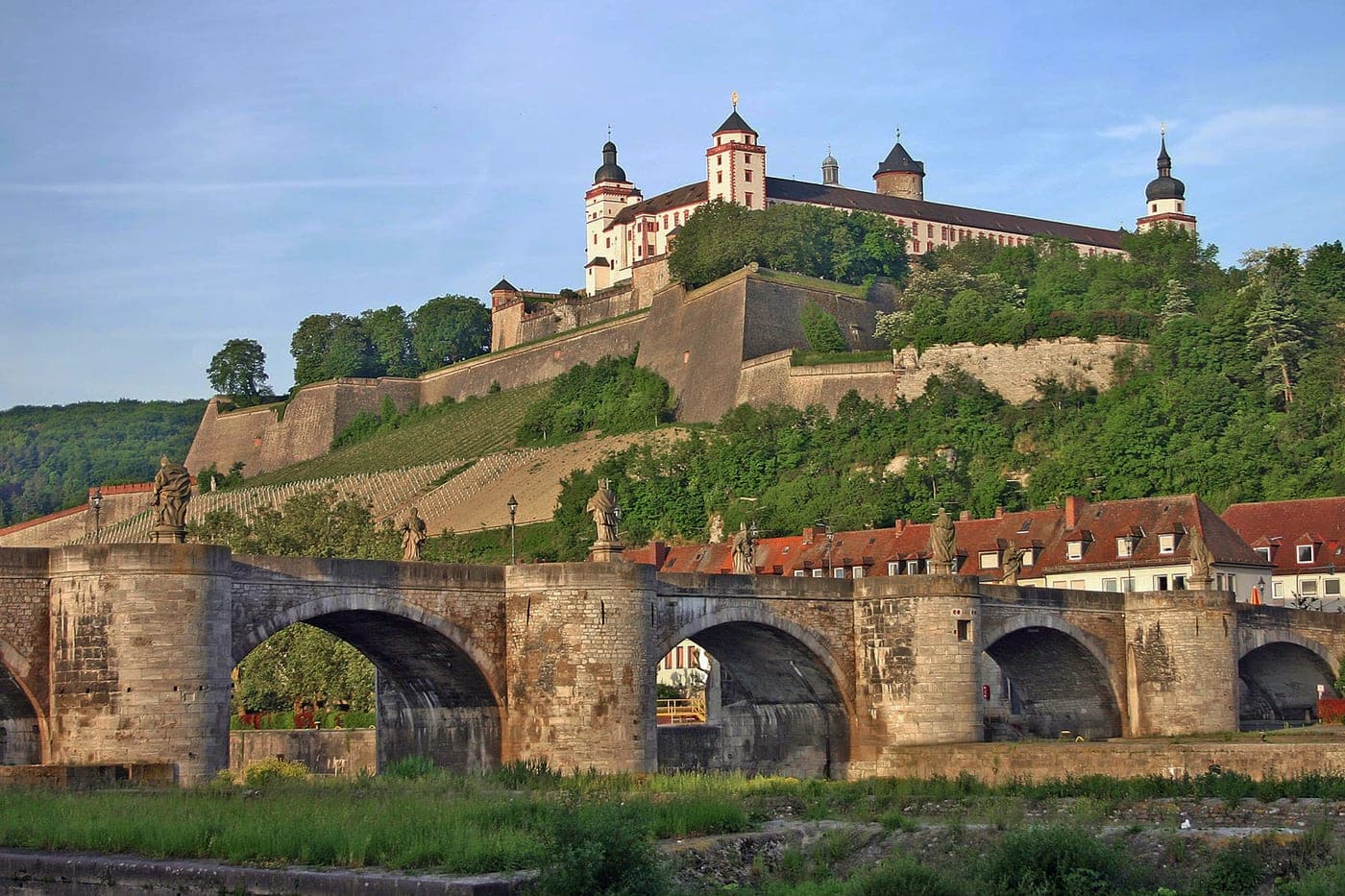 Camper Van Rentals
Würzburg
Baroque city famed for its grand Residenz and flourishing wine culture.
Camper Van RentalsHiking
1 region
 Cabins31 destinations
Bavaria
Bavaria is Germany's largest state, and one of its most varied. In the south, the land rises into the Alps, with peaks above Berchtesgaden and Garmisch-Partenkirchen, and lakes such as the Chiemsee and the Königssee nearby. Further north, the hills flatten into the Franconian wine country, where Silvaner and Müller-Thurgau vines cover slopes above the Main river. Between these two landscapes sit market towns, river cities, and castle villages that reward slow attention. Munich, the state capital, has its beer gardens, its baroque churches, and its markets selling Weißwurst in the morning. But much of Bavaria's character lives outside the capital, in places built for a quieter pace. Regensburg, on the Danube, keeps a medieval old town of narrow lanes, stone bridges, and merchant houses that once served river trade. Bamberg spreads across seven hills and several arms of the Regnitz river, and is known for its smoked Rauchbier, brewed in local taverns much as it always has been. Rothenburg ob der Tauber sits inside its own medieval walls, with half-timbered houses and a walkway along the ramparts that circles the whole old town. Franconia, in the north, is Bavaria's wine country. Vineyards climb the terraces above Würzburg and along the Main, and small wine villages sell their own vintages from cellar doors and courtyard taverns. The wine here is usually bottled in the round Bocksbeutel flask, a shape associated with the region. Cycling paths follow the river through the vines, linking one village to the next at an easy, level pace, past chapels, wine presses, and stone crosses set among the rows. In the Allgäu, close to the Austrian border, the town of Füssen sits below the castle hill of Neuschwanstein, built by King Ludwig II in the nineteenth century. The castle draws attention, but the surrounding countryside holds its own appeal: lakes, foothills, and villages where farming and dairy traditions continue much as before. Bavaria's lakes add another layer of slowness. The Chiemsee, the largest, can be crossed by boat to its island monasteries, where former royal buildings and quiet cloisters sit surrounded by water and reed beds. Smaller lakes near the Alpine foothills, such as the Staffelsee and the Ammersee, are ringed by paths used for walking and cycling rather than for speed. Food and drink run through the region's identity. Beer gardens, some centuries old, work on a simple principle: food brought from home, a beer ordered at the counter, a seat under chestnut trees for as long as the weather allows. Franconian taverns serve local wine alongside dishes built around potatoes, dumplings, and river fish. Bakeries sell pretzels still warm from the oven, and markets in towns like Nuremberg keep old traditions of spiced gingerbread and roasted sausages. A morning market in Regensburg, an afternoon among the Franconian vines, an evening in a Bamberg tavern: each has its own pace. Villages across Bavaria keep their own customs — wine festivals in Franconia, woodcarving and dairy traditions in the Alpine foothills. Mountains and vineyards, river cities and castle villages: Bavaria fits them into a single state, each within reach of the next.
CabinsCastlesHikingCamper Van Rentals