Coburger Bratwurst
Pine-cone grilled sausage served on a roll in Coburg
- Local name
- Coburger Bratwurst
- Served with
- Small bread roll
- Best eaten at
- Coburg market square grill
- Pairs with
- Franconian beer
What it is
The Coburger Bratwurst is a long, slender fresh sausage of pork with beef or veal that hails from the city of Coburg in Upper Franconia, Bavaria, where bratwurst was first documented in 1498. Unlike many German sausages that are pan-fried or boiled, this variety is traditionally grilled over an open fire using pine cones as fuel. The smoke from the burning resin gives the meat a distinct, slightly sweet aroma that is hard to replicate on a standard grill.
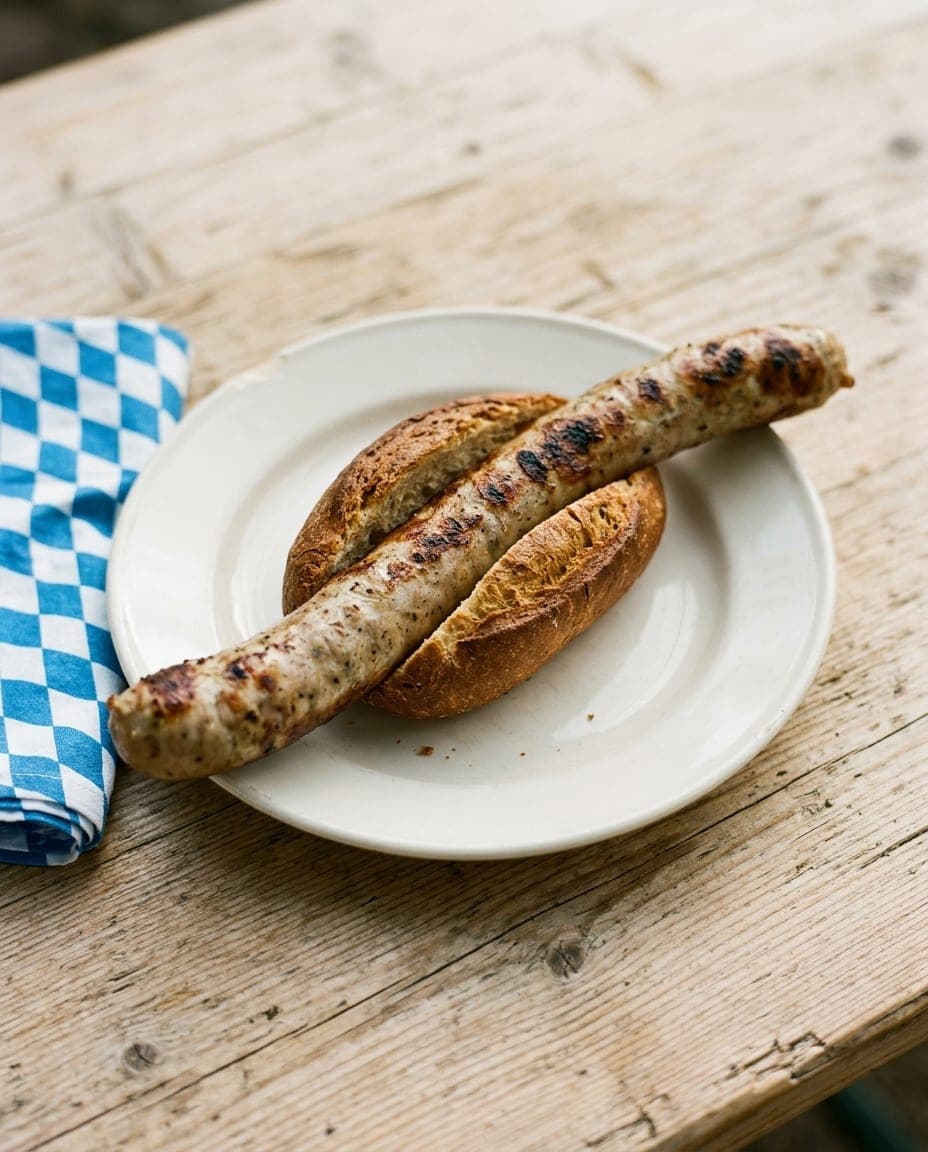
It is a sausage of generous dimensions, roughly 25 centimetres long, and much bigger than its Nuremberg cousin. The sausage is typically served laid across a small bread roll. The meat overhangs the ends of the roll at both sides, creating a visual balance that invites the eater to hold the sausage with both hands or cut it into sections while keeping it on the bread. Mustard is often offered alongside, adding a sharp contrast to the smoky richness of the meat.
The preparation method is the heart of the local tradition. In the market square of Coburg, large grills are often set up where pine cones are piled beneath the sausages. As the cones burn, they release a resinous smoke that infuses the meat with a golden hue and a specific taste. This method is central to the identity of the dish.
The legend of the measuring staff
The most persistent story regarding the sausage concerns its length. Locals say the official measure is the staff held by the Bratwurstmännle, an 18th-century bronze of St Mauritius, dated 1752, on the town hall in Coburg; the staff is usually given as 31 centimetres. According to this explanation, the statue holds the perfect ruler for the ideal sausage, and butchers have taken their measure from it ever since. While the tale adds a layer of charm to the city's history, it remains a local explanation rather than a documented fact. There is no official record confirming that the statue dictated the sausage size, and the sausages served today are usually somewhat shorter than the staff.
What is clear is that the length serves a practical function in the serving style. The overhang allows the eater to hold the sausage without burning their fingers. Whether the measurement comes from a statue or simply evolved through trial and error, the result is a consistent form that has become synonymous with Coburg itself.
What goes into it
The composition of the sausage is what separates it from other German varieties. While many bratwursts rely on marjoram for their signature seasoning, the Coburger Bratwurst is seasoned only with salt, pepper, nutmeg and lemon zest. This simplicity allows the quality of the meat and the pine-cone smoke to take centre stage. The meat mixture consists of pork with at least 15 per cent beef or veal, ground to a coarse texture.
A notable detail in the preparation is the use of raw egg to bind the meat. The egg helps the mixture stay cohesive as it cooks over the open fire, ensuring the sausage does not fall apart despite its length and the intensity of the heat.
- Pork with beef or veal: A blend that provides a balance of fat and lean meat, essential for a juicy result after grilling.
- Salt, pepper, nutmeg and lemon zest: A short list of seasonings, avoiding the marjoram found in many other regional sausages.
- Raw egg: Added to bind the meat mixture, ensuring the sausage holds together over the fire.
The resulting texture is firm yet tender, with a smoky aroma that lingers on the palate. It is not a dish for those who prefer a soft or mushy sausage; the pine-cone grilling gives it a slight crust and a dense, satisfying bite.
How it is eaten
The sausage arrives in a small round roll cut across the top, which acts as both a plate and an edible utensil. One holds the roll with the sausage draped over it, taking care not to let the meat slide off before the first bite.
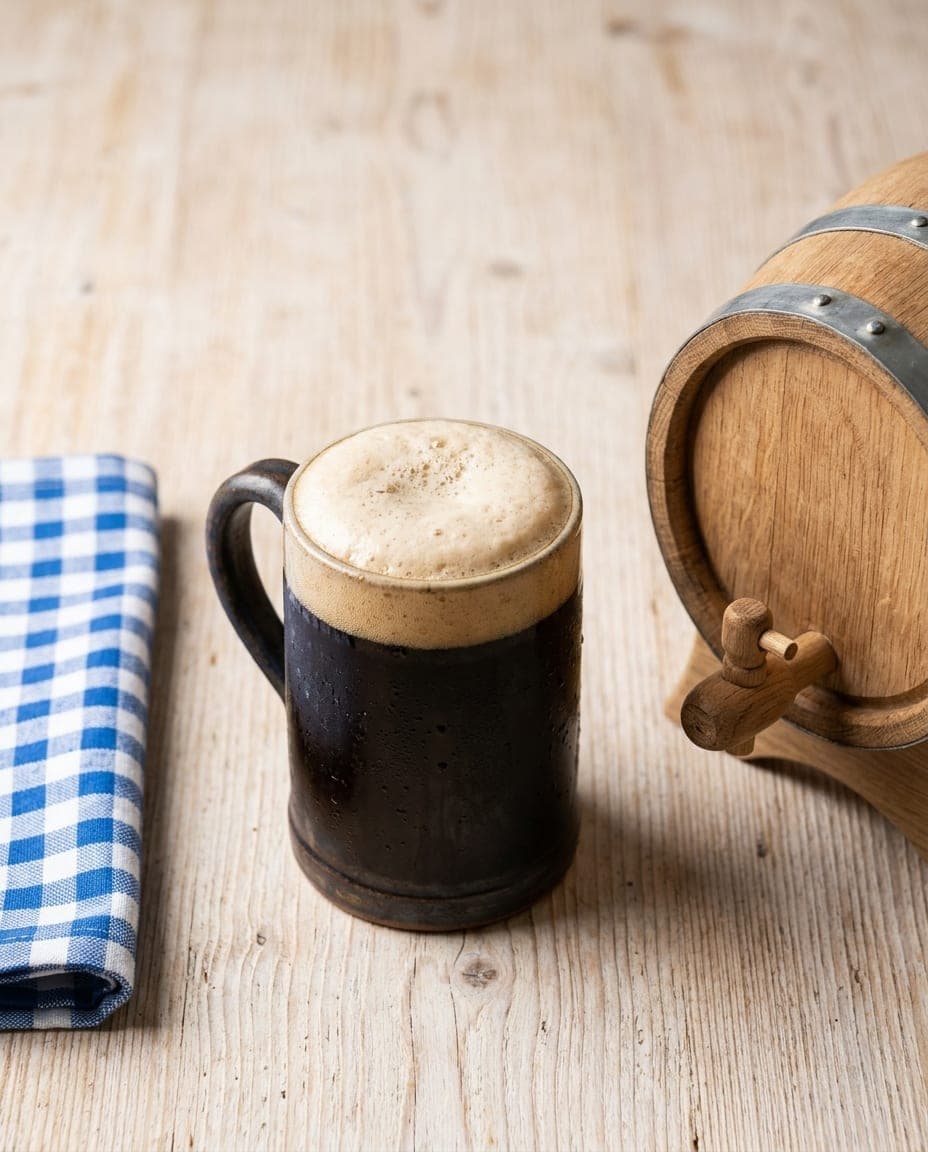
The pairing is straightforward and bound up with the region. A glass of Franconian beer is the standard companion, its bitterness cutting through the fat of the grilled pork.
The sausage can also be cut into sections while still on the bread.
Curious facts
- The pine cone method: Grilling over pine cones is the Coburg hallmark, a technique that imparts a resinous smoke rarely found elsewhere.
- Raw egg binder: Raw egg holds the coarse meat mixture together over the fire.
- An old tradition: Bratwurst is recorded in Coburg as early as 1498.
- The overhang design: The sausage is designed to overhang the roll at both ends, allowing for easy handling and a specific eating style.
Where to try it
The most authentic experience of the Coburger Bratwurst takes place in the market square of Coburg itself. Here, grill stands burn pine cones to cook the sausages over an open fire and serve them straight into the roll.
Outside the market square, one can find the sausage in traditional restaurants across Coburg and the wider Upper Franconia region. The key is to find a place that still uses pine cones for grilling, as this method is essential to the true taste of the dish.
Visitors often gather at the market square during warmer months, where the smell of burning pine fills the air and long lines form around the grills. The smoke is part of the attraction.
Where to try it
1 destination
 Castles
Ahorn
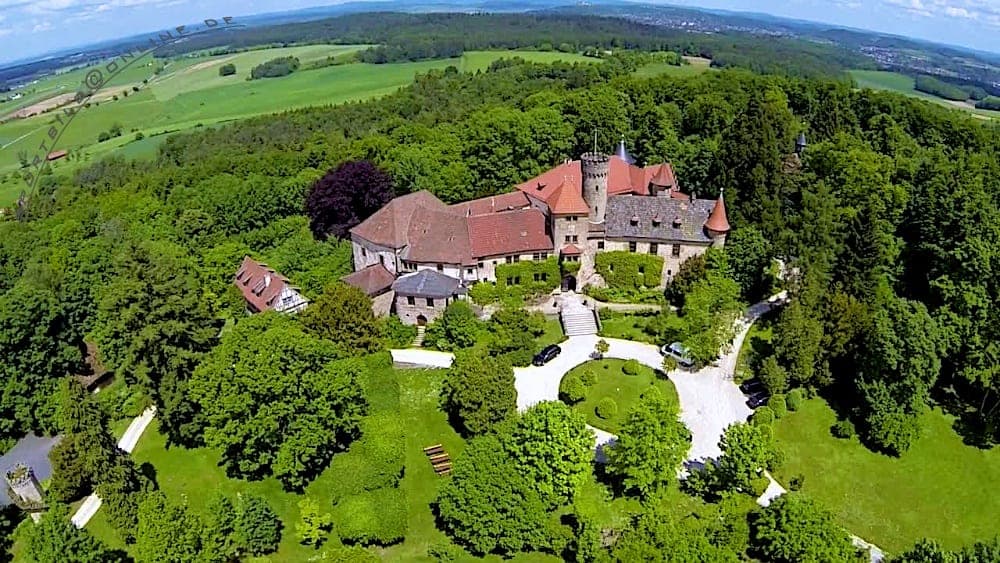
Quiet Franconian village near Coburg with a compact 16th-century castle that served as an administrative centre, set in gently rolling agricultural landscape.
CastlesHiking