Saucisse de Strasbourg (Knack)
The smoked pork-and-beef sausage from Alsace that snaps when bitten
- Local name
- Knack d'Alsace
- Served with
- Mustard, potato salad, sauerkraut
- Best eaten at
- An Alsatian winstub
- Pairs with
- Alsace Riesling or lager
What it is
Saucisse de Strasbourg, known locally as the Knack d'Alsace, is a slim sausage of pork and beef that defines the table culture of Alsace. The name itself describes its texture: knack is an onomatopoeic word for the sharp crack heard when the taut casing breaks under the teeth. This sound is the hallmark of a properly made version.
The sausage is already cooked and smoked over beechwood when it is sold, so at home it only needs reheating in hot water. It is not boiled; boiling would split the skin and dull the flavour. Instead, gentle heat warms the meat while preserving the smoky aroma and the firm bite that characterises it. The filling is a very fine, smooth emulsion that holds together without being dry or greasy, and the casing is brownish or, often, tinted pink to orange.
Saucisse de Strasbourg is widely used as a generic name, and similar sausages are made industrially across France. The Alsatian Knack is made from pork and beef in natural sheep casings and smoked over beechwood, and the versions from the region's butchers remain the benchmark.
The history of a regional speciality
The sausage belongs to the family of slim smoked sausages that developed across the German-speaking world, alongside the Frankfurt sausage and the Viennese Frankfurter. A Knackwurst already appears in texts of the early 16th century, and the Strasbourg writer Johann Fischart mentioned it in 1575. In 1744, sausages were handed out in Strasbourg to celebrate the recovery of King Louis XV from illness.
In Alsace, the sausage is not merely a food item but a cultural anchor, long a staple for workers and families alike because it is ready to eat after a few minutes in hot water. Its complex history mirrors that of the region, passing between French and German influences; during the German annexation after 1871, local butchers adopted new German techniques, including the cutters used to make its fine paste.
The distinction between the industrial version and the artisanal one is significant in this region. While factories produce a consistent product, butchers in the countryside and the city still prepare their own batches in natural casings. These versions are often sold in pairs or loose by weight at markets and butcher's counters.
The ingredients that define it
The composition of the sausage is straightforward but relies on specific cuts of meat and careful processing. It is made from a blend of pork and beef, with the ratio varying between producers. The meat and fat are chopped very finely with ice into a smooth, homogeneous paste with no visible pieces.
The casing is natural, traditionally made from sheep intestine. This thin, taut skin provides the tension needed for the signature snap when bitten.
Smoking is the critical step that gives the sausage its identity. Beechwood, abundant in Alsace, is the standard fuel, chosen for its clean, mild smoke. The sausages are cooked and smoked before sale, which gives them their colour and flavour and lets them keep longer than fresh sausages.
How it is eaten
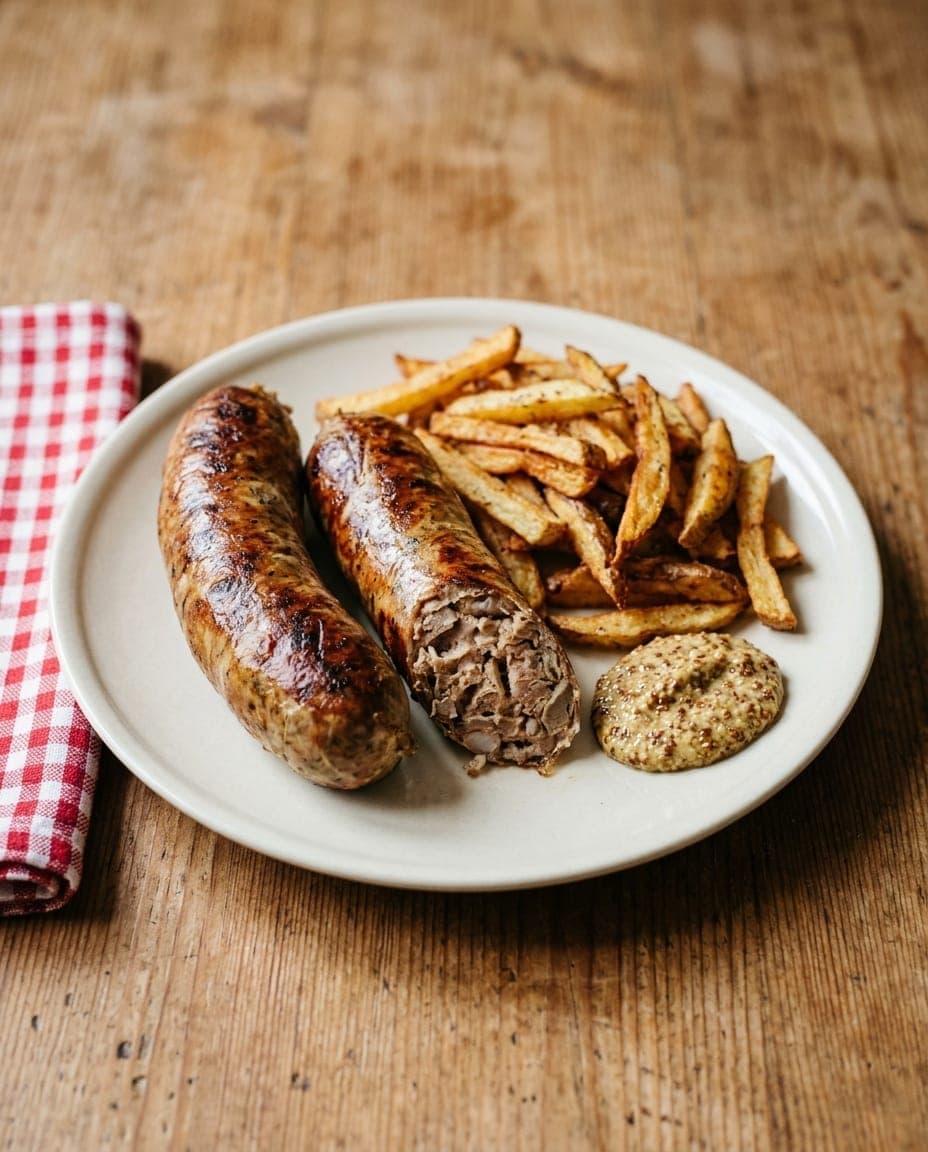
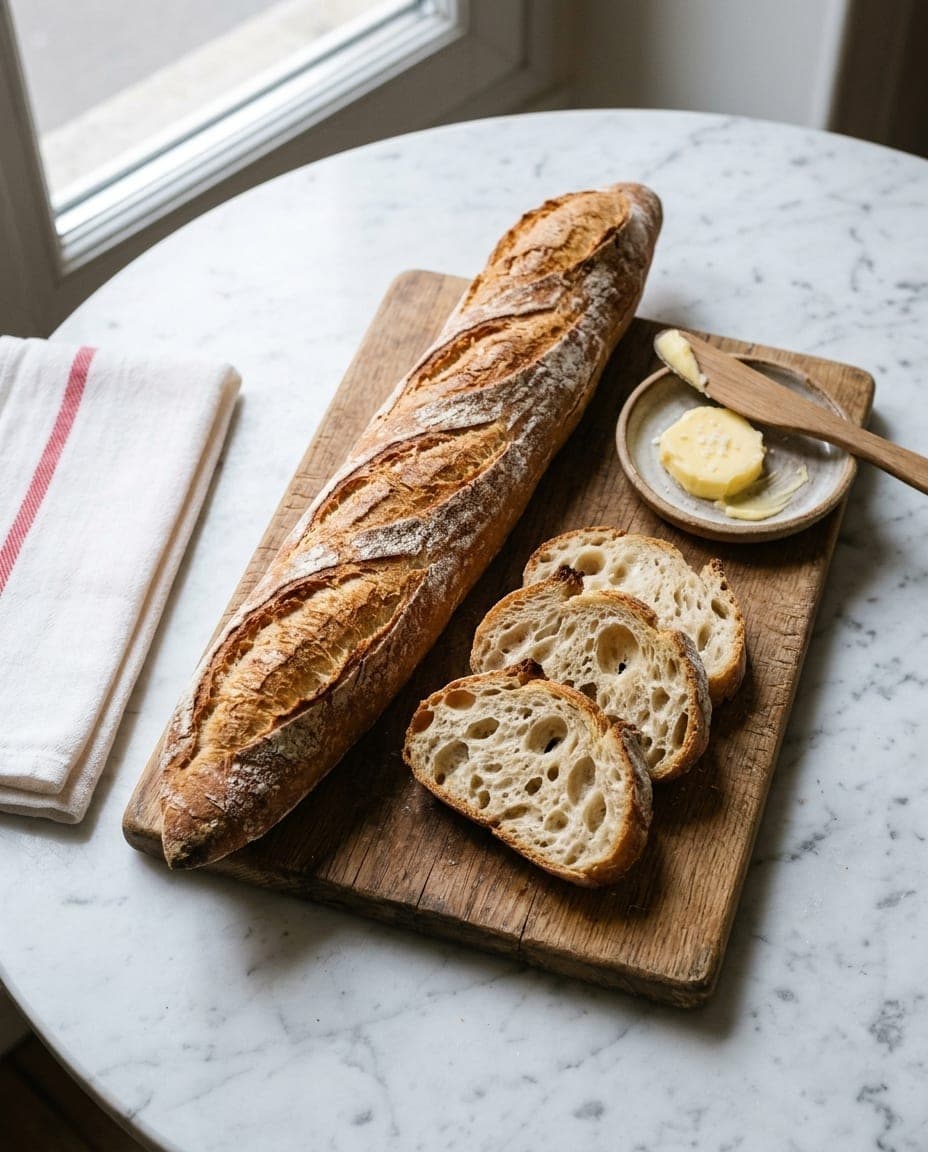
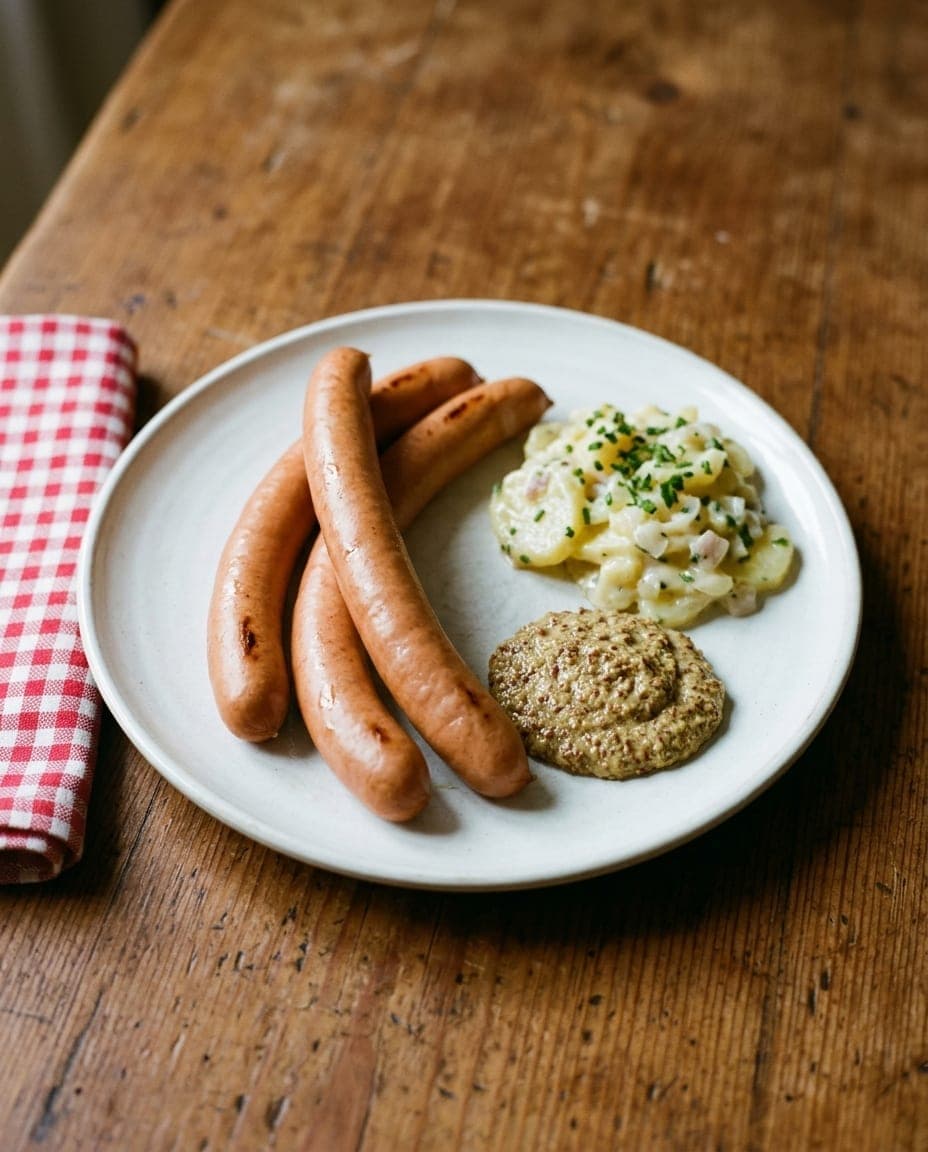
The sausage is rarely served alone. It often comes as a pair, two links arranged on a plate or a wooden board, accompanied by a generous dollop of mustard. The mustard is essential, cutting through the fat of the meat with its sharp acidity. A slice of crusty bread or a dense rye loaf completes the meal.
In a traditional setting, such as an Alsatian winstub, the sausage might be served alongside potato salad, usually dressed with vinegar and oil, offering a cool contrast to the warm, smoky meat. It is also one of the classic sausages laid on top of choucroute garnie, the region's sauerkraut dish, where it adds smoke and substance to the sour cabbage.
Sliced cold, the sausage also turns up in simple Alsatian salads with potatoes, onions and a sharp vinaigrette, a practical option for lunch during the warmer months. The mustard remains a constant companion, whether the sausage is hot on a plate or cold in a salad.
Where to find it
Winstubs, the cosy wine taverns of Alsace, are found throughout the region, from the streets of Strasbourg to the surrounding villages. Many are family-run, with menus that change seasonally but often feature the Knack.
Butchers in Alsace sell the sausages fresh from their own smokehouses for reheating at home. The quality is generally higher at these sources than in supermarket versions, where the smoking process may be less rigorous.
Pairing the sausage with a glass of Alsace Riesling is traditional, as the wine's crisp acidity complements the smoky meat. A cold lager is also a common choice, particularly in casual settings or during summer evenings.
Curious facts
- The name describes the sound. The word knack imitates the sharp crack heard when the casing breaks.
- It is not boiled. The sausage is already cooked and only reheated; boiling would split the casing and ruin the texture that defines it.
- A generic name and a regional one. Saucisse de Strasbourg is used for sausages made all over France, while Knack d'Alsace refers specifically to the Alsatian product.
- Often served in pairs. Two links is the usual portion in taverns and at butcher's counters.
- A Germanic relative. The sausage is a cousin of the Frankfurt and Vienna sausages, reflecting the shared culinary history of the Rhine region.
Where to try it
The Knack is at its best in a winstub in Strasbourg or the surrounding villages of Alsace, and at the city's markets, where local butchers sell their own. It is typically ordered with mustard and a side of potato salad or choucroute, with a glass of Alsace Riesling or a lager alongside.
Where to try it
1 destination
 Camper Van Rentals
Strasbourg
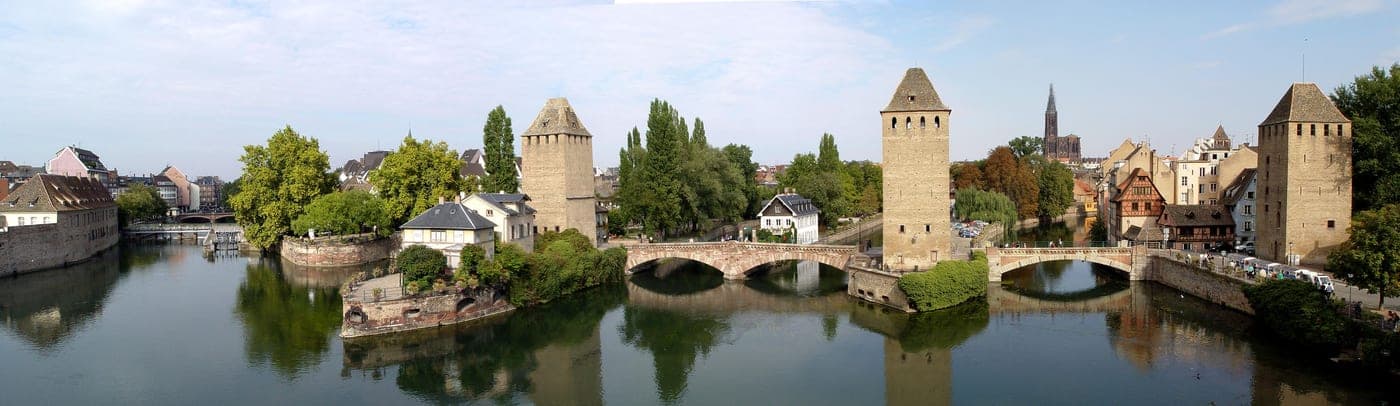
Alsatian capital with Gothic cathedral, half-timbered houses, and European institutions.
Camper Van RentalsHikingLocal Cuisine
2 regions
 Wine Tasting10 destinations
Alsace
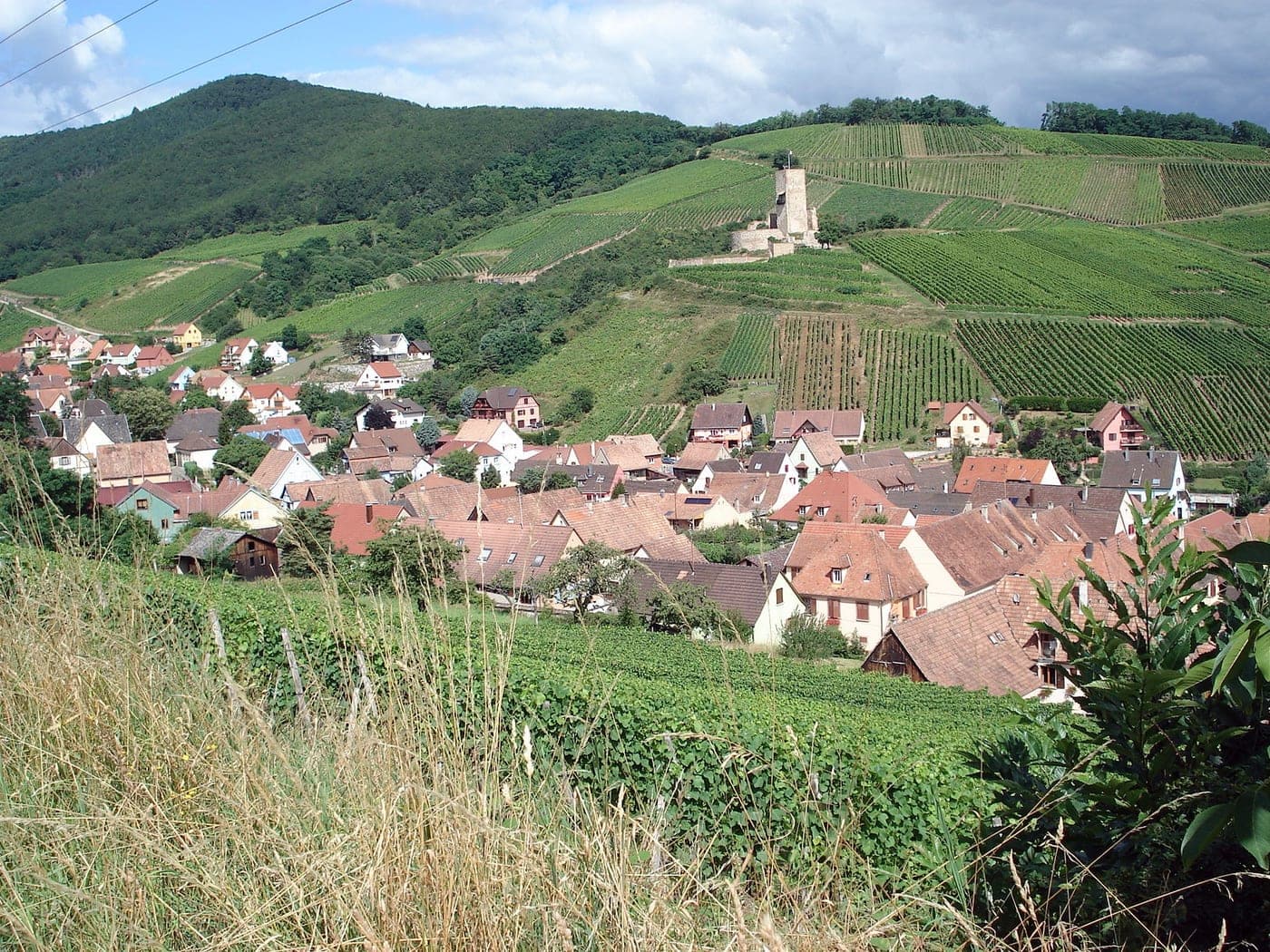
Nestled in northeastern France, this region is known for its unique blend of French and German cultures, reflected in its architecture and cuisine. Strasbourg, the largest city, features a stunning Gothic cathedral and a picturesque old town recognized as a UNESCO World Heritage site. Known for its Alsatian wines, particularly Riesling and Gewürztraminer, wine routes in the region offer opportunities to explore local vineyards and quaint villages like Riquewihr. The Vosges Mountains provide hiking and cycling trails, while the Route des Vins showcases charming towns, half-timbered houses, and traditional eateries serving tarte flambée. Rich in history, the region has a blend of medieval castles and modern European institutions, making it a fascinating area to explore at a leisurely pace.
Wine TastingHikingCastles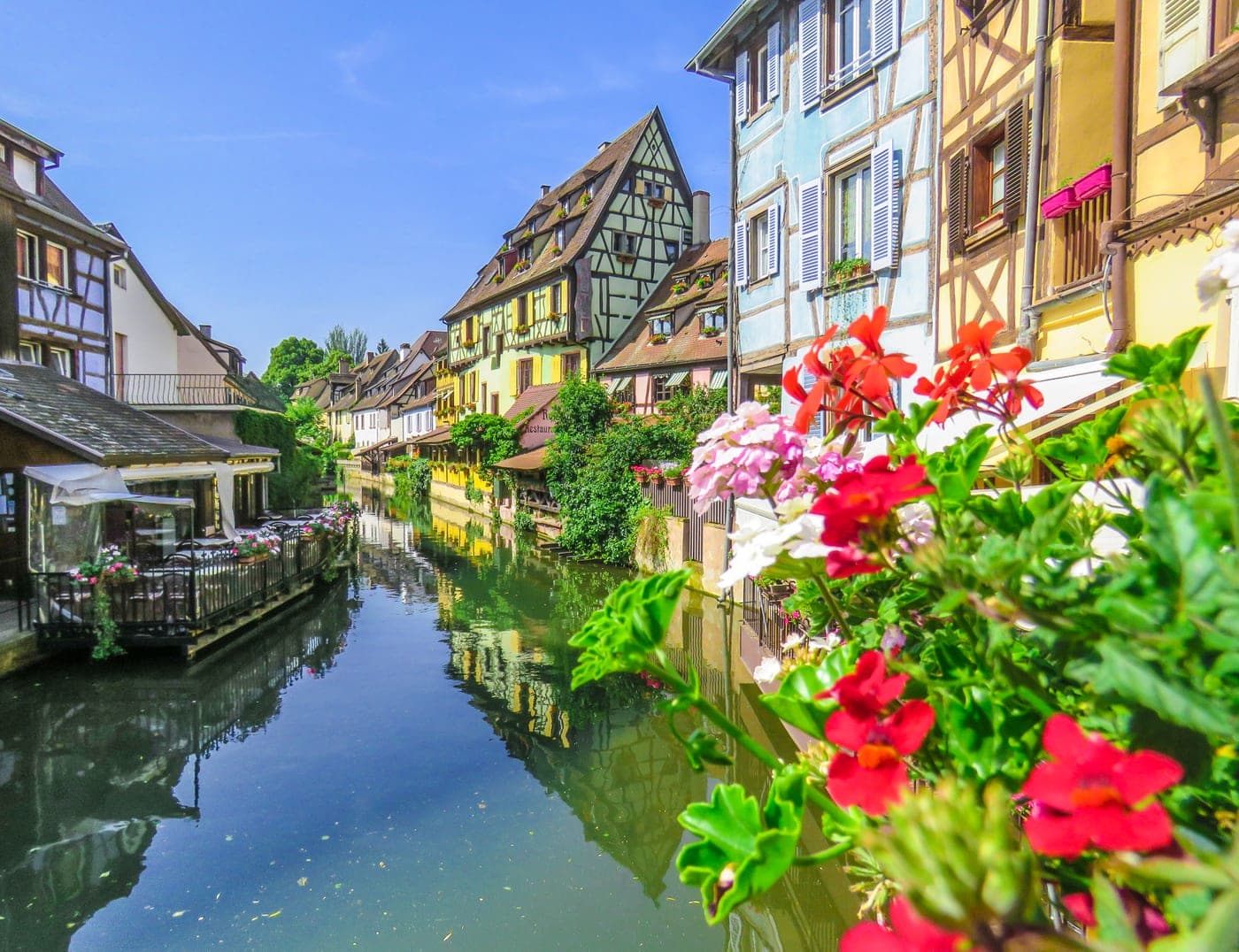 Wine Tasting19 destinations
Grand Est
Nestled in northeastern France, this region is the second largest, blending rich history with diverse landscapes. It boasts Strasbourg, known for its Gothic cathedral and unique blend of French and German cultures. The vineyards of Alsace produce exquisite white wines, particularly Riesling, while the Vosges Mountains offer scenic hiking trails. Visitors can explore the historic town of Colmar, famous for its well-preserved medieval architecture. The region is dotted with charming villages like Riquewihr, known for its half-timbered houses. Grand Est is also home to the Champagne region, celebrated for its sparkling wines. Festivals throughout the year highlight local traditions, making it a vibrant area to experience local culture.
Wine TastingHikingLocal CuisineCamper Van Rentals