Pain d'épices de Gertwiller (gingerbread)
Honey-spiced loaf from Gertwiller, Alsace's gingerbread capital
- Vegetarian
- Local name
- Pain d'épices de Gertwiller
- Best eaten at
- Alsace Christmas markets
- Pairs with
- Vin chaud (mulled wine)
What it is
Pain d'épices de Gertwiller is a dense gingerbread cake that comes from the village of Gertwiller in Alsace. While similar honey-spiced cakes exist across Europe, this version has a specific identity tied to its place of origin. The village is known as the capital of pain d'épices, a title it took over from larger gingerbread towns such as Reims and Dijon; the local tradition goes back at least to the 18th century.
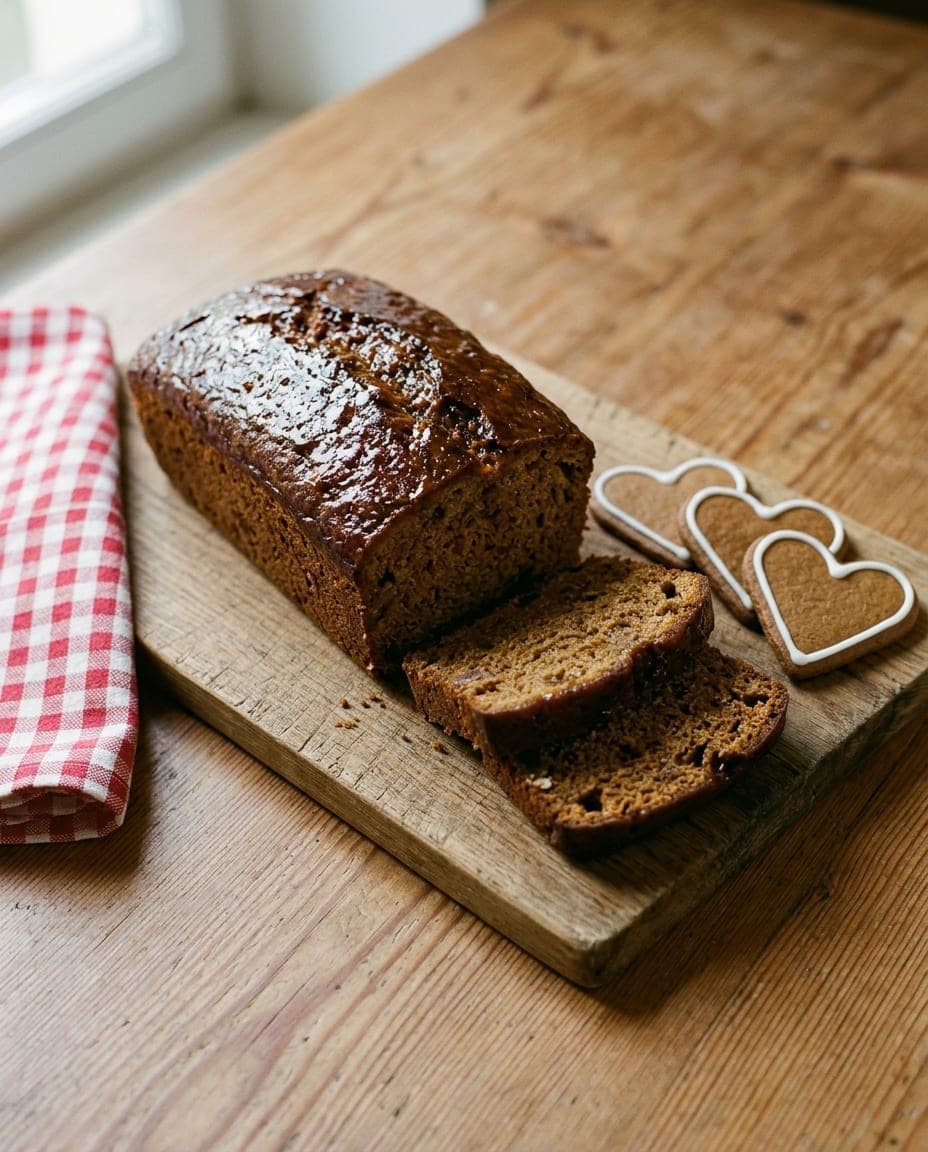
The cake is defined by its texture and taste. It is not light or fluffy like a typical sponge; instead, it is firm, moist and deeply aromatic. Honey gives it its sweetness and character, and the spice notes are warm and earthy, with cinnamon, anise and clove among the usual flavourings. It contains little fat, which keeps the crumb tight and allows it to keep well for a long time.
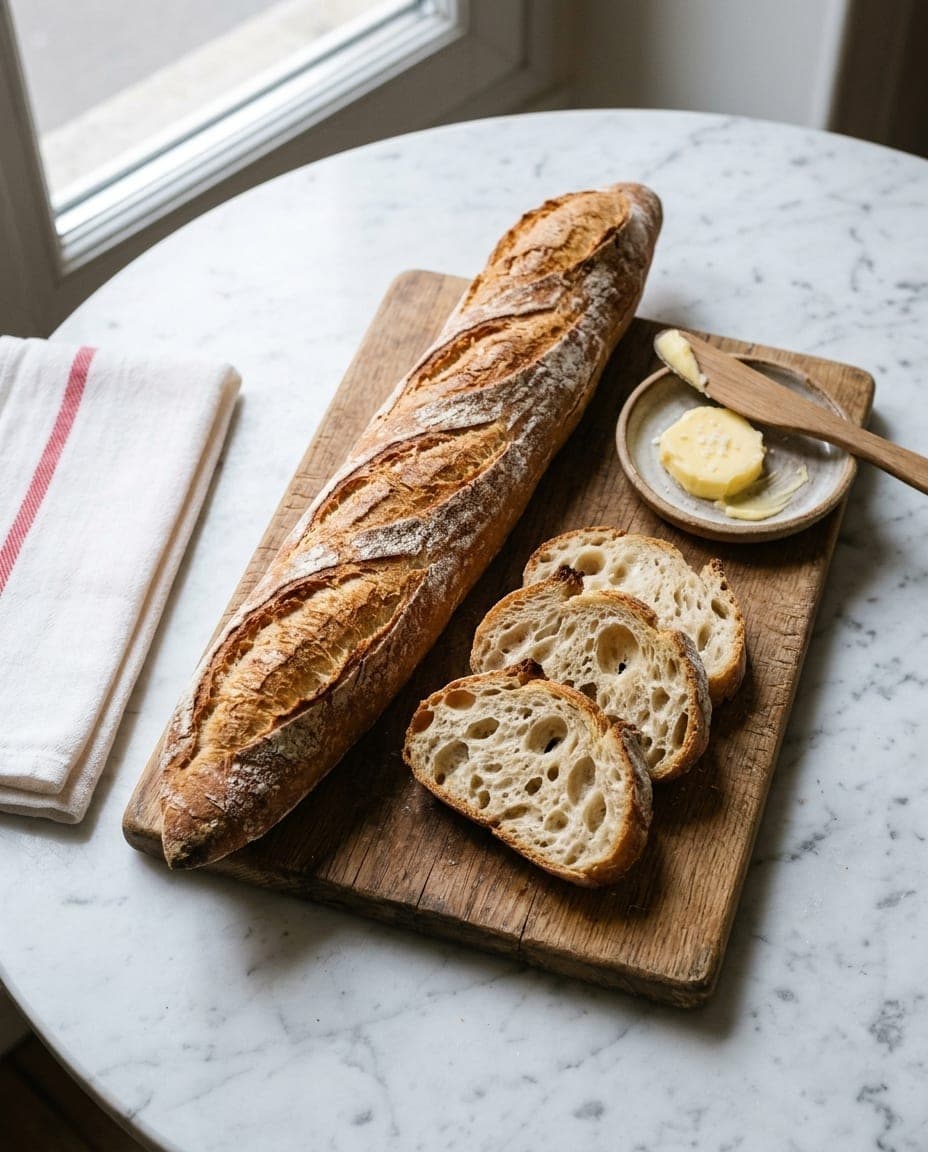
In Gertwiller, the gingerbread is made in two main forms. The first is a loaf that is baked, cooled and then sliced. These slices are often served with butter or paired with foie gras as a savoury-sweet starter. The second form consists of shaped and decorated pieces — hearts, figures, animals or stars. Decorated gingerbread is a traditional treat for children around the Saint Nicholas celebrations in December.
The history of Gertwiller
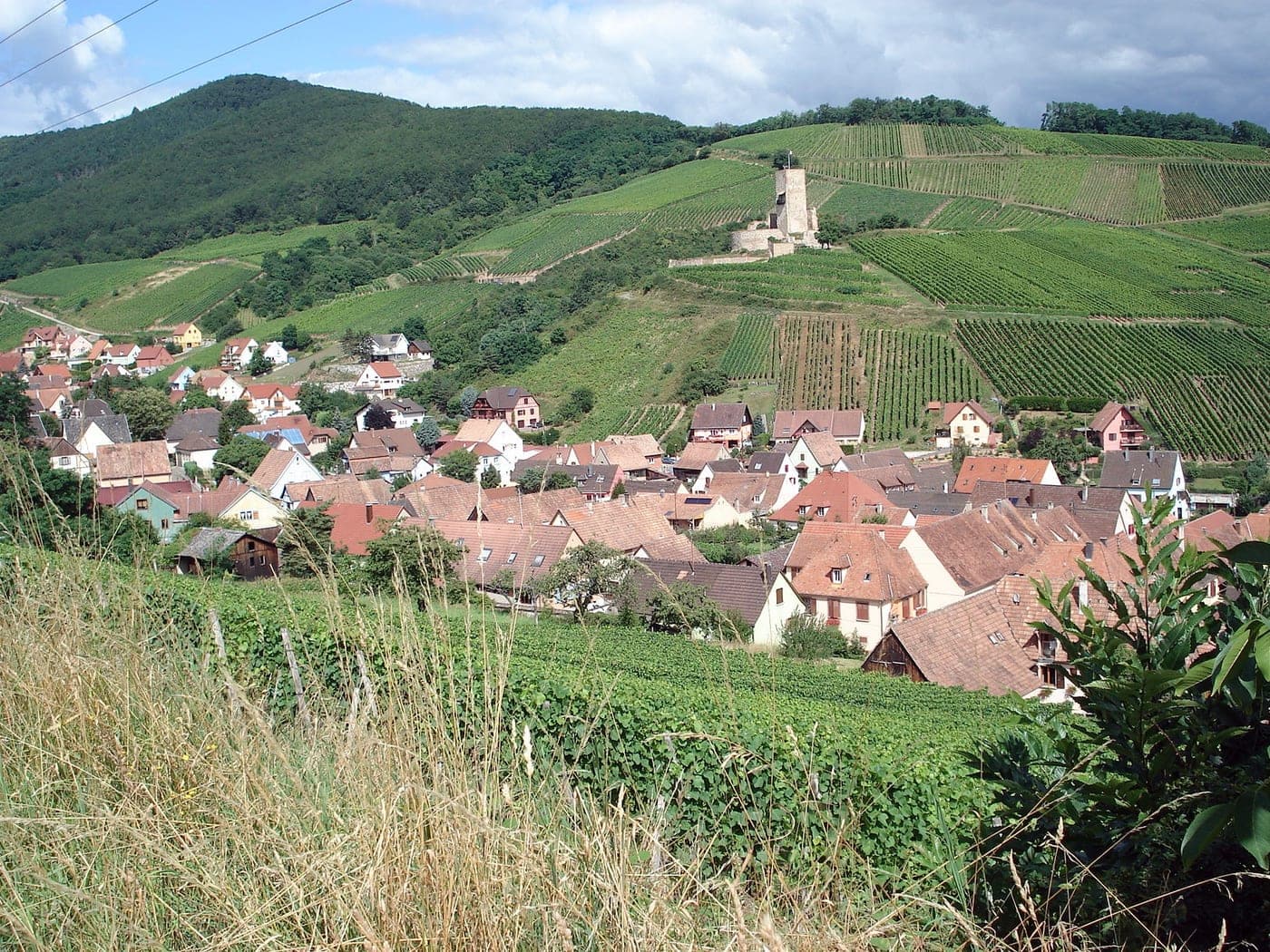
Gertwiller is a small village on the Alsace wine route, on the north-eastern edge of the town of Barr. It has long been associated with the production of spiced honey cakes. By the start of the 20th century at least eight separate businesses made gingerbread there; today production is concentrated in two long-established houses.
The tradition draws on old Alsatian ingredients and habits. Honey was the traditional sweetener, and a cake built on honey could be stored for long periods without spoiling. Imported spices allowed local bakers to create something richer than plain honey bread.
Today, the village preserves this heritage through its gingerbread museums. Visitors can see the wooden moulds once used to shape the figures and learn about the history of pain d'épices and its place in the Alsatian Christmas.
How it is made
The preparation of pain d'épices relies on patience rather than speed. The dough is mixed from flour, honey and a blend of spices. In the traditional method, a base dough of flour and honey is left to rest for a long time — several months in some houses — before it is finished and baked.
This resting period is said to develop the final flavour. During the wait, the honey and flour mature together, and the dough becomes easier to work, which helps the loaf hold its shape during baking and slicing.
The loaves are baked until they are brown on the outside while remaining moist inside. Once baked, they are allowed to cool completely before being cut. For the festive pieces, the dough is shaped or moulded, baked, glazed and often decorated by hand before being sold.
How to eat it
Pain d'épices de Gertwiller is eaten in different ways depending on the occasion. The sliced loaf is served at room temperature, often topped with a layer of butter. In some settings, particularly during the winter months, it is paired with foie gras as a starter that balances the richness of the liver with the sweetness of the cake.
During the Christmas season, the glazed and decorated pieces take centre stage. They are sold at the Alsace Christmas markets, where they are displayed in baskets and stacks, and are eaten as treats for children or taken home as gifts. The shapes make them appealing as decorative items before they are eaten.
A traditional accompaniment is vin chaud, a mulled wine spiced with cinnamon and cloves. The warmth of the wine complements the spice notes in the gingerbread, a combination that is particularly popular at the outdoor markets during the Advent season.
Curious facts
- The resting period. In the traditional method the base dough rests for a long time before baking, a step that develops flavour.
- Two shapes, two uses. Loaves are sliced for eating with butter or foie gras, while decorated pieces are given as Christmas treats.
- A village title. Gertwiller is known as the capital of pain d'épices, a title once associated with Reims and Dijon.
- Museums dedicated to it. The village has gingerbread museums that display the tools, moulds and history of its production.
- Market staple. The best time to find these cakes is at the Alsace Christmas markets, where they are sold alongside other regional specialities.
Where to try it
The most authentic experience of pain d'épices de Gertwiller takes place in Gertwiller itself or at the Christmas markets along the Alsace wine route. The village's gingerbread makers sell their loaves and figures on site, next to the museums. During December, the Christmas markets in towns like Strasbourg or Colmar also feature gingerbread from Gertwiller.
The markets are the primary venue for the decorated pieces, which are displayed in large quantities. A visit to the village during the winter months allows one to see the gingerbread museums and taste the cakes in season. The combination of the market atmosphere and the local history makes the experience distinct from buying a similar cake elsewhere.
Where to try it
1 destination
 Wine Tasting
Gertwiller
Alsace wine village on the Route des Vins producing Riesling and Gewürztraminer.
Wine Tasting
2 regions
 Wine Tasting10 destinations
Alsace
Nestled in northeastern France, this region is known for its unique blend of French and German cultures, reflected in its architecture and cuisine. Strasbourg, the largest city, features a stunning Gothic cathedral and a picturesque old town recognized as a UNESCO World Heritage site. Known for its Alsatian wines, particularly Riesling and Gewürztraminer, wine routes in the region offer opportunities to explore local vineyards and quaint villages like Riquewihr. The Vosges Mountains provide hiking and cycling trails, while the Route des Vins showcases charming towns, half-timbered houses, and traditional eateries serving tarte flambée. Rich in history, the region has a blend of medieval castles and modern European institutions, making it a fascinating area to explore at a leisurely pace.
Wine TastingHikingCastles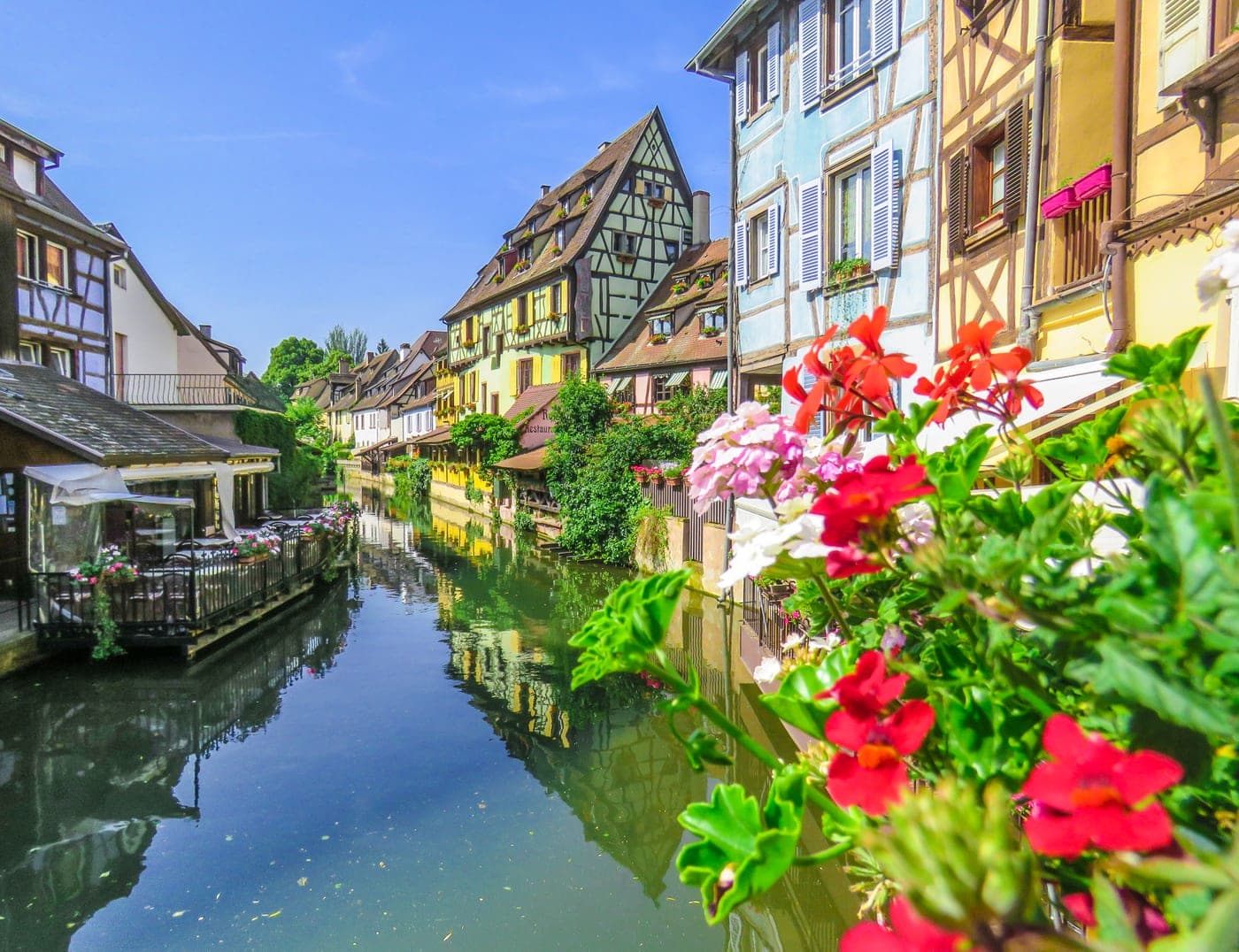 Wine Tasting19 destinations
Grand Est
Nestled in northeastern France, this region is the second largest, blending rich history with diverse landscapes. It boasts Strasbourg, known for its Gothic cathedral and unique blend of French and German cultures. The vineyards of Alsace produce exquisite white wines, particularly Riesling, while the Vosges Mountains offer scenic hiking trails. Visitors can explore the historic town of Colmar, famous for its well-preserved medieval architecture. The region is dotted with charming villages like Riquewihr, known for its half-timbered houses. Grand Est is also home to the Champagne region, celebrated for its sparkling wines. Festivals throughout the year highlight local traditions, making it a vibrant area to experience local culture.
Wine TastingHikingLocal CuisineCamper Van Rentals