Kougelhopf
The fluted Alsatian ring cake of raisins and kirsch
- Vegetarian
- Local name
- Kougelhopf, Kouglof, Kugelhopf
- Best eaten at
- An Alsatian Sunday breakfast
- Pairs with
- Gewurztraminer or coffee
What it is
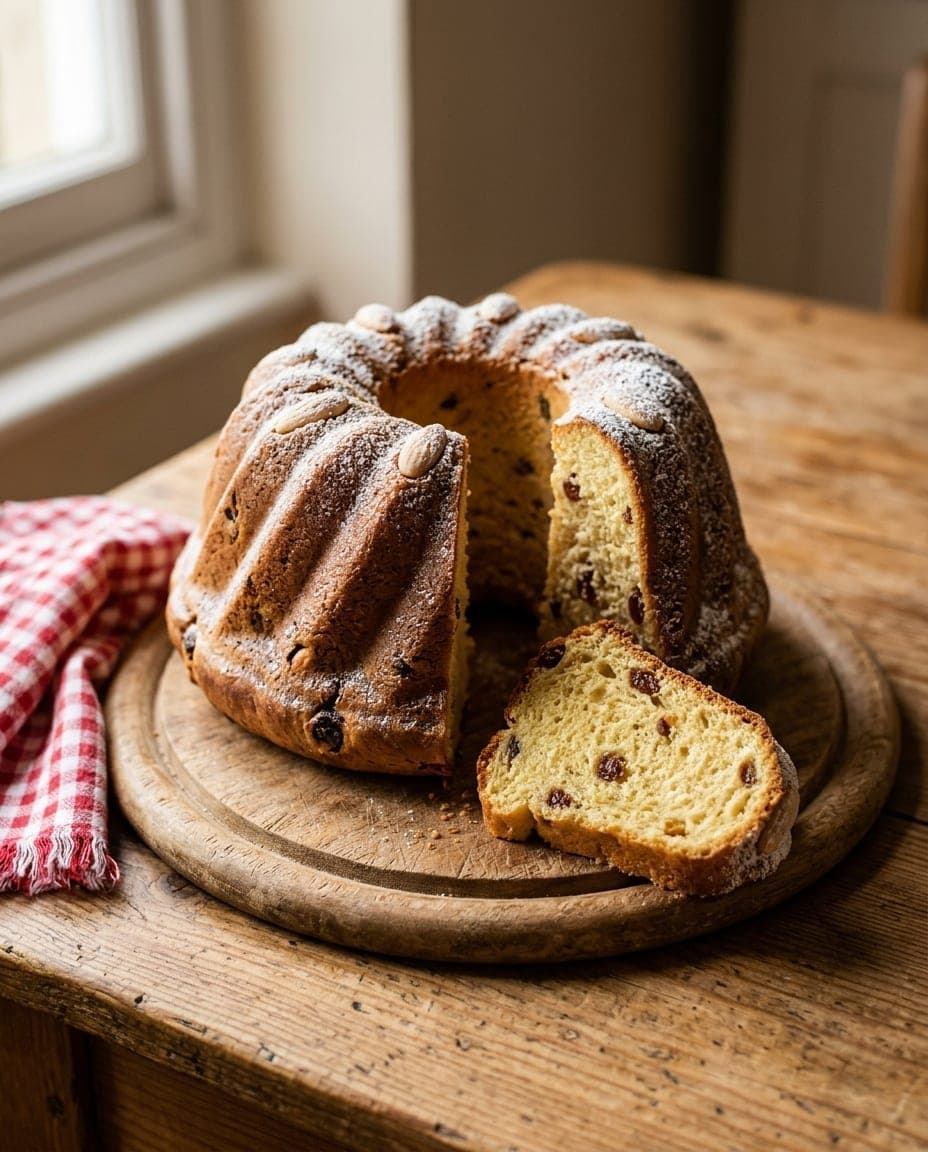
The Kougelhopf, also spelled Kouglof or Kugelhopf, is a ring-shaped yeast cake defined by its distinctive tall, fluted shape and the almonds lining its grooves. Baked in a mould of glazed earthenware that gives it the silhouette of a turban, this pastry is a staple of the Alsace region in eastern France. It is not a nationwide French classic but a regional speciality, a cousin of the Austrian and southern German Gugelhupf.
The cake itself is a study in texture. The dough is enriched with butter, milk and eggs, creating a crumb that sits somewhere between a brioche and a bread. It is drier and less sweet than many other cakes, and many Alsatians say it is even better a day or two after baking. Whole almonds are placed in the grooves of the mould before the dough goes in, so that when the cake is turned out, the ridges are studded with nuts. The raisins, often soaked beforehand in kirsch or rum, provide bursts of flavour and moisture throughout the slice.
The result is a loaf that feels substantial yet elegant, typically dusted with icing sugar and served in thick slices. While it is sold year-round, its true home is the Alsatian Sunday breakfast table.
The shape of the dish
The most defining feature of the Kougelhopf is the vessel that creates it: a tall, fluted ring of glazed earthenware with a central chimney. The shape is not merely decorative. The central funnel lets heat reach the middle of the rich dough so that it bakes through without the outside burning, and the deep grooves give the golden crust its pattern. When the cake is ready, it is turned out, revealing the almonds that were pressed into the mould's interior.
An old Kougelhopf mould is considered a household heirloom in many Alsatian families. The earthenware develops a patina over years of use, and painted moulds are sold in markets and shops across the region, from Ribeauvillé to Strasbourg. It is common to find these vessels passed down through generations.
The history of the ring cake
The origins of the Kougelhopf are a subject of local folklore rather than documented culinary history.
The best-known Alsatian legend ties the cake to the Three Kings. On their travels, so the story goes, the Magi were given shelter in Ribeauvillé by a potter named Kugel, and thanked him by baking a cake in one of his moulds. It is oral tradition that adds colour to the dish but lacks documentary evidence.
A second story links the pastry to Marie-Antoinette. The queen, born an Austrian archduchess, is said to have been fond of the Viennese Gugelhupf and to have helped make it fashionable at the French court. This tells us more about the cake's fame in France than about its Alsatian roots.
What is certain is that the Kougelhopf has long been a fixture in Alsatian bakeries and kitchens. It belongs to the broader Central European tradition of fluted yeast cakes, adapted to local ingredients such as kirsch and to the earthenware moulds of the region.
What goes into it
The dough is built from flour, milk, yeast, sugar, eggs and butter, the butter used generously to keep the crumb tender and rich.
- Raisins: Typically soaked in kirsch or rum before baking, which plumps them and adds flavour.
- Almonds: Whole almonds are pressed into the grooves of the mould before the dough is added, so they end up on the ridges of the finished cake.
- Kirsch: The clear cherry brandy used to soak the raisins adds a distinct aromatic note. It is not used in large quantities but serves as a key flavouring.
- Icing sugar: A light dusting is applied after baking and cooling.
A savoury variation also exists in Alsace. In this version, the raisins are replaced with bacon (lardons) and walnuts, and the cake is served as an apéritif with wine rather than at breakfast. This version is not vegetarian.
How it is eaten
The Kougelhopf is most traditionally eaten at an Alsatian Sunday breakfast. Families often bake the cake the day before, letting it rest so that the crumb firms up. It is sliced thickly, often with a serrated knife to avoid crushing the almonds.
It is eaten plain or with butter or jam, though many locals prefer it on its own to appreciate the interplay between the yeasty crumb, the soaked raisins and the toasted almonds. Some dunk slices in their morning coffee. A glass of Gewurztraminer or another Alsace white provides a floral contrast that complements the fruit in the cake.
The cake is also served as an afternoon treat, and it is especially popular in the weeks before Christmas. The savoury version with bacon and walnuts is usually cut into small pieces and served with a glass of local wine before a meal.
A note on the name
The spelling varies with the source: Kougelhopf and Kouglof are both common in French, while Kugelhopf follows the German spelling and Gugelhupf is the Austrian and southern German form. The etymology is uncertain. One common explanation links the first part to Kugel ("ball") or Gugel ("hood"), and the second to Hopf or Hupf, sometimes connected to yeast; none of these explanations is settled.
Curious facts
- An heirloom vessel. Glazed earthenware moulds are sold across Alsace, and some families pass down the same mould for generations.
- Savoury adaptation. A version with bacon and walnuts is served as an apéritif, keeping the signature shape.
- Folklore origins. The stories linking the cake to the Three Kings in Ribeauvillé or to Marie-Antoinette are legends, not documented history.
Where to try it
The best place to find a Kougelhopf is in Alsace itself, particularly in wine villages such as Ribeauvillé, where the Three Kings legend is set. Local bakeries in the region sell it daily, and many shops also stock the earthenware moulds, so visitors can take home the vessel used to create the cake. The cake is easy to find in Strasbourg and Colmar too, but buying it fresh from a small-town bakery remains part of its charm.
Where to try it
1 destination
 Wine Tasting
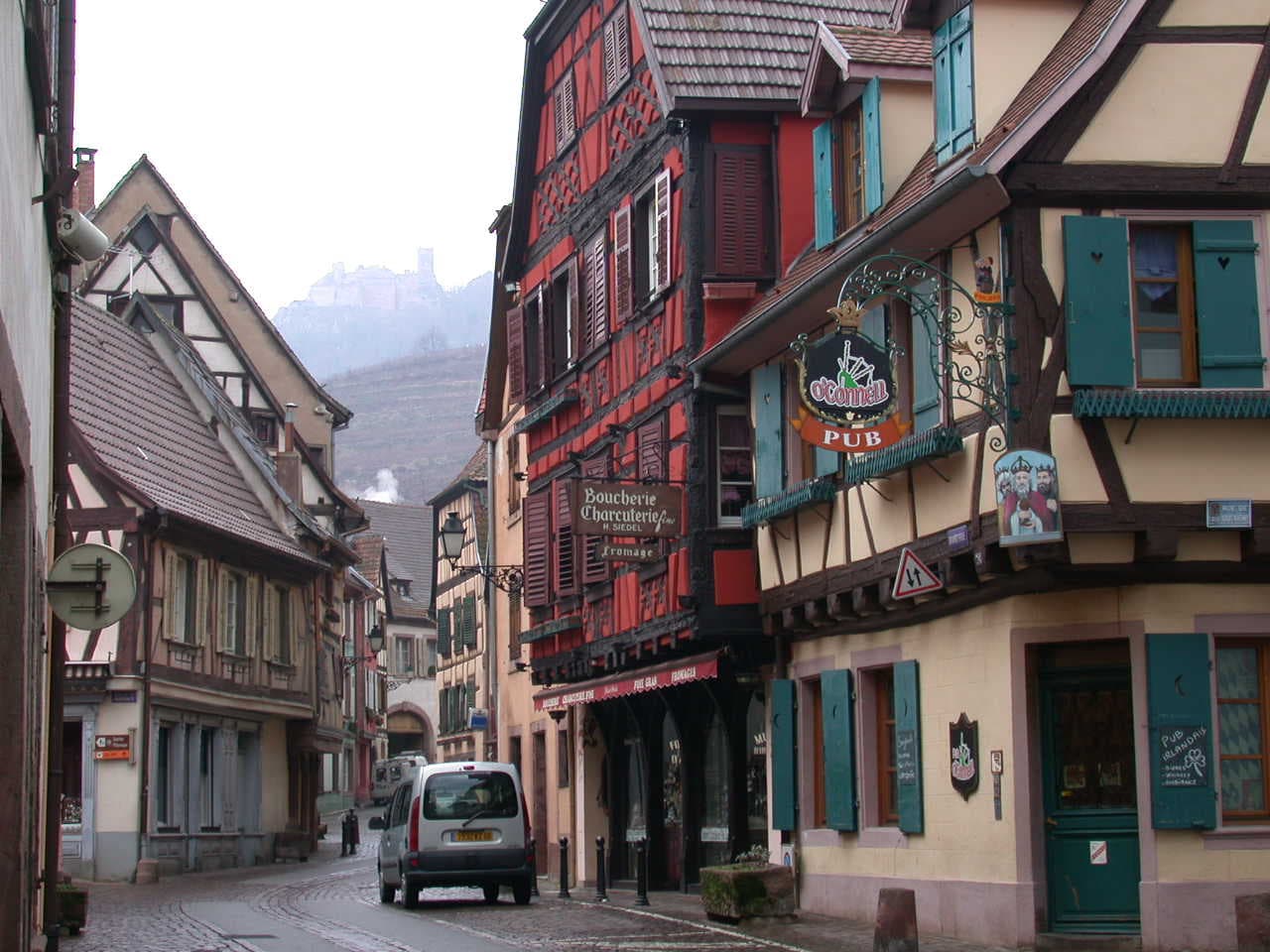
Ribeauvillé
Historic Alsace wine town with three medieval castles and renowned Grand Cru vineyards.
Wine TastingHiking
1 region
 Wine Tasting10 destinations
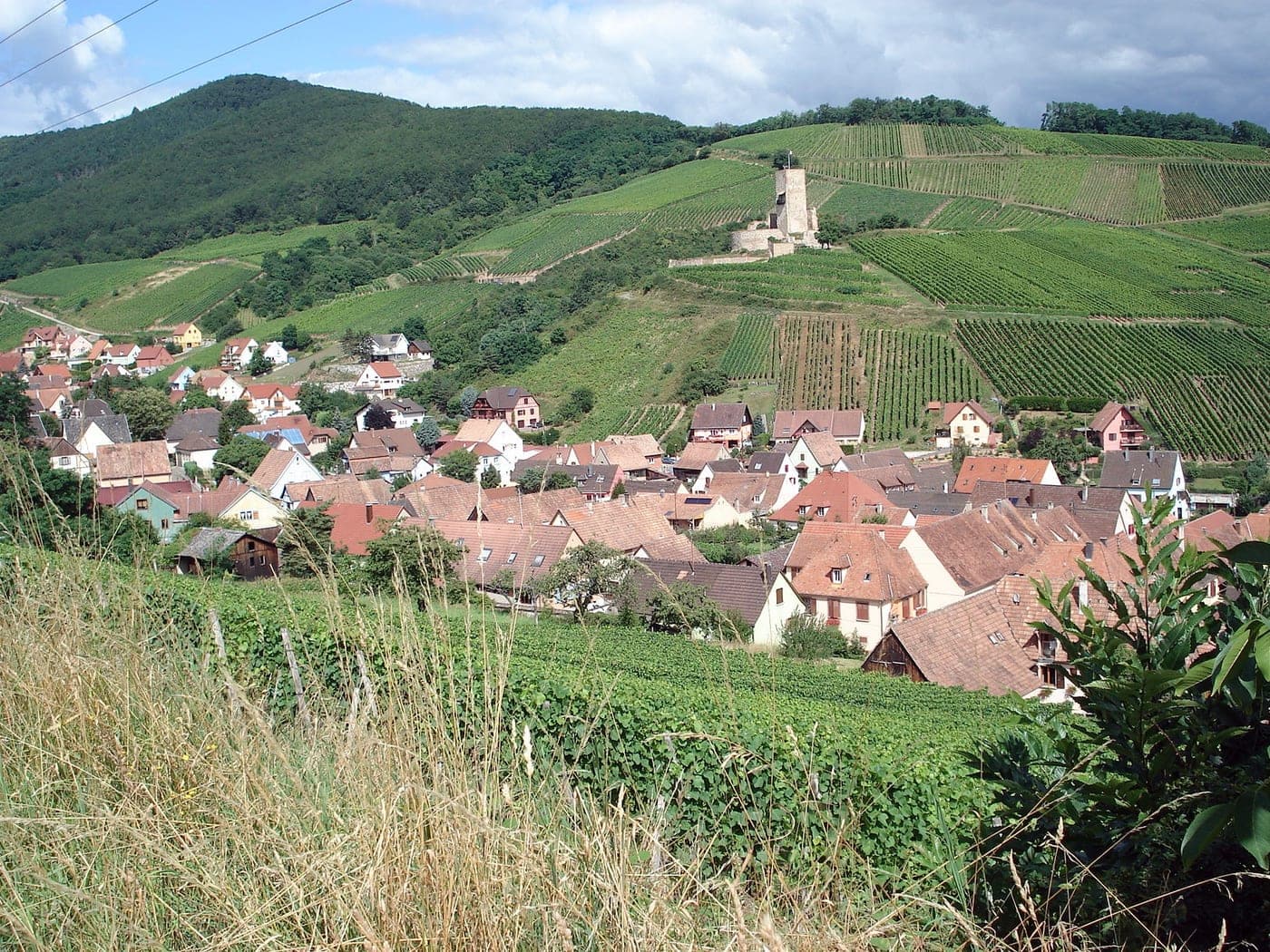
Alsace
Nestled in northeastern France, this region is known for its unique blend of French and German cultures, reflected in its architecture and cuisine. Strasbourg, the largest city, features a stunning Gothic cathedral and a picturesque old town recognized as a UNESCO World Heritage site. Known for its Alsatian wines, particularly Riesling and Gewürztraminer, wine routes in the region offer opportunities to explore local vineyards and quaint villages like Riquewihr. The Vosges Mountains provide hiking and cycling trails, while the Route des Vins showcases charming towns, half-timbered houses, and traditional eateries serving tarte flambée. Rich in history, the region has a blend of medieval castles and modern European institutions, making it a fascinating area to explore at a leisurely pace.
Wine TastingHikingCastles