Escargots de Bourgogne
Snails baked in shells with garlic-parsley butter from Burgundy
- Local name
- Escargots de Bourgogne
- Served with
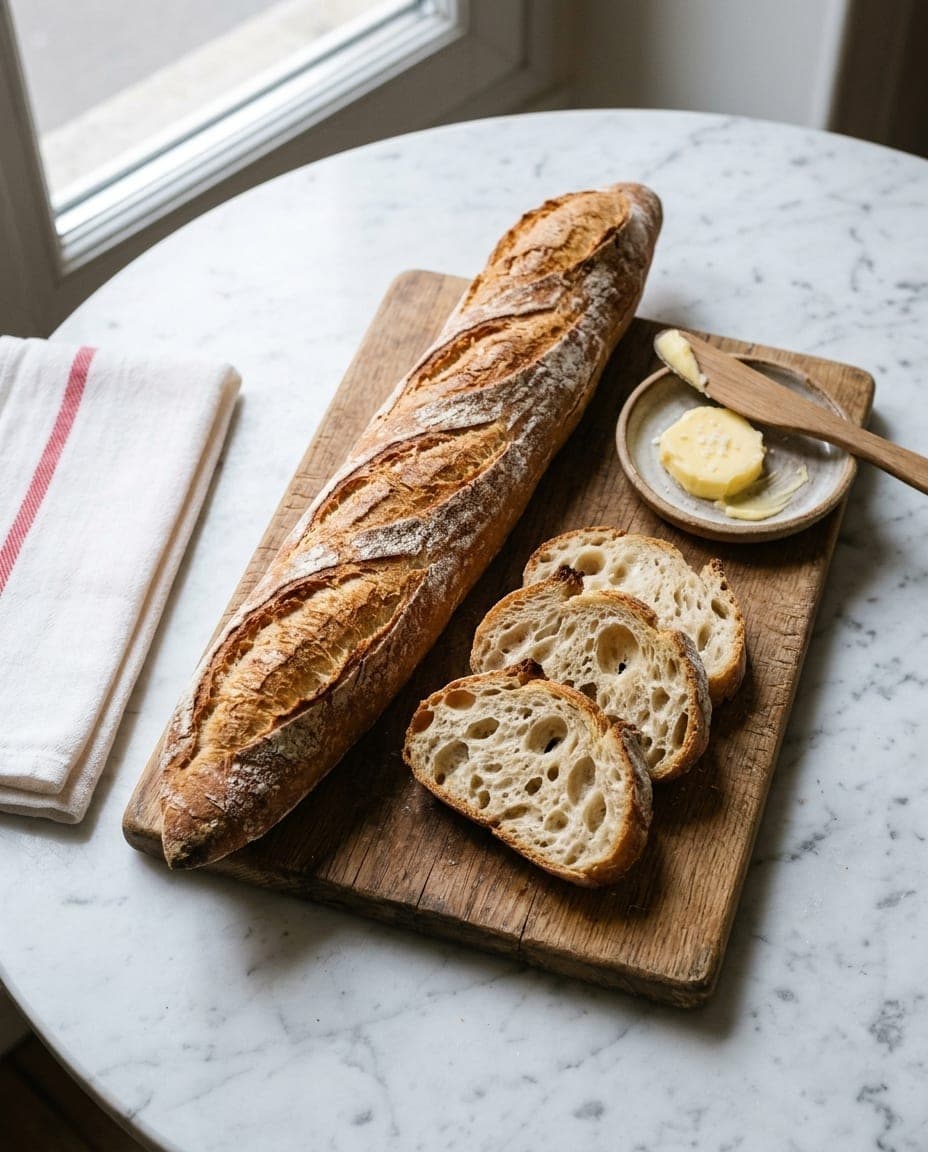
- Baguette for the butter
- Best eaten at
- A Burgundian bistro
- Pairs with
- Chablis or white Burgundy
What it is
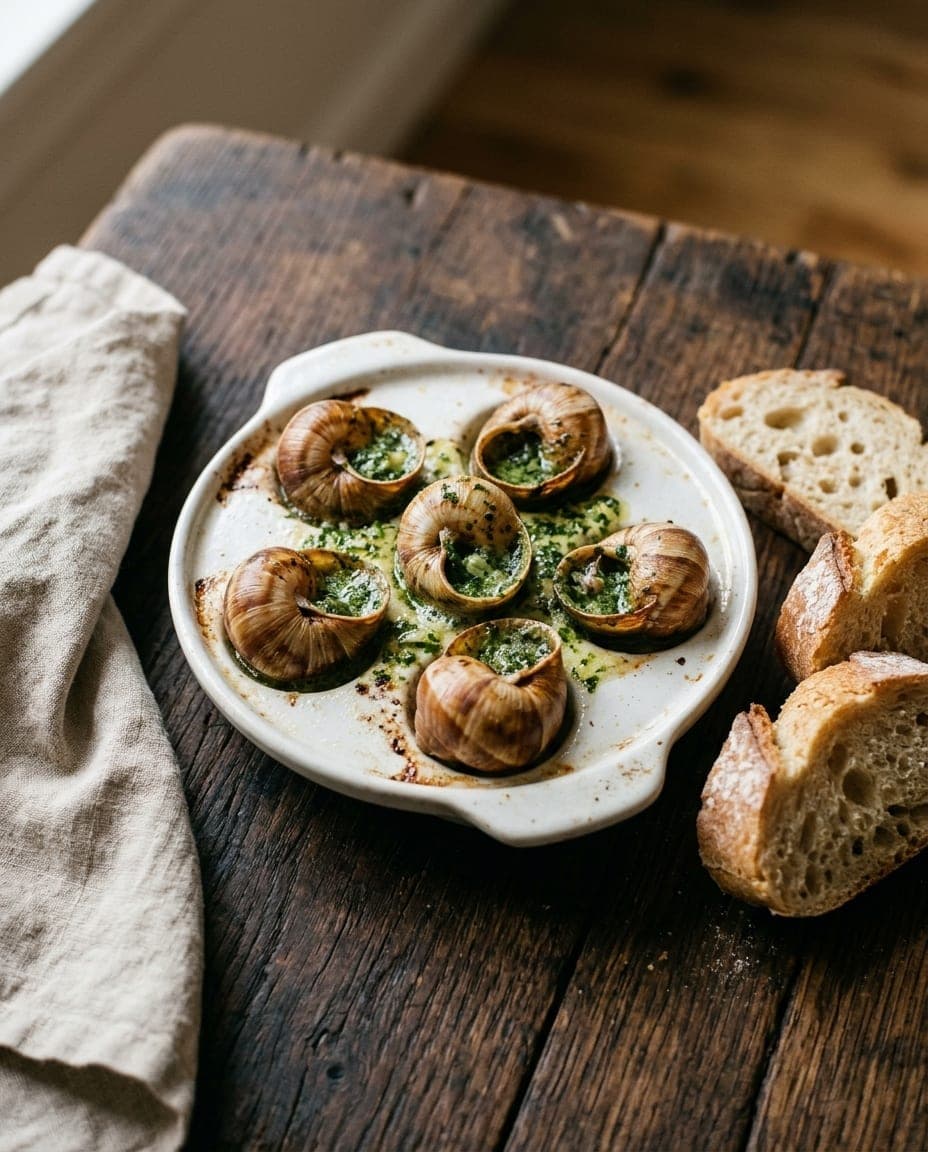
Escargots de Bourgogne, the snails of Burgundy, are one of the most recognisable dishes of France. They consist of cooked land snails baked in their shells and topped with a generous layer of butter mixed with garlic, flat-leaf parsley and shallot. Strictly speaking, escargot de Bourgogne is the name of the large Roman snail, Helix pomatia, and under French labelling rules only that species may be sold under the name; the same preparation made with the smaller petit-gris (Helix aspersa) is usually called escargots à la bourguignonne. The dish is served hot, often on a dimpled plate designed to hold the shells steady, and eaten with a small pair of tongs and a narrow two-pronged fork.
The snail meat itself is mild, slightly earthy and firm. The true flavour comes from the butter that surrounds it. This compound butter, known as beurre d'escargot or beurre à la bourguignonne, melts during baking and pools in the shell, creating a savoury sauce that coats every bite. A single portion typically contains six or twelve snails, served as a starter.
The dish is bound up with Burgundy, in the Bourgogne-Franche-Comté region of eastern France. It appears on menus across the country and is a classic of the French festive table, yet it remains closely identified with Burgundy.
The history of the snail
People in Europe have eaten land snails since prehistoric times, and the Romans raised them in enclosures for fattening. In France they remained a food of the countryside for centuries. The preparation now known as escargots de Bourgogne became fashionable in the 19th century. A popular legend credits the chef Antonin Carême with inventing it for a dinner given by Talleyrand for Tsar Alexander I, but this story is not documented and is best treated as legend.
The method of cleaning and preparing snails is labour-intensive. Traditionally, the snails are first purged by fasting, sometimes on flour or bran, then washed with salt and vinegar to remove slime, blanched and taken out of their shells. They are then simmered in a court-bouillon, a seasoned broth often containing white wine, herbs and vegetables, before being returned to cleaned shells for baking. This long process meant that the dish was traditionally reserved for special occasions.
Wild Helix pomatia populations declined sharply in the 20th century, and since 1979 their collection in France has been regulated: snails with shells under 3 cm may never be gathered, and picking is banned from April to June, with prefects able to restrict it further. Today, most snails served in France are imported, largely from Central and Eastern Europe and the Balkans, or come from snail farms.
The shell and the butter
The dish relies entirely on the interaction between the snail and the butter. Softened butter is beaten with a large quantity of minced garlic, finely chopped flat-leaf parsley and shallot, along with salt and pepper. A little of this mixture goes into each shell, the snail is pushed in, and the opening is sealed with a generous plug of butter. The plate is then placed in a hot oven until the butter bubbles.
The garlic provides a sharp, pungent kick, while the parsley adds freshness to cut through the fat of the butter, and the shallots offer a subtle sweetness. The melted butter mixes with the juices released by the snail during baking, and this liquid is considered an essential part of the dish.
How it is eaten
Escargots de Bourgogne are almost always served as a starter (entrée in French) rather than a main course. They arrive sizzling on a hot plate, often accompanied by a basket of fresh baguette. The bread is not merely an accompaniment but a functional tool: diners use it to mop up the garlic-parsley butter that remains in the shells and in the dimples of the plate.
The eating process requires specific tools. A pair of small spring-loaded tongs is used to grip the hot shell firmly, while a slender two-pronged fork is used to extract the snail. The diner holds the shell with the tongs, inserts the fork into the opening and twists to release the snail, which is eaten at once, often after a dip in the remaining butter. Some then tip the last of the butter from the shell onto bread.
It is not a dish one eats while rushing through a meal. The ritual of extracting each snail encourages a slower pace, making it a natural opening to a leisurely lunch or dinner. A glass of dry white wine from the region complements the richness of the butter and the earthiness of the snail.
Curious facts
- A protected name. Only Helix pomatia may be sold as "escargot de Bourgogne"; the smaller petit-gris and other species must be labelled differently.
- Regulated picking. Gathering wild Burgundy snails in France is restricted by size and season, and some departments add their own bans.
- The bread is essential. The baguette served alongside the snails is used to soak up the melted butter, a crucial part of the experience rather than a mere side.
- A festive starter. Snails are a classic of French Christmas and New Year menus, sold ready-stuffed in butchers' shops and supermarkets in December.
- The plate matters. The dimpled escargotière keeps the shells from rolling and holds the melted butter in place.
- A global trade. Although the dish is French, the snails often come from abroad, reflecting the decline of wild populations at home.
Where to try it
The most traditional version of escargots de Bourgogne can be found in a Burgundian bistro or a traditional restaurant in towns like Beaune, Chalon-sur-Saône or Dijon. The dish appears year-round but is particularly prominent around Christmas, when it features as part of a festive meal.
While the dish appears on menus across France and even internationally, the quality varies with the source of the snails and the care taken in preparation. The butter should be fresh and rich, with a clear balance between the garlic, parsley and shallot. The dish is best eaten slowly, letting the butter cool slightly before the first bite to avoid burning the tongue.
Where to try it
1 region
 Castles5 destinations
Bourgogne-Franche-Comté
Bourgogne-Franche-Comté is France's largest region, rich in history and culture. It's renowned for its exceptional wines, particularly those from the Burgundy area, which produce some of the world's finest Pinot Noir and Chardonnay. The region features historic cities like Dijon, known for its mustard and vibrant markets, and Besançon, famous for its citadel and watchmaking heritage. Natural landscapes include the Jura mountains and the picturesque Doubs River, perfect for hiking and cycling. The region is dotted with charming villages such as Arbois and Nans-sous-Sainte-Anne, offering a taste of local crafts and cuisine. Festivals celebrating wine and regional traditions add to its cultural depth, attracting those looking to experience France beyond the usual tourist paths.
CastlesWine TastingHiking