Entrecôte à la bordelaise
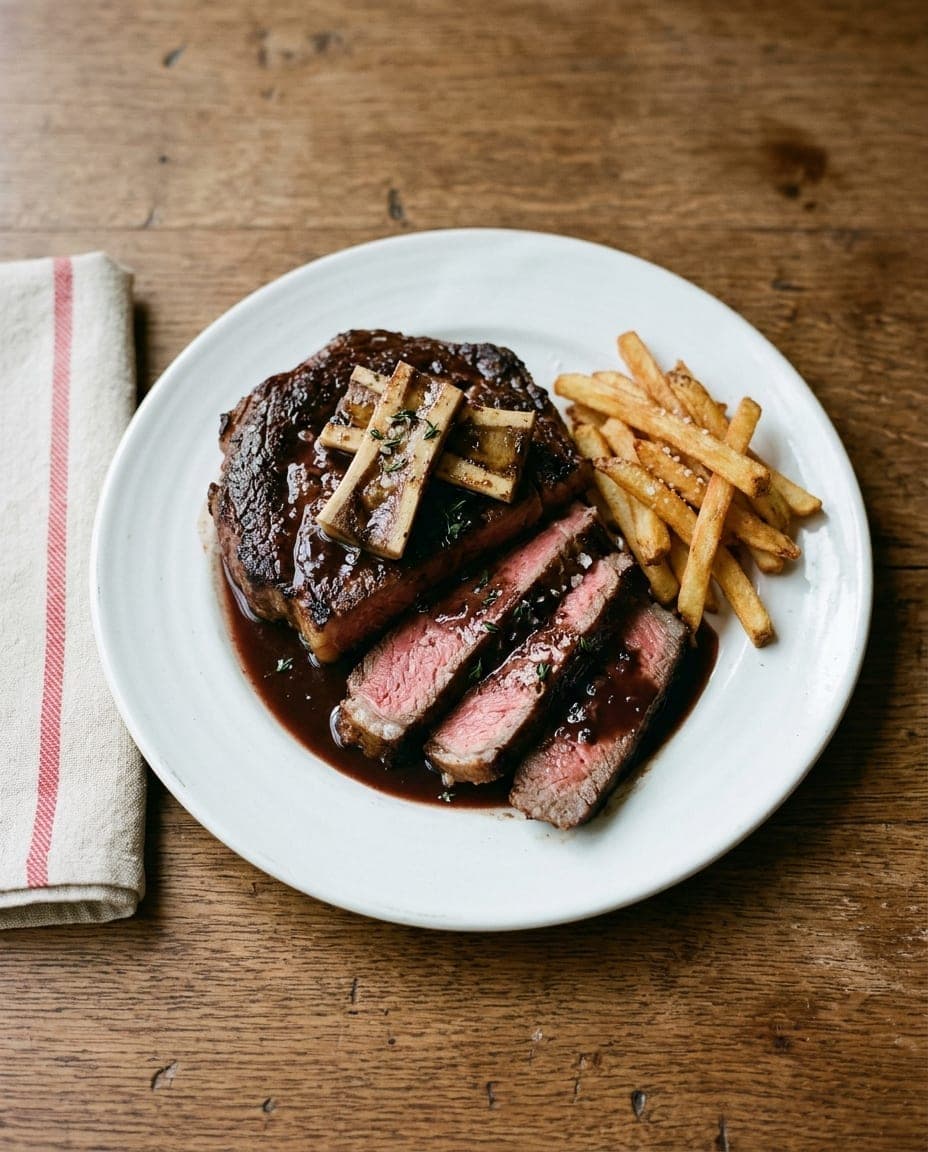
Rib steak grilled on vine cuttings with red wine and bone marrow sauce
- Local name
- Entrecôte à la bordelaise
- Served with
- Fries
- Best eaten at
- A Bordeaux bistro
- Pairs with
- Bordeaux red
What it is
Entrecôte à la bordelaise is one of the best-known meat dishes of Bordeaux and the surrounding Gironde in Nouvelle-Aquitaine. It is not merely a steak with a side of sauce; it brings together two of the region's great agricultural products: the vine and the cattle. The dish consists of a thick rib steak, the entrecôte, grilled over the embers of pruned vine canes known as sarments. It arrives topped with a dark, glossy sauce of red wine reduced with shallots, thyme and bay leaves, enriched with veal stock and butter, and traditionally finished with poached beef marrow.
The result is a dish of deep savoury intensity. The meat carries a distinct smoky aroma from the vine cuttings used for fuel. This smoke is not heavy or bitter but sharp and clean, cutting through the fat of the steak. The sauce complements it with a dark, wine-based depth that coats the meat without overwhelming it. Variations exist across France, but the version grilled over sarments and served with beef marrow is the one Bordeaux claims as its own.
The vine cutting tradition
The method of cooking the steak is what sets this dish apart. In Bordeaux, vines are pruned every winter to encourage better fruit the following year. The long, woody canes, the sarments, are bundled and used as fuel for grilling. Unlike logs or charcoal, which burn slowly and steadily, vine cuttings ignite quickly and produce a hot, short-lived fire with an aromatic quality of its own.
Grilling over vine prunings is not unique to Bordeaux; other wine regions put the by-products of the vineyard to the same use. In Bordeaux, however, the technique has become the defining feature of the dish. The intense heat of the sarments sears the surface of the meat rapidly while imparting a subtle smokiness. It is a tradition born of practicality and local abundance, turning a waste product into the essential element of a regional classic.
How the sauce is built
The sauce, sauce bordelaise, is the second pillar of the dish. Its base is a reduction of red Bordeaux wine with finely chopped shallots, thyme and bay leaves. This is cooked down until concentrated and syrupy before veal stock or demi-glace is added to deepen the flavour. The sauce is then finished with cold butter to give it a velvety texture and a glossy sheen.
The element that distinguishes the classic version from simpler interpretations is beef marrow. Traditionally, marrow from a beef bone is poached gently and sliced on top of the hot steak or stirred into the sauce just before serving. The marrow melts slowly into the dish, adding richness to the wine reduction. While many restaurants now serve the steak with a plain shallot and red wine sauce, purists consider the marrow essential to the true character of entrecôte à la bordelaise.
How it is eaten
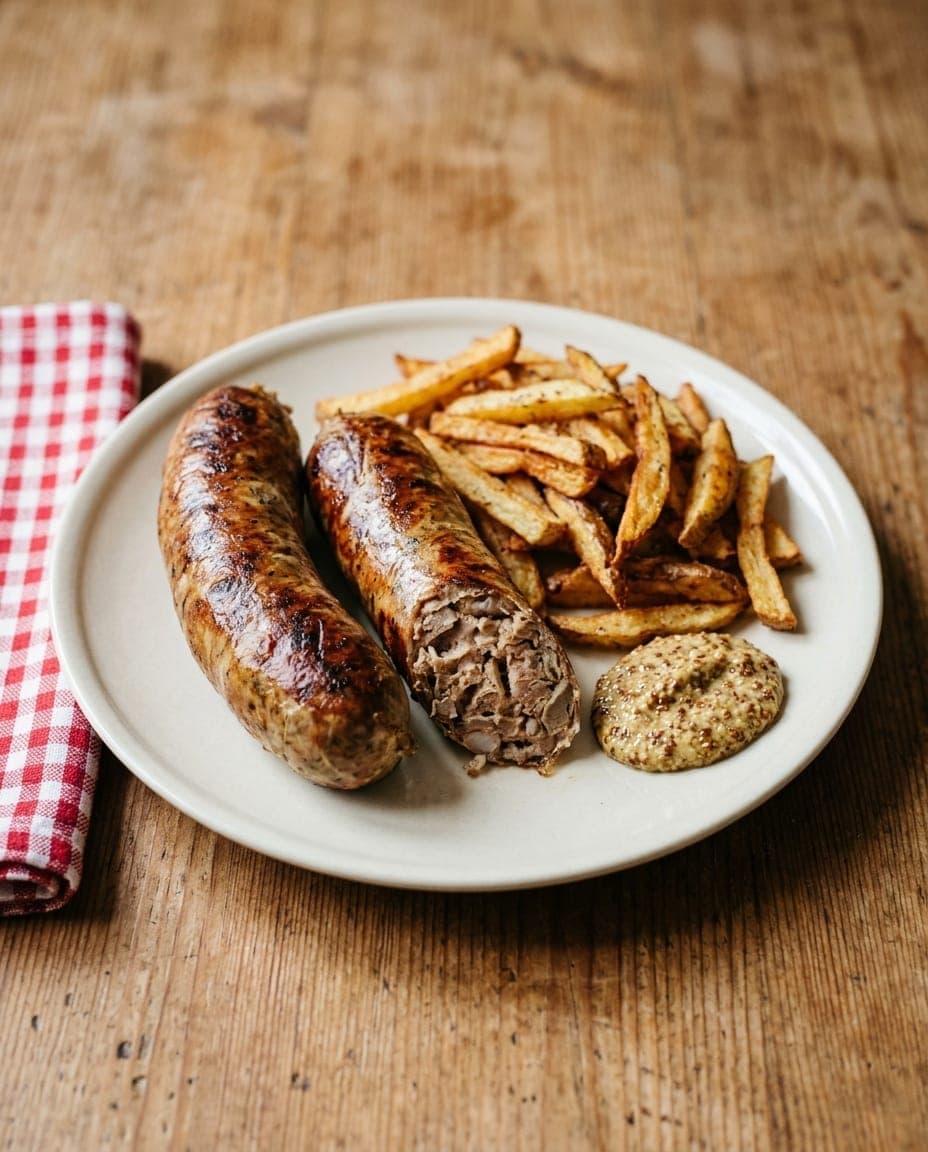
The dish is typically served as a main course at lunch or dinner in a Bordeaux bistro. The steak arrives with fried potatoes, usually chips or sometimes pommes sarladaises from the neighbouring Périgord. A glass of red wine from the region is the standard companion, chosen to match the weight and tannins of the dish.
Each mouthful ideally combines a bit of the smoky meat, the rich sauce and, if present, the soft marrow. The fried potatoes provide a contrast in texture, crisp against the tender meat. It is a substantial meal that suits a leisurely pace, ideally at a wooden table in a bustling restaurant where the clatter of cutlery and the smell of the grill linger in the air.
Curious facts
- The smoke comes from the vine. The aroma of entrecôte à la bordelaise comes specifically from burning pruned vine canes rather than ordinary wood or charcoal.
- Marrow is the key. Poached beef marrow distinguishes the classic sauce from a simple red wine reduction, adding a richness that defines the traditional recipe.
- A regional match. The dish is almost always paired with a Bordeaux red, creating a harmony between the smoky meat and the wine.
- The potato side. While often served with plain chips, it is sometimes paired with pommes sarladaises, the Périgord speciality of potatoes fried in duck or goose fat.
- A winter practice. Vine cuttings are most plentiful during and after the winter pruning season, when the canes are gathered from the vineyards.
Where to try it
The dish is best sought out in a traditional bistro in Bordeaux or its wine-growing hinterland in the Gironde. Such places often specialise in regional classics, and some still grill their meat over vine cuttings.
A meal here is about the combination of grilled meat, wine sauce and regional context rather than a complex culinary performance. It is a dish that speaks of the land itself, where vines and cattle have coexisted for centuries, producing a meal that is simple in concept and deep in flavour.
Where to try it
1 destination
 Camper Van Rentals
Bordeaux
Elegant wine capital with classical architecture and Garonne riverside.
Camper Van RentalsHikingLocal Cuisine
1 region
 Wine Tasting31 destinations
Nouvelle-Aquitaine
This expansive region is the largest in France, boasting a stunning coastline along the Atlantic Ocean. Known for its diverse landscapes, Nouvelle-Aquitaine features the Pyrenees mountains, rolling vineyards, and historic towns. Bordeaux, the region's major city, is celebrated for its world-class wines, particularly Merlot and Cabernet Sauvignon. Other notable areas include the picturesque village of Saint-Émilion and the stunning Dune du Pilat, the tallest sand dune in Europe. The region's rich history is reflected in its architecture, with medieval castles and Roman ruins scattered throughout. Local markets offer artisan cheeses and fresh seafood, highlighting the region's culinary delights. Festivals celebrating wine and local culture are common, providing deeper insights into the area's heritage.
Wine TastingHikingCamper Van RentalsLocal Cuisine