Crème de marrons d'Ardèche
A dark, sweet chestnut spread from the Ardèche region of France
- Vegetarian
- Local name
- Crème de marrons d'Ardèche
- Served with
- Crêpes, fromage blanc
- Best eaten at
- An Ardèche crêperie
What it is
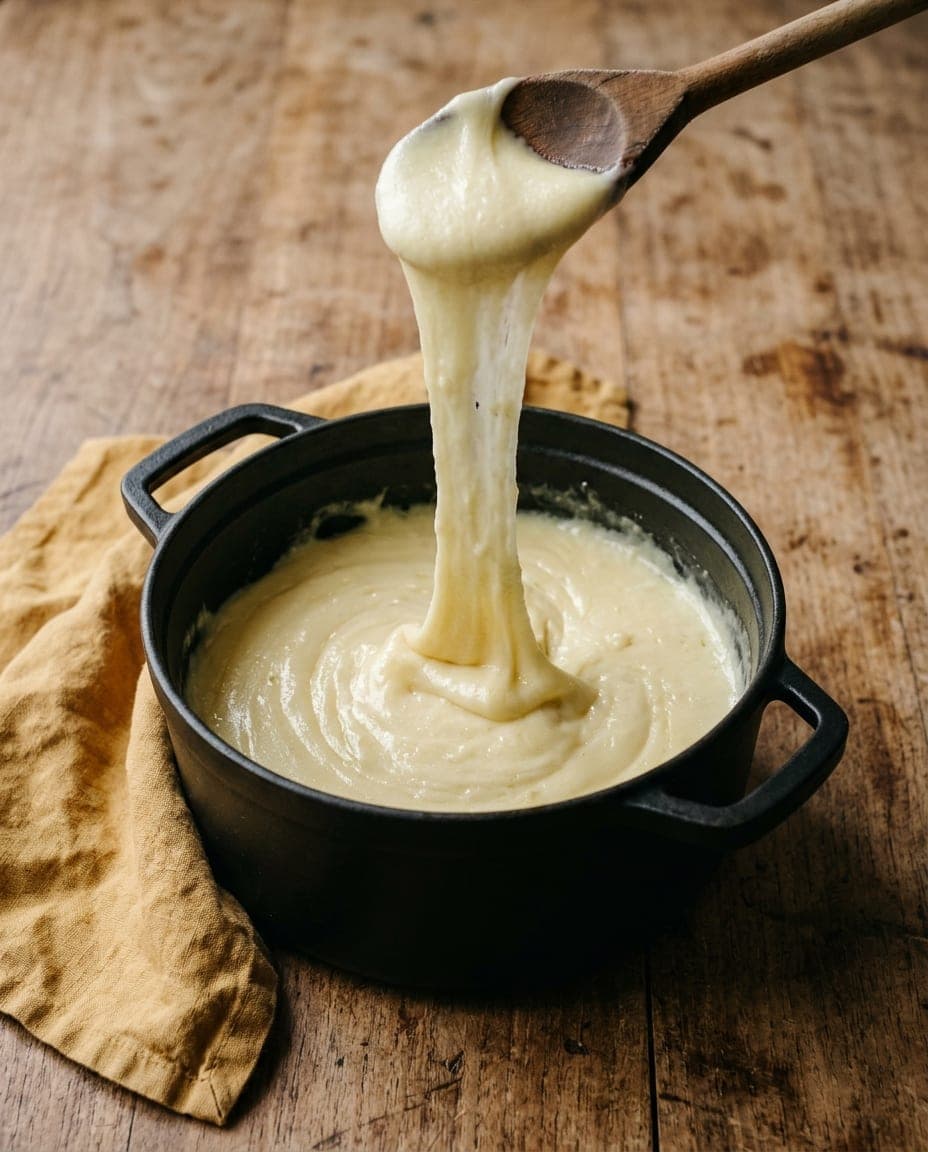
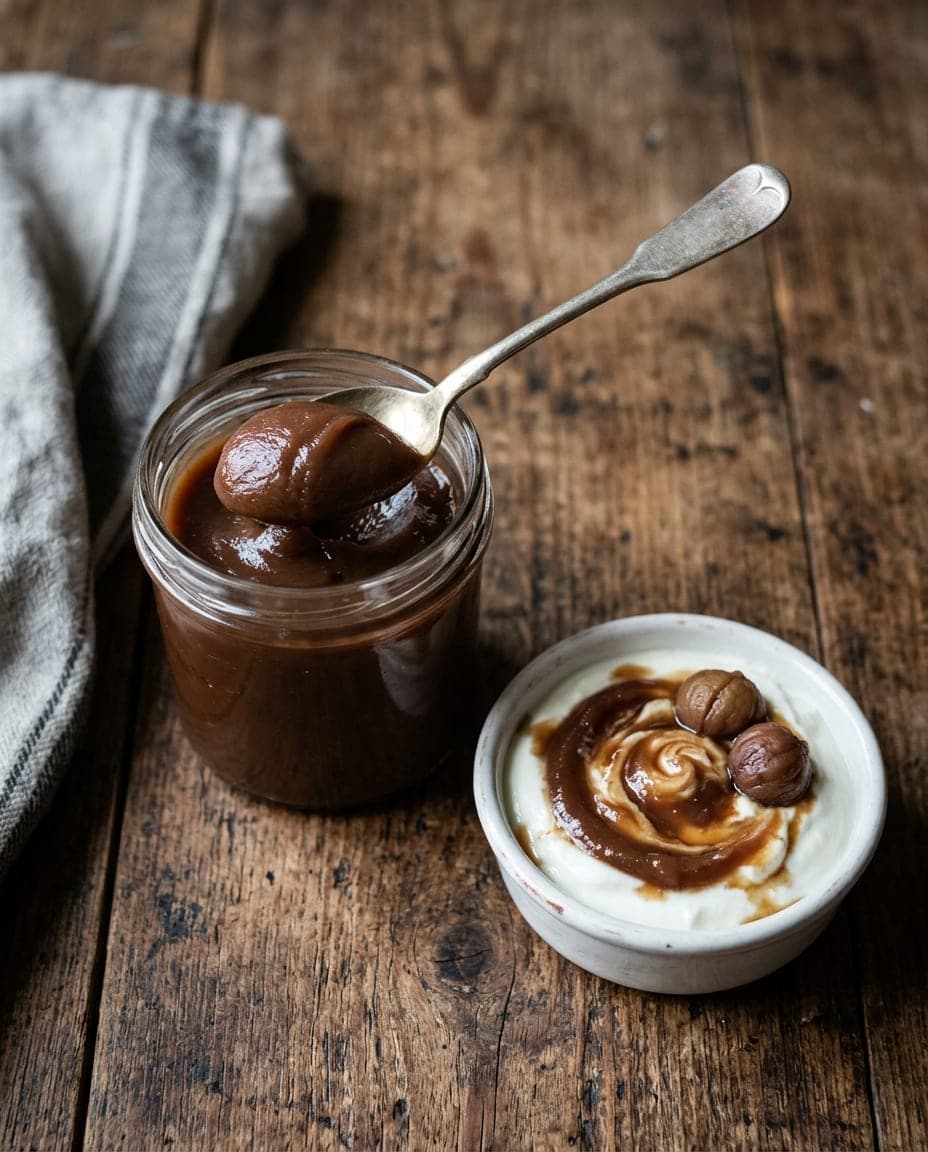
Crème de marrons d'Ardèche is a dark, glossy spread made from sweet chestnuts that have been cooked, sieved and sweetened until they form a thick paste. It comes from the Ardèche, a department in the Auvergne-Rhône-Alpes region of south-eastern France, where the chestnut tree has long been known as the arbre à pain, or bread tree. It can be eaten on its own with a spoon, though it is most often served as an accompaniment to other foods.
It is smooth and dense, with no visible chunks of nut, yet it retains the deep, earthy aroma of roasted chestnuts. The colour ranges from a warm amber to a deep brown, depending on the variety of chestnut used and the length of the cooking process. Sugar is added in generous amounts during the final stages of preparation, which preserves the spread and gives it a sticky, almost jam-like consistency that clings to the spoon.
This product is distinct from the whole candied chestnuts known as marrons glacés. While those are made from large, perfect nuts that are peeled and preserved in syrup, crème de marrons was born from thrift. It was created in 1885 in the Ardèche, in Privas, to use the chestnut pieces broken during the making of marrons glacés, turning a potential waste product into a cherished regional speciality.
The bread tree of the Ardèche
The chestnut groves of the Ardèche have shaped the history and diet of the region for centuries. In the poor mountain areas where wheat was difficult to grow, the châtaignier provided the staple food for local families. During the winter months, when other harvests had long been gathered, people relied on chestnuts for sustenance. They were dried, stored for months, and eaten boiled, in soups and porridges, or ground into flour.
Even today, the landscape is dotted with ancient groves where the trees grow tall and wide, their leaves turning a brilliant gold in autumn before dropping their spiky fruits. The department is France's leading chestnut producer, and the Châtaigne d'Ardèche, covering a group of old local varieties, has been protected as an AOC since 2006 and as an EU PDO since 2014.
This deep connection between the land and the nut gave rise to the spread, though the protected designation applies to the chestnuts themselves rather than to the cream, and commercial crème de marrons labelled as Ardèche-made does not necessarily use Ardèche chestnuts. The cream has outlived the bread tree's role as a daily staple, evolving from a way of using up broken fruit into a celebrated culinary product.
How it is made and what goes into it
The process begins with fresh chestnuts harvested in the autumn. They are peeled, boiled until soft, and then passed through a sieve or food mill to create a fine purée. The purée is then cooked again with sugar, syrup and vanilla until it reaches a thick, dark consistency.
The ingredients are simple: chestnuts, sugar, syrup and vanilla, with chestnuts making up at least 38 per cent of the product. The starch in the chestnut and the high sugar content create the desired texture. The result is a spread that is intensely sweet yet balanced by the nutty bitterness of the chestnut.
The finished spread is sold in jars, tins and tubes.
How to eat it
A classic way to enjoy crème de marrons is at a crêperie, a small restaurant specialising in thin pancakes. Here, the spread is served on sweet wheat-flour crêpes, either alone or with other fillings.
Another popular method is to stir it into fromage blanc, a fresh, mild curd cheese that is common in French breakfasts and desserts. The cream swirls into the white cheese in dark ribbons. This combination is often eaten for breakfast or as a light afternoon snack.
The spread also finds its way into other dishes. It can be used as a filling for pastries, a layer in a Mont Blanc dessert, or simply spread on slices of bread. In the Ardèche itself, jars from small local producers are sold at markets and farm shops.
Curious facts
- Protected chestnuts. The Châtaigne d'Ardèche has been an AOC since 2006 and an EU PDO since 2014; the designation covers the chestnuts, not the cream.
- Autumn harvest, year-round spread. While the chestnuts are harvested in autumn, the spread is available throughout the year thanks to the high sugar content which acts as a natural preservative.
- Ice cream and Chantilly. Beyond crêpes and fromage blanc, it is often served over vanilla ice cream with whipped cream.
Where to try it
The best place to taste crème de marrons d'Ardèche is in the heart of its production area. Privas, the departmental capital, is the historic home of the crème de marrons, while the chestnut groves themselves cover the hills and valleys of the Ardèche uplands. In the south of the department, small towns such as Bourg-Saint-Andéol, Saint-Martin-d'Ardèche and Valvignères have crêperies that serve the spread on crêpes alongside other regional treats.
It is worth asking about the origin of the chestnuts used, as some small producers highlight the specific village or area where they were grown, and the AOP label on the chestnuts themselves is the surest sign of local fruit.
For those who prefer a more rustic experience, there are small farms and producer stalls in the countryside where the spread is made on-site. Jars bought there make a natural souvenir of the region.
Where to try it
3 destinations
 Wine Tasting
Bourg-Saint-Andéol
Historic Ardèche town on the Rhône with local wine estates and Roman heritage.
Wine TastingHiking Wine Tasting
Saint-Martin-d'Ardèche
Gateway to Ardèche Gorges with wine estates and outdoor activities.
Wine Tasting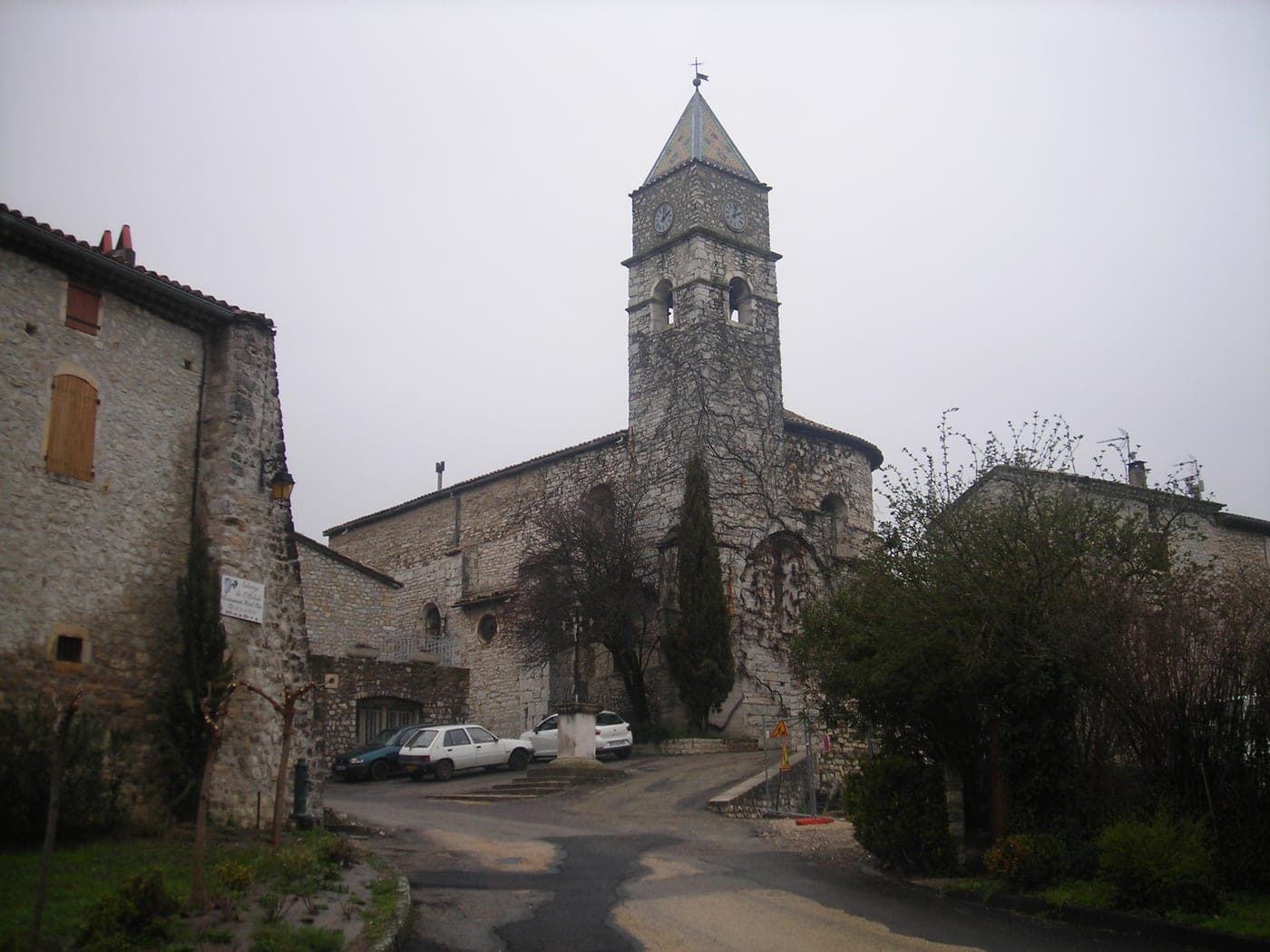 Wine Tasting
Valvignères
Ardèche wine village with natural wine producers and organic viticulture.
Wine TastingHiking