Choucroute garnie
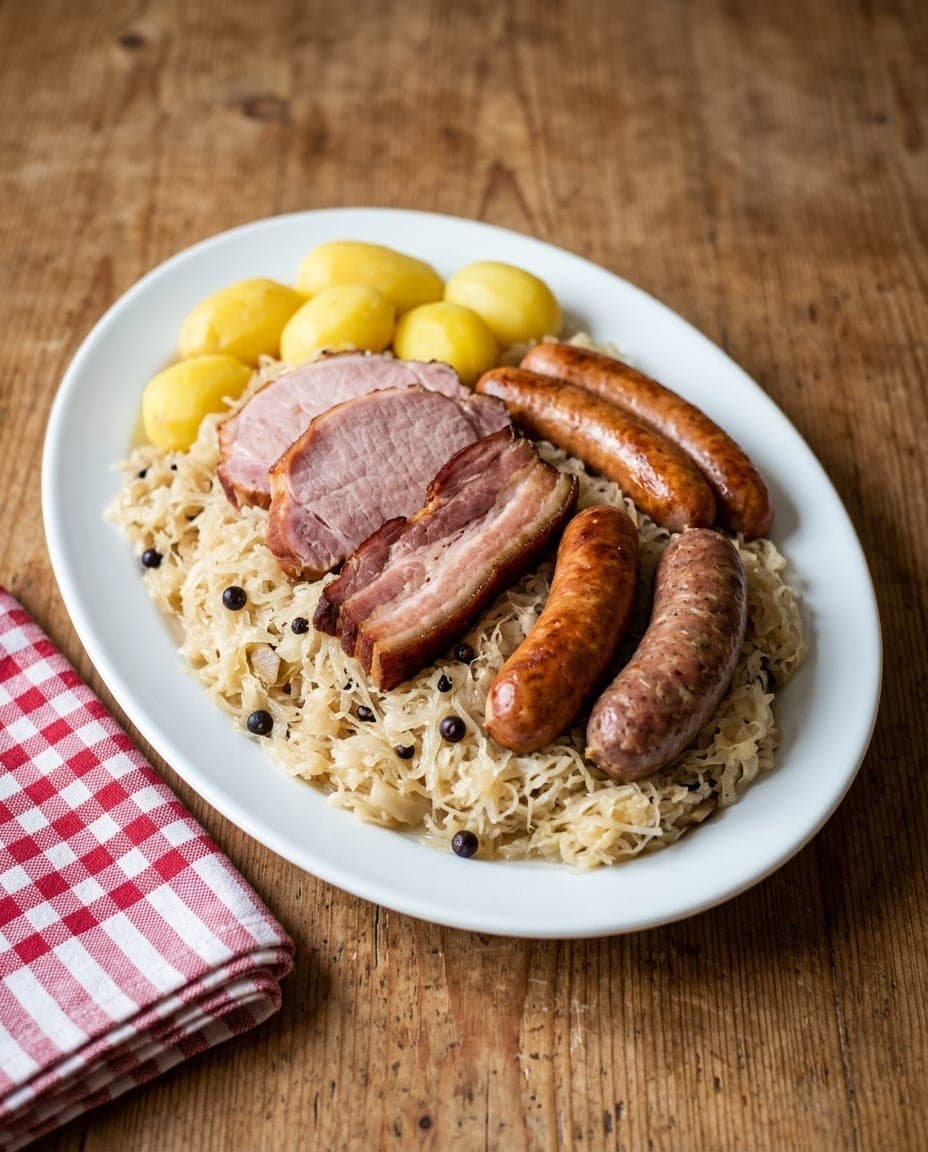
A generous plate of sauerkraut, pork and sausages from Alsace
- Local name
- Choucroute garnie
- Best eaten at
- A Strasbourg winstub
- Pairs with
- Alsace Riesling or beer
What it is
Choucroute garnie is the signature meal of Alsace, a dish born from the cold winters of the far north-east of France, where preserving vegetables was once a necessity. It is not a side dish or a simple stew but a substantial, heaped plate. The foundation is sauerkraut – choucroute, from the Alsatian sürkrüt, "sour cabbage" – cabbage that has been finely shredded, salted and left to ferment until it turns pleasantly sour. This fermented cabbage is then braised slowly, often in white wine such as Riesling or Sylvaner, along with aromatics like juniper berries, bay leaves and sometimes cloves.
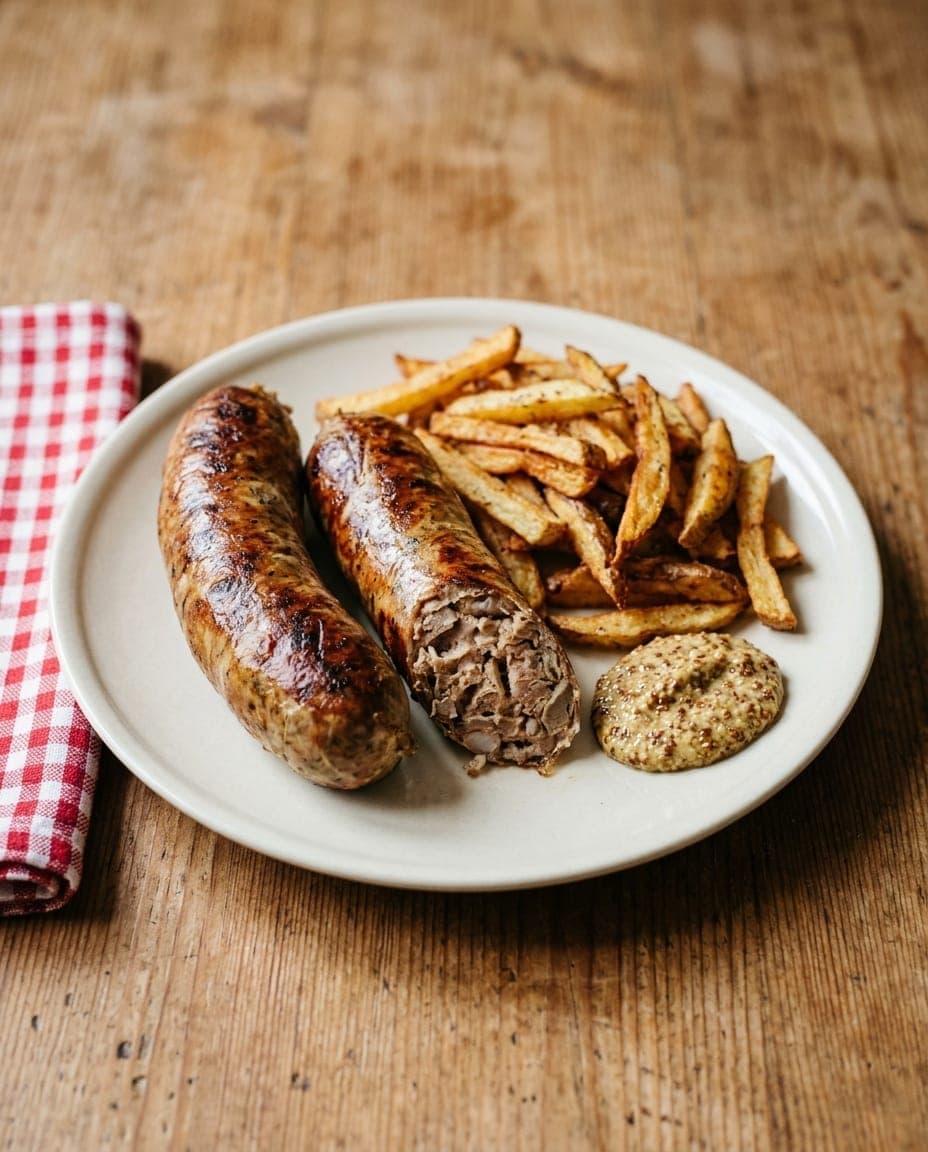
The "garnie" part of the name refers to the meat piled on top of the cabbage. It is a composition of smoked and salted pork products: bacon, slices of pork belly, pork knuckle and various sausages. Among these, the Strasbourg sausage, or knack, is a near-constant presence, often joined by Montbéliard sausage. The whole assembly is served with boiled potatoes that absorb the tangy juices of the cabbage. The sharpness of the fermented cabbage cuts the fat of the smoked pork.
Where it comes from
The origins of choucroute garnie lie in the agricultural rhythms of Alsace, a region that has historically been a crossroads between French and German cultures. Fermenting cabbage was known across central and northern Europe for centuries, but the combination of sauerkraut braised with local wine and topped with a wide array of cured meats became a hallmark of Alsatian cooking. Long, cold winters encouraged families to preserve the cabbage harvest in barrels so there was something to eat when fresh vegetables were scarce.
Over time, the humble fermented cabbage grew into a celebratory dish, closely bound up with the winstub, the traditional Alsatian wine tavern. Today it is the most recognisable symbol of Alsatian gastronomy, appearing on menus from small village inns to the grander establishments of Strasbourg and Colmar, and it is counted among the dishes of France's wider culinary heritage. Since 2018, sauerkraut made in Alsace has been protected by the EU as Choucroute d'Alsace PGI.
The work of fermentation and wine
The heart of the dish is the cabbage, which is transformed before it ever reaches the kitchen. Fresh cabbages are cut into fine strips, mixed with salt and packed tightly into vats or crocks. There they ferment for anywhere from two weeks to two months, as lactic acid bacteria convert the sugars into acid, giving the cabbage its characteristic sour taste and preserving it. Once ready, the cabbage is often rinsed to remove excess salt before cooking.
The braising is what turns the sharp vegetable into a soft, complex component of the meal. The sauerkraut is cooked slowly with dry white wine, usually an Alsace Riesling or Sylvaner, which adds acidity and fruitiness without overpowering it. Aromatic spices are added to the pot; juniper berries are particularly important, offering a piney note that pairs well with the smoky pork. Bay leaves, cloves and onions are also common. The mixture simmers until the cabbage is tender but retains a slight bite.
How it is built and served
The meats are usually cooked or heated through separately, or nestled into the cabbage towards the end, so that the smoked pork, bacon, knuckle and sausages keep their individual textures. The potatoes are boiled in salted water until tender, then placed around the cabbage to soak up the juices.
When the plate arrives, it is an impressive mound. The sauerkraut forms the bed, mounded high in the centre, with the meats arranged over the top and the potatoes around the edge. In many winstubs it comes on a large platter to share, and it is filling enough that a single serving satisfies even a hearty appetite.
How it is eaten
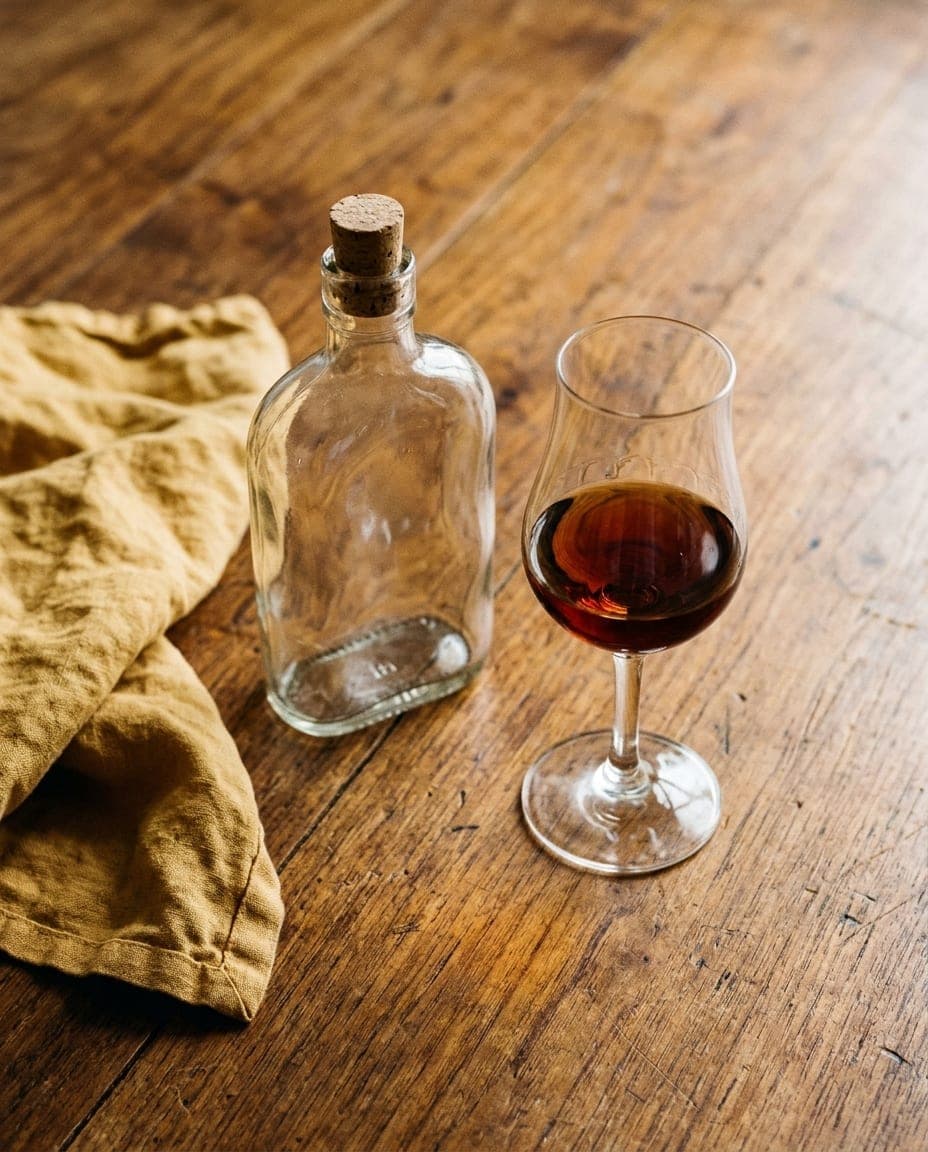
In a Strasbourg winstub or a rustic tavern in Colmar, the meal is usually accompanied by wine. A glass of Alsace Riesling or Sylvaner is the traditional companion, its crisp acidity cutting through the fat of the smoked meats and the tang of the cabbage. Beer is equally acceptable, particularly a local blonde lager, which complements the savoury notes.
Each forkful typically combines cabbage, a piece of meat and a little potato. Some diners mix everything together, while others eat each component separately. Given the heaviness of the dish, a light dessert or a small digestif usually follows.
Curious facts
- A seafood version exists. A variation known as choucroute de la mer replaces the meats with fish, sometimes with shellfish, offering a lighter alternative.
- The name is Alsatian. Choucroute comes from the Alsatian sürkrüt, meaning "sour cabbage".
- A protected product. Choucroute d'Alsace gained EU Protected Geographical Indication status in 2018.
- Juniper is key. The piney flavour of juniper berries is a signature of the traditional Alsatian seasoning.
- A winter staple. Historically, sauerkraut provided sustenance during the coldest months, when fresh produce was scarce and preserved foods were vital.
Where to try it
The best place to experience choucroute garnie is in a traditional winstub in Strasbourg or Colmar. These small taverns focus on local ingredients and regional dishes, making them the ideal setting for this hearty meal. In Strasbourg, they cluster in the historic centre; in Colmar, the narrow streets of the old town are lined with them.
A genuine winstub will offer a selection of Alsace wines alongside the dish, making it easy to pair the meal with a Riesling. Whether in the depth of winter or during the grape harvest, choucroute remains a constant presence on the menu, a sign of the enduring appeal of Alsatian cooking.
Where to try it
2 destinations
 Wine Tasting
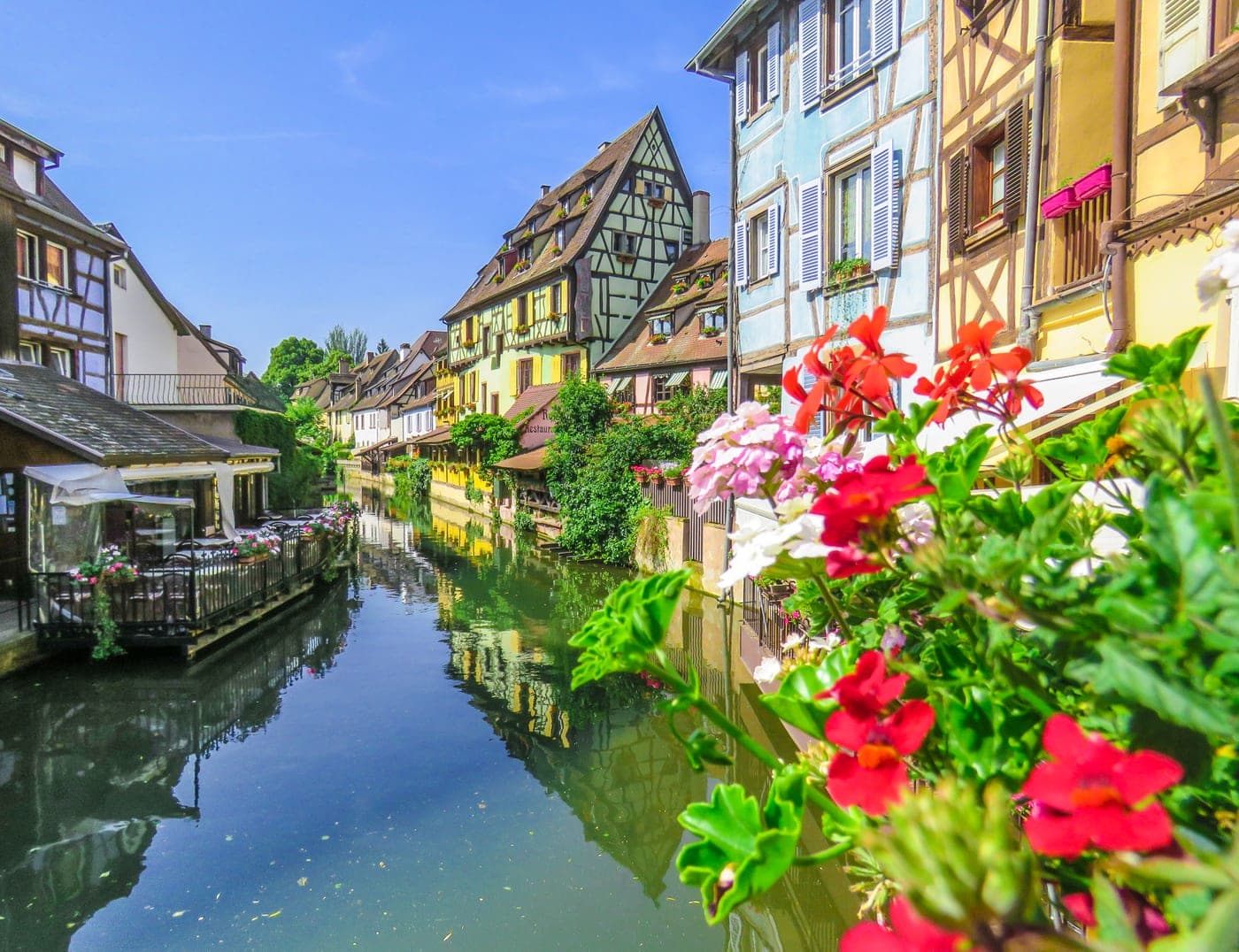
Colmar
Capital of Alsace wines with colorful half-timbered houses and wine museum.
Wine TastingHikingLocal Cuisine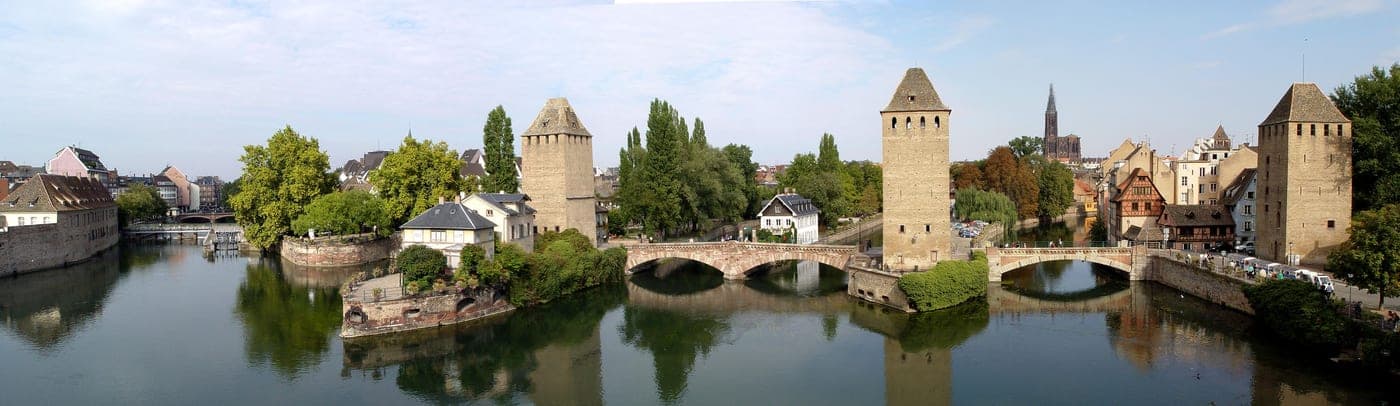 Camper Van Rentals
Strasbourg
Alsatian capital with Gothic cathedral, half-timbered houses, and European institutions.
Camper Van RentalsHikingLocal Cuisine
2 regions
 Wine Tasting10 destinations
Alsace
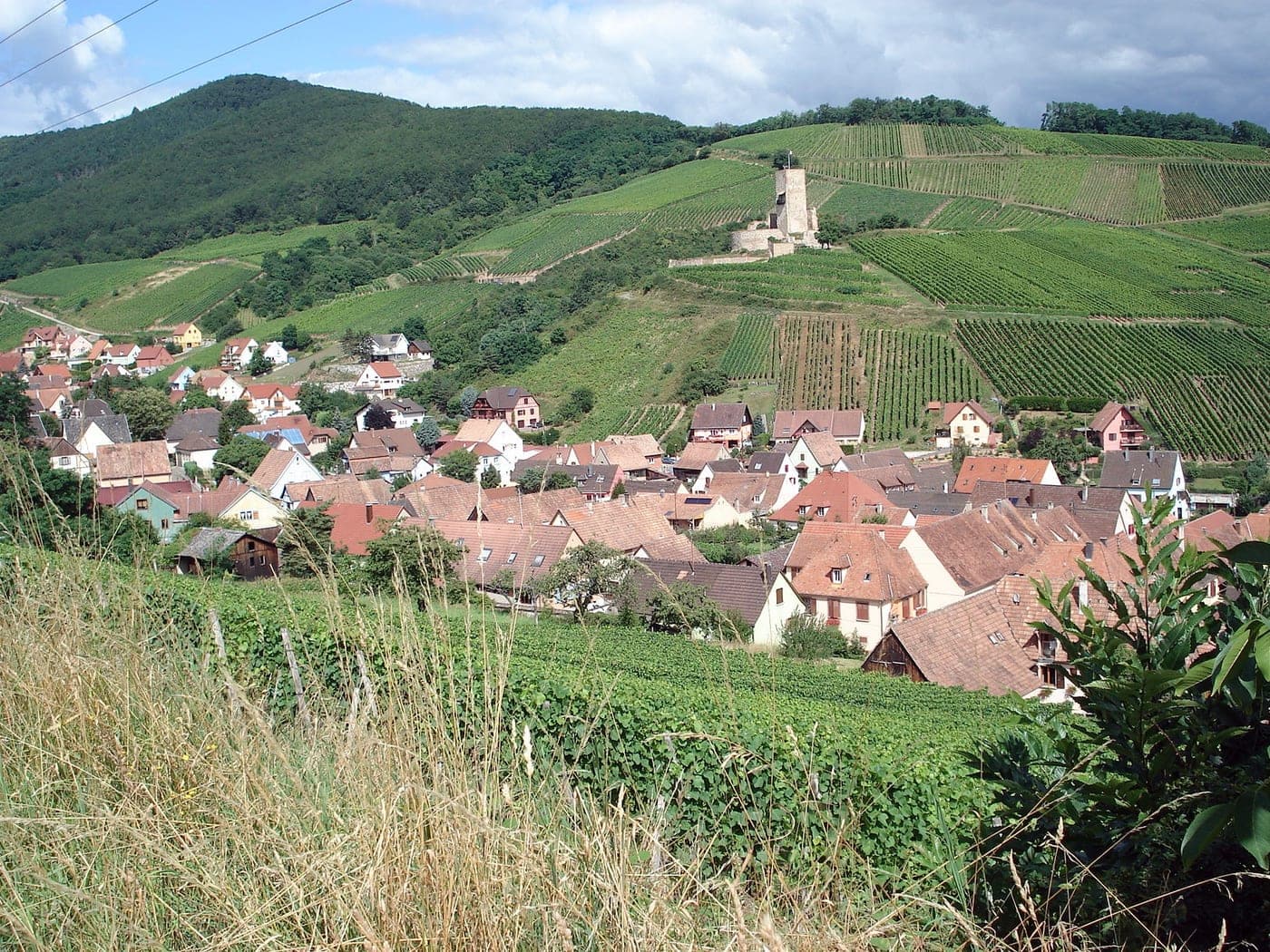
Nestled in northeastern France, this region is known for its unique blend of French and German cultures, reflected in its architecture and cuisine. Strasbourg, the largest city, features a stunning Gothic cathedral and a picturesque old town recognized as a UNESCO World Heritage site. Known for its Alsatian wines, particularly Riesling and Gewürztraminer, wine routes in the region offer opportunities to explore local vineyards and quaint villages like Riquewihr. The Vosges Mountains provide hiking and cycling trails, while the Route des Vins showcases charming towns, half-timbered houses, and traditional eateries serving tarte flambée. Rich in history, the region has a blend of medieval castles and modern European institutions, making it a fascinating area to explore at a leisurely pace.
Wine TastingHikingCastles- Wine Tasting19 destinations
Grand Est
Nestled in northeastern France, this region is the second largest, blending rich history with diverse landscapes. It boasts Strasbourg, known for its Gothic cathedral and unique blend of French and German cultures. The vineyards of Alsace produce exquisite white wines, particularly Riesling, while the Vosges Mountains offer scenic hiking trails. Visitors can explore the historic town of Colmar, famous for its well-preserved medieval architecture. The region is dotted with charming villages like Riquewihr, known for its half-timbered houses. Grand Est is also home to the Champagne region, celebrated for its sparkling wines. Festivals throughout the year highlight local traditions, making it a vibrant area to experience local culture.
Wine TastingHikingLocal CuisineCamper Van Rentals