Bouillabaisse
A Marseille fish stew defined by rockfish, saffron broth and rouille
- Local name
- Bouillabaisse
- Served with
- Rouille, croutons, potatoes
- Best eaten at
- A Marseille Vieux-Port restaurant
- Pairs with
- Cassis or Bandol white
What it is
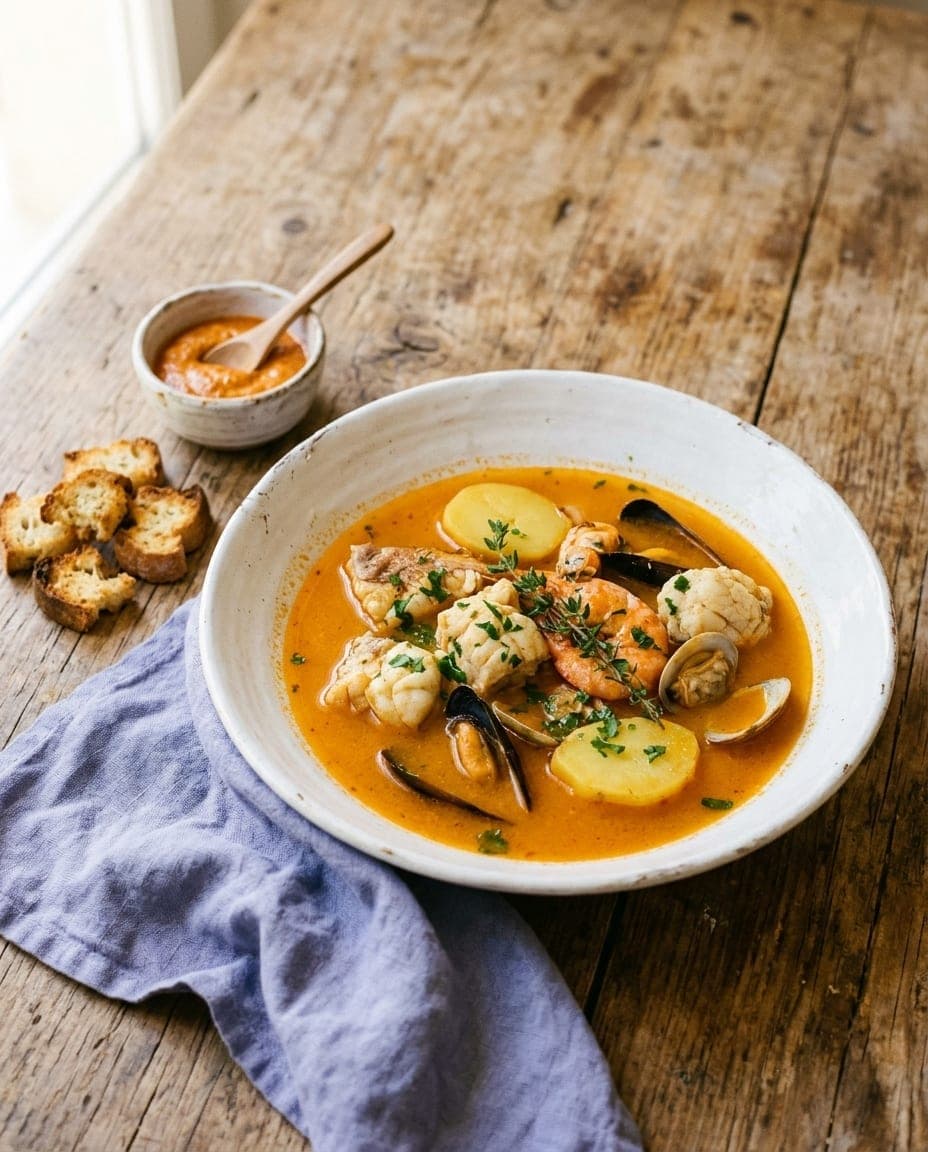
Bouillabaisse is the most famous dish of Marseille and the culinary symbol of the French Mediterranean coast. It is a thick, aromatic soup made from Mediterranean rockfish, cooked in a broth flavoured with saffron, fennel, garlic, tomato and olive oil. The name comes from the Provençal bolhabaissa, combining "to boil" and "to lower": the broth is brought to a fierce boil, then the heat is lowered so the fish cook gently. The dish itself began with local fishermen using fish that were too spiny, ugly or small to sell at the market.
What distinguishes this stew from other fish soups is its rigid structure and the specific way it is served. A traditional bouillabaisse arrives in two distinct stages. First comes the broth, a deep orange liquid scented with saffron, which is eaten with toasted bread spread with rouille, a fiery sauce of garlic, chilli and saffron bound with olive oil. The fish follows separately, carved in front of the diners and served on a platter with potatoes cooked in the broth. This separation ensures the delicate flesh does not overcook in the broth and allows the diner to savour the specific textures of each catch.
The fishermen's pot
The origins of bouillabaisse lie in the daily routine of the Marseillais fishing fleet rather than in any grand kitchen innovation. For centuries, the fishermen would cast their nets into the rocky waters of the Calanques and the Bay of Marseille. The prized fish were sold to restaurants and markets. The rest — the scorpionfish known as rascasse, the weever, the gurnard, and other bony, unattractive creatures — were deemed unsellable.
Rather than waste this catch, the fishermen simmered it for their families in a pot with water, onions, fennel, garlic, tomato and saffron. The result was a hearty meal that could feed a family after a long day at sea. Over time, this humble pot evolved into a celebrated dish, yet its soul remains rooted in the idea of using the best available fish from the local seabed.
The specific fish used are rarely found in large supermarkets. The rascasse is essential to an authentic version, providing a distinct flavour that other white fish cannot replicate. Other traditional members of the catch include conger eel, John Dory, monkfish and weever. Mussels, prawns and other shellfish appear in many modern versions but are not part of the original fishermen's dish. Purists argue that they dilute the broth.
The charter of 1980
As more establishments began using the name for any fish soup, a group of Marseille restaurateurs drew up the Charte de la Bouillabaisse Marseillaise in 1980. This document was not a law but a voluntary agreement among those who wished to uphold the traditional standards of the stew.
The charter stipulated that a bouillabaisse must contain at least four species from a set list of fish, including rascasse, monkfish, conger, weever, John Dory and gurnard, and it defined the basic ingredients and the traditional presentation.
Not every good restaurant signed the charter, but those that follow its spirit will list the types of fish on the menu and serve the broth separately before the fish arrives.
What goes into it
The ingredients are simple but demand high quality, and the catch changes with the season and the weather at sea.
- Mediterranean rockfish: The rascasse (scorpionfish) is the heart of the dish, supported by conger eel, weever, gurnard, John Dory and monkfish; small rockfish are used for the base of the broth.
- The aromatics: A base of onion, fennel, garlic, parsley and tomato creates the taste.
- Saffron: This spice provides the signature golden colour and a subtle, hay-like aroma that defines the broth.
- Olive oil: Generous amounts enrich the soup and give it a silky texture.
- Rouille: A thick sauce made from garlic, chilli or cayenne and saffron, bound with egg yolk and olive oil, which is spread on toasted bread.
- Accompaniments: Thick slices of potato are cooked in the broth and served with the fish, and bread is essential for the broth.
Orange peel is sometimes added to the broth for a hint of citrus brightness, though this is not universal.
How to eat it
Eating bouillabaisse in Marseille follows a specific rhythm that honours its history. The meal begins with the broth, which is served very hot in a deep soup plate. Toasted slices of bread, often rubbed with garlic, are spread generously with rouille and dropped into it. The diner stirs the rouille into the hot liquid, allowing the garlic and chilli to dissolve into the saffron broth before taking the first spoonful.
After the broth is finished, the fish arrives on a separate platter. It is usually carved from the bones by the server in front of the table. The potatoes are served alongside.
A glass of Cassis white wine or a Bandol blanc pairs well with the dish, their crisp acidity cutting through the richness of the olive oil and garlic. The meal is substantial enough to be a full lunch or dinner, particularly when eaten at a table overlooking the Vieux-Port.
Curious facts
- The name describes the method. Bouillabaisse comes from the Provençal for "boil" and "lower": a hard boil, then gentle simmering.
- Rouille means rust. The sauce shares its name with the French word for rust, a fair description of its saffron-and-chilli colour.
- Not binding. The 1980 charter is a voluntary agreement; restaurants are not bound by its rules but may choose to follow them for authenticity.
Where to try it
The most authentic experience of bouillabaisse is found in Marseille itself, specifically in restaurants located near the Vieux-Port. While many restaurants claim to serve the dish, those that respect the charter will be transparent about the fish species they use on the day.
Beyond the city, the tradition extends to other towns along the Provence-Alpes-Côte d'Azur coast. Smaller harbour towns have their own versions that reflect the local catch, offering a quieter alternative to the bustling port restaurants of Marseille.
Where to try it
2 destinations
 Wine Tasting
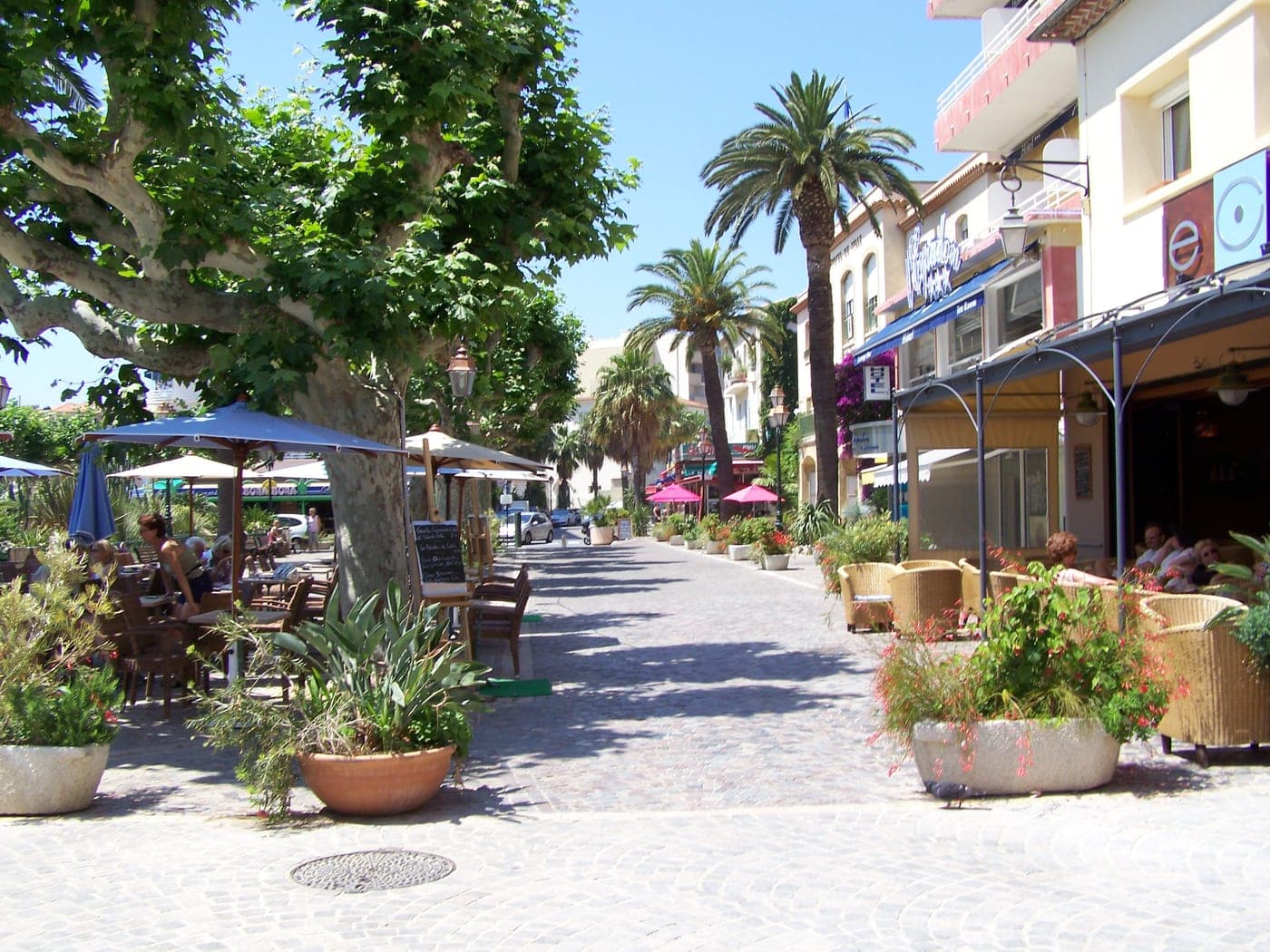
Le Lavandou
Mediterranean coastal resort near Côtes de Provence vineyards with sandy beaches.
Wine TastingHiking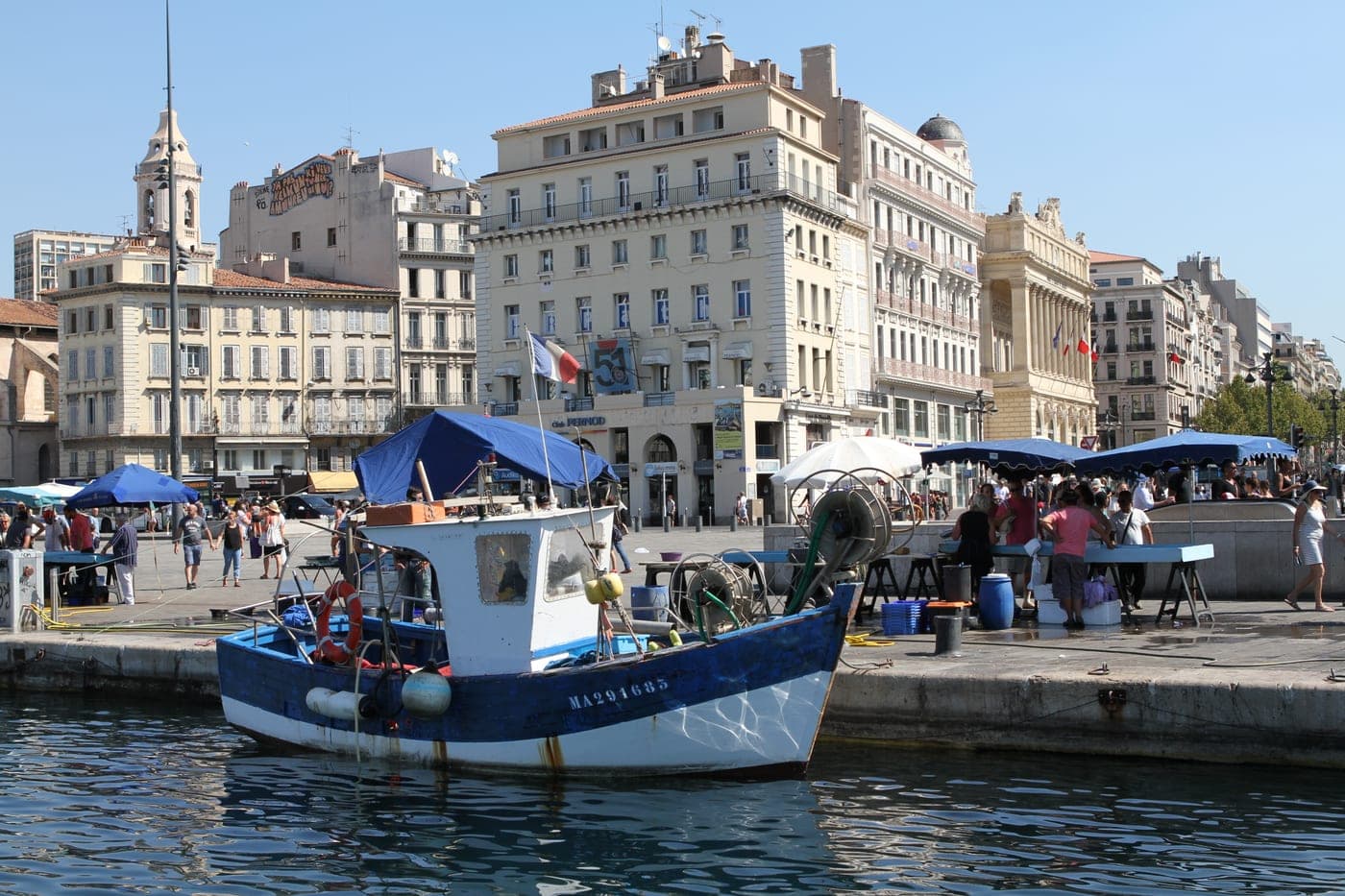 Camper Van Rentals
Marseille
Mediterranean port city with calanques, bouillabaisse, and multicultural energy.
Camper Van RentalsHiking
1 region
 Wine Tasting44 destinations
Provence-Alpes-Côte d'Azur
This picturesque region in southeastern France is known for its diverse landscapes, from the rugged Alps to the stunning Mediterranean coastline. It is the only region with direct access to the coast, featuring historic towns like Nice and the artistic haven of Saint-Paul-de-Vence. The region is famous for its lavender fields, particularly around Valensole, and its vineyards producing renowned wines such as Bandol and Côtes de Provence. Lesser-known villages like Moustiers-Sainte-Marie are rich in pottery traditions, while the Verdon Gorge offers breathtaking hiking and kayaking opportunities. Local markets showcase seasonal produce like olives, herbs, and artisan cheeses, enhancing the immersive experience of this vibrant region.
Wine TastingHikingCamper Van RentalsLocal Cuisine