Ruisleipä (rye bread)
Dense sour rye bread, eaten at every meal
- Vegetarian
- Local name
- Ruisleipä
- Served with
- Butter, cheese, cold cuts
- Pairs with
- Buttermilk (piimä)
What it is
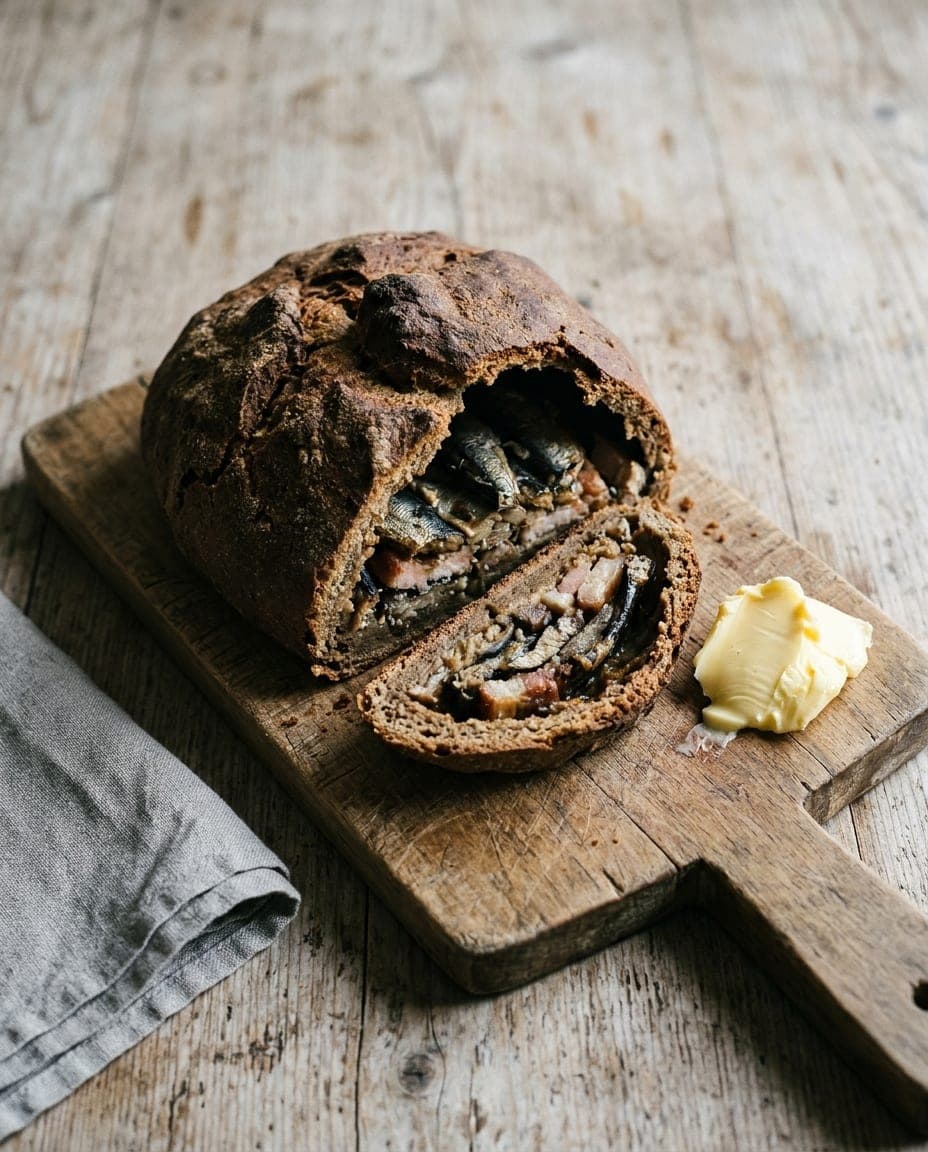
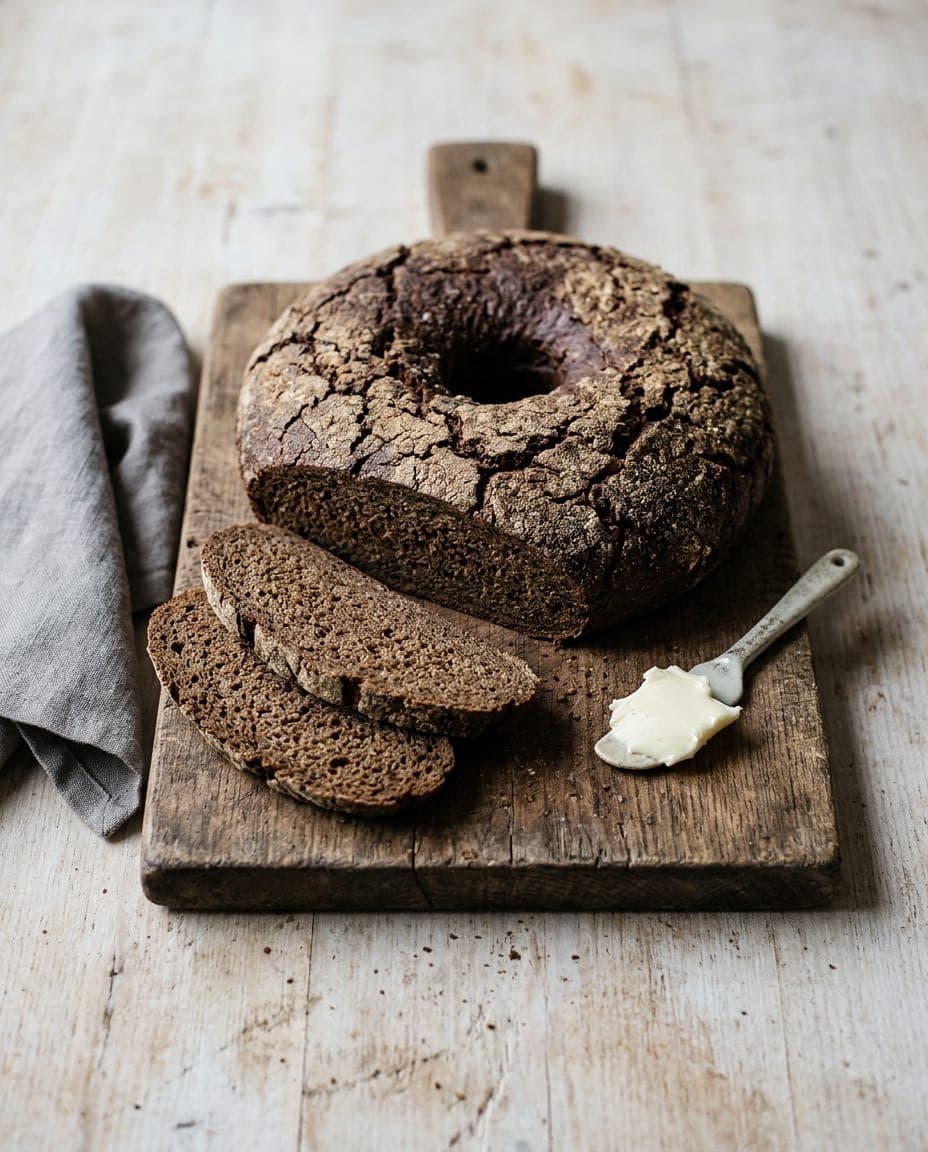
Ruisleipä, the word for "rye bread", was voted Finland's national food in 2017. It is a dark, dense loaf made from wholegrain rye flour and water, leavened by a sourdough starter that is often kept going for years. The result is a bread with a deep brown crust, a moist crumb, and a sharp, tangy sourness that defines the Finnish palate. Unlike the light, airy wheaten loaves common in many other European countries, ruisleipä feels substantial and grounding.
Finns eat this bread at every meal of the day. It appears on the breakfast table alongside cheese and cold cuts, sits next to a bowl of soup at lunch, and forms the base for evening snacks. The sourness is not an accident but a deliberate feature; a well-made ruisleipä should taste sharp enough to cut through rich dairy or salty meats. It is often said to be the food Finns miss most abroad, and many pack it into suitcases to ensure their daily bread remains familiar.
The history of the holed loaf
The most distinctive form of this bread is reikäleipä, the "hole bread". Traditional rounds were baked with a large hole in the centre, cut out before baking. This shape was practical rather than decorative. In rural western Finland, where bread was baked in large batches only a few times a year, the loaves were hung on long poles suspended just below the kitchen ceiling.
The hole allowed air to circulate around the loaf, keeping it dry and preventing mould in the damp northern climate. The bread could hang for months without spoiling. When needed, a loaf was taken down and broken or cut, and the rest continued to dry on the pole. This method of storage meant that a family always had rye bread available, regardless of the season or the weather outside.
While modern ovens have replaced the hanging poles in most homes, the shape remains a symbol of Finnish resilience and self-sufficiency. Reikäleipä is still baked, and still sold in markets and country bakeries. The crisp, flat näkkileipä is a related keeping bread, dried until it snaps.
What goes into it
There are many variations of ruisleipä across Finland, but the core ingredients remain consistent. A true version relies on nothing more than rye flour, water, salt, and a sourdough starter. The starter is the soul of the bread; some families and bakeries have kept theirs going for decades, saving a little dough from each batch for the next.
- Wholegrain rye flour: This provides the dark colour and the dense texture. Finns prefer the coarse meal that retains the bran and germ.
- Sourdough starter: A living mixture of flour and water that ferments the dough, creating the characteristic sour flavour.
- Water: The liquid for mixing the dough and feeding the starter.
- Salt: Added in small amounts to balance the fermentation and enhance the taste.
The dough is left to sour slowly before a long bake, which gives the loaf a thick crust and a faint sweetness beneath the sourness. Some regions add a little malt or sugar to the dough, but the purists argue that the rye itself should provide all the necessary complexity.
How it is eaten
Ruisleipä is rarely eaten plain. It is almost always paired with something salty, creamy, or cold. The classic combination involves a thick slice of butter spread over the warm bread, topped with a slice of mild Finnish cheese or a hard farmhouse cheese. Cold cuts, like cured ham or salami, are also common toppings.
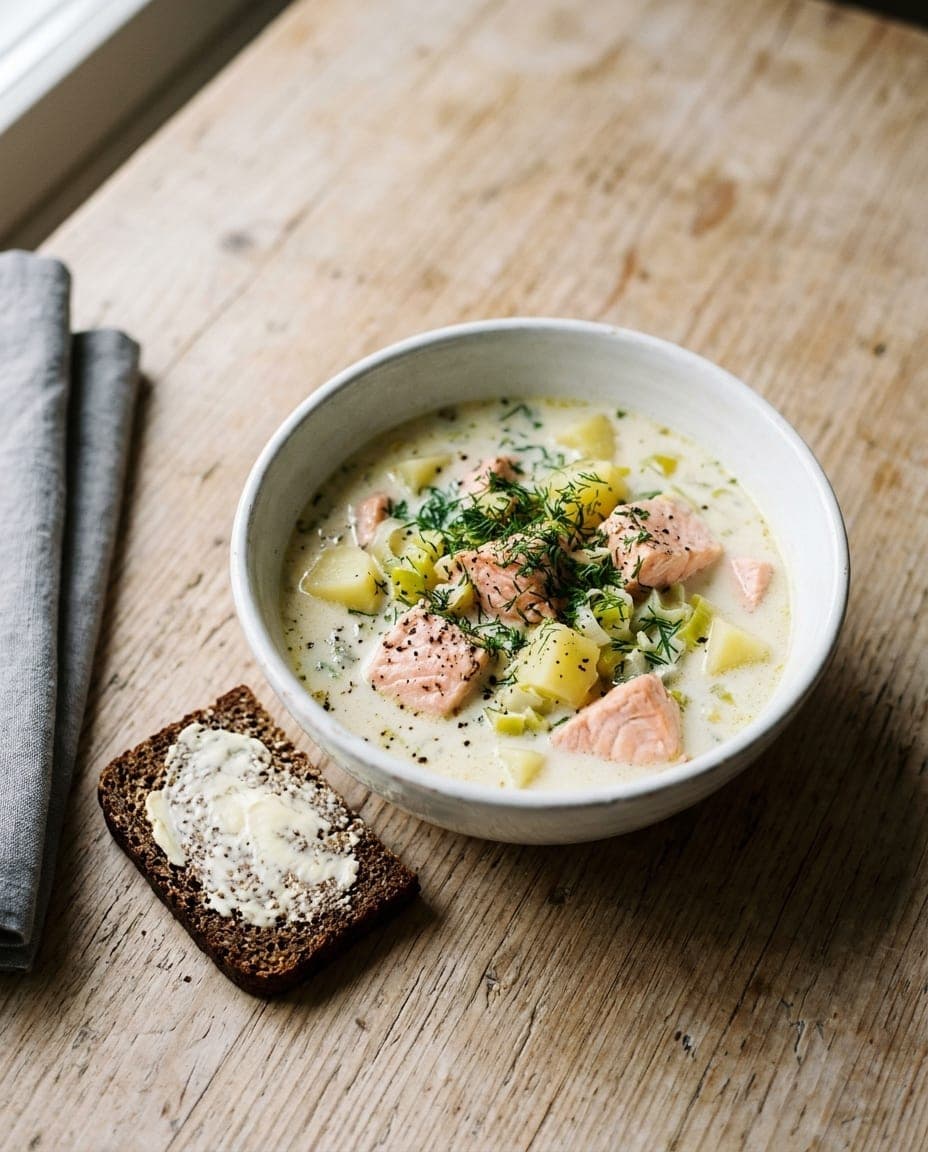
The bread is particularly well suited to soups. A bowl of pea soup or potato leek soup often comes with a side of ruisleipä, where the diner dips a piece into the broth before eating it. The bread soaks up the liquid without disintegrating, offering a satisfying contrast in texture.
For breakfast, Finns might layer the bread with cheese and cold cuts, or simply eat it with a dollop of viili, a cultured dairy product that is slightly sour and thick. A traditional drink to accompany these meals is buttermilk, known as piimä, or a glass of cold milk. Its cool, tangy flavour complements the sharpness of the rye bread. The pairing is a fixture of everyday Finnish meals.
Curious facts
- The hole was for storage. The central hole in reikäleipä allowed loaves to be hung on poles in the kitchen, keeping them dry and fresh for months without refrigeration.
- A sour measure of quality. Sourness is a matter of taste and region, but a clean, sharp tang is usually the sign of a healthy starter.
- Bread on the table daily. Finns eat more than 13 kilos of rye a year, most of it as bread, and it can turn up at every meal from morning until night.
- The national favourite abroad. When Finns travel or live overseas, ruisleipä is often said to be the first food they miss.
- A national day. Rye bread has its own day in Finland, ruisleivän päivä, on 28 February.
Where to try it
Ruisleipä can be found in bakeries across the whole of Finland, from the bustling streets of Helsinki to the quiet villages of Satakunta. The bakeries worth finding still use a wood-fired oven, or keep a visible sourdough starter. In the countryside the loaves are sometimes hung on display, or sold by the farmer who grew the rye.
For the most authentic experience, visit a local café or a small kahvila where the bread is served fresh from the oven with butter and cheese. Many restaurants also offer ruisleipä alongside their soups or main courses. In western regions such as Satakunta, the dried reikäleipä is the older tradition, while the east favoured thick, soft loaves. The bread is available year-round, making it a constant companion to the Finnish table regardless of the season.
Where to try it
1 region
 Boat Rentals2 destinations
Satakunta
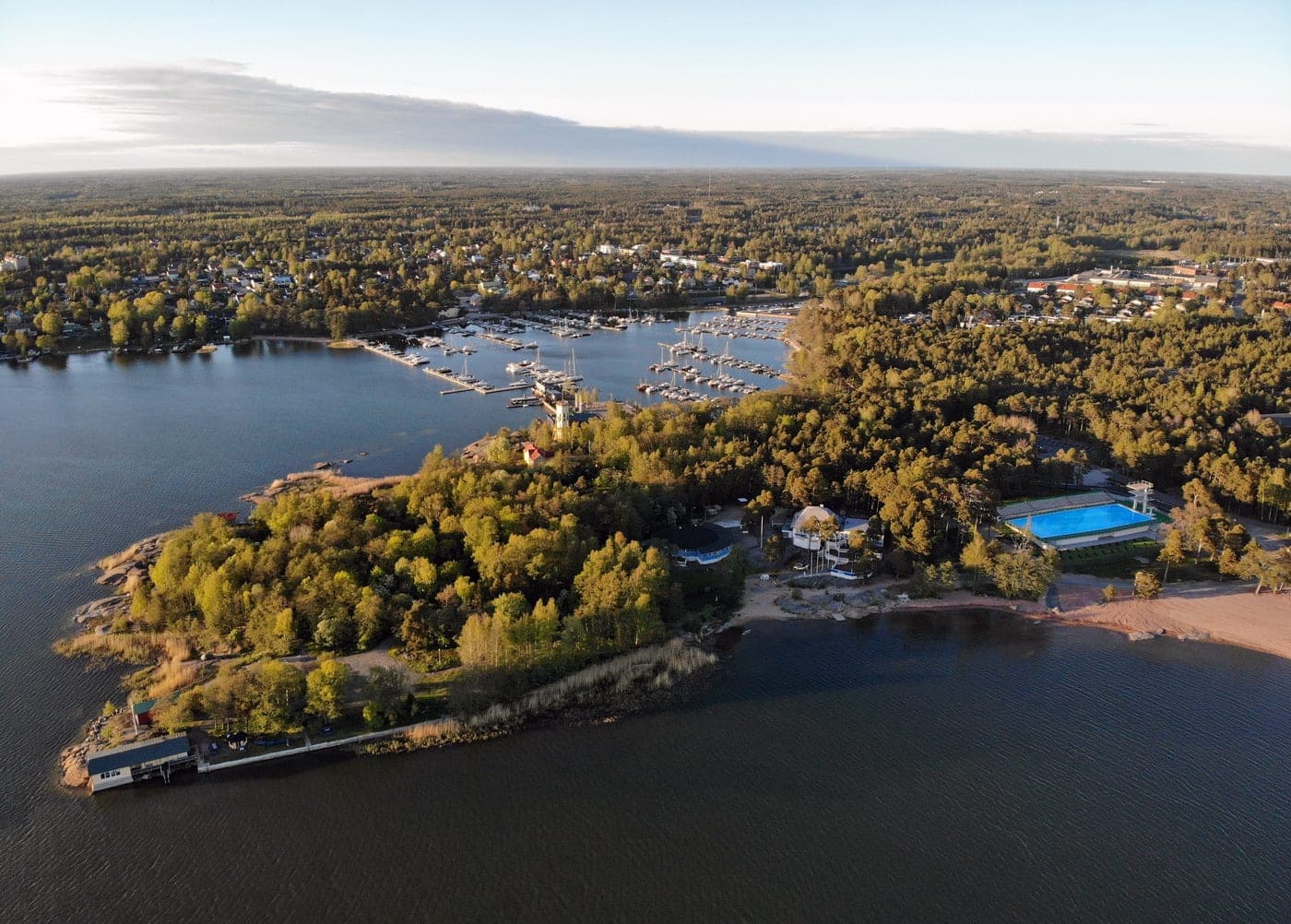
Satakunta stretches along Finland's Bothnian Sea coast, where the land breaks into hundreds of islands and skerries before turning inland to lakes and river valleys. The Kokemäenjoki river reaches the sea here after crossing much of western Finland, spreading into wetlands and one of the country's widest river deltas at Preiviikinlahti — a bay important enough for migrating birds that birdwatchers plan whole mornings around it. Slow travel in Satakunta means letting that geography set the pace: a few days by the water, a sauna at the end of each one, and time to notice how the light shifts through a summer evening. The regional capital, Pori, sits at the river mouth. Every July it fills with the Pori Jazz Festival, but the rest of the year it keeps a quieter rhythm. A short walk from the centre, the dunes of Yyteri run for several kilometres along the coast, backed by pine forest — one of Finland's longest sand beaches, used as much for early walks as for swimming. South along the coast is Rauma, whose old town, Vanha Rauma, is a UNESCO World Heritage Site. Its wooden houses, painted in soft, faded colours and packed along narrow lanes, have survived largely intact since the 18th century. Rauma is also one of the last places in Finland where bobbin lace-making is still practised as a living craft rather than displayed behind glass; in summer, lace-makers work in doorways and courtyards, happy to explain a pattern to anyone who stops. Inland, the region turns toward lakes and forest. Säkylän Pyhäjärvi draws the same cottage families back to the same stretch of shore year after year. Around it and further into Satakunta's forests, the pace drops again: cottage life is built from small routines — chopping wood, heating the sauna, rowing out before dinner — rather than sightseeing. The archipelago off Rauma runs on an older logic, shaped by fishing rather than tourism. Wooden boathouses and old net-drying racks still stand along parts of the shore, evidence of a working relationship with the sea that predates any resort. Coastal food reflects that history: whitefish and Baltic herring, smoked or pan-fried, appear on menus across the region, usually with a dense, dark rye bread on the side. Sauna here is a household habit, not a spectacle. Lakeside and coastal saunas sit beside almost every cottage, and the ritual — heat, a plunge into cold water, a pause outside to cool down — is the same whether the water is a lake, a river, or the Bothnian Sea itself. Three to five days give a real feel for Satakunta without rushing it: a day or two around Pori and Yyteri, a day in Rauma's old town, and the rest spent by a lake or on the coast, with a sauna booked for the evening. Longer stays suit anyone who wants to add the inland forests or spend more unhurried time among the islands. Below are Satakunta's towns, each with its own share of coastline, forest or lakeshore to take slowly.
Boat RentalsHiking