Kalakukko
A rye loaf baked hard around fish and pork
- Local name
- Kalakukko
- Served with
- Butter, cold milk or buttermilk
- Best eaten at
- Kuopio market square
- Pairs with
- Buttermilk
What it is
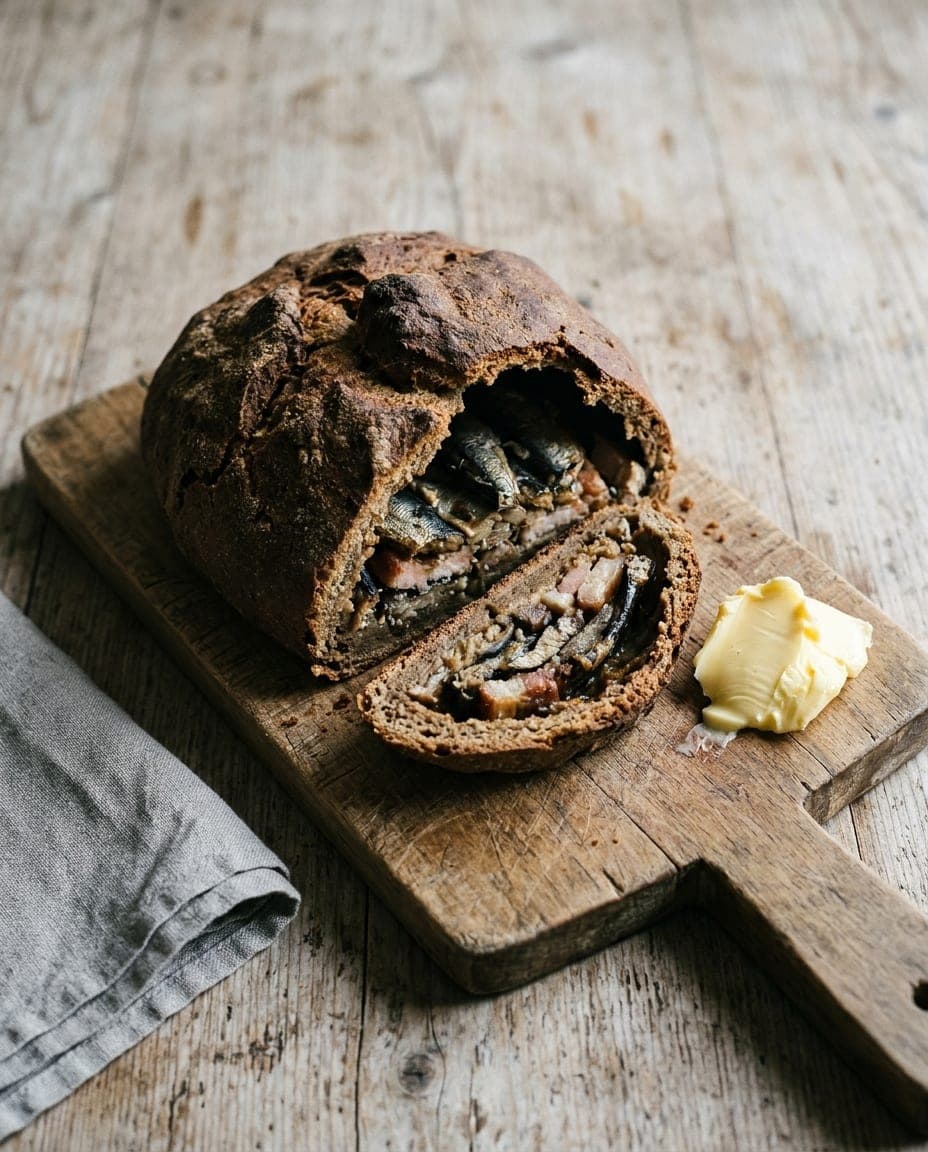
Kalakukko is a distinctive loaf of rye bread from Savonia (Savo) in eastern Finland, above all Kuopio. The name reads literally as "fish rooster", but linguists now trace kukko here to a Low German loanword related to German kochen (to cook) and English "cake", not to the bird. It is not a light snack or a simple side dish. This is a substantial, dense loaf of dark rye dough baked around whole small fish and chunks of fatty pork, then sealed and cooked slowly for several hours until the crust hardens into a protective case and the bones inside soften to the point of being edible.
The texture is unique in European baking. The outer crust becomes hard as stone once cooled, requiring a sharp knife to cut through it at the table. When opened, the top layer lifts away like a lid, revealing the steaming filling beneath: the fish, now tender and creamy, mixed with rendered pork fat that has soaked into the rye crumb. It is heavy, salty, and deeply savoury, designed originally as a durable food for labourers rather than a delicacy for casual dining.
Where it comes from
The dish belongs firmly to Savonia, with Kuopio in Pohjois-Savo serving as its cultural capital. While similar breads exist in other parts of the Nordic world, the specific combination of vendace (muikku) and pork within a sealed rye shell is a hallmark of this area; further north, perch often replaces the vendace. Since 2002 kalakukko has been registered in the EU as a Traditional Speciality Guaranteed (TSG), which protects the traditional recipe and method rather than tying the name to a place.
Historically, the loaf was a practical solution for people working away from home in the forests or on the lakes. The heavy rye dough provided a seal that kept the fish and fat fresh without refrigeration. A single loaf could be carried in a bag, eaten cold or warmed over a fire, and would last for days without spoiling. It fed hunters, fishermen, and loggers who needed high-calorie food that did not require cooking equipment to consume.
The story of the sealed crust
The method of baking is as distinctive as the ingredients. A layer of rye dough is placed in a pan or pot, followed by a filling of whole small fish and fatty pork pieces, then covered with another layer of dough and sealed completely around the edges. The loaf is baked for hours at a low temperature, allowing the heat to penetrate slowly. This long cooking time breaks down the collagen in the fish bones and softens the fat, while the outer crust hardens into a durable shell.
The result is a loaf that keeps for a long time as long as it stays unopened. In the past, this durability made it a valued provision for work away from home or long journeys across eastern Finland. The fish inside does not taste like raw fish; the slow baking transforms the texture into something akin to a rich pâté, while the pork fat adds a smooth, unctuous quality that balances the saltiness of the rye and the fish.
What goes into it
Every baker in Savo does it slightly differently, and the same handful of things go in:
- Rye dough, often with some wheat flour added to make it more pliable, forming the thick outer shell that hardens during baking.
- Muikku (vendace), small white fish caught from the deep lakes of Savo, which provide the main filling; perch is the common alternative.
- Fatty pork, usually in the form of bacon or salted pork belly, which melts into the fish and dough during the long bake.
- Salt, added to the dough and the filling to preserve the ingredients and enhance the flavour.
The ratio of fish to meat can vary, but the goal is always a moist interior that contrasts with the hard exterior. The bread is not vegetarian, as the pork is essential to the traditional preparation.
How it is eaten
Kalakukko is rarely served as an appetiser. It is a substantial meal in itself, often eaten for lunch or dinner. In Kuopio, particularly at the market square, the loaf is sold warm, fresh from the oven. The heat makes the crust slightly softer and the filling even more aromatic. To eat it, one cuts off the top layer of the hard crust like a lid and lifts it away, revealing the steaming fish and pork inside.
It is traditional to serve Kalakukko with a generous amount of butter, which melts into the warm filling and adds body. A glass of cold milk or buttermilk is the customary drink to accompany it; the cool, tangy liquid cuts through the heaviness of the bread and fat. Some people also enjoy it with pickled vegetables, though the classic pairing remains butter and a dairy drink.
Curious facts
- The bones are edible. The slow baking process softens the tiny bones of the vendace until they can be chewed without notice, turning the fish into a creamy paste within the bread.
- A portable meal. The sealed rye crust was designed to keep food fresh for a long time, making it ideal for long journeys across the Finnish wilderness.
- Protected status. Kalakukko has been an EU Traditional Speciality Guaranteed since 2002, protecting the traditional recipe rather than a place of origin.
- Market square tradition. In Kuopio, the market square is famous for selling warm loaves.
- A regional speciality. While rye bread is common across Finland, this specific fish-and-pork loaf is above all a Savonian speciality, though bakeries elsewhere in Finland make it too.
Where to try it
The best place to experience Kalakukko is Kuopio, the heart of Savo. At the Kuopio market square, vendors sell warm loaves throughout the day, offering a chance to taste the bread fresh from the oven. The warm crust and soft filling provide a stark contrast to the cold Finnish climate outside. Outside the city, traditional bakeries in the surrounding countryside of Savo also produce excellent versions, often selling them to locals who carry them as provisions for work or travel.
When visiting, look for the smell of baking rye and fish wafting from the ovens. It is not a light meal, and the butter and the milk are part of it. The loaf is heavy, salty, and unlike anything else in Europe, offering a taste of the practical ingenuity that defined life in the forests of eastern Finland.
Where to try it
1 region
 Boat Rentals1 destination
Etelä-Savo
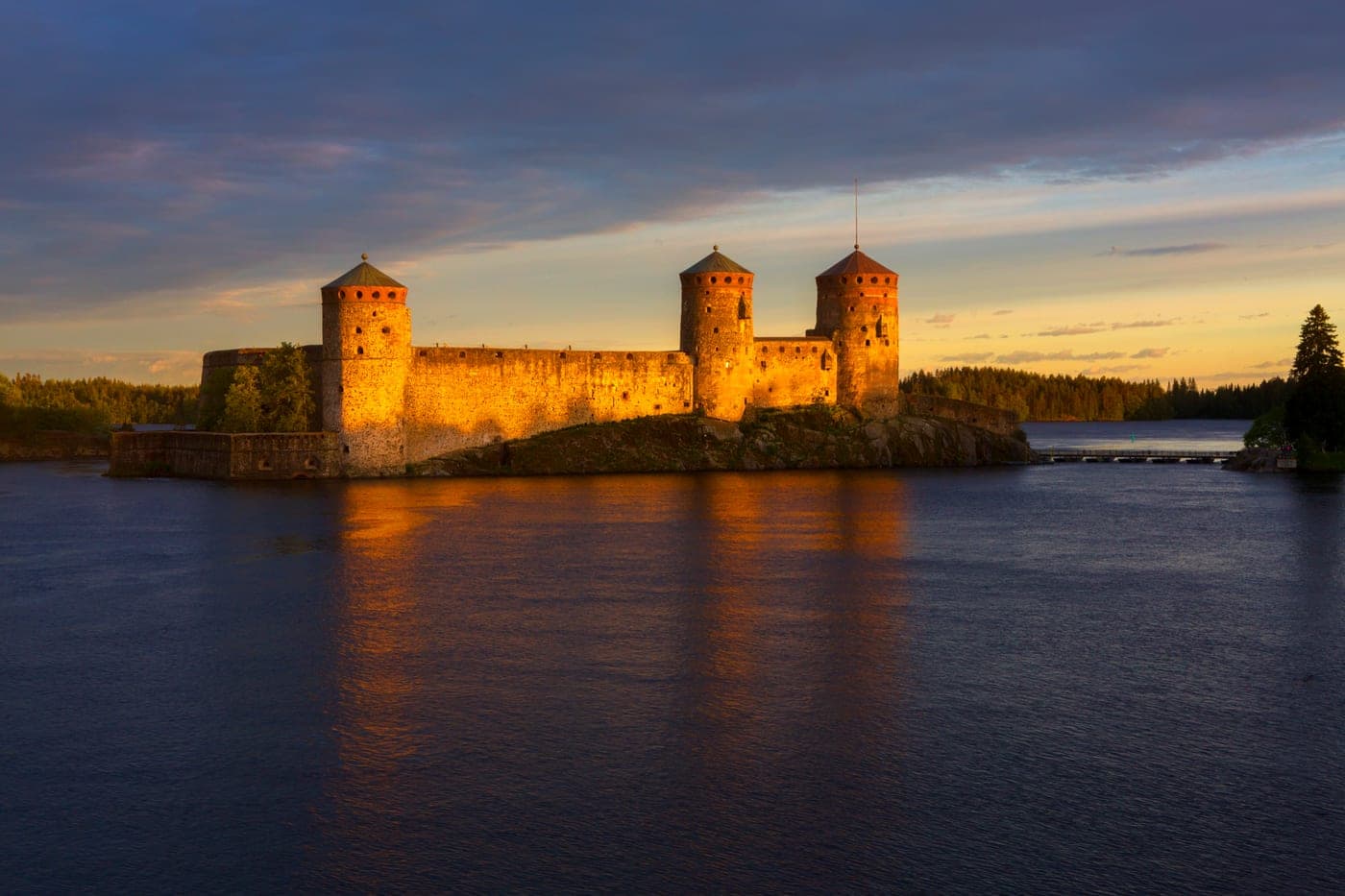
Etelä-Savo is a region in Finland known for its extensive lake systems, featuring the largest lake, Saimaa, which is famous for its unique Saimaa ringed seal. The region is characterized by its lush forests and numerous small towns like Savonlinna, home to a historic castle and vibrant summer opera festival. Mikkeli, the largest city, offers insights into local history with its museums and markets. The area is also recognized for its rich sauna culture and traditional Finnish cuisine, emphasizing local fish and berries. With its picturesque landscapes and outdoor activities, including hiking and boating, Etelä-Savo invites exploration beyond typical tourist paths.
Boat RentalsHiking