Karjalanpiirakka (Karelian pie)
A thin rye crust filled with rice porridge
- Vegetarian
- Local name
- Karjalanpiirakka
- Served with
- Egg butter (munavoi)
- Best eaten at
- A Finnish market hall
- Pairs with
- Coffee
What it is
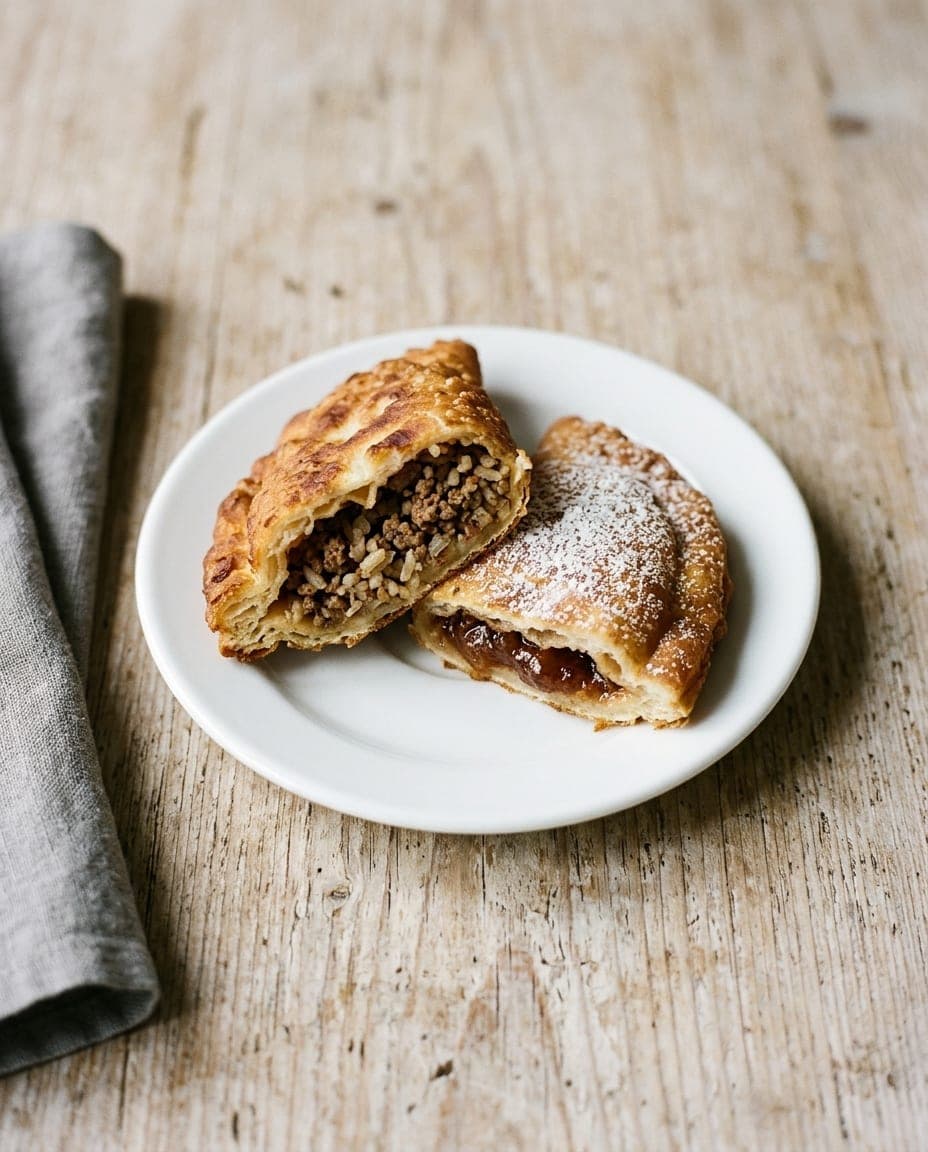
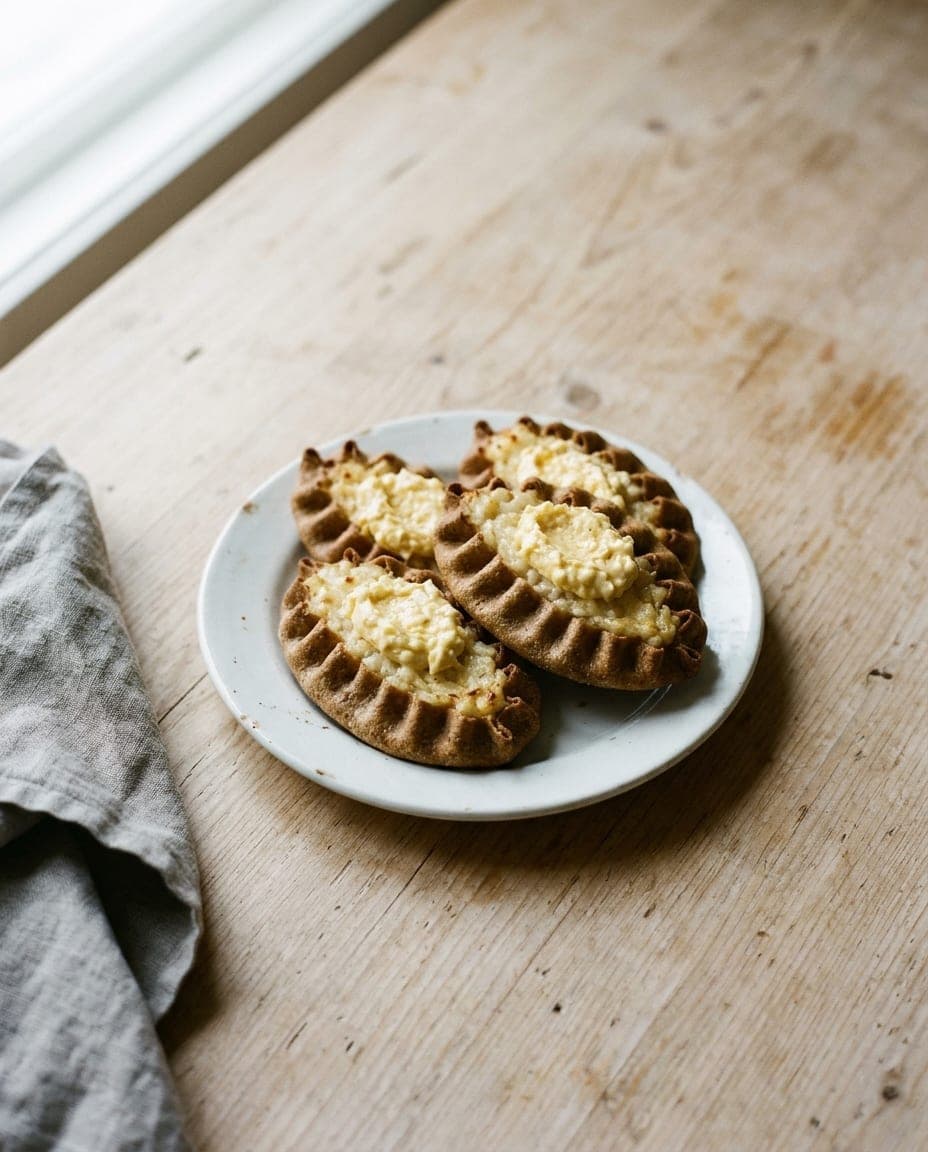
Karjalanpiirakka, often shortened to piirakka in everyday speech, is an oval-shaped pastry that stands as one of Finland's most recognisable food symbols. The crust is made from rye flour and water, rolled out very thin. It is baked quickly at a high temperature until the surface blisters and turns golden brown. The interior is filled with a salted rice porridge, though historically this was sometimes made from barley or potato.
The defining feature of the dish is how it is served. Once baked, the hot pastry is brushed with melted butter (or a butter-and-milk mix) and then topped with munavoi, a creamy mixture of softened butter and finely chopped hard-boiled eggs. The result is a warm, soft bite that balances the earthy notes of the rye with the rich, savoury egg topping. It is not a dessert in the modern sense but a staple comfort food, eaten at any time of day, most commonly as part of a breakfast or coffee break.
The story of Karelia and the evacuees
The dish originates from the historical region of Karelia, which is today divided between Finland and Russia. For centuries, families in this forested area lived by farming and fishing, developing a cuisine designed to preserve food through long winters. The thin rye crust was a practical solution: it required very little flour and could be stretched over a small amount of filling.
The true reason Karjalanpiirakka is now found in supermarkets from Helsinki to Rovaniemi lies in the events of the Second World War. During the Winter War and the Continuation War, Finland lost a significant portion of its eastern territory to the Soviet Union. Approximately 400,000 Karelian evacuees were forced to leave their homes and relocate to other parts of Finland. These displaced families brought their traditions with them, including their method for making the piirakka.
As the evacuees settled into new communities across the country, they shared their recipes and cooking techniques. The dish became a symbol of resilience and a connection to the lost homeland. Over time, it moved from rural farms to urban bakeries and eventually to every grocery store in Finland. Today, almost every Finnish bakery stocks this pastry, making it a truly national dish despite its regional roots.
The shape and the technique
The most distinctive visual trait of Karjalanpiirakka is its oval shape and the crimped edge. The pie is open-faced: the edges of the crust are folded up over the filling and pinched with the fingertips into a decorative, wavy border, leaving the porridge visible in the middle. This crimping is not merely aesthetic; it holds the filling in place during baking.
Mastering this technique takes practice. A baker must stretch the rye dough thin enough to be almost translucent but strong enough to hold the heavy rice filling without tearing. The dough itself is simple, often containing only flour, water, and a pinch of salt, though some regional variations include a small amount of fat. Once filled, the pies go into a very hot oven for only a few minutes.
What goes into it
Bakers vary the proportions; the elements are the same across Finland:
- Rye flour dough, mixed with water and rolled paper-thin to create a crisp yet chewy crust.
- Rice porridge filling, made from rice cooked slowly in milk (or water) until soft and creamy, and seasoned with salt.
- Butter, brushed over the hot pastry immediately after it comes out of the oven to keep the crust soft and add flavour.
- Egg butter (munavoi), a topping of softened butter mixed with chopped hard-boiled eggs, which provides a creamy, savoury finish.
The porridge is cooked first and then spooned into the raw crust; the short, hot bake sets it, leaving a moist interior that contrasts with the crisp edges.
How to eat it
Karjalanpiirakka is designed to be eaten by hand. It is too hot to hold immediately after coming out of the oven, so it is usually left to cool for a few minutes before being served. The traditional way to enjoy it is at a breakfast table or during a coffee break. A warm pie is topped with a thick layer of egg butter, which melts slightly into the hot crust, and then accompanied by a strong cup of filter coffee.
The pairing is so standard that it forms a ritual for many Finns. The mild rice and the fat of the egg butter cut through the bitterness of the coffee, creating a balanced start to the day. It is common to see locals in Helsinki or Tampere eating these pies at their desks or on the go. While they are excellent as a snack, they are also served as part of a larger meal, often alongside other pastries or savoury dishes.
Curious facts
- A protected name. Karjalanpiirakka is registered in the EU as a Traditional Speciality Guaranteed: the name is reserved for pies made to the traditional recipe (rye crust, porridge or potato filling), wherever they are baked. Others must be sold as rice pies or potato pies.
- The rye connection. Rye is the primary grain in Finnish baking history, grown even in short summer seasons where wheat would struggle to mature.
- A wartime legacy. The spread of the pie across Finland is directly tied to the resettlement of 400,000 people after the Second World War, turning a regional speciality into a national icon.
- No fork needed. The pastry is almost always eaten by hand, with the egg butter acting as a sauce that holds the bite together.
- Regional variations. While rice is now standard, older versions of the filling used barley, millet or mashed potatoes, reflecting the crops available at the time.
Where to try it
The most authentic experience is found in a Finnish market hall, such as the Old Market Hall in Helsinki or the Market Hall in Turku. Here, bakery stalls sell freshly baked piirakka, often still warm and ready to be topped with egg butter.
Supermarkets and bakeries everywhere sell them; the market halls sell them warm. It is a dish that does not require fine dining; it is meant for the simple pleasure of eating something homemade and warm.
Where to try it
3 regions
 Boat Rentals1 destination
Etelä-Savo
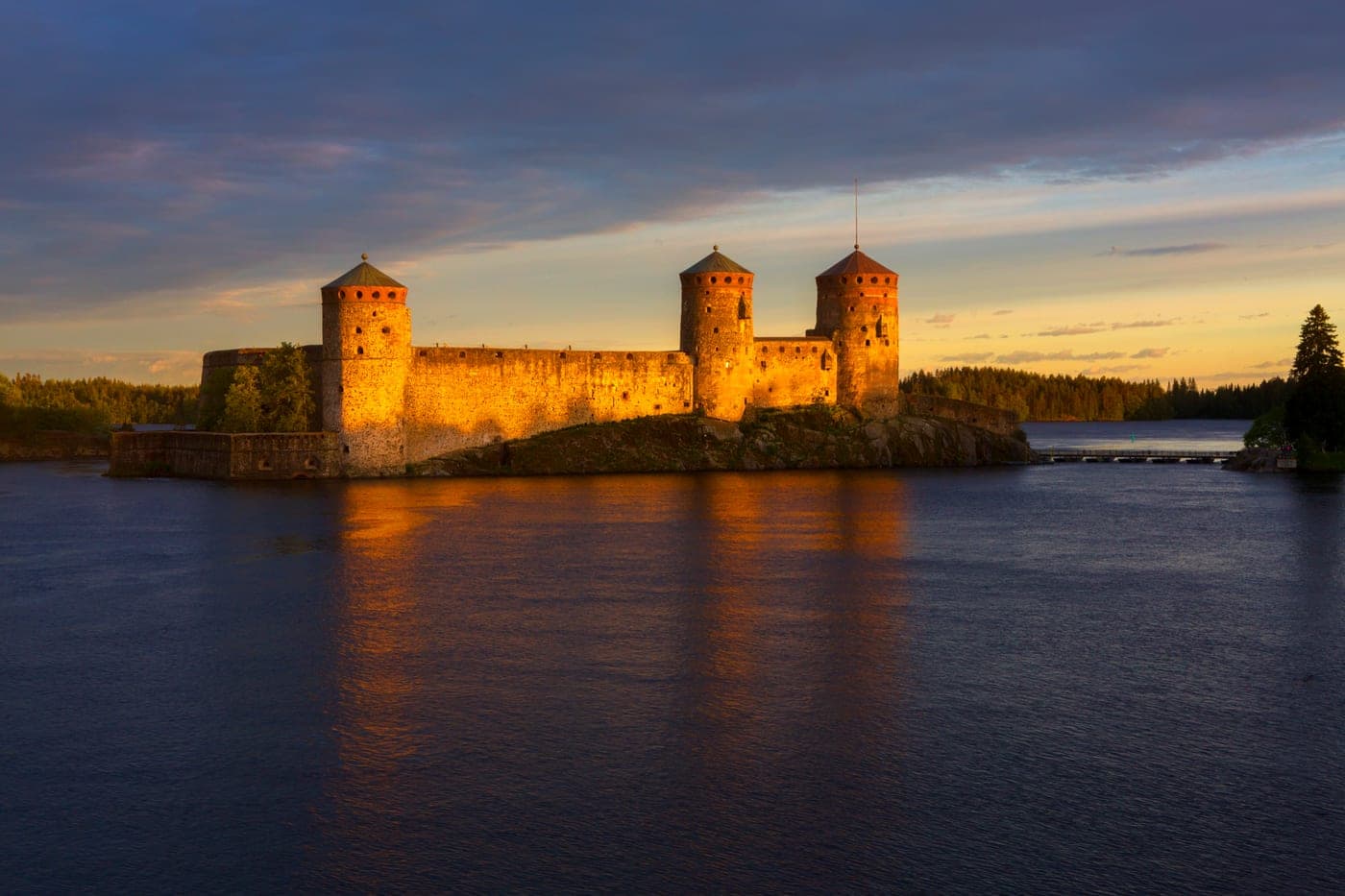
Etelä-Savo is a region in Finland known for its extensive lake systems, featuring the largest lake, Saimaa, which is famous for its unique Saimaa ringed seal. The region is characterized by its lush forests and numerous small towns like Savonlinna, home to a historic castle and vibrant summer opera festival. Mikkeli, the largest city, offers insights into local history with its museums and markets. The area is also recognized for its rich sauna culture and traditional Finnish cuisine, emphasizing local fish and berries. With its picturesque landscapes and outdoor activities, including hiking and boating, Etelä-Savo invites exploration beyond typical tourist paths.
Boat RentalsHiking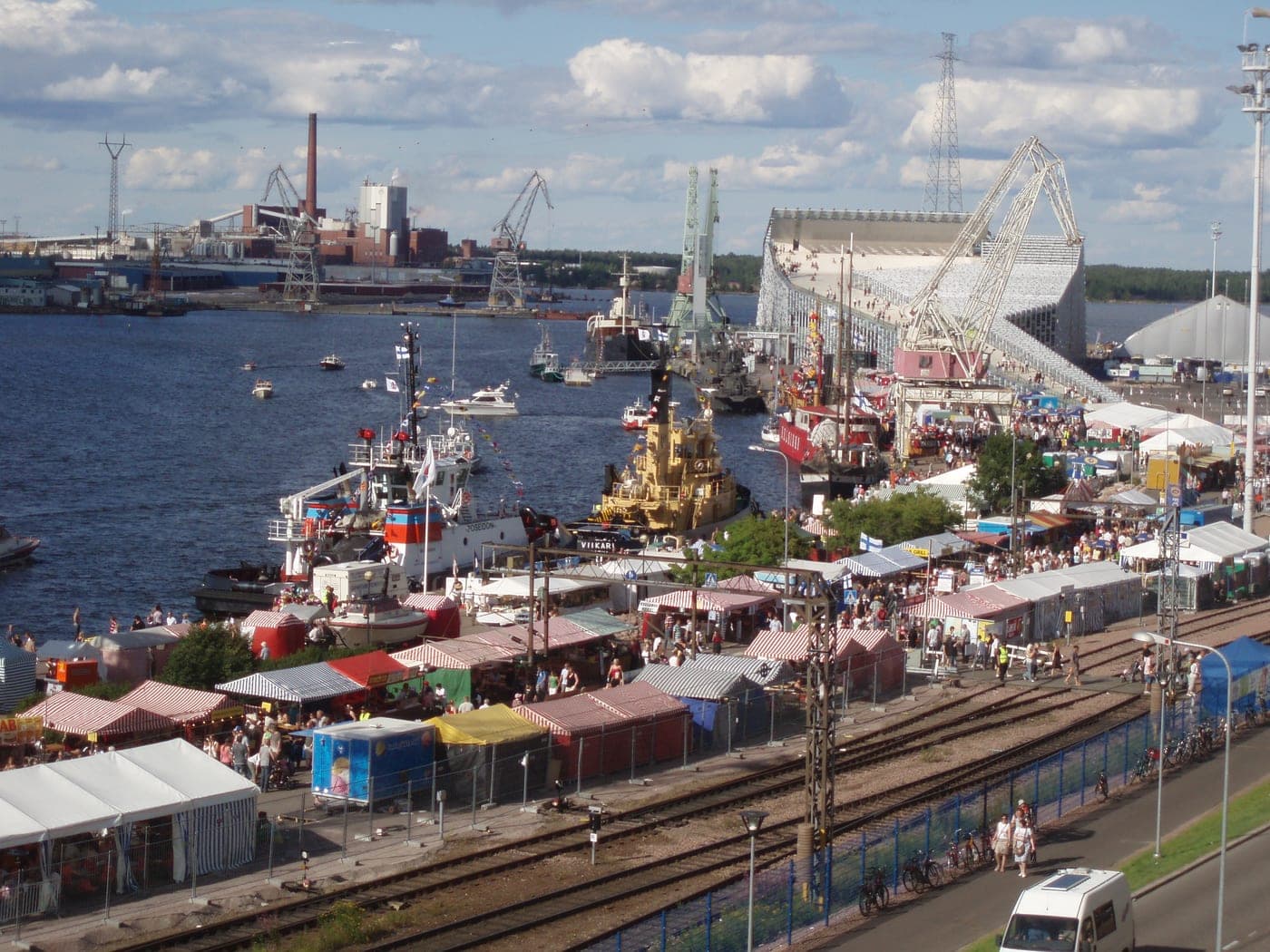 Boat Rentals1 destination
Kymenlaakso
Kymenlaakso is a unique Finnish region blending coastal landscapes and rich history. It is one of the few areas in Finland with direct access to the Gulf of Finland, boasting a mix of large towns and serene nature. Kouvola, the largest city, serves as a hub for exploring nearby natural parks and the Kymi River, known for its scenic views and outdoor activities. The region is famous for its paper industry history, with several museums showcasing this heritage. Off the beaten path, travelers can discover the charming villages along the coast, such as Hamina, known for its star-shaped fortress and vibrant cultural events. The archipelago provides opportunities for quiet retreats and local seafood experiences, enhancing the slow travel journey.
Boat RentalsHiking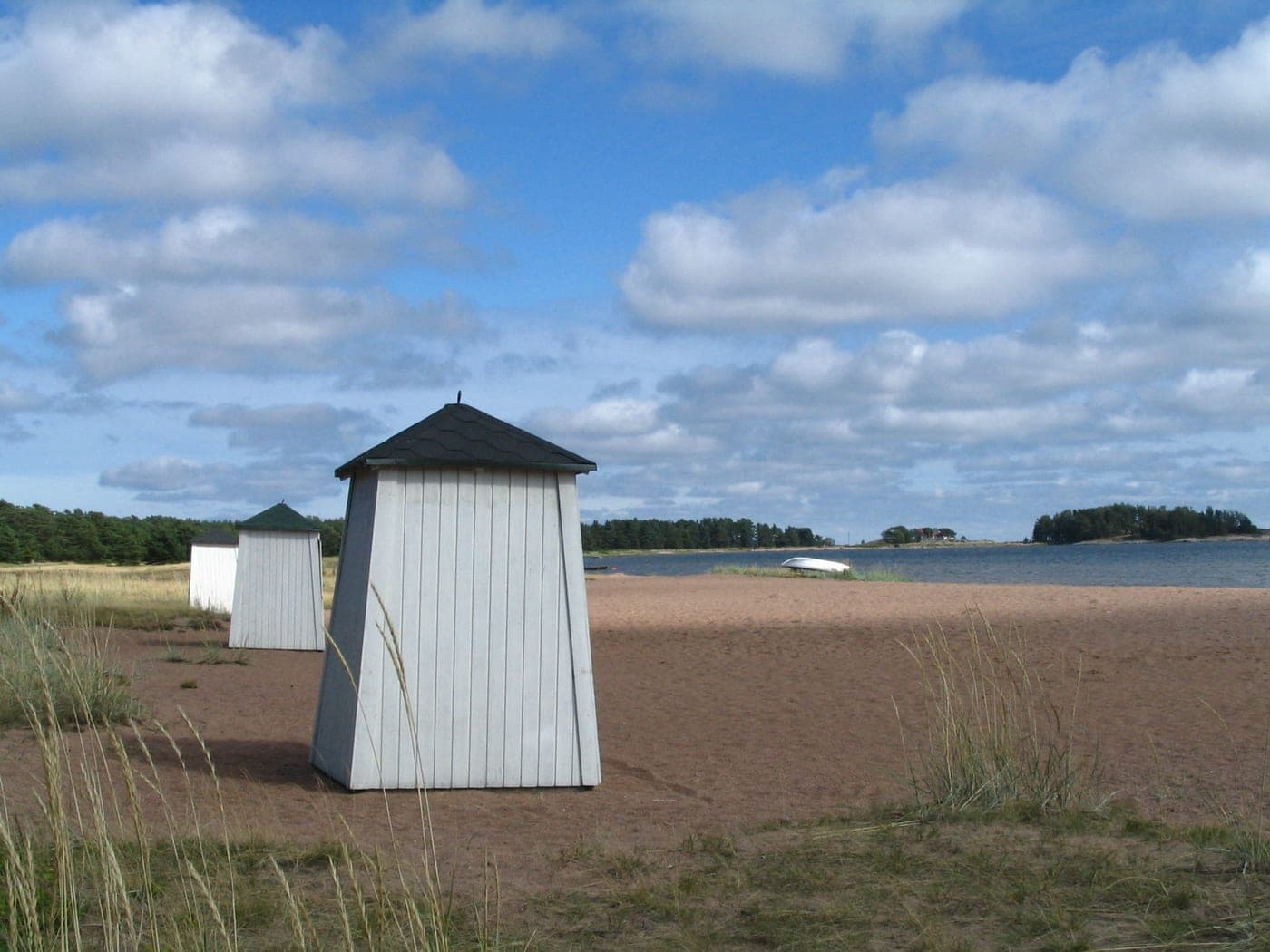 Boat Rentals2 destinations
Uusimaa
Uusimaa is Finland's southern coastal region and home to the capital, Helsinki. Its coastline breaks apart into thousands of islands, skerries and inlets, and this archipelago, together with the forests and lakes just inland, gives the whole region its unhurried character. Uusimaa is the most visited part of Finland, yet away from Helsinki the pace drops quickly: small wooden towns, fishing villages and quiet lakeshores sit close enough together that a slow, multi-stop trip is easy to build. The archipelago is the region's defining feature. Boats link small islands off Helsinki and the western coast, many reachable on a half-day trip. Suomenlinna, the sea fortress guarding Helsinki's harbour, is well known among these islands and a UNESCO World Heritage Site, but quieter islands further along the coast reward travellers who stay longer. Life on them still follows old patterns: net fishing, small wooden cottages known as mökki, and saunas built right at the water's edge for a swim before or after. Sauna culture is easiest to feel properly outside the city. Many guesthouses and cottages along the coast keep a wood-heated sauna, followed by a swim in the sea or a lake, a rhythm that shapes the day rather than breaking it up. Inland, this slower pace continues in Nuuksio National Park, west of Helsinki, where marked trails, quiet lakes for swimming, and simple overnight huts draw hikers and canoeists rather than day-trippers in a hurry. Beyond Helsinki, Uusimaa's towns each keep their own character. Porvoo, one of Finland's oldest towns, has a river-side old town of orange wooden warehouses and narrow cobbled streets that are still lived in, not kept as a museum piece. Loviisa, further east along the coast, has a similar wooden core with far fewer visitors. To the west, Hanko stretches along a narrow sand-and-granite peninsula, known for its late-19th-century wooden villas and long beaches. Nearby Raasepori, including the old town of Tammisaari, mixes Swedish-speaking coastal culture with dense archipelago just offshore. Inland, Lohja sits on its own lake, a reminder that Uusimaa's water is not only coastal. Language reflects this coastal history: Finnish and Swedish are both spoken across the region, more evenly than almost anywhere else in Finland, and many towns and villages carry a name in each. Food follows the same coastal and seasonal pattern, with smoked and salted fish from the archipelago, summer berries and mushrooms from the forests, and simple bakery traditions in the old wooden towns. Uusimaa works best as a loop rather than a single base. Three or four days allow time split between Helsinki, one archipelago excursion, and one smaller coastal town such as Porvoo or Raasepori. A week allows a slower circuit: a few nights on the coast, a night inland near Nuuksio for hiking and lake swimming, and time left over for the islands. Distances between towns are short, so there is little need to rush, and most places in the region can be properly explored in a day, leaving room to simply stay longer wherever the pace suits. What ties Uusimaa together is water: sea to the south, lakes inland, and a coastline shaped by centuries of fishing, trade and shipbuilding. The traditions here are practical rather than staged, a sauna built for daily use, a wooden warehouse still used for storage, a rowing boat tied to its own jetty. Visitors tend to slow down here simply because the region already moves at that pace.
Boat RentalsHiking