Lohikeitto (salmon soup)
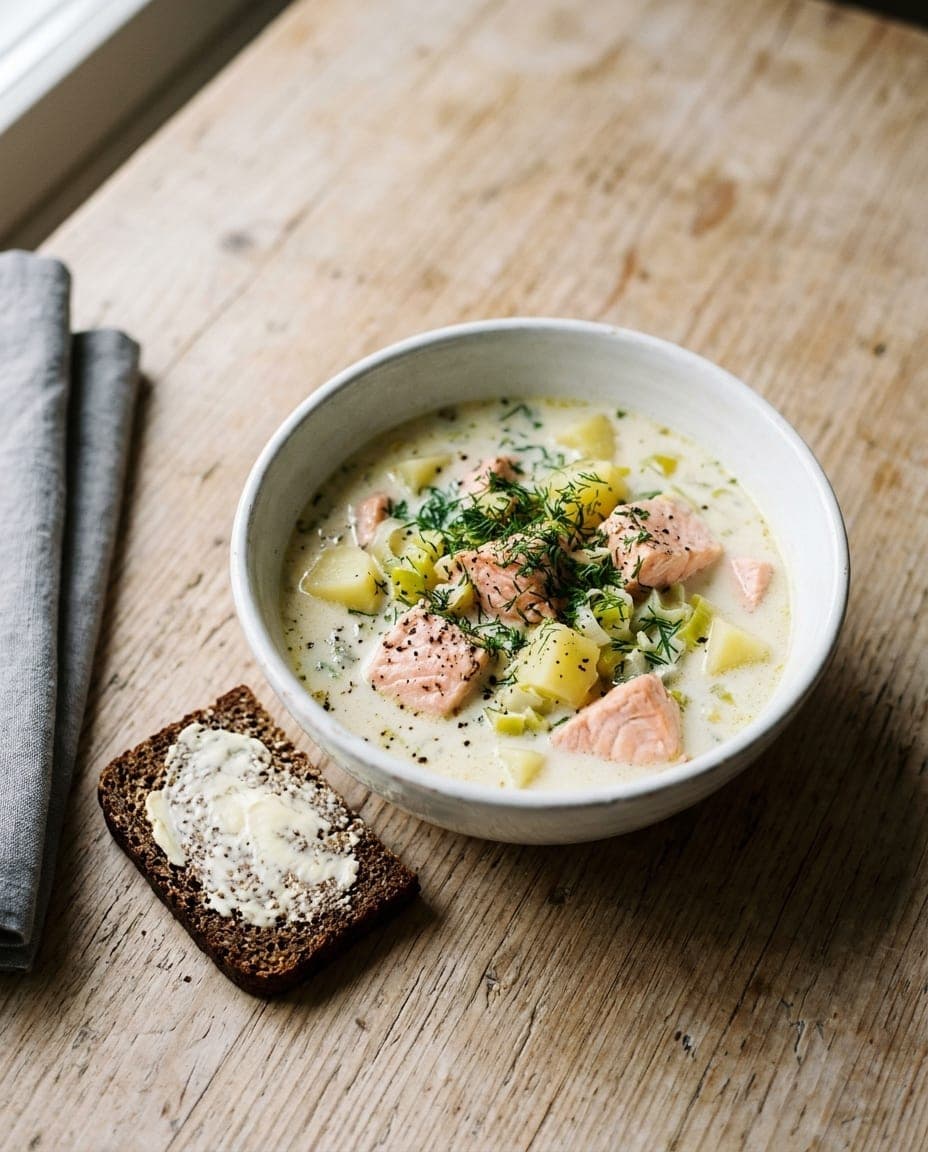
Creamy salmon, potato and dill soup served with rye bread
- Local name
- Lohikeitto
- Served with
- Rye bread, butter
- Best eaten at
- A Helsinki market hall
- Pairs with
- Finnish lager
What it is
Lohikeitto, the name for a creamy salmon soup, is one of the most recognisable dishes in Finnish cuisine. It is a thick, comforting broth made from salmon, potatoes, leeks or onions and carrots, finished with heavy cream and a generous amount of fresh dill. A knob of butter often melts on top just before serving. The fish is added towards the end of the cooking process so that it remains in large, tender flakes rather than dissolving into the liquid.
This soup is not a ceremonial dish reserved for special occasions. It is everyday food, found on lunch menus in workplaces, served in family canteens, and prepared in home kitchens across the country. It appears year-round, but it feels particularly appropriate on a cold day near the harbour or by the window of a market hall. The texture is smooth yet substantial, and the flavour relies on the freshness of the fish and the earthy scent of dill rather than heavy spices.
Where it comes from
Lohikeitto has roots that stretch back through the Nordic countries, where cold-water fish and root vegetables have long been staples. Similar soups are eaten in Sweden (laxsoppa) and Norway; in Finland the dish is almost always finished with plenty of fresh dill. The dish likely evolved from simple peasant fare made with whatever fish were caught locally and stored root vegetables available through the winter.
The recipe likely settled into its familiar creamy form as Finland developed a modern food culture in the 19th and 20th centuries. Today, it is served everywhere from small roadside cafes in Kymenlaakso to high-end restaurants in Uusimaa. The dish defines a certain kind of Finnish hospitality: warm, straightforward and focused on the quality of the ingredients rather than complex technique.
How it is made
There is no single official recipe, but the structure remains consistent across the country. A base of leeks or onions is softened in butter or oil, then potatoes and carrots are added along with fish stock or water. The salmon fillets, cut into large chunks, go in last to ensure they do not break down too much. Fresh dill is stirred in at the end, and cream is folded through to create a pale, opaque broth. Allspice is sometimes used as a seasoning, adding a subtle warmth that complements the fish without overpowering it.
The choice of salmon varies by season and availability. Both wild-caught and farmed salmon are used, depending on what the supplier offers at the time. It is a whole meal in one bowl: fish, potato, leek and broth. It is often garnished with extra dill and a pat of butter before it reaches the table.
How to eat it
Lohikeitto is usually eaten as a main course for lunch or dinner. In Finland, it is traditional to serve it with dark rye bread and a generous layer of butter. The bread is torn into pieces and dipped into the creamy broth, absorbing the flavour of the dill and salmon. A side of pickled cucumbers or beetroot sometimes accompanies the bowl on restaurant menus.
A Finnish lager pairs well with the dish, cutting through the fat of the cream. The beer is not required, but it is a frequent companion in casual settings. Some visitors might prefer a glass of water or a light white wine, though a lager is a common choice. The soup is rarely served as a starter; it is too substantial for that role and is meant to fill the diner completely.
Curious facts
- The dill is essential. Without fresh dill, the dish loses its identity. Dried dill is sometimes used in quick preparations, but the fresh herb is the standard in traditional kitchens.
- Butter on top. A small knob of cold butter is often placed on the hot soup just before serving, melting slowly into the cream to add a final layer of richness.
- Market hall staple. Helsinki's market halls are famous for their food stalls, and lohikeitto is one of the most popular items sold there.
- Not a starter. The soup is too filling to be served as an appetiser. It is almost always ordered as a main course or a substantial lunch item.
- Cream or milk. Most versions are made with cream, but some cooks use whole milk for a lighter soup.
Where to try it
The most authentic experience of lohikeitto is in a Helsinki market hall, where the soup is served fresh daily by vendors who specialise in traditional Finnish food. The Old Market Hall on the Eteläranta waterfront, open since 1889, is a well-known destination for this dish, offering bowls that are warm, creamy and generous. Helsinki's other market halls, in Hakaniemi and Hietalahti, also have food stalls where it often appears on the menu.
Outside the capital, the soup can be found in cafes and restaurants throughout Finland, particularly in coastal towns where fresh salmon is more accessible. In Kymenlaakso and Uusimaa, local eateries often pride themselves on their version of the dish. For a truly local experience, seek out a small neighbourhood tavern or a workplace canteen that serves it as part of its daily lunch menu. The soup is not tied to one specific restaurant but is a shared national tradition enjoyed everywhere.
Where to try it
1 destination
 Boat Rentals
Espoo
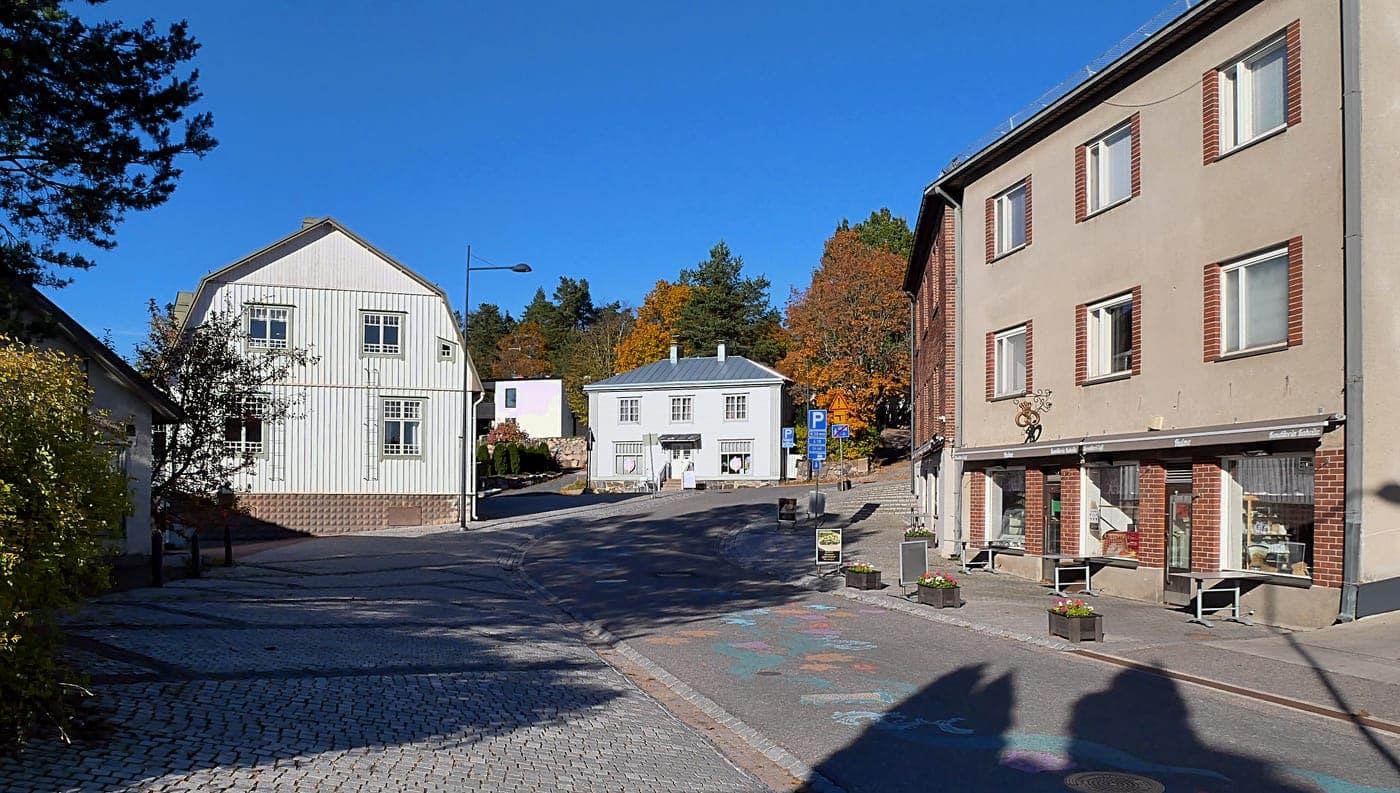
Modern city blending nature and culture with beautiful parks and architecture.
Boat RentalsHiking
2 regions
 Boat Rentals1 destination
Kymenlaakso
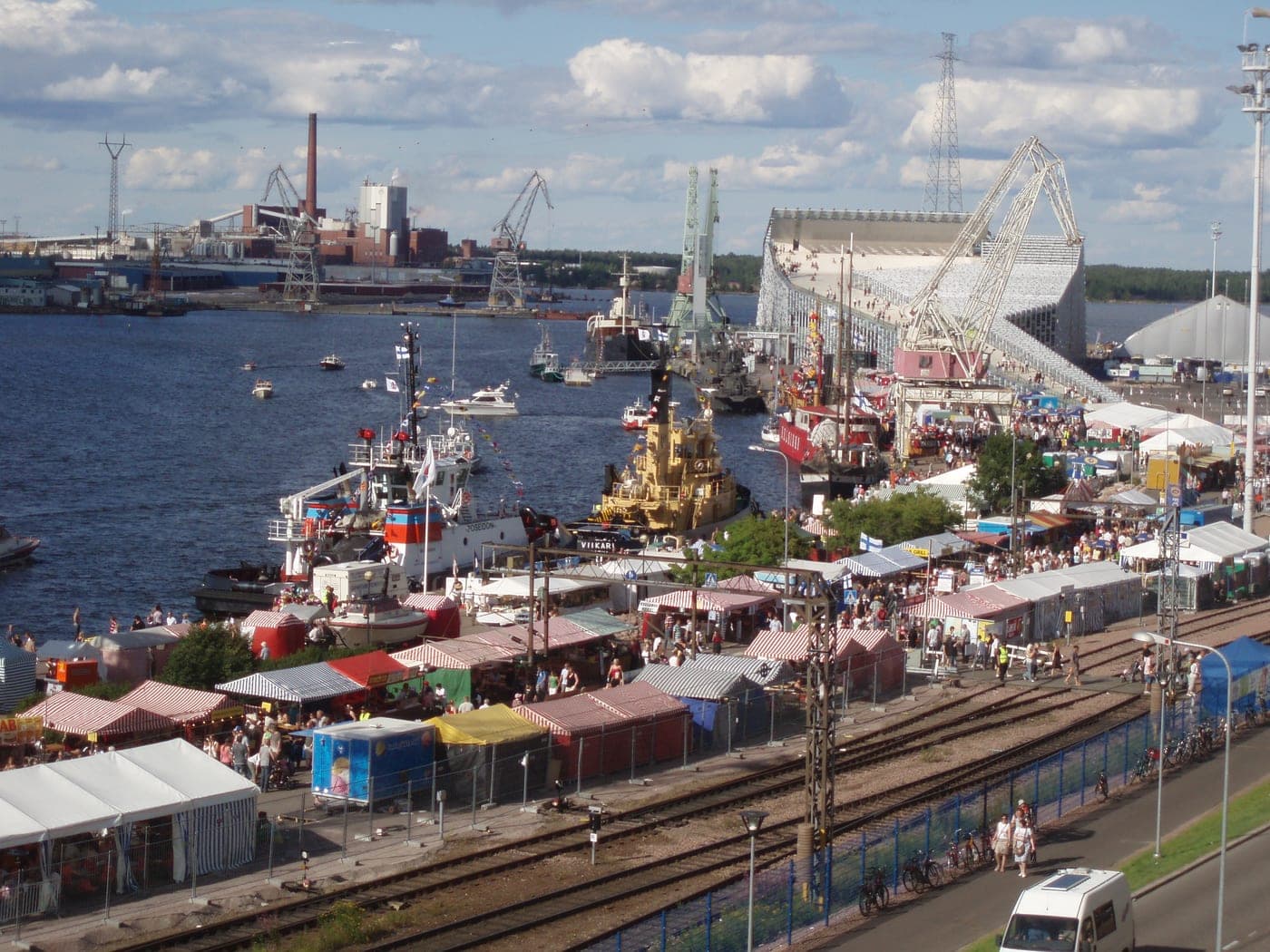
Kymenlaakso is a unique Finnish region blending coastal landscapes and rich history. It is one of the few areas in Finland with direct access to the Gulf of Finland, boasting a mix of large towns and serene nature. Kouvola, the largest city, serves as a hub for exploring nearby natural parks and the Kymi River, known for its scenic views and outdoor activities. The region is famous for its paper industry history, with several museums showcasing this heritage. Off the beaten path, travelers can discover the charming villages along the coast, such as Hamina, known for its star-shaped fortress and vibrant cultural events. The archipelago provides opportunities for quiet retreats and local seafood experiences, enhancing the slow travel journey.
Boat RentalsHiking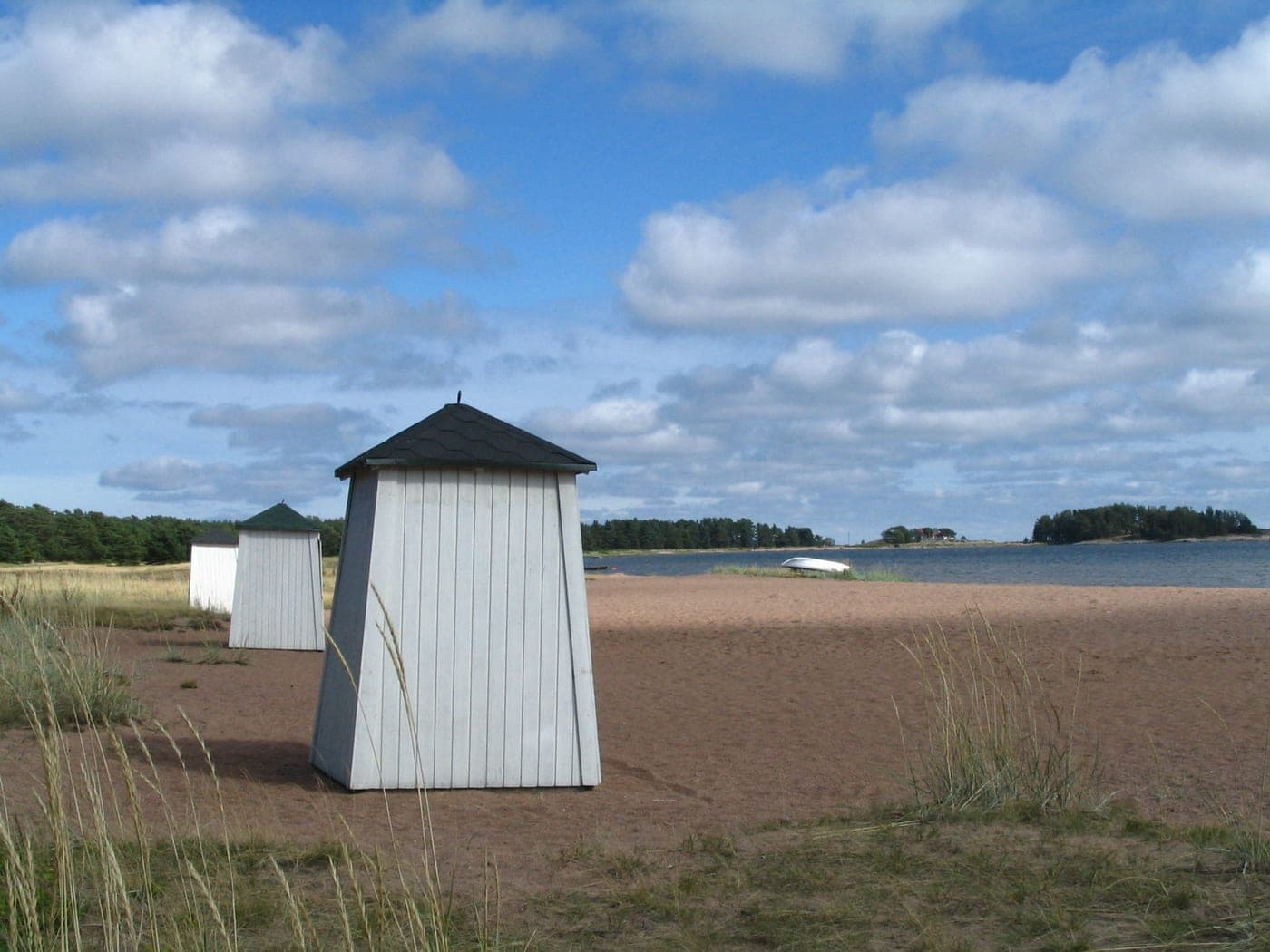 Boat Rentals2 destinations
Uusimaa
Uusimaa is Finland's southern coastal region and home to the capital, Helsinki. Its coastline breaks apart into thousands of islands, skerries and inlets, and this archipelago, together with the forests and lakes just inland, gives the whole region its unhurried character. Uusimaa is the most visited part of Finland, yet away from Helsinki the pace drops quickly: small wooden towns, fishing villages and quiet lakeshores sit close enough together that a slow, multi-stop trip is easy to build. The archipelago is the region's defining feature. Boats link small islands off Helsinki and the western coast, many reachable on a half-day trip. Suomenlinna, the sea fortress guarding Helsinki's harbour, is well known among these islands and a UNESCO World Heritage Site, but quieter islands further along the coast reward travellers who stay longer. Life on them still follows old patterns: net fishing, small wooden cottages known as mökki, and saunas built right at the water's edge for a swim before or after. Sauna culture is easiest to feel properly outside the city. Many guesthouses and cottages along the coast keep a wood-heated sauna, followed by a swim in the sea or a lake, a rhythm that shapes the day rather than breaking it up. Inland, this slower pace continues in Nuuksio National Park, west of Helsinki, where marked trails, quiet lakes for swimming, and simple overnight huts draw hikers and canoeists rather than day-trippers in a hurry. Beyond Helsinki, Uusimaa's towns each keep their own character. Porvoo, one of Finland's oldest towns, has a river-side old town of orange wooden warehouses and narrow cobbled streets that are still lived in, not kept as a museum piece. Loviisa, further east along the coast, has a similar wooden core with far fewer visitors. To the west, Hanko stretches along a narrow sand-and-granite peninsula, known for its late-19th-century wooden villas and long beaches. Nearby Raasepori, including the old town of Tammisaari, mixes Swedish-speaking coastal culture with dense archipelago just offshore. Inland, Lohja sits on its own lake, a reminder that Uusimaa's water is not only coastal. Language reflects this coastal history: Finnish and Swedish are both spoken across the region, more evenly than almost anywhere else in Finland, and many towns and villages carry a name in each. Food follows the same coastal and seasonal pattern, with smoked and salted fish from the archipelago, summer berries and mushrooms from the forests, and simple bakery traditions in the old wooden towns. Uusimaa works best as a loop rather than a single base. Three or four days allow time split between Helsinki, one archipelago excursion, and one smaller coastal town such as Porvoo or Raasepori. A week allows a slower circuit: a few nights on the coast, a night inland near Nuuksio for hiking and lake swimming, and time left over for the islands. Distances between towns are short, so there is little need to rush, and most places in the region can be properly explored in a day, leaving room to simply stay longer wherever the pace suits. What ties Uusimaa together is water: sea to the south, lakes inland, and a coastline shaped by centuries of fishing, trade and shipbuilding. The traditions here are practical rather than staged, a sauna built for daily use, a wooden warehouse still used for storage, a rowing boat tied to its own jetty. Visitors tend to slow down here simply because the region already moves at that pace.
Boat RentalsHiking