Rapska torta (Rab cake)
A spiral almond cake flavoured with maraschino
- Vegetarian
- Local name
- Rapska torta
- Served with
- Coffee
- Best eaten at
- A Rab town pastry shop
- Pairs with
- Prošek dessert wine
What it is
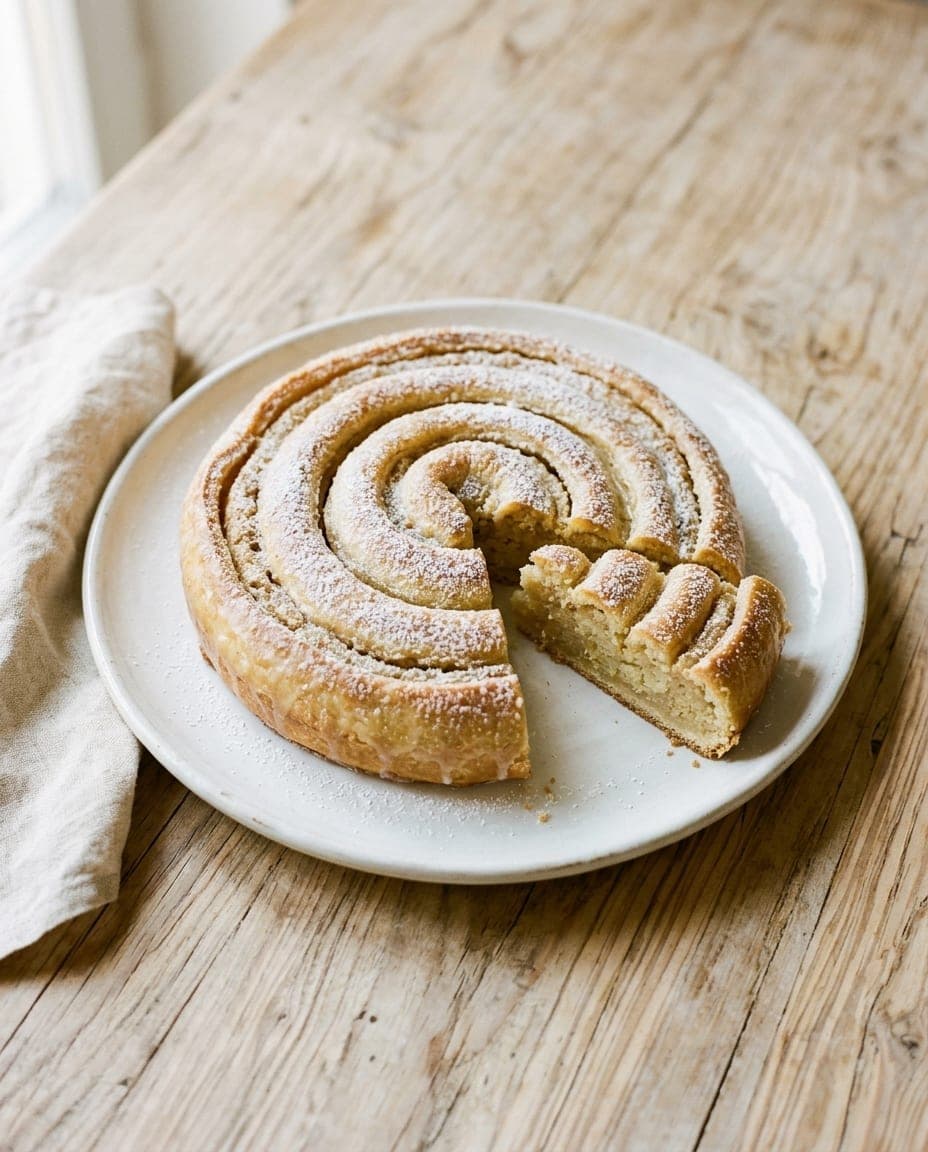
Rapska torta, known in English as the Rab cake, is a sweet pastry specific to the island of Rab in Croatia's Primorje-Gorski Kotar region. It is not a nationwide treat but a local speciality tied closely to the island's capital, which shares the same name. The cake is traditionally a flat spiral, a coil of almond filling wound inside a thin, crisp pastry case and baked until pale, though other shapes are common today.
The texture is dense and heavy with ground almonds, yet the pastry remains light and flaky. It is intensely sweet, flavoured with lemon and orange zest and maraschino, the clear cherry liqueur of Zadar. The cake is usually cut into thin slices to manage its richness. While it looks delicate, it is substantial enough to serve as a dessert or a snack alongside coffee.
The island's tradition holds that the cake was first served in 1177 to Pope Alexander III, who came to consecrate Rab's cathedral, by the nuns of the Benedictine convent of St Anthony. This story is part of the local narrative, though there is no written record of the cake from that time. The cake has since become a symbol of Rab, and its traditional preparation is listed as intangible cultural heritage in Croatia's register of protected cultural goods.
How it came to be
The account most often told in Rab involves the visit of Pope Alexander III in 1177, when he consecrated the Cathedral of the Assumption. According to local lore, the nuns of St Anthony prepared the cake specifically for this high-ranking guest, using almonds and other ingredients available on the island, and the recipe was later kept by the Benedictine nuns of St Andrew. The maraschino in today's recipe must be a later addition, since the liqueur is not recorded in Zadar until the 16th century.
While this version of events is widely accepted by residents and appears in local guides, it remains an oral tradition rather than a documented historical fact. The narrative helps explain why the cake is so deeply connected to the island's identity and why it was traditionally associated with weddings, baptisms and high-status guests; under Venetian rule it was a delicacy of Rab's wealthier families.
What goes into it
The composition of Rapska torta is straightforward but precise, relying on a few key ingredients that define its taste:
- Ground almonds, mixed with sugar and eggs, which form the bulk of the filling and give the cake its dense, nutty character.
- Maraschino liqueur, the clear cherry liqueur of Zadar, which carries an almond note of its own.
- Lemon and orange zest, used to cut through the sweetness with a bright citrus note.
- Pastry dough of flour, sugar, eggs and butter or other fat, rolled thin and baked until crisp to form the outer spiral case.
The result is a cake that is sweet but not cloying, provided it is sliced thinly. The maraschino is essential; without it, the cake would lack the specific regional character that defines Rapska torta. The almond filling is often pressed into the pastry before baking, ensuring the layers remain distinct.
How to eat it
Rapska torta is best enjoyed as a dessert or an afternoon treat. It is traditionally served with a strong black coffee, which helps balance the sweetness of the almond filling. A glass of prošek, the sweet dessert wine of Dalmatia, is also a common pairing that complements the maraschino notes in the cake.
The usual setting is a pastry shop in Rab town, where it is also sold boxed as a gift. It keeps well for days, which is why it travels home as a souvenir, though the pastry is crispest soon after baking.
Curious facts
- Protected heritage. The cake's traditional preparation is on Croatia's register of protected cultural goods as intangible heritage, and it featured on a Croatian postage stamp in 2020.
- The spiral shape. The coiled form is not just decorative; it allows the thin pastry to bake evenly around the dense almond filling without breaking.
- A papal legend. Local tradition claims the cake was first served to Pope Alexander III in 1177, though no written record of the cake from that time survives.
- Maraschino origin. The maraschino liqueur used in the recipe comes from Zadar, further down the coast, distilled from Dalmatian Marasca cherries.
Where to try it
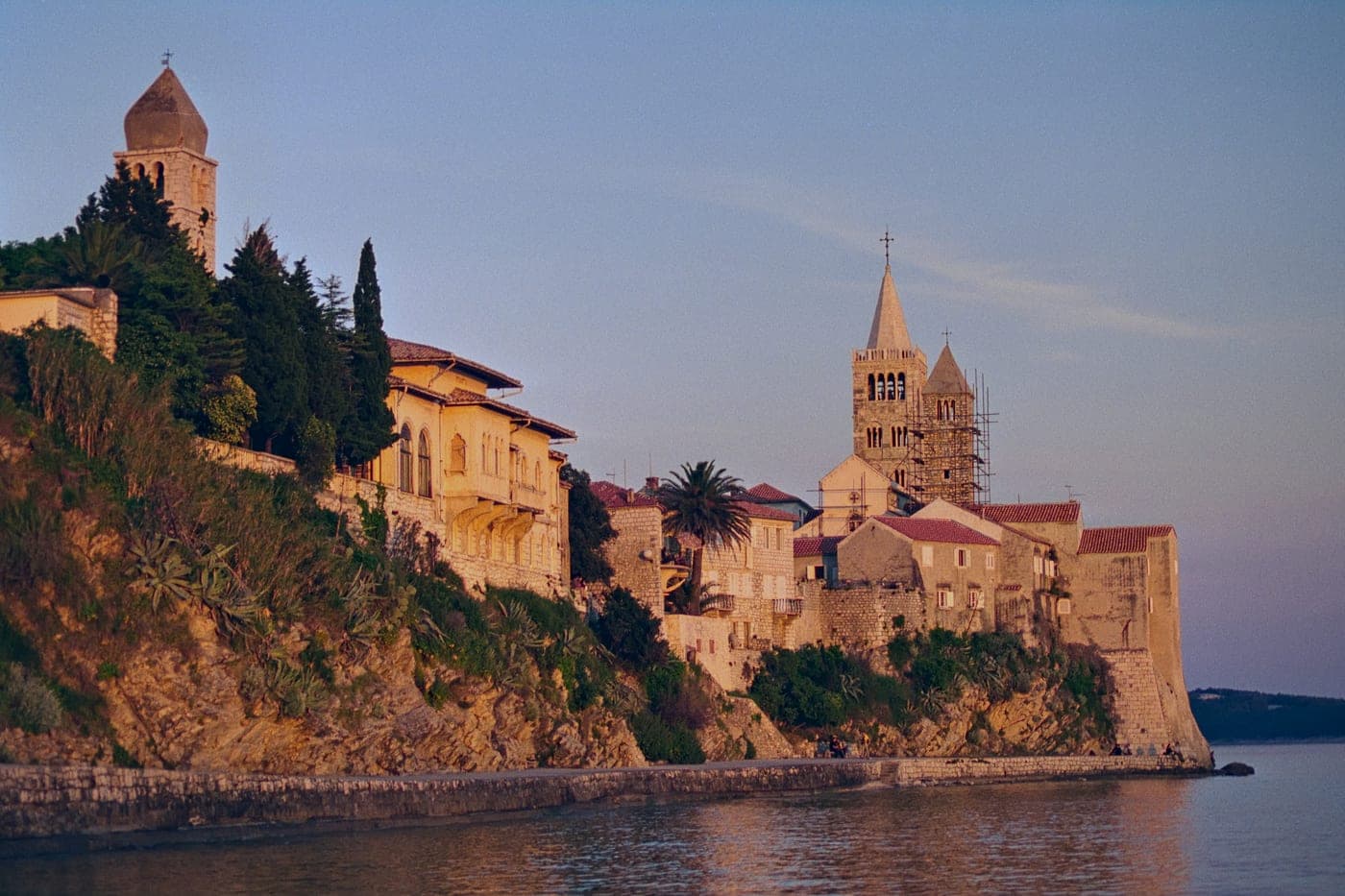
Rab town is where to find it, in the pastry shops along the streets inside the old walls. These are small, family-run establishments where the cakes are often baked fresh daily. Some larger bakeries on the island sell it too, and it turns up elsewhere in Croatia, but Rab is where it belongs. Visitors often purchase them boxed to take home, making the cake a popular gift for friends and family abroad.
Where to try it
1 destination
1 region
 Boat Rentals7 destinations
Primorje-Gorski Kotar
Nestled along the northern Adriatic, this region is the largest in Croatia by area, featuring a diverse landscape of mountains, islands, and coastal towns. The city of Rijeka serves as a cultural hub, known for its vibrant festivals and rich maritime history, including the Trsat Castle overlooking the city. Opatija, with its historic villas and seaside promenade, offers a glimpse into the 19th-century Austrian Riviera. Nearby, the islands of Cres and Lošinj boast stunning natural parks and traditional fishing villages. Nature lovers can explore the Risnjak National Park, while wine enthusiasts can taste local Vrbnička Žlahtina. This region thrives on its rich cultural tapestry and local gastronomy, emphasizing sustainable practices and authentic experiences that reflect its heritage.
Boat RentalsHiking