Istarska maneštra
A thick bean and maize soup from Istria's inland hills
- Local name
- Istarska maneštra
- Served with
- Bread
- Best eaten at
- An Istrian konoba
- Pairs with
- Teran red wine
What it is
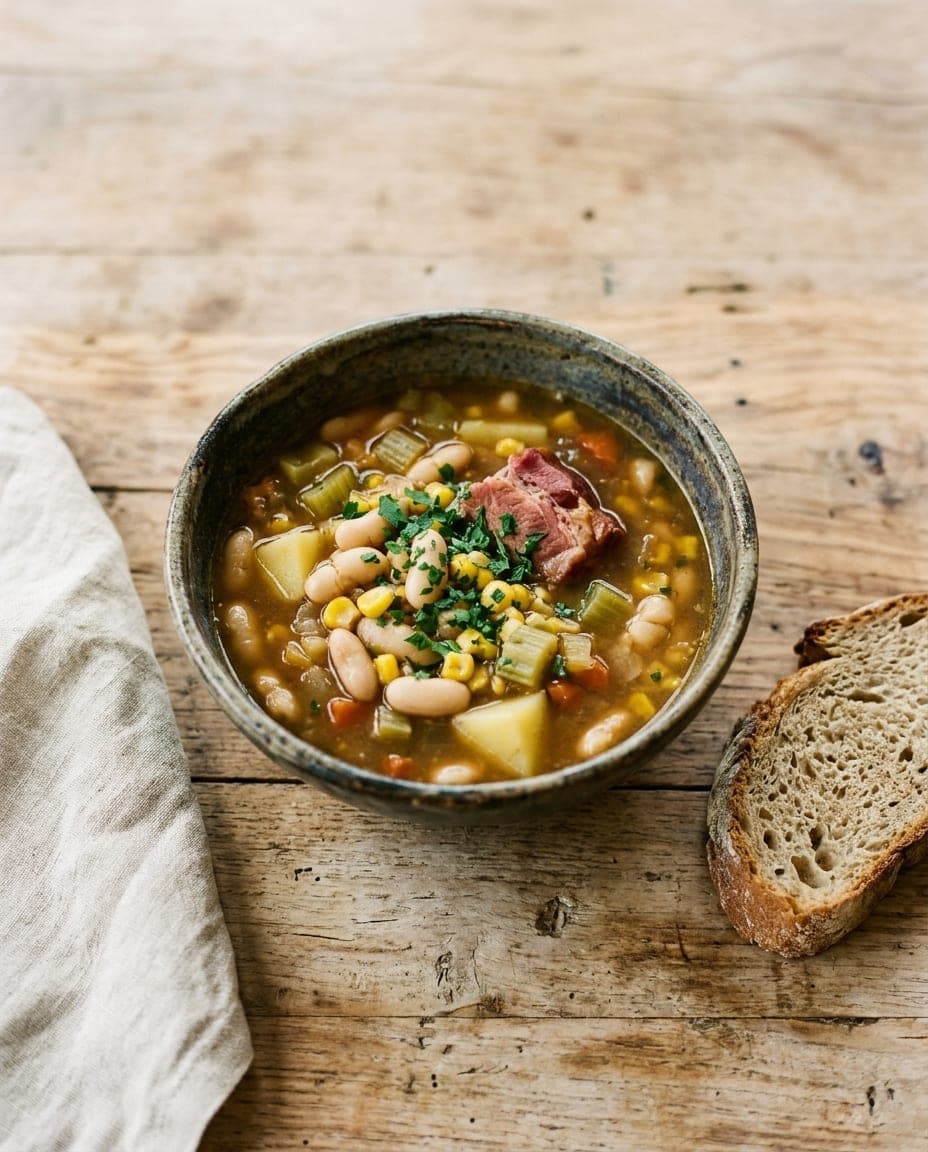
Istarska maneštra is the daily soup of the inland hills of Istria. It is not a dish for a quick lunch but a slow-cooked pot that thickens over hours until a spoon can stand upright in the broth. The base is beans and potatoes, joined by whatever the season provides; in the best-known version that means young maize kernels. A piece of dried pork, usually the bone of a pršut, simmers with the vegetables until the meat falls from the bone and the liquid becomes rich and heavy.
The name itself reveals the dish's history. Maneštra is the Istrian form of the Italian minestra, a word that simply means soup or stew. This linguistic link reflects the long shared history between the Istrian coast and the Italian peninsula, yet the dish has evolved into something distinctly local. It sits on the border between two cuisines without belonging entirely to either. In the quiet villages of the interior, where the landscape is defined by olive groves and vineyards, this soup was the standard meal for families and farmworkers alike.
There are as many versions of the dish as there are villages. Some cooks add barley (maneštra od jačmika), chickpeas or fennel, and the winter version with sauerkraut or sour turnip is known as jota. The best-known iteration is maneštra od bobići, made with young maize and beans. It is a humble dish, born from ingredients that could be stored for months and cooked over a low fire to last through a long day.
Where it comes from
The soup belongs to the hinterland of Istria rather than the coastal towns. In the inland hill villages, where the climate is cooler and the soil is suited to hardy crops like beans and maize, this dish was essential. The region's history of alternating rule between Venice, Austria-Hungary and Italy has left a mark on its language and food, but the maneštra remains a product of local necessity rather than courtly influence.
In these villages, the kitchen was the heart of the home. A large cauldron would be kept simmering over the hearth, with vegetables added as they were harvested and meat reserved from the curing process. The result was a meal that could stretch across several days, becoming thicker and more savoury with each heating. This practicality ensured that the dish survived even when resources were scarce.
Today, the soup is still associated with the inland area, the villages around Pazin, Motovun and Buzet, though it is cooked across the whole peninsula. It is not typically found on the menus of high-end restaurants in the coastal resorts but is a staple in the small neighbourhood taverns known as konobe. These places serve it as a first course, often before a main dish of grilled fish or roasted meat.
What goes into it
The ingredients change with the seasons, but the core elements remain constant:
- Dried beans, usually borlotti or similar varieties, which provide the body and texture.
- Maize kernels (bobići), young corn cut from the cob in the bobići version, adding a subtle sweetness to the broth.
- Cured pork, such as a pršut bone or dried ribs, plus pešt, a paste of chopped bacon fat, garlic and parsley added at the start, which infuse the liquid with salt and savour.
- Potatoes, cut into chunks that soften into the stew.
- Seasonal vegetables, which might include carrots, onions, cabbage or leafy greens depending on the time of year.
The cured pork is not optional; it is where the salt and the depth come from. The maize and beans create a thick, earthy base that holds the savoury notes of the meat. It is a dish that demands patience, as the flavours only deepen after hours of slow cooking.
How to eat it
In an Istrian konoba, the soup arrives in a deep bowl or a small clay pot. It is thick enough to hold its shape when the spoon is lifted, and the pieces of meat are often tender enough to fall away from the bone with a gentle stir. The traditional accompaniment is a slice of crusty bread, used to scoop up the last of the broth.
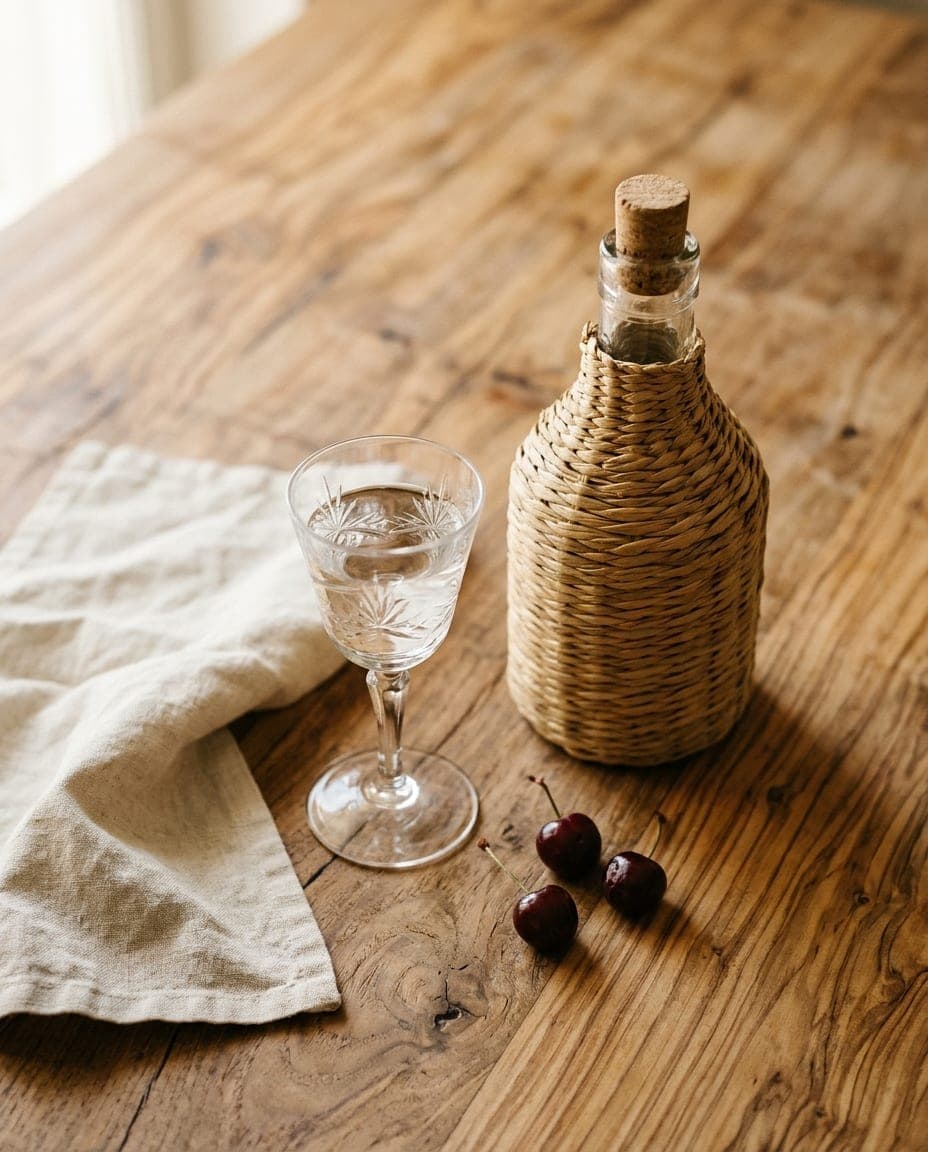
The pairing is specific: a glass of Teran, the dark red wine produced in the nearby hills. The tannins of the wine cut the fat of the soup, while the earthy notes complement the cured pork and maize. This combination is so common that it feels inevitable to the local palate.
Ordered as a starter, it arrives in quantity. It is filling enough to serve as a meal in itself, though locals usually follow it with a main course of meat or fish. The bread is essential; it is not merely an extra but part of the dish's structure.
Curious facts
- A linguistic bridge. The name maneštra comes from the Italian (and Venetian) minestra, reflecting the region's long history of Venetian rule.
- Seasonal flexibility. The vegetable in the pot names the soup: young maize in summer, fennel or chickpeas at other times, and sauerkraut in the winter jota.
- A thick consistency. Locals like to say a good maneštra should hold a spoon upright, a sign that the ingredients have cooked down sufficiently over many hours.
- Village variations. Every village in the interior has its own preferred ratio of beans to maize, and some add barley to their version.
- The pork's role. The pršut bone is there for flavour rather than as a separate course; it is boiled with the vegetables until any meat on it falls into the broth.
Where to try it
The best place to find Istarska maneštra is in a konoba in the inland hills of Istria, around Pazin, Motovun or Buzet. These small taverns serve it as a first course, often alongside other regional dishes. The coast cooks fish; the soup belongs inland, in the villages where the beans and the maize are grown. The soup is available year-round, though the bobići version is at its best in summer, when young maize is in season. Teran, the local red, is the glass beside it.
Where to try it
1 destination
 Boat Rentals
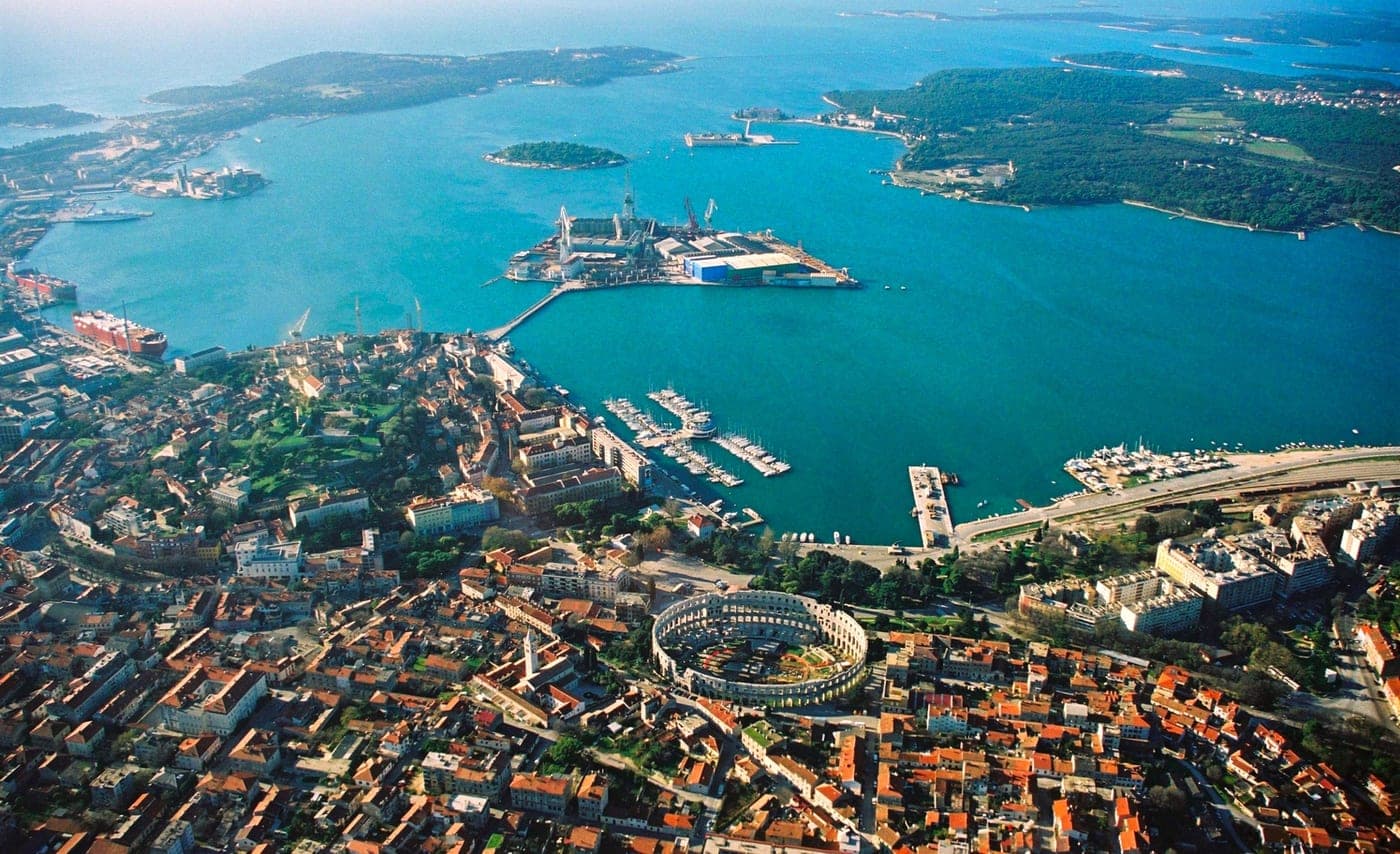
Pula
Ancient Istrian city with remarkably preserved Roman amphitheater and port.
Boat RentalsHikingLocal Cuisine
1 region
 Boat Rentals5 destinations
Istria
Istria is Croatia's largest peninsula, known for its diverse landscape of rolling hills, vineyards, and olive groves. This region features charming towns like Rovinj, famous for its colorful waterfront and Venetian architecture, and Pula, home to one of the best-preserved Roman amphitheaters in the world. The coastal areas provide access to beautiful beaches, while inland, the hilltop villages of Motovun and Grožnjan offer stunning views and rich history. Istria is celebrated for its culinary delights, particularly truffles and local wines like Teran and Malvazija. The region also hosts various cultural festivals, showcasing its vibrant traditions and arts. It's a place where ancient history meets rich gastronomy, ideal for those who wish to explore beyond typical tourist paths.
Boat RentalsHikingLocal Cuisine