Tiroler Speckknödel
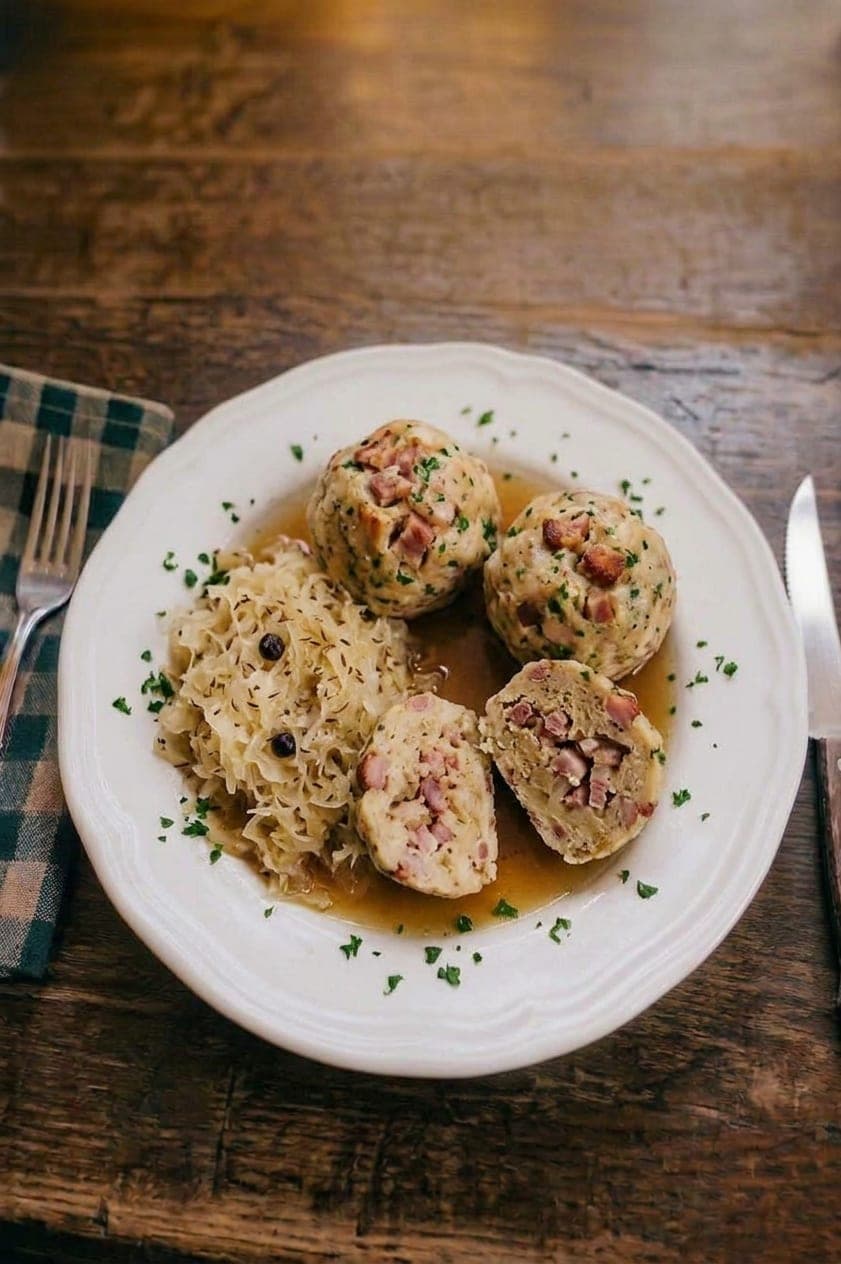
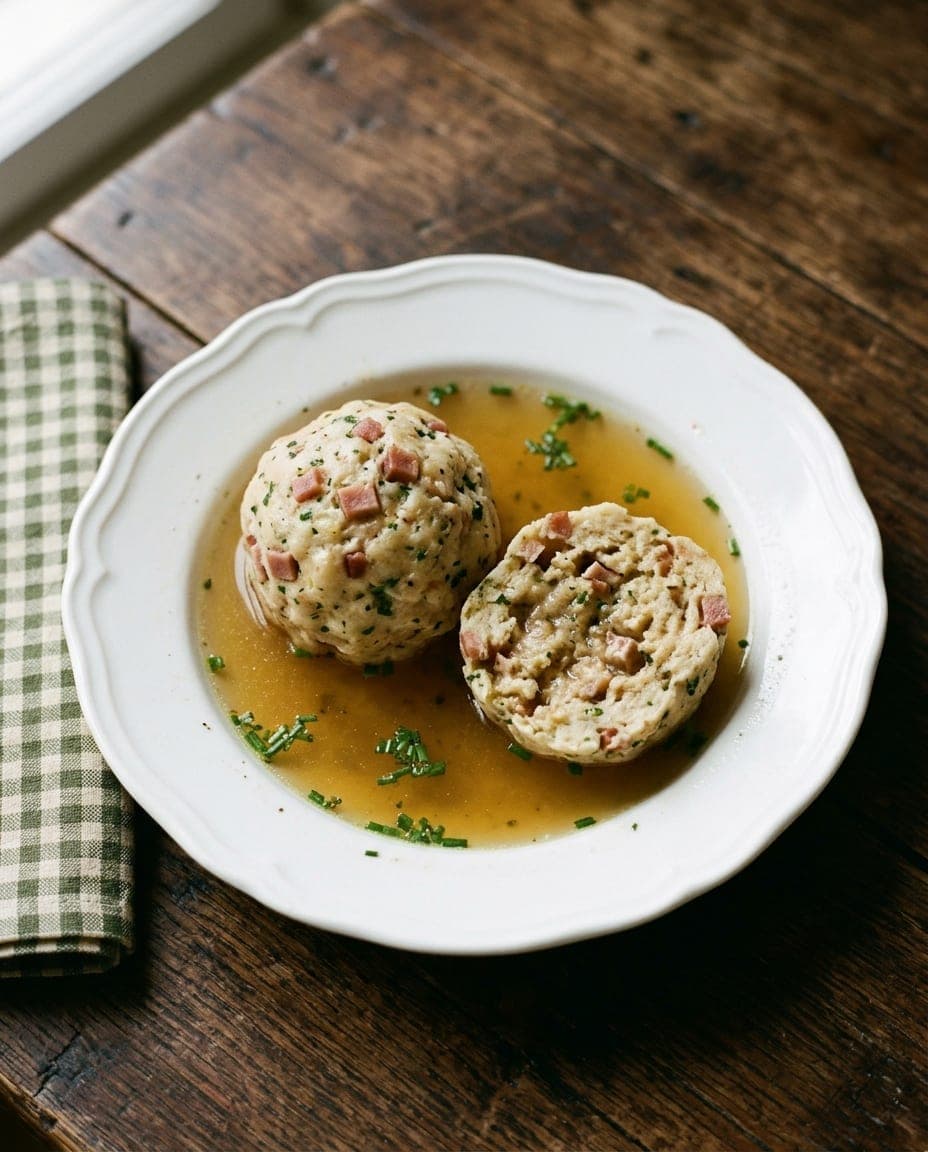
Tyrolean speck dumplings in broth or with sauerkraut
- Local name
- Tiroler Speckknödel
- Served with
- Clear broth or sauerkraut
- Best eaten at
- A Tyrolean mountain hut
- Pairs with
- Tyrolean lager
What it is
Tiroler Speckknödel are bread dumplings with cured ham through them, eaten all over Tyrol. Stale white rolls are diced and soaked in milk, bound with egg, flour, onion and parsley, studded with diced Speck, rolled into balls by hand and simmered until they are firm.
They were assembled out of what a farm kitchen had left: bread going dry, meat that had been cured in autumn to last the winter, milk, an egg. Nothing in the dumpling was bought for it.
Two ways of serving, and a Tyrolean will have an opinion about which is correct. One or two dumplings in a bowl of clear beef broth, which makes a light meal or a first course; or two on a plate with sauerkraut or a warm cabbage salad, which makes a full one.
The role of Speck in Tyrolean cooking
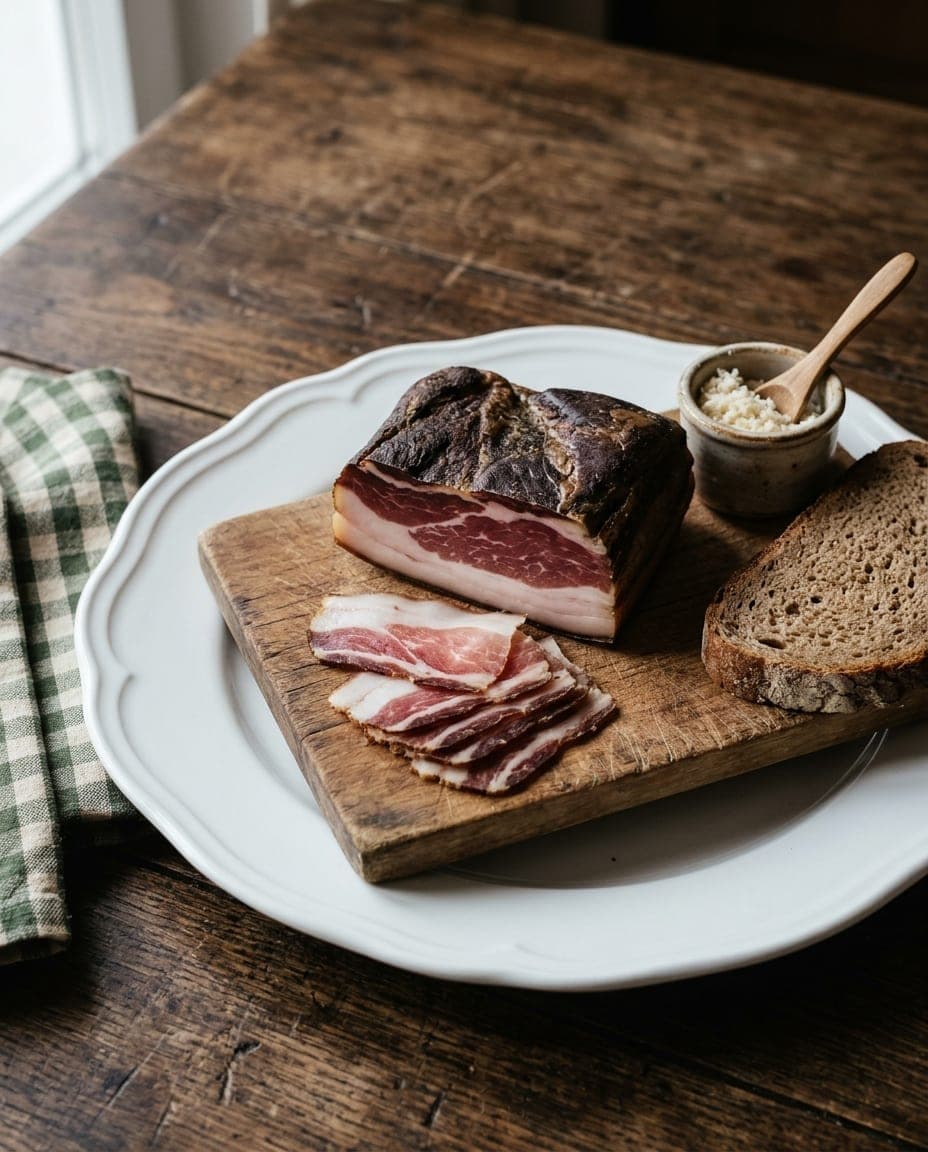
The defining ingredient is the Speck, which distinguishes this dish from other Central European dumplings. Tiroler Speck is not a bacon and not a cooked ham. It is a protected regional product: pork dry-cured with juniper, pepper and garlic, cold-smoked, then air-dried for months in the valley air. Firm, salty, strongly smoky.
Diced through the dumpling, it gives away its fat in the pot and seasons the bread from the inside, which is the whole mechanism of the dish. Without it these are plain bread balls.
The bread has to be stale. A day or two of drying is what lets the cubes take up the milk and still hold together; fresh rolls turn the mixture to paste and the dumplings fall apart in the water.
How it is made
The preparation relies on technique rather than complex ingredients. Stale white rolls are cut into small cubes and soaked in milk until they soften but do not disintegrate. They are then drained and mixed with raw egg, a little flour to bind the mixture, chopped onion, fresh parsley, and the diced Speck. The cook works the mixture by hand to ensure the ingredients are evenly distributed without overworking the dough.
Once formed into balls, the dumplings are gently lowered into simmering water or broth. They cook until they float to the surface and feel firm when pressed. The dumplings themselves are never fried (at most the Speck is sweated in butter first); they are cooked entirely by simmering. This keeps the texture soft and prevents the bread from becoming hard or greasy.
The final presentation dictates the accompanying elements. If served in broth, the liquid is clear and golden, often seasoned only with salt and a touch of parsley. If served with sauerkraut, the cabbage is usually warmed gently to soften its sharpness without losing its crunch. A small amount of butter may be added to the sauerkraut or the dumplings themselves to add gloss, though this is not always required.
How it is eaten
In broth, with a spoon, as a first course or a light lunch; or on a plate, cut open with the side of a fork so the sauerkraut gets into it. A Tyrolean lager is the usual drink, and its bitterness is what the salt of the Speck asks for.
Portions are built for someone who has been outside. One dumpling in broth is a starter; two on a plate with kraut is a day's walking undone.
Curious facts
- A regional boundary. Similar dumplings exist across southern Germany and Austria, but the bread-and-Speck version is most closely tied to Tyrol. Over the border in mostly German-speaking South Tyrol they are Speckknödel too; in Italian, there and in Trentino, they are canederli, made with the local Speck.
- The broth version is the lighter one. In a hut the same dumpling is a main course on a plate with kraut and a first course in a bowl of broth.
- The bread must be stale. Using fresh bread is a common mistake for home cooks. The dumplings rely on the dry texture of day-old rolls to absorb the milk and hold their shape during cooking.
- The Speck came first. The curing existed because the winter did: a pig killed in autumn had to feed a household until spring, and the dumpling is what that larder produced in February.
Where to try it
An Almhütte or a Berggasthof above a Tyrolean village, reached on foot or by cable car, where the menu is a board and the dumplings are made in the morning. The valley inns of the Inn and Ziller valleys serve the same thing in a room with tablecloths. In Innsbruck, a Gasthaus cooking Tyrolean food will have it, usually next to Käsknödel, the cheese version, and Schlutzkrapfen on the same page.
Where to try it
1 destination
 Camper Van Rentals
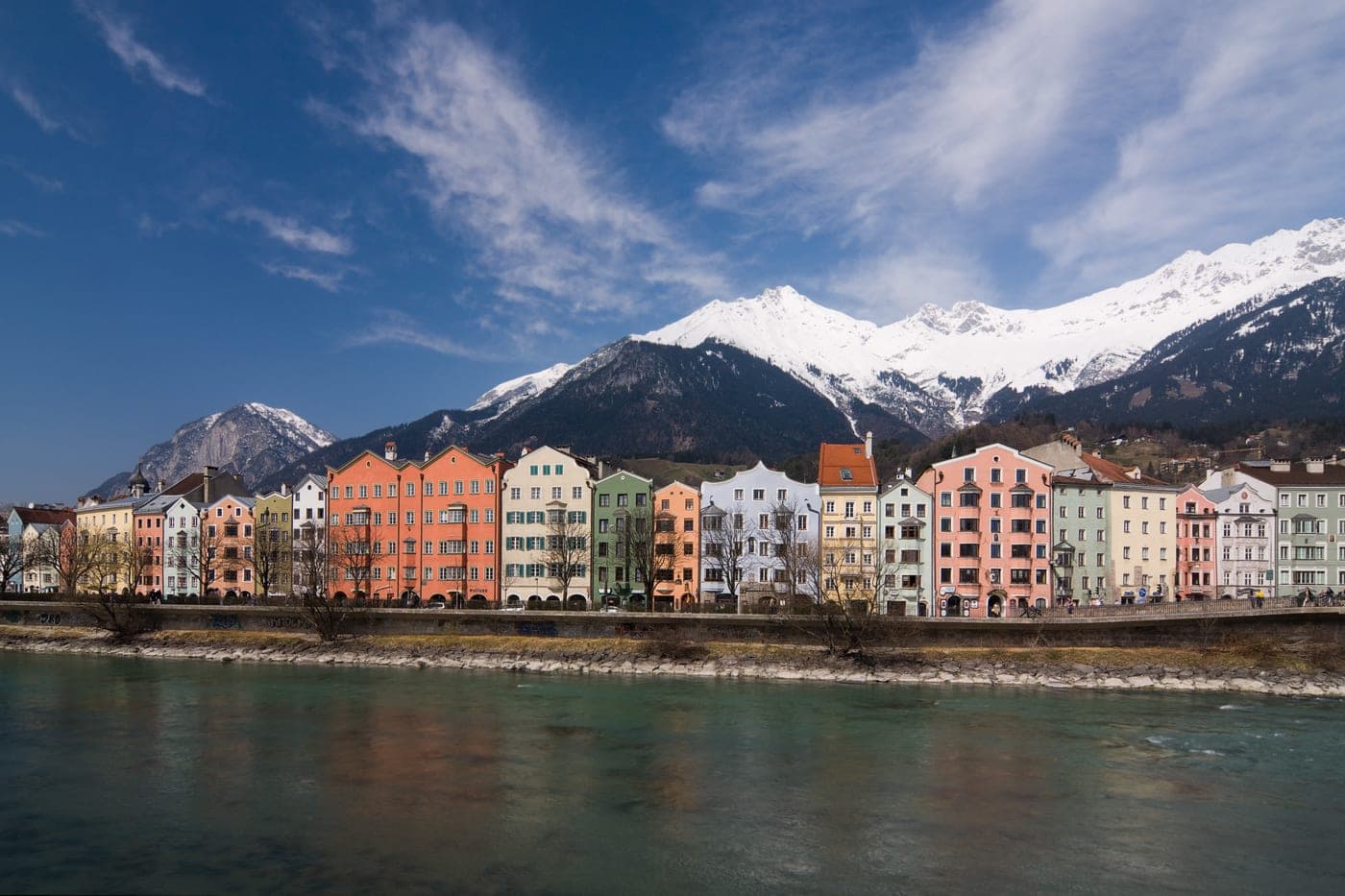
Innsbruck
Alpine city renowned for its imperial architecture and winter sports.
Camper Van RentalsHikingLocal Cuisine
1 region
- Camper Van Rentals2 destinations
Tyrol
Nestled in the heart of the Alps, this region is renowned for its stunning landscapes and traditional alpine culture. Innsbruck, the capital, is famous for its historic architecture and the iconic Golden Roof. Smaller towns like Hall in Tirol and Rattenberg showcase medieval charm and rich local traditions. The region is known for its outdoor activities, including hiking in summer and skiing in winter, along with unique culinary offerings such as Tyrolean dumplings and apple strudel. Tyrol is also home to numerous historic castles and museums that reflect its rich heritage. Off the beaten path, the Ötztal Valley offers breathtaking trails and authentic mountain huts, ideal for a deeper connection with nature and local life.
Camper Van RentalsHikingLocal CuisineCastles