Gailtaler Speck
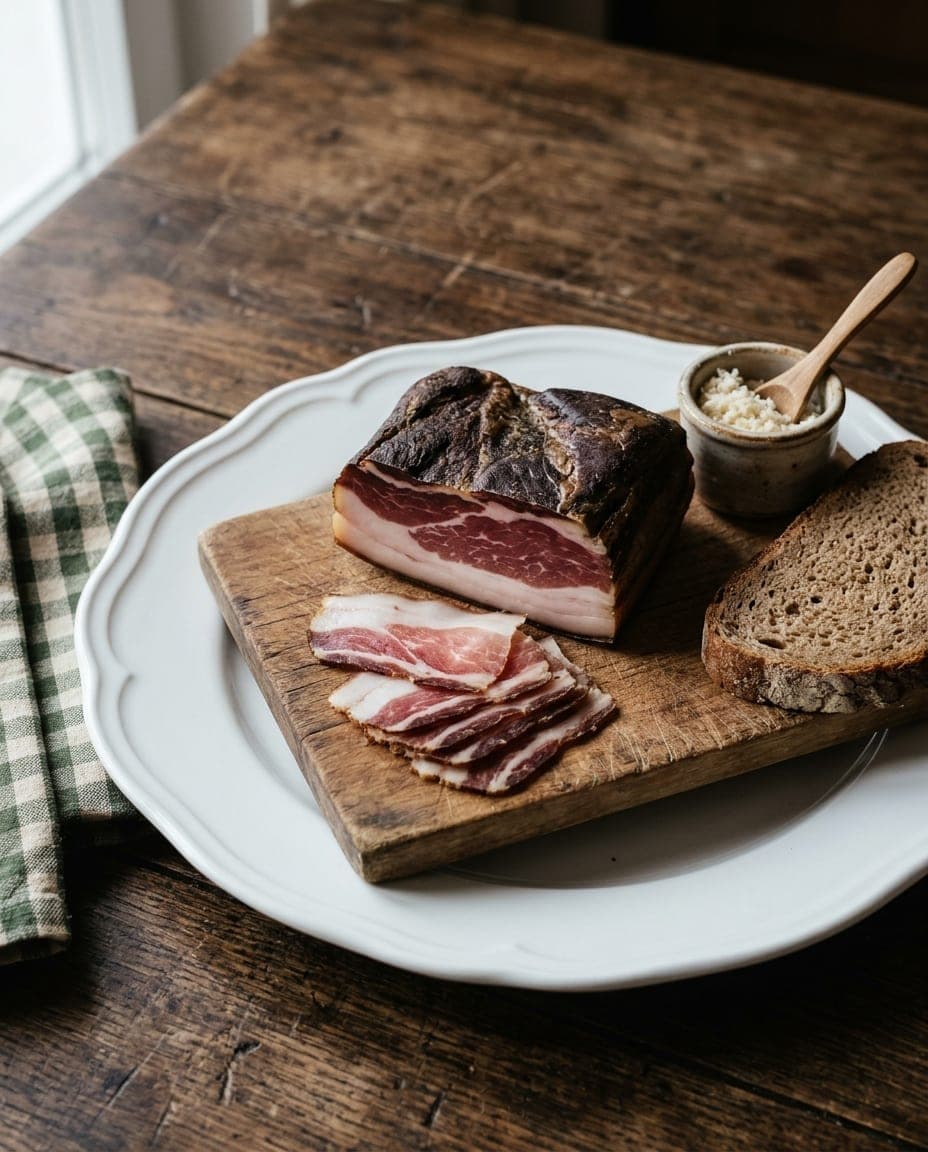
One valley's cured pork, cut thick with a knife
- Local name
- Gailtaler Speck
- Served with
- Farmhouse bread, horseradish
- Best eaten at
- A Carinthian Jause
- Pairs with
- Carinthian beer or Schnaps
What it is
Gailtaler Speck is cured pork from the Gail valley, a long east–west valley in Carinthia running towards the Italian and Slovenian borders. Belly, loin, leg and shoulder are all used. The meat is dry-cured with salt, pepper, garlic and herbs such as juniper and caraway, cold-smoked over beech wood, then hung to ripen for weeks or months until it is firm enough to cut and still soft enough to bite.
The name carries an EU protected geographical indication, which ties the curing and drying to that valley and to its farms. The result is a slice that is neither greasy nor hard, mildly salty with a clear note of smoke.
Where it comes from
There is no inventor and no date here, only a valley that kept doing something. Curing was how a farm made one autumn pig last until spring, and the Gail valley's cool, moving air did the drying that a cellar elsewhere could not.
What the protection does is fix that arrangement in law. The pigs must come from the valley, from set breeds and on a regulated diet, the curing and drying happen in the valley, and a Speck made the same way one valley over is simply a different Speck.
What goes into it
Very little goes into it, which puts all the weight on the pork and the air of the valley:
- Pork from pigs raised in the Gail valley: belly, loin, leg or shoulder, boneless.
- Salt and spices, rubbed on as a dry cure with pepper, garlic and herbs such as juniper, to draw out moisture and begin the preservation process.
- Smoke, cold and over beech wood, applied in stages with breaks for fresh air — enough to flavour the meat, not to cook it.
- Valley air, which allows the meat to ripen slowly over several weeks or months, concentrating its flavour.
It is cut by hand, in thick uneven slices off the slab, rather than shaved by machine — a farmhouse habit that survives because the fat behaves differently when it is cut thick.
How to eat it
As part of a Jause: a wooden board, mid-morning or mid-afternoon, with farmhouse bread, grated horseradish and usually a slice of the valley's own alpine cheese, which carries a protected designation of its own. The horseradish is the sharp thing on the board and the reason the salt works.
It is a raw cured meat and is not cooked. A glass of beer or a small measure of Schnaps is the usual accompaniment.
Curious facts
- A strict border. The protected status means the meat must be cured entirely within the Gail valley boundaries to carry the name.
- The smoke is cold. It is smoked at low temperature with pauses for fresh air, so the meat takes on flavour without cooking.
- Part of a trio. It is rarely served alone on a Jause, but usually alongside alpine cheese and horseradish as a complete savoury set.
- The bread is part of it. A dense sourdough loaf, cut thick, is what the slices are eaten on — not a roll and not a cracker.
- No cooking required. Unlike many cured meats that are fried or boiled before serving, Gailtaler Speck is intended to be eaten raw and sliced fresh.
Where to try it
The Gail valley itself, where a Gasthaus or a farm will put a board together on request, and several farms sell the slab by weight at the door. A hut on the slopes above the valley will do the same for walkers. Elsewhere in Austria the protected name on a label is reliable; what is harder to find outside the valley is someone willing to cut it by hand.
Where to try it
1 region
 Wine Tasting7 destinations
Carinthia
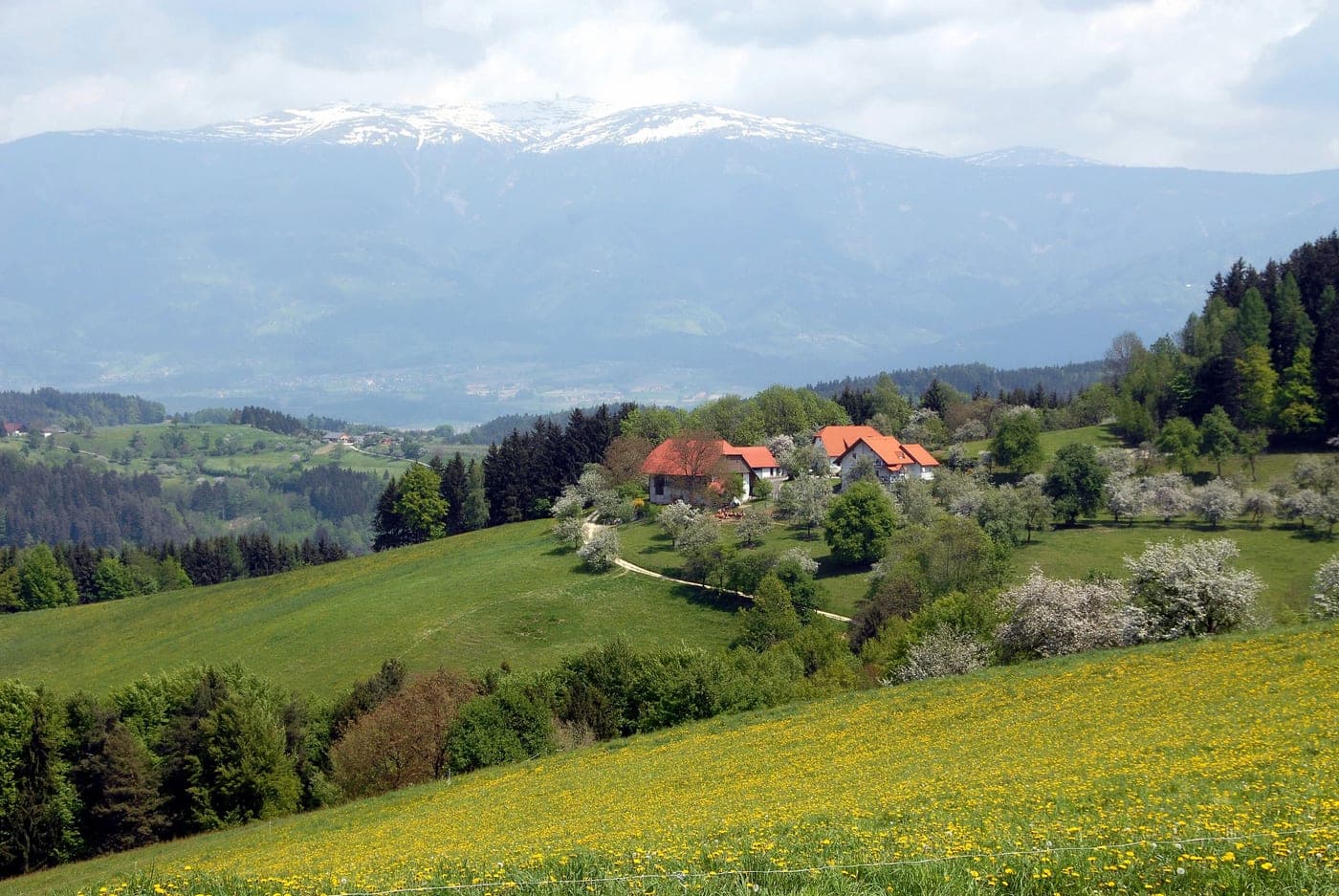
Carinthia, Austria's southernmost region, is renowned for its stunning lakes and mountains. The largest lake, Wörthersee, is famous for its turquoise waters and vibrant summer festivals. Klagenfurt, the capital, features the historic Lindwurm fountain and a beautiful old town. The region boasts rich Slavic heritage, reflected in its cultural events and cuisine, such as hearty stews and local cheeses. Nature enthusiasts will appreciate the Nockberge National Park, offering scenic hiking trails. Carinthia also has a unique blend of Italian and Austrian influences, evident in its architecture and gastronomy, making it a fascinating area for deep exploration.
Wine TastingHikingCastles