Innviertler Speckknödel
Boiled dumplings with a heart of cured pork
- Local name
- Innviertler Speckknödel
- Served with
- Warm cabbage salad, sauerkraut
- Best eaten at
- An Innviertel Gasthaus
- Pairs with
- Local Innviertel beer
What it is
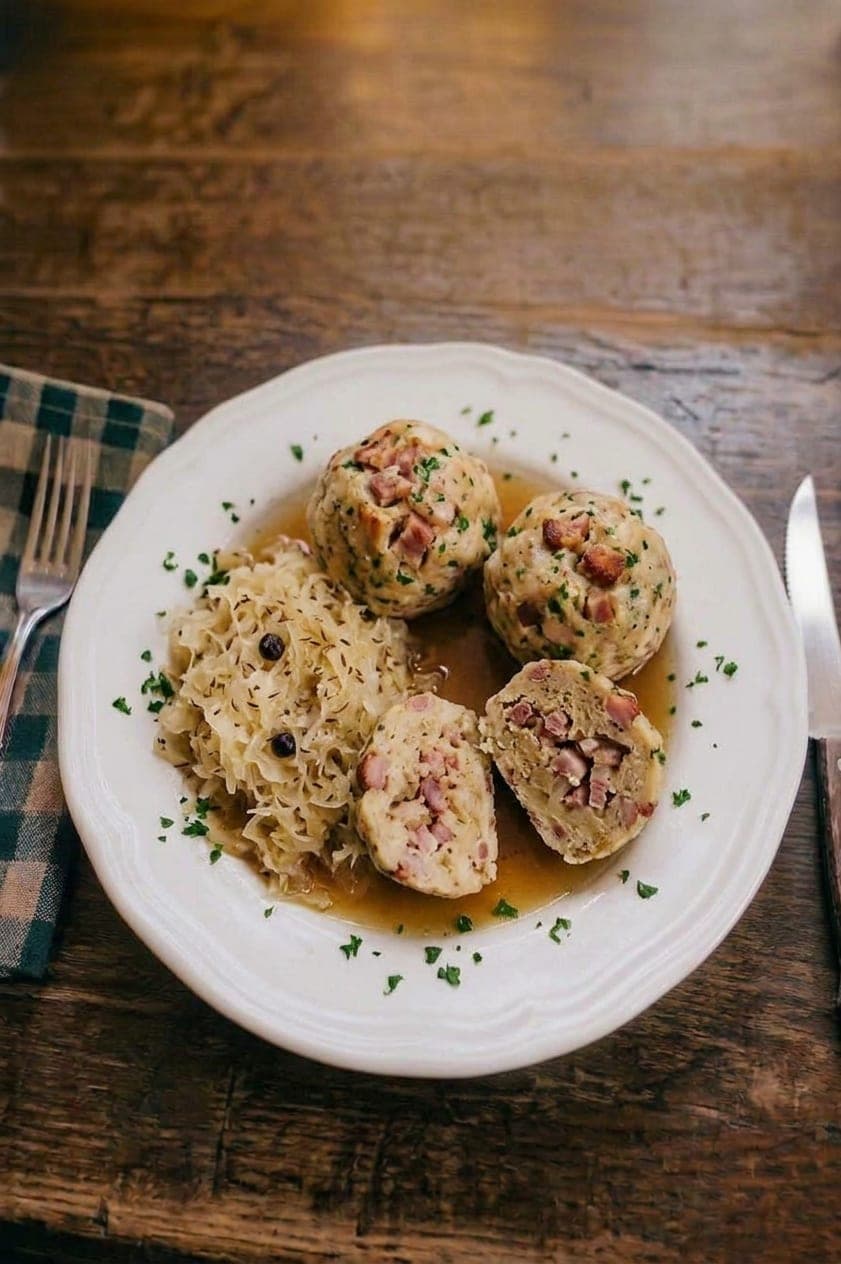
Innviertler Speckknödel are substantial dumplings from the north-western corner of Upper Austria, known locally as the Innviertel. The name translates literally to "Innviertel bacon dumplings", a description that fits the dish's composition precisely. They consist of a plain dough of flour, egg and milk or water — some kitchens use a bread dough instead — wrapped round a savoury filling of diced cured, often smoked pork belly (Speck).
They are a main course, not a side: two on a plate with sauerkraut and nothing else. The dough has to be elastic enough to hold a salty, fatty filling through twenty minutes in the water without splitting, which is the whole skill of the dish.
Where it comes from
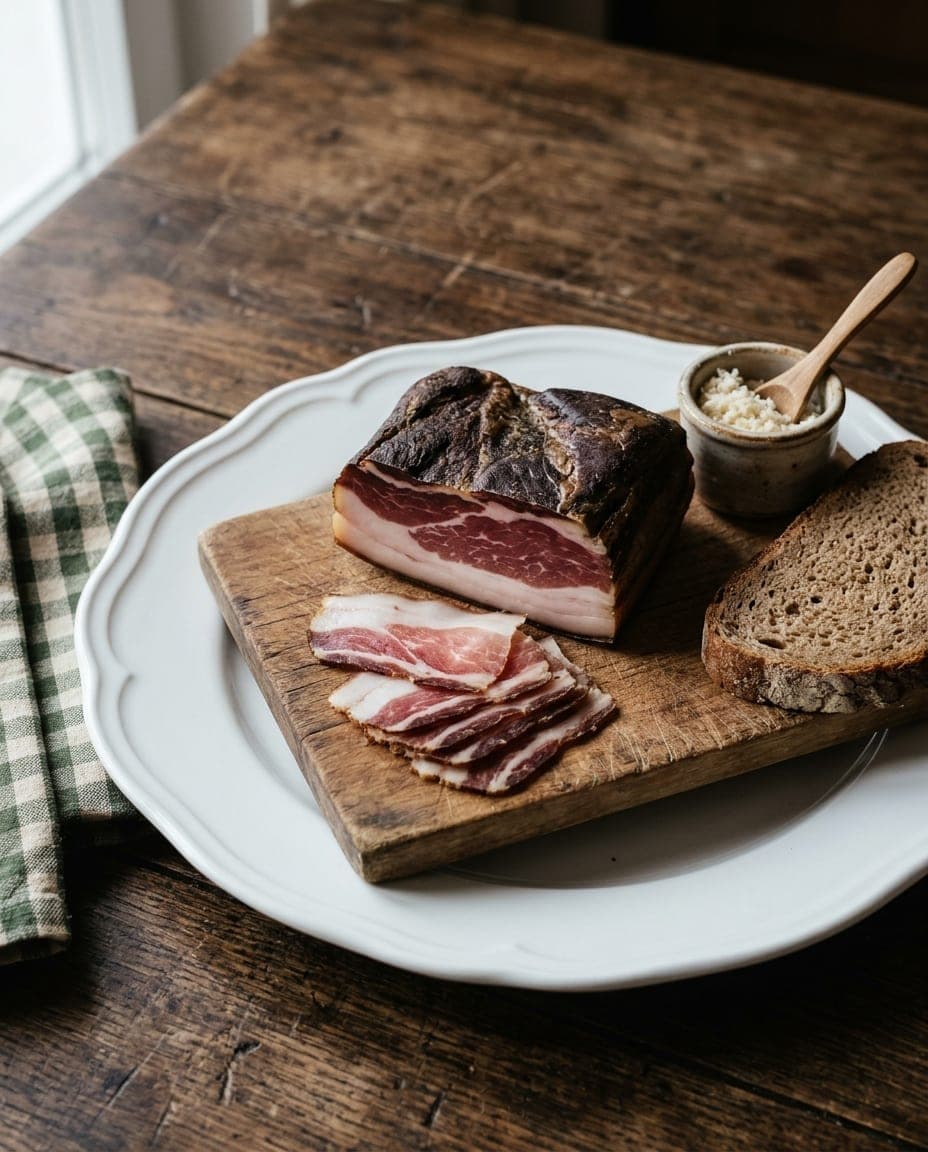
The Innviertel is the north-western corner of Upper Austria, low rolling country between the Inn and the Danube, with Bavaria on the other side of the river. It is pig country, which is why the filling is pork and not beef or game, and why nothing is wasted: the Speck is from the pig killed in autumn, traditionally kept under lard in a tub as Kübelspeck, and the Grammeln left after rendering the lard go into its sibling, the Grammelknödel.
Filled dumplings of this kind are made across Austria and Bavaria. The Innviertel version is distinguished by how much goes inside it, and it is a regional dish rather than a national one — most at home on the menus of the Gasthäuser between Ried im Innkreis and Schärding, though it is found across Upper Austria.
How it is made
The preparation relies on a balance of textures. The dough is kneaded from flour, egg and milk or water into a smooth, pliable mass and left to rest. Inside, the filling consists of cubes of smoked or salted pork belly, pressed into small balls before the dough is folded round them. The filling is seasoned simply, often with just pepper and perhaps chives or parsley, allowing the quality of the pork to shine through.
The dumplings are formed into large balls and simmered gently in water or broth until they float and become tender on the outside while remaining soft inside. They are then drained and served immediately. There is no frying involved in the final cooking stage, ensuring the exterior remains soft rather than crispy. It is substantial food, and the interest is in the contrast: smooth dough, salty chew.
How to eat it
In a Gasthaus, as a main course, with sauerkraut or a warm Krautsalat — white cabbage wilted with vinegar, oil and caraway — which is there to cut the fat, and does.
The Innviertel brews its own beer and a glass of it is the standard drink with them. One large dumpling is a lunch; two is a decision.
Curious facts
- Not a potato dumpling. The dough is usually just flour, egg and liquid, or a bread dough; potato dough is kept for the Grammelknödel.
- The filling is the star. The Speck is not merely an ingredient but the defining element, providing a chewy, salty contrast to the smooth exterior.
- Regional specificity. While Bavaria has similar dishes, this version carries the name of the Innviertel and is seldom seen on menus outside Upper Austria.
- One of three. The traditional Innviertler Knödelteller puts a Speckknödel beside a Grammelknödel and a Fleischknödel, on sauerkraut or warm cabbage salad.
- Served as a main course. Unlike many European dumplings that accompany roast meats, these are often served on their own with only salad or sauerkraut as a side.
Where to try it
A Gasthaus in the Innviertel itself — the towns along the Inn, Schärding and Ried im Innkreis among them — where they are made in the morning and sold until they run out. They are lunch food more than dinner food, and a kitchen that has them on a handwritten board rather than the printed menu made them that day.
Where to try it
1 region
 Wine Tasting6 destinations
Upper Austria
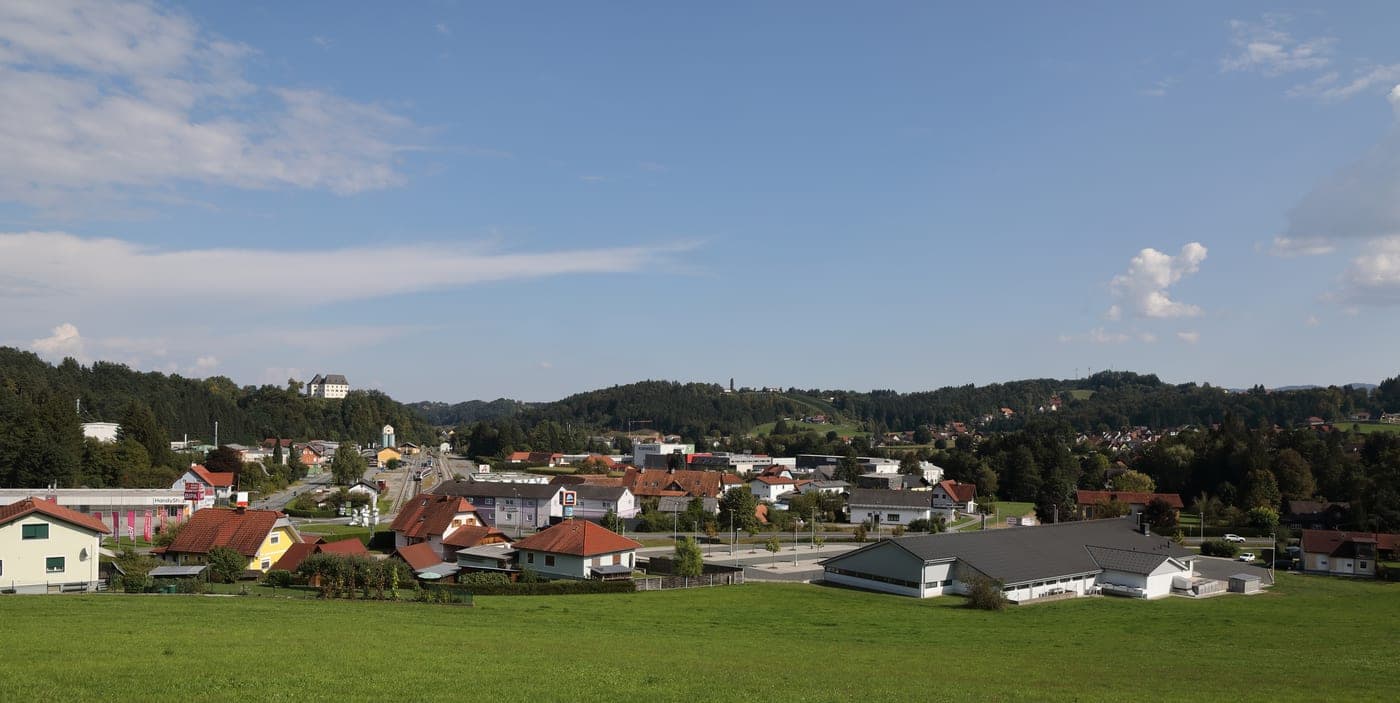
Upper Austria is known for its stunning landscapes, featuring the Danube River and the foothills of the Alps. The largest city, Linz, is a cultural hub with a rich industrial heritage, hosting the Ars Electronica Center for contemporary media art. The region is also famous for its picturesque lakes, such as Traunsee and Attersee, which offer outdoor activities like hiking and sailing. Explore charming towns like Gmunden, known for its pottery, and Steyr, where medieval architecture meets a vibrant textile industry. Upper Austria's history includes significant events from the Habsburg era and the industrial revolution, making it a fascinating destination for those interested in cultural depth and local traditions.
Wine TastingHikingCamper Van Rentals