Kaiserschmarrn
A torn caramelised pancake served with plum compote
- Vegetarian
- Local name
- Kaiserschmarrn
- Served with
- Zwetschkenröster plum compote
- Best eaten at
- An alpine mountain hut
- Pairs with
- Wiener Melange coffee
What it is
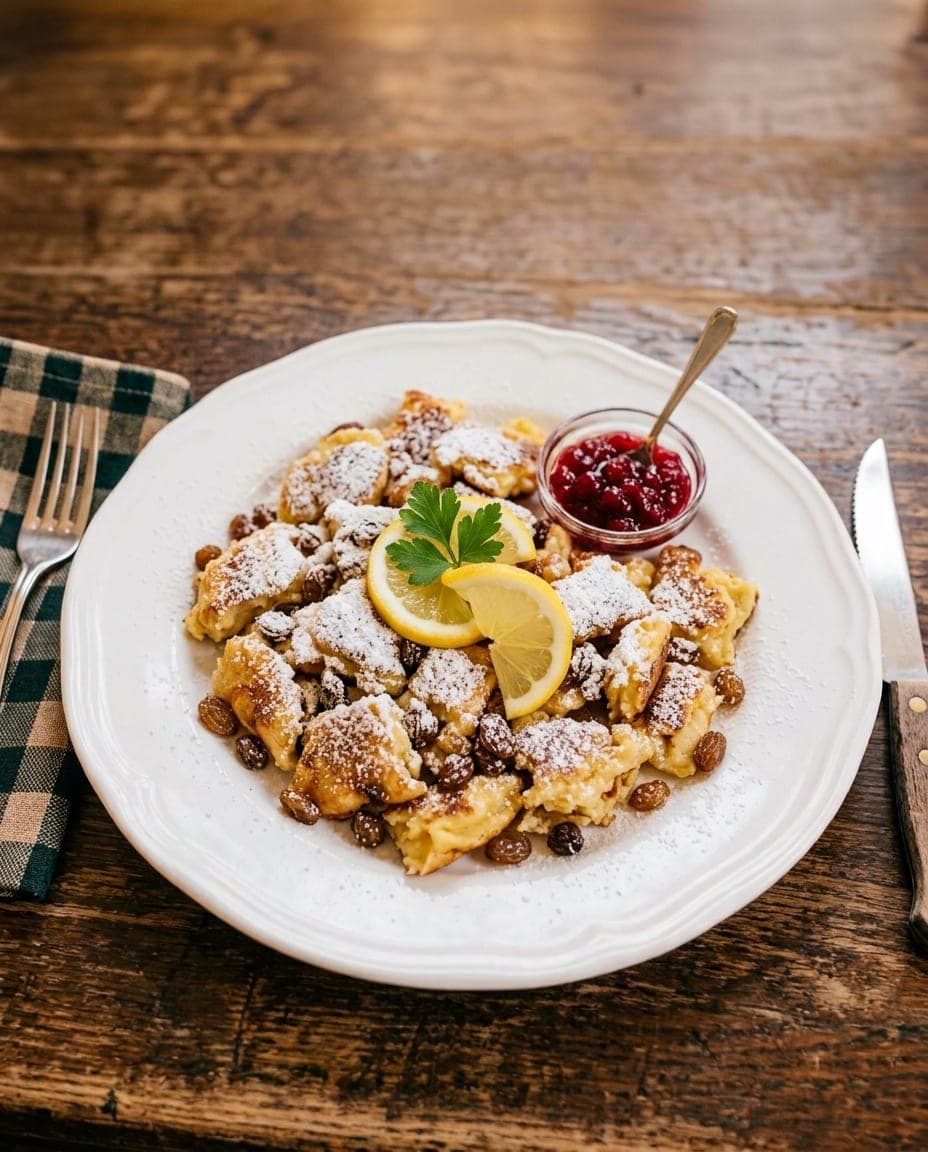
Kaiserschmarrn is a sweet, fluffy pancake that has become one of the most recognisable dishes across Austria, from the city streets of Vienna to the high mountain huts of Salzburg. The name combines Kaiser, meaning emperor, with Schmarrn, a colloquial term for a mess or a crumble. It describes the dish perfectly: a thick batter cooked in a pan until golden, then torn into rough, bite-sized pieces and caramelised further in butter before being served piled high under a dusting of icing sugar.
The inside stays soft and airy, the torn edges go slightly crisp in the butter, and the whole thing is served with Zwetschkenröster, a compote of stewed plums, or with apple sauce. It is eaten throughout Austria and is on most menus in the Alpine valleys, where it is as often a main course as a dessert: the portions are built for someone who has spent the day outside, and the tearing is what gives the sauce and the butter something to hold on to.
The emperor's mess
The name Kaiserschmarrn suggests a link to the Habsburg monarchy, specifically Emperor Franz Joseph I, who reigned for over sixty years during the late 19th and early 20th centuries. Several stories attempt to explain how this dish came to bear his name, yet none are supported by written documentation from the era they describe. The accounts contradict one another, and historians generally agree that the true origin remains a matter of folklore rather than fact.
In one telling the dish was made for the court and the emperor ate what the empress refused; in another a cook tore a pancake that had failed and served it anyway; in a third the emperor ate it in a farmhouse or a hut while out hunting and asked for it again. The versions place it in different kitchens, in different decades, and with different people at fault, which is a reliable sign that none of them is a record.
What is certain is the plainer half of the name. In everyday Austrian speech a Schmarrn is a mess or a piece of nonsense — "red kan Schmarrn" means stop talking rubbish — so the dish is, literally, the emperor's mess. Whether an innkeeper attached the emperor to it afterwards, as innkeepers did with a great many dishes in those decades, is not knowable from what survives.
How it is made
The batter for Kaiserschmarrn begins with flour, eggs, milk and sugar, often enriched with a pinch of salt. Some versions include vanilla or rum-soaked raisins, which become plump and sweet as they cook within the thick batter. The mixture is poured into a large pan that has been generously greased with butter, allowing the pancake to spread out into a thick, round cake.
Once the bottom side is set and golden, the cook does not flip the pancake in one piece. Instead, they use a spatula or fork to tear the cake into rough, irregular strips and chunks while it continues to cook. These pieces are tossed in the pan with more butter until every surface develops a caramelised crust. The torn pieces end up soft inside and caramelised on every edge.
Nothing about the shapes is uniform, and nothing is meant to be. Once the butter has browned and the pieces are cooked through they are piled on a plate, well above the rim, and dusted with icing sugar.
What goes into it
The ingredients are those of an Alpine farm kitchen:
- Flour, eggs, milk and sugar: The base of the batter, creating a thick consistency that holds its shape when torn.
- Raisins: Often plumped in rum or water before being folded into the batter, adding bursts of sweetness and texture.
- Butter: For the pan and for the tossing, and the reason the torn edges brown.
- Icing sugar: A generous dusting applied just before serving to sweeten the surface without melting into the warm cake.
The sweetness is in the batter and the icing sugar; the tartness of the plum compote beside it is what stops the plate becoming too much.
How to eat it
Kaiserschmarrn is typically served as a dessert in city restaurants, but its role changes when eaten in an alpine mountain hut. In these high-altitude settings, it is often presented as a substantial main course, designed to refuel hikers and skiers after hours of physical exertion. The portion sizes are large, frequently enough for two people or a very hungry single diner.
A small bowl of Zwetschkenröster comes beside it, or the compote is spooned over the top: stewed plums cooked down thick, often with cinnamon or a little clove, sharp enough to cut the butter and the sugar. It is eaten with a fork or a spoon, and a Wiener Melange or a pot of tea is the usual drink with it.
Curious facts
- The name means nonsense. Schmarrn is an everyday Austrian word for a mess or something ridiculous, suggesting the dish was originally considered a chaotic or humble creation before becoming a national favourite.
- A mountain-hut staple. While it is counted part of Viennese cuisine, the dish is a fixture of the huts of the Salzburg and Tyrolean Alps, where it serves as a practical meal for mountain hikers.
- Served as a main course. In many alpine settings, the portion size and caloric density are such that it functions as a full meal rather than just a sweet ending to lunch or dinner.
- The fruit pairing is essential. The tartness of the Zwetschkenröster plum compote is considered necessary to balance the sweetness of the caramelised batter and icing sugar.
- No single recipe exists. Every kitchen has its own ratio of raisins to batter and its own way of tearing the pancake — with two forks, a spatula or the edge of a spoon.
Where to try it
An Almhütte or a Berggasthof — a hut or an inn on the mountain — in the Salzburg Alps or the Tyrolean valleys is where the dish is at its most useful: a long wooden table, a short menu, and a portion sized for someone who walked up. One order is often enough for two, and most huts will say so if asked. In the towns, a Gasthaus serves it as a dessert in a smaller portion, and the Salzkammergut lake inns and the Zillertal each have their own habits about how wet the compote should be. It is on enough menus across the country that finding one is never the problem.
Where to try it
1 region
 Castles3 destinations
Salzburg
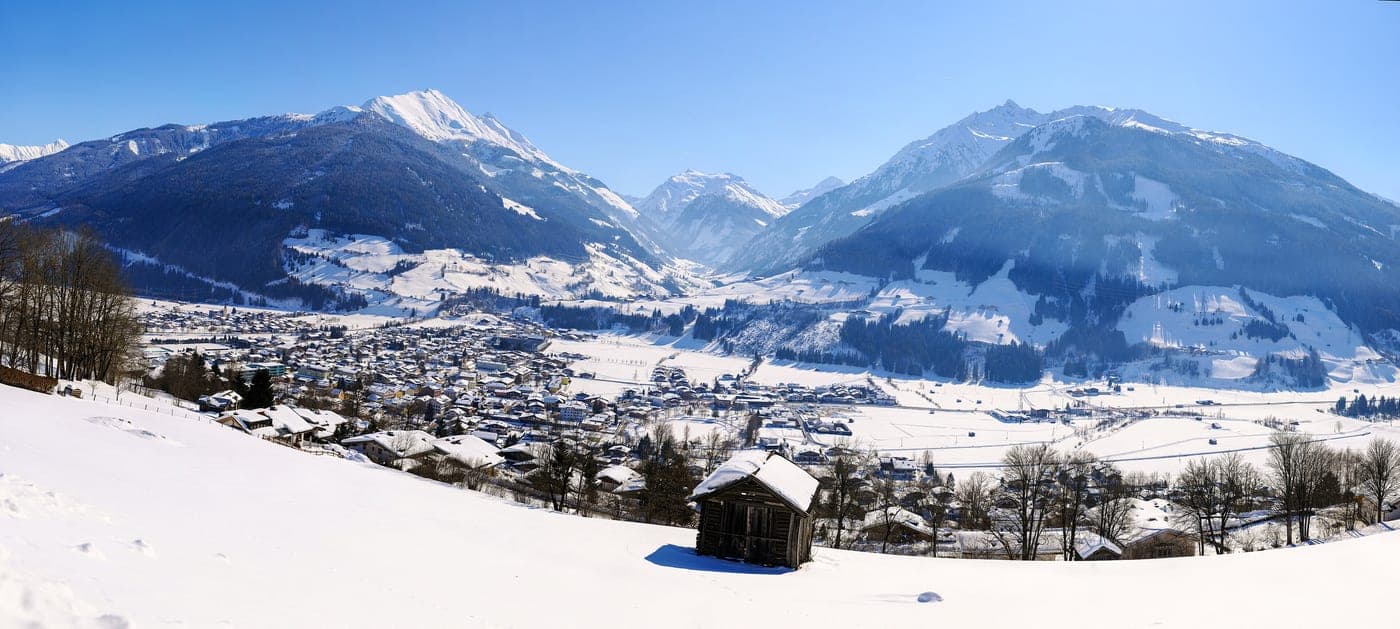
Nestled in the Alps, this region is renowned for its baroque architecture and stunning landscapes. Salzburg is the birthplace of Mozart and boasts a rich musical heritage. The region is characterized by picturesque lakes, including the beautiful Wolfgangsee, and the majestic peaks of the surrounding mountains. Hidden gems like the charming village of St. Gilgen and the historical town of Hallein invite exploration. Salzburg's unique salt mines, dating back to prehistoric times, reveal its historical significance in trade. The region hosts various local festivals, including the Salzburg Festival, celebrating music and theater, making it an intriguing locale for cultural exploration. Ideal for those seeking to connect with both nature and history, this area offers a wealth of experiences off the typical tourist path.
CastlesHikingWine TastingCamper Van Rentals