Apfelstrudel
Pastry pulled thin enough to read through
- Vegetarian
- Local name
- Apfelstrudel
- Served with
- Vanilla sauce or whipped cream
- Best eaten at
- A Viennese coffee house
- Pairs with
- Wiener Melange coffee
What it is
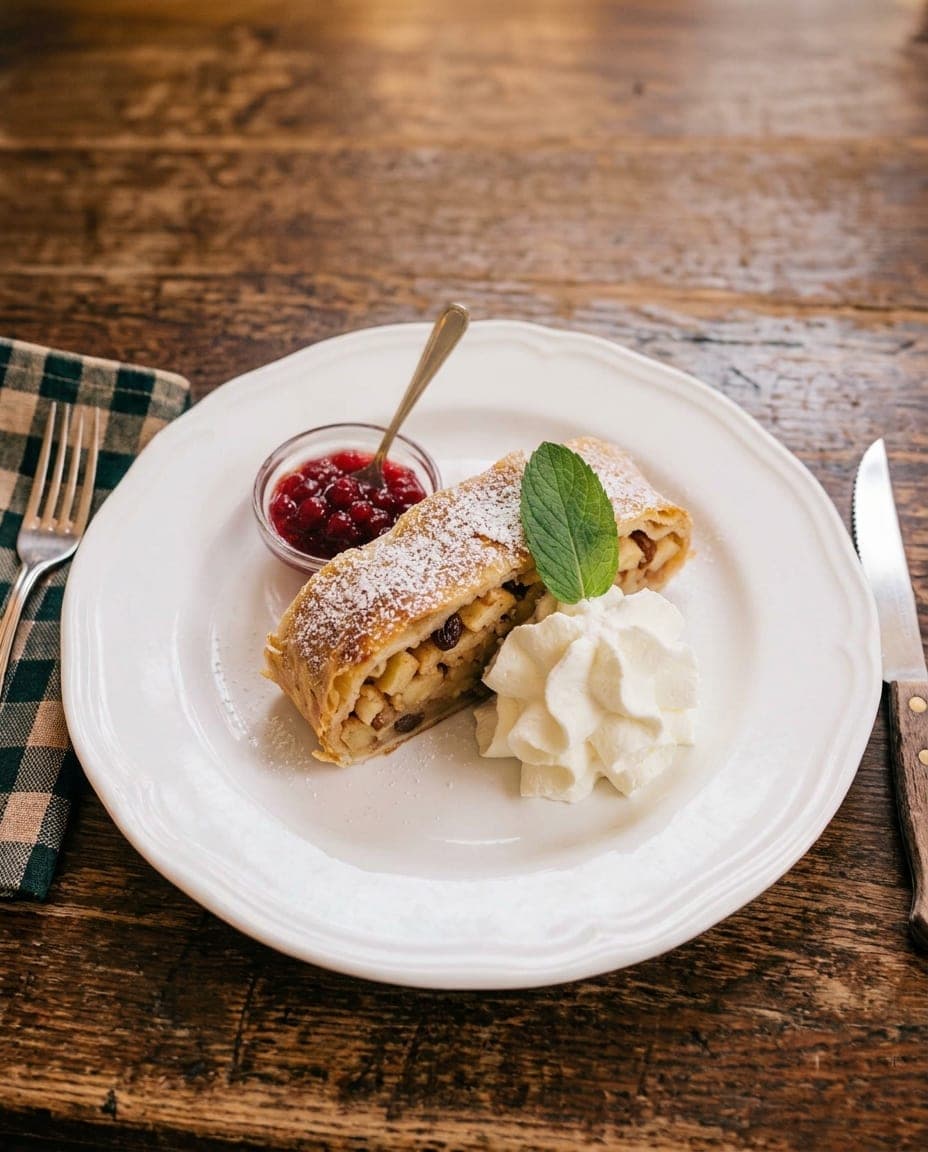
Apfelstrudel is a long roll of very thin pastry wrapped around tart apples, sugar, cinnamon, raisins and buttery fried breadcrumbs, baked until the outside is crisp and the fruit inside has collapsed into something soft and scented. It is cut across into thick slices, so each one shows the spiral of dough and filling in section. In Austria it is eaten warm, as a dessert or in the middle of the afternoon, usually with vanilla sauce or a spoonful of whipped cream.
The word Strudel means whirlpool or eddy in German, and it describes the shape rather than the filling: any thin sheet of dough rolled around something is a strudel, which is why the Austrian repertoire also includes strudels of sour cherries, poppy seed, curd cheese and cabbage. Apple is simply the one that travelled.
Where the pastry comes from
The dough, not the apple, is the part with a history. Pulled pastry of this kind belongs to a family of layered and stretched doughs that runs through Ottoman and Hungarian cooking, and it reached Vienna through the long contact between the Habsburg lands and their neighbours. Austrian, Hungarian and Turkish kitchens all have a claim on the technique; Austria's contribution is what it did with it afterwards, not its invention.
The oldest known written strudel recipe is a handwritten one held in the Vienna city library, and it is not for an apple strudel at all: it describes a Milchrahmstrudel, a milk-cream strudel, and dates from 1696. By the 19th century strudel was fixed in the city's coffee houses, which suited it: a slice of something sweet, cut to order, eaten slowly over a newspaper and a long coffee.
How the dough is stretched
A strudel dough is flour, water, salt and a little oil or melted butter, kneaded until it is smooth and elastic, then left to rest. What follows is the part that separates a strudel from other pastries. The dough is rolled out on a cloth spread over a table, then stretched from the middle outwards over the backs of the hands, the cook working around the table until the sheet covers it completely and hangs over the edges.
The test is whether a newspaper laid under the sheet can still be read through it. At that point the dough is scattered with the breadcrumbs, the apples are laid along one edge, and the cloth is used to roll the whole thing up and lift it onto a tray. Many bakeries take a shortcut with Blätterteig, puff pastry, and in western Austria strudel is sometimes made with a shortcrust or curd-cheese dough instead. These bake into something flakier or heavier. They are sold as Apfelstrudel and nobody pretends otherwise, but the hand-pulled version is a separate pleasure and worth seeking out.
What goes into it
- Tart cooking apples, peeled and sliced thin — a firm, acidic variety such as Boskoop, which holds its shape instead of turning to purée.
- Sugar and cinnamon, enough to season the fruit rather than sweeten it into a jam.
- Raisins, often soaked first in rum or warm water so they plump rather than scorch.
- Fried breadcrumbs, made from stale bread turned in butter until golden.
- Butter, brushed over the pastry before and during baking.
The breadcrumbs are the part people leave out and then regret. Apples release a great deal of juice as they bake, and in a sheet of pastry this thin there is nothing to hold it: the crumbs take up the liquid, keep the dough dry from the inside and stop the roll splitting along its base.
How to eat it
Warm, and soon after it is cut. In a Viennese coffee house a slice arrives on a small plate with a fork, dusted with icing sugar, and with either a jug of Vanillesauce or a spoonful of Schlagobers, whipped cream, on the side. The standard drink with it is a Wiener Melange, the Viennese coffee with steamed milk and foam.
In Tyrol and the rest of western Austria, Apfelstrudel is as likely to turn up in a Gasthaus at the end of a walking day, in a wider slice and sometimes with vanilla ice cream, which is the modern version and now entirely normal. Either way it is not a pastry to carry away in a bag: the crust softens within the hour.
Curious facts
- The oldest strudel on record is not apple. The handwritten recipe in the Vienna city library is for a milk-cream strudel, from 1696.
- The name describes a shape. Strudel means whirlpool, which is why cabbage and curd cheese strudels are strudels too.
- The newspaper is a real test. Cooks stretch the dough over a cloth until print laid underneath can be read through it.
- The breadcrumbs are structural. Fried in butter and scattered under the fruit, they absorb the juice that would otherwise soak the dough.
- Puff pastry is the common shortcut. Plenty of strudel sold in bakeries today is made with Blätterteig rather than hand-pulled dough.
- An apple is named after it. Strudler is a tart Austrian apple variety, named for the pastry it suits best.
- The tradition is shared. Stretched and layered doughs of this kind are Ottoman and Hungarian as much as Austrian, a legacy of centuries of contact across the empire.
Where to try it
In Vienna, a traditional coffee house that bakes its own is the setting the pastry was built around — marble tables, a rack of newspapers, and no pressure to leave. Many of these rooms have been in business for well over a century. In Tyrol, and across the Alpine west, strudel belongs to the inns and small bakeries of the valleys, where it is sold by the slice from the counter all day. The thing to ask, in either place, is whether the dough is handgezogen — hand-pulled. Where it is, the answer tends to come with some pride.
Where to try it
2 regions
 Camper Van Rentals2 destinations
Tyrol
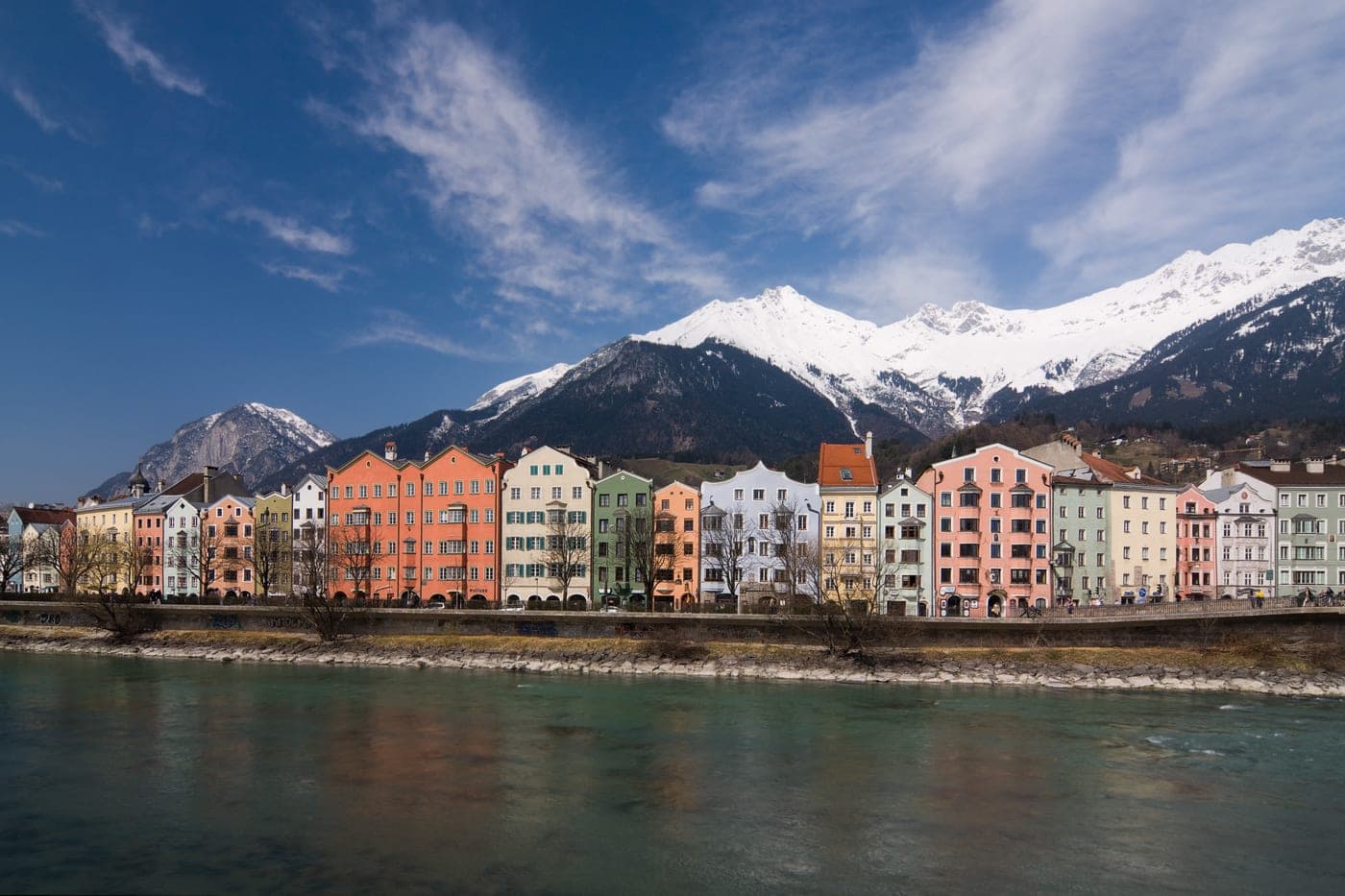
Nestled in the heart of the Alps, this region is renowned for its stunning landscapes and traditional alpine culture. Innsbruck, the capital, is famous for its historic architecture and the iconic Golden Roof. Smaller towns like Hall in Tirol and Rattenberg showcase medieval charm and rich local traditions. The region is known for its outdoor activities, including hiking in summer and skiing in winter, along with unique culinary offerings such as Tyrolean dumplings and apple strudel. Tyrol is also home to numerous historic castles and museums that reflect its rich heritage. Off the beaten path, the Ötztal Valley offers breathtaking trails and authentic mountain huts, ideal for a deeper connection with nature and local life.
Camper Van RentalsHikingLocal CuisineCastles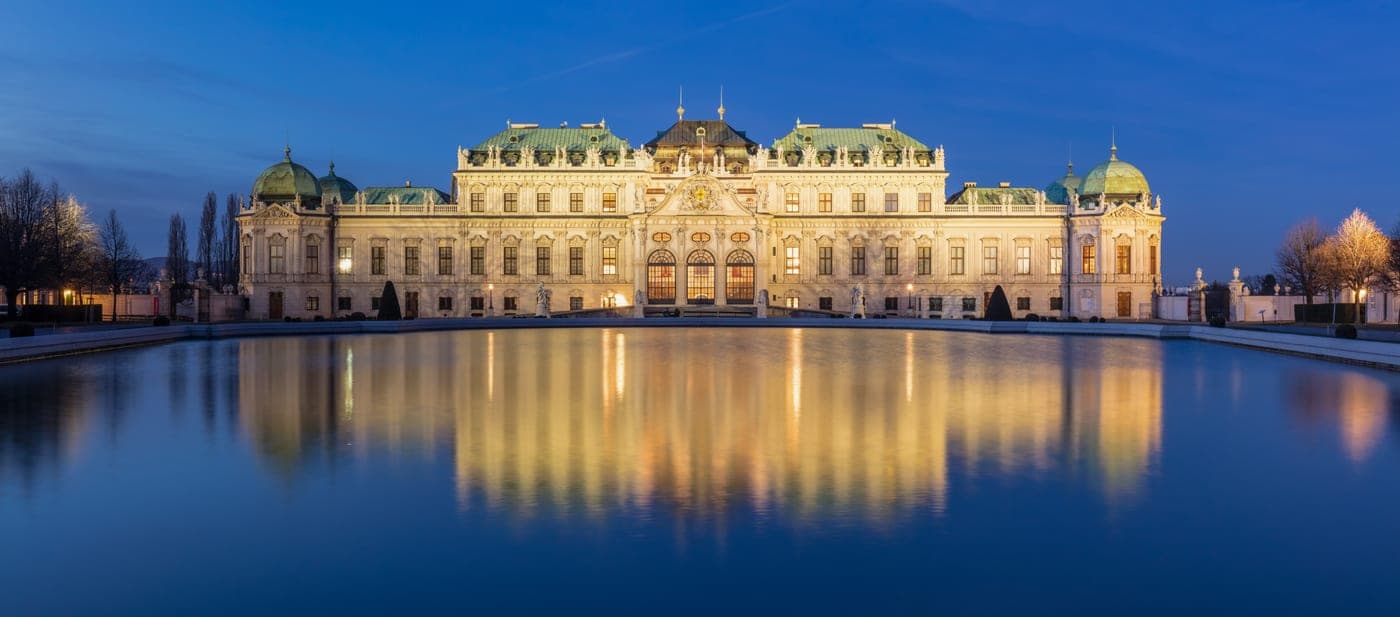 Camper Van Rentals1 destination
Vienna
Vienna stands out as Austria's capital, rich in history and culture. This vibrant city is renowned for its classical music heritage, featuring composers like Mozart and Beethoven. The historic center, a UNESCO World Heritage site, showcases stunning architecture ranging from Gothic to Baroque. Beyond the mainstream attractions, explore the lesser-known neighborhoods like Margareten and Favoriten, where local markets and authentic eateries thrive. The city's coffee house culture, a UNESCO Intangible Cultural Heritage, invites you to savor traditional pastries. For nature lovers, the Vienna Woods offer picturesque hiking trails. This capital is an exciting blend of imperial history and modern creativity.
Camper Van RentalsWine TastingHiking