Tiroler Gröstl
Sunday's roast, fried on Monday with an egg on top
- Local name
- Tiroler Gröstl
- Served with
- Fried egg, cabbage salad
- Best eaten at
- An alpine hut (Almhütte)
- Pairs with
- Austrian lager
What it is
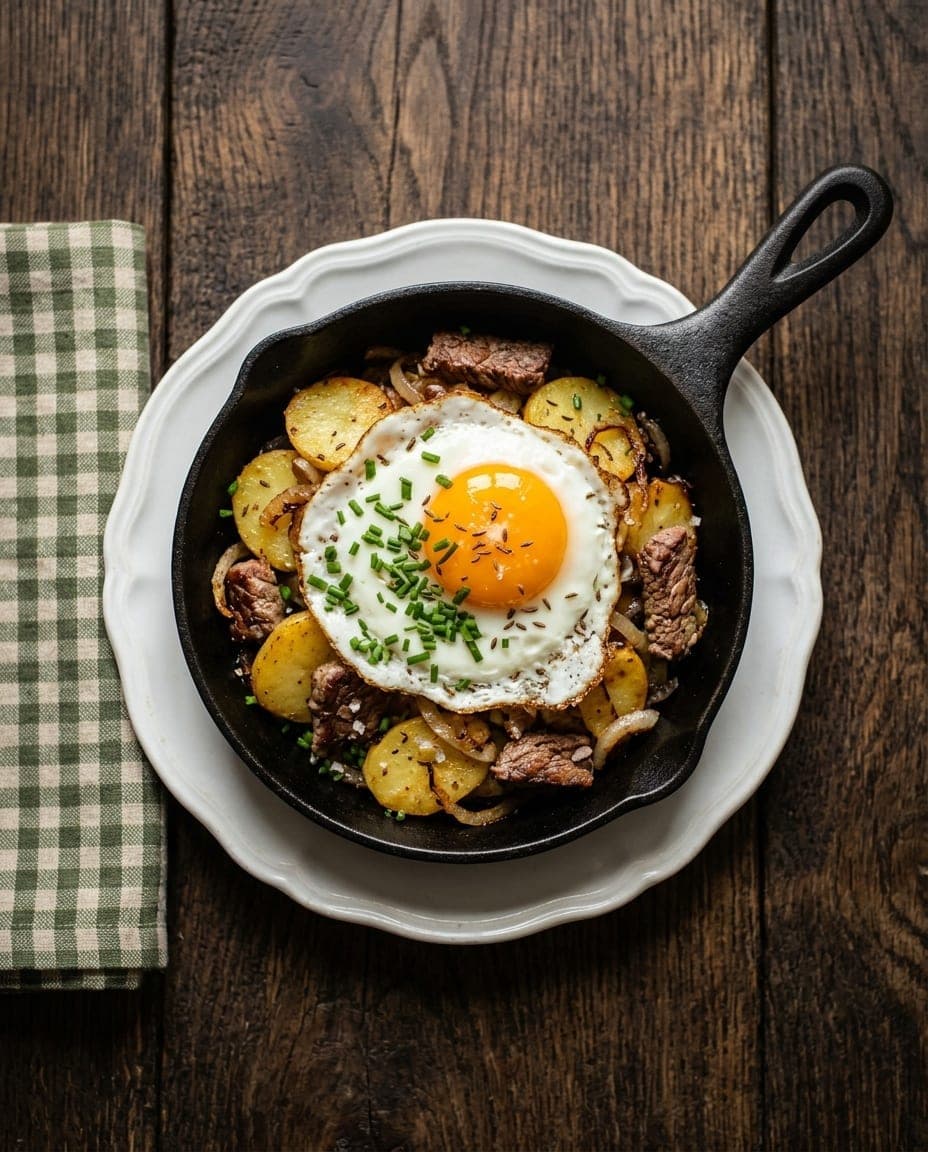
Tiroler Gröstl is the definitive lunch of Austria's Tyrol region, a dish that turns simple ingredients into something substantial and satisfying. It consists of boiled potatoes, sliced onions and meat — often leftover roast beef or pork, or cured Speck — fried together in a large pan until the potatoes develop a dark, crispy crust. The mixture is seasoned with caraway seeds and often marjoram, then topped with a fried egg and served alongside a portion of cabbage salad or green salad.
The name comes from the verb rösten, meaning to roast or fry. While the word can apply to many cooking methods, in this context it refers specifically to the pan-frying technique that gives the dish its characteristic texture. The potatoes are not mashed; once boiled and cooled, they are sliced and fried until they form a golden crust, while the onions soften into the fat. The meat is usually added after the potatoes have begun to crisp, ensuring it warms through without drying out.
One portion is a day's walking undone. The egg goes on last, the yolk left runny, and breaking it over the hot potatoes is the first thing that happens at the table.
How it began as Sunday leftovers
The origins of Tiroler Gröstl are practical rather than ceremonial. It emerged as a way for Tyrolean households to make use of the meat remaining from a Sunday roast. In traditional Alpine farming life, Sunday was the day for a substantial meal, often featuring roasted beef or pork. By Monday, the meat would be cold and dry, but frying it with potatoes and onions transformed it into something new.
Over time, the dish moved beyond the kitchen table. As mountain huts (Almhütten) became central to Tyrolean life, the Gröstl found a permanent place on their menus. It was ideal for the alpine environment: quick to prepare in large batches, cheap to make and capable of sustaining people working in cold conditions. Today, it remains a staple at lunchtime in both valley inns and high-altitude huts.
There is no inventor and no date, which is the honest version of the story: the dish is a habit rather than a recipe. Many huts now also cook it without meat, with cheese or simply more potato and onion.
What goes into it
There is no single official recipe, and every cook guards their own version, but the building blocks are always similar:
- Potatoes, boiled first then sliced and fried until they form a dark, crispy crust.
- Onions, sliced and cooked in the fat of the meat or butter until soft and sweet.
- Meat, usually leftover roast beef, pork or cured Speck, cut into strips and fried with the potatoes.
- Caraway seeds and marjoram, the spices that define the taste of the dish.
- A fried egg, served on top with a runny yolk to mix into the hot potatoes.
- Cabbage salad or green salad, on the side, dressed sharply enough to cut the fat.
The yolk, the crusted potato and the meat juices make the only sauce there is. Nothing is thickened and nothing is poured over it.
How to eat it
It arrives in the iron pan it was cooked in, set straight on the table, with the egg cracked over it at the last moment. The yolk is broken and mixed through the potatoes before anything is eaten. In a hut one pan is often shared between two, and the salad is passed separately.
An Austrian lager is the standard drink with it, and the caraway and marjoram are the reason it works.
Curious facts
- The egg is key. The runny yolk is not just a garnish; it acts as a sauce for the potatoes and meat, binding the flavours together.
- A vegetarian option. Many mountain huts now serve a version without meat, using cheese or extra potatoes to maintain the dish's heartiness.
- The name comes from cooking. Rösten refers to the frying method, not the roasting of meat in an oven.
- It travelled, but it is at home in Tyrol. Tiroler Gröstl turns up on inn menus across Austria; in the Tyrolean valleys it is on almost every lunch board.
- Leftovers made new. It began as the answer to Monday's cold roast, and the recipe is still essentially that.
Where to try it
An Almhütte — a hut on the mountainside, reached on foot or by cable car — at lunchtime, where the pan comes to a long wooden table and the view does the rest. The valley inns around Innsbruck and through the Inn valley cook it the same way indoors, and most of them serve it from late morning until the kitchen closes in the afternoon. Anywhere that lists a vegetarian version is not cutting corners: huts have cooked both for years.
Where to try it
1 destination
 Camper Van Rentals
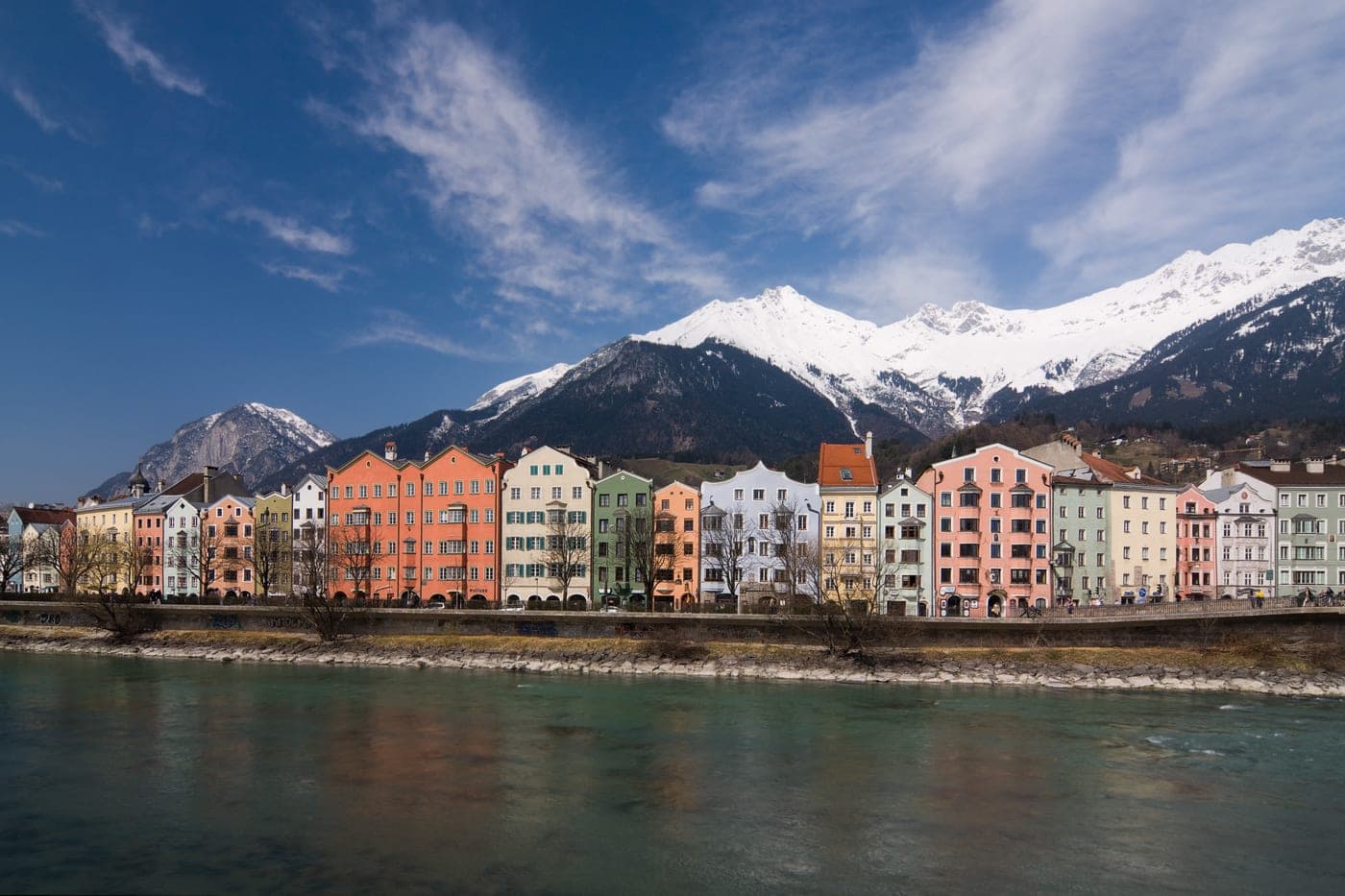
Innsbruck
Alpine city renowned for its imperial architecture and winter sports.
Camper Van RentalsHikingLocal Cuisine
1 region
- Camper Van Rentals2 destinations
Tyrol
Nestled in the heart of the Alps, this region is renowned for its stunning landscapes and traditional alpine culture. Innsbruck, the capital, is famous for its historic architecture and the iconic Golden Roof. Smaller towns like Hall in Tirol and Rattenberg showcase medieval charm and rich local traditions. The region is known for its outdoor activities, including hiking in summer and skiing in winter, along with unique culinary offerings such as Tyrolean dumplings and apple strudel. Tyrol is also home to numerous historic castles and museums that reflect its rich heritage. Off the beaten path, the Ötztal Valley offers breathtaking trails and authentic mountain huts, ideal for a deeper connection with nature and local life.
Camper Van RentalsHikingLocal CuisineCastles