Lavanttaler Most
A cool cider from Carinthia's orchard meadows
- Alcoholic
- Local name
- Lavanttaler Most
- Served
- Cool, from a jug
- Best eaten at
- A Lavanttal Mostbuschenschank
- Pairs with
- Brettljause cold-cuts board
What it is
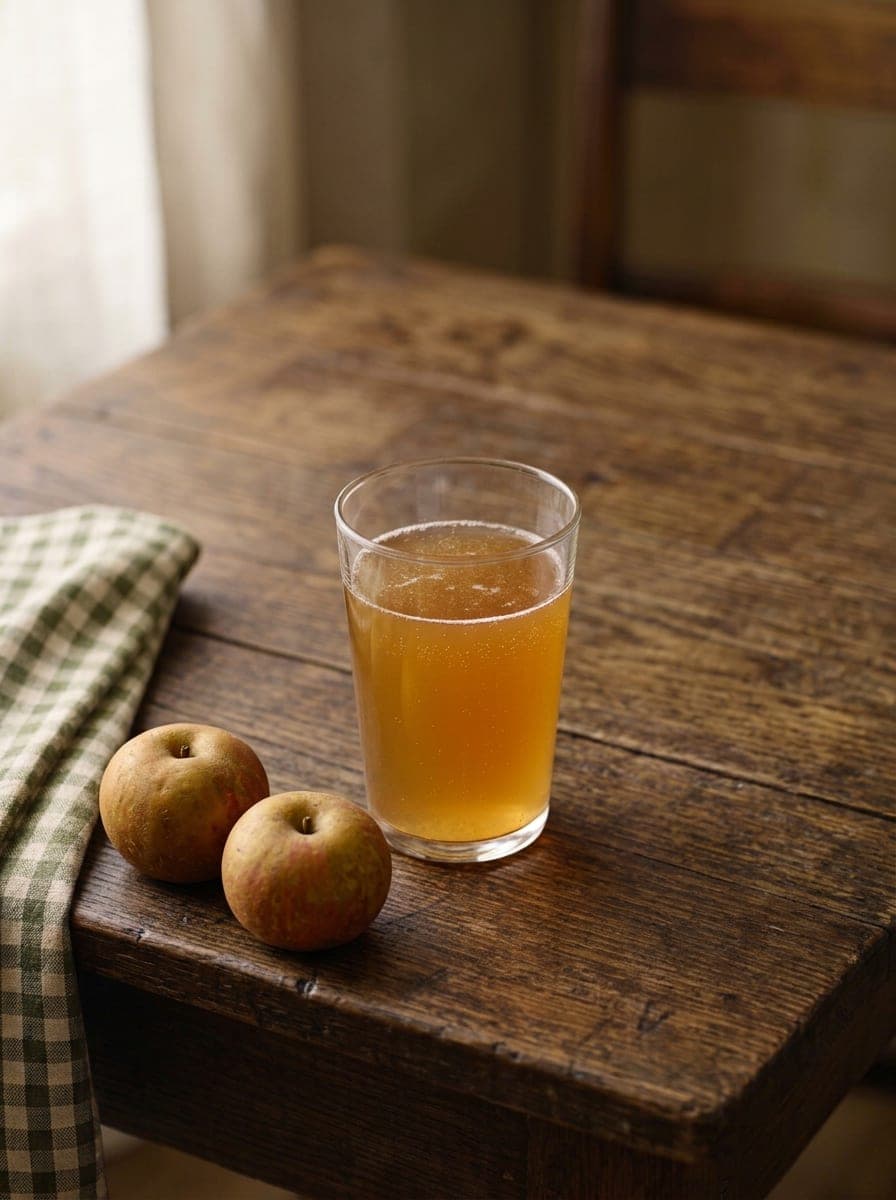
Lavanttaler Most is a still cider made mainly from the apples grown in the orchard meadows of the Lavant valley in Carinthia, traditionally with some pears alongside. Unlike the sparkling ciders found in many other parts of Europe, this drink remains calm and clear, golden to amber, with a sharp, fruity finish from the natural malic acid of the region's apples; it runs from mild to robust, at around 6–7.5% alcohol. It is not a wine, nor a beer, but a distinct product of the Austrian Most tradition, shared with districts like the Mostviertel in Lower Austria.
The drink arrives at the table in a simple glass jug or carafe, poured cool rather than ice-cold. This temperature allows the aroma of the crushed fruit to rise without numbing the palate. It is a rustic beverage, designed to accompany a meal rather than stand alone as a dessert wine or a celebratory toast. In the quiet valleys of Carinthia, it serves as a daily refreshment for workers and guests alike.
The orchard meadows of the Lavant valley
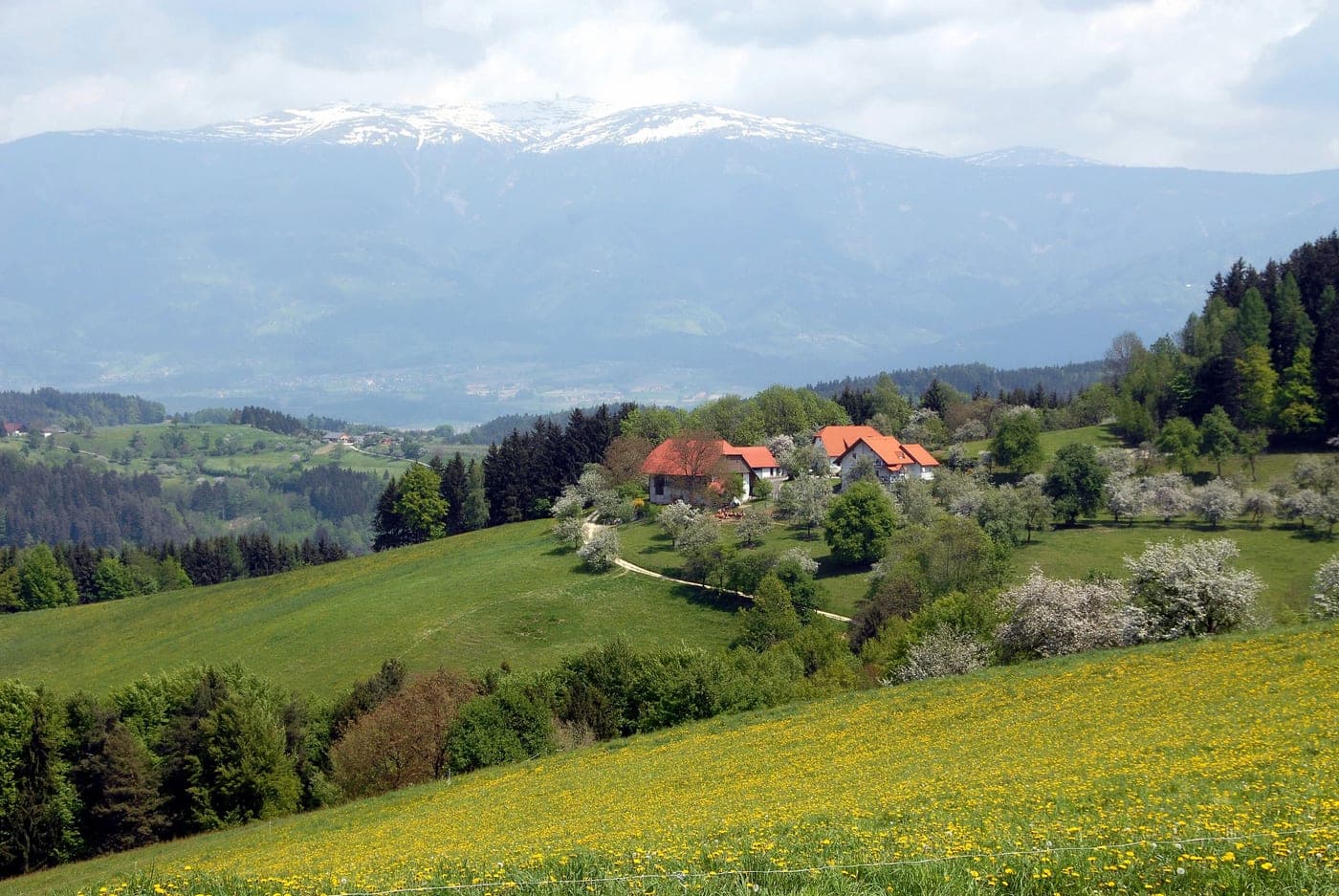
The landscape behind the drink is the Streuobstwiese, the orchard meadow: tall standard fruit trees scattered across grazing land rather than planted in rows. Sheep or cattle graze beneath them, the grass is cut for hay, and the fruit comes off trees that may be several decades old. It is an inefficient way to grow fruit and a productive way to use one field twice, which is why it survived here and disappeared in flatter countries.
The Lavant valley runs north to south through eastern Carinthia, with orchards between roughly 400 and 800 metres, high enough that the apples keep their acidity. Many varieties are old and local — the Lavanttaler Bananenapfel, Maschansker, Bohnapfel — and when the fruit comes down in autumn it is pressed within a few days and fermented for several weeks in wooden casks.
How it is served
Lavanttaler Most is traditionally consumed at a Mostbuschenschank, a small farm tavern where producers serve their own harvest alongside local produce. These are usually simple rooms or gardens on the farm itself, offering views of the orchards rather than city lights.
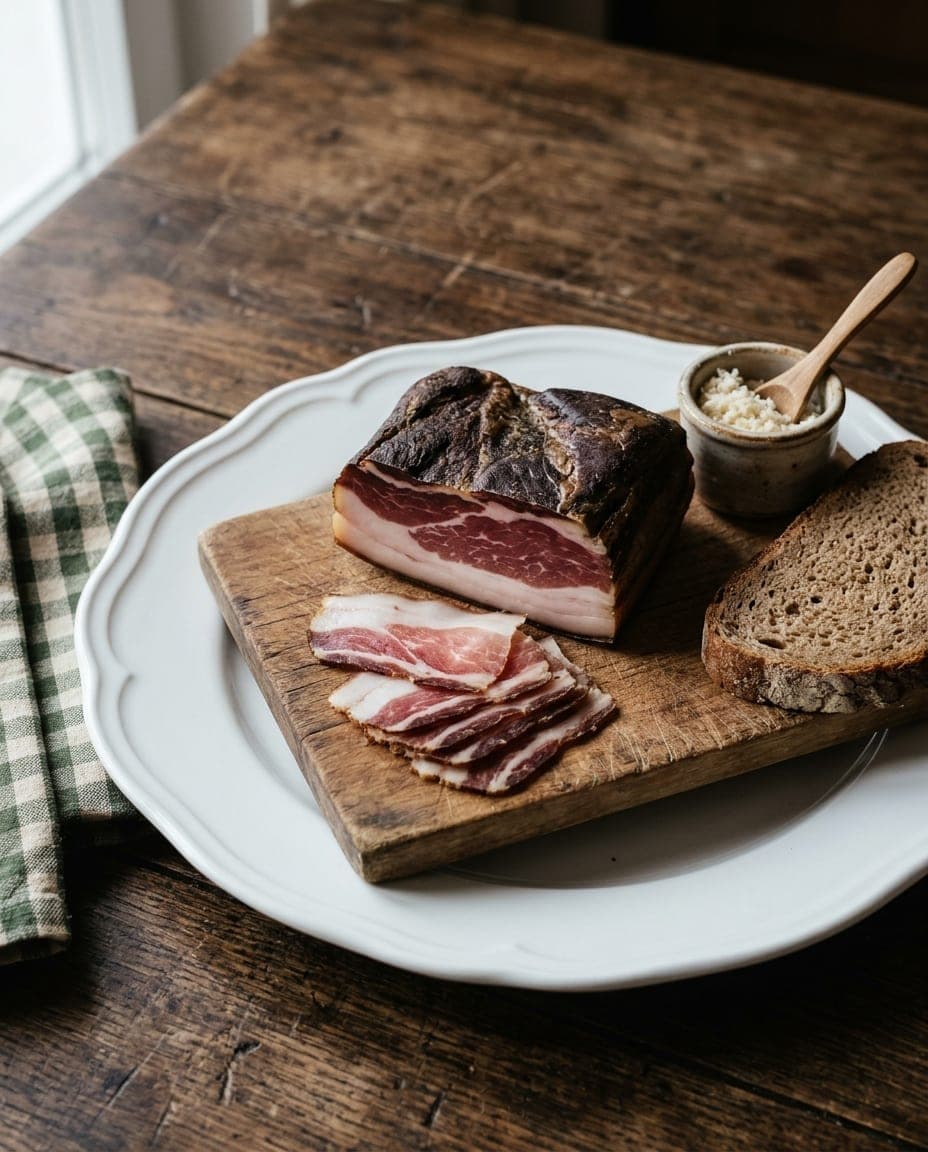
The jug comes to the table and is poured into glasses or pottery mugs. What comes with it is a Brettljause — a wooden board of cured pork, cheese, pickles and bread — and the pairing is the entire logic of both: a dry, slightly tart cider against salt and fat.
Curious facts
- A regional identity. While Most is made in several Austrian provinces, the version from the Lavant valley has a specific character tied to old local apple varieties such as the Lavanttaler Bananenapfel; it is listed in Austria's register of traditional foods as Lavanttaler Apfelwein.
- One field, two uses. The orchard meadows are grazed and mown beneath the fruit trees, which is why they survive — and why they hold far more plant and insect life than a modern orchard.
- No added sugar. Traditional versions rely on the natural sugars of the fruit, which is why most of it is on the dry, tart side.
- The seasonality of the press. The harvest usually takes place in autumn, and while the cider is available year-round from stored vats, the freshest batches arrive with the first cool weather.
Where to try it
The valley itself, from Wolfsberg down to St. Paul im Lavanttal, where farms open their Mostbuschenschank in turn through the year and announce it with a sign at the gate. They sit on the edges of the villages, among the trees the fruit came from.
The sign to look for is the word Mostbuschenschank rather than Gasthaus: it means the producer is serving their own pressing, which is both the cheaper and the more interesting option. Several also sell it by the bottle or the canister to take away.
Where to try it
1 destination
 Wine Tasting
St. Paul im Lavanttal
Historic abbey town in the Lavant Valley of Carinthia with Benedictine heritage.
Wine TastingHiking
1 region
- Wine Tasting7 destinations
Carinthia
Carinthia, Austria's southernmost region, is renowned for its stunning lakes and mountains. The largest lake, Wörthersee, is famous for its turquoise waters and vibrant summer festivals. Klagenfurt, the capital, features the historic Lindwurm fountain and a beautiful old town. The region boasts rich Slavic heritage, reflected in its cultural events and cuisine, such as hearty stews and local cheeses. Nature enthusiasts will appreciate the Nockberge National Park, offering scenic hiking trails. Carinthia also has a unique blend of Italian and Austrian influences, evident in its architecture and gastronomy, making it a fascinating area for deep exploration.
Wine TastingHikingCastles