Romesco
A brick-red Catalan sauce of dried ñora peppers, toasted nuts and garlic
- Vegetarian
- Local name
- Romesco
- Served with
- Grilled fish, calçots
- Best eaten at
- A Tarragona fishermen's restaurant
- Pairs with
- Tarragona white
What it is
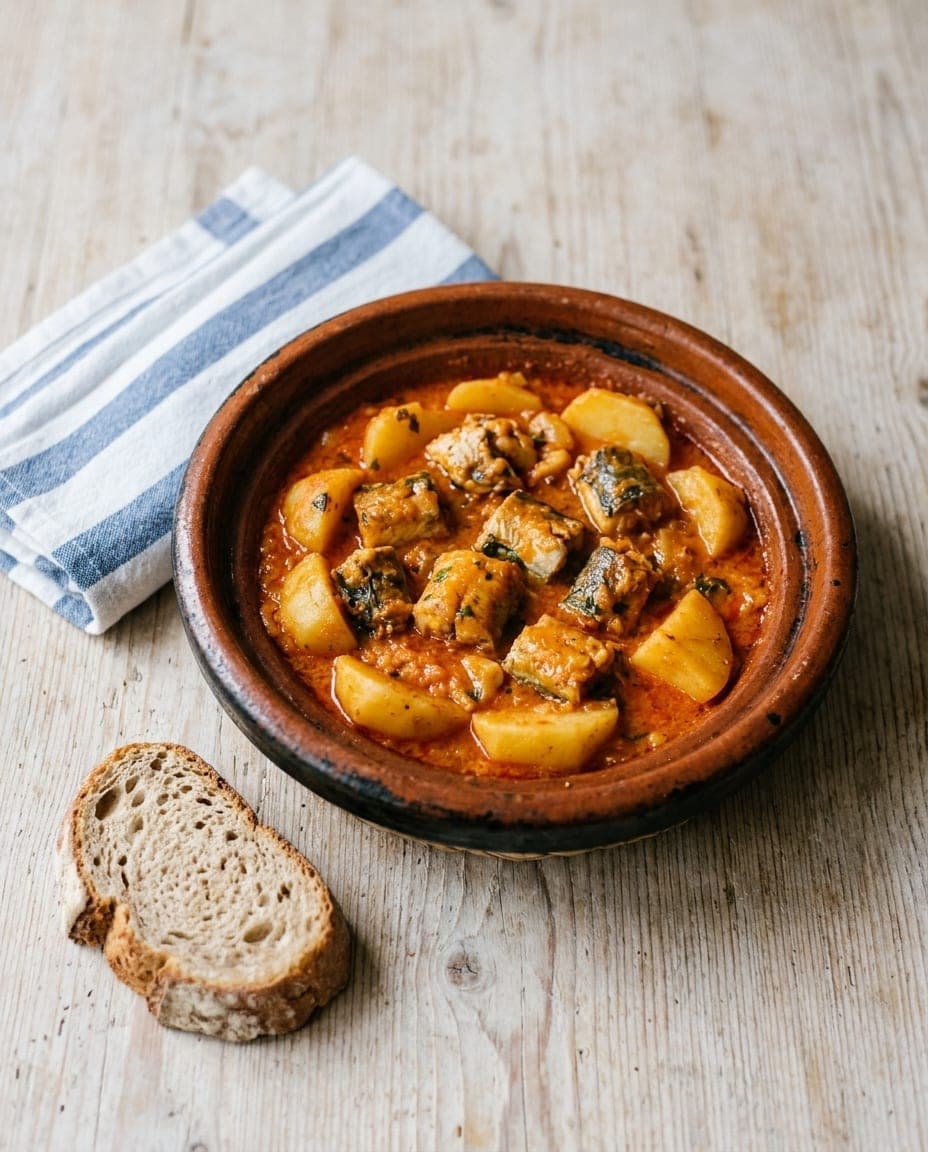
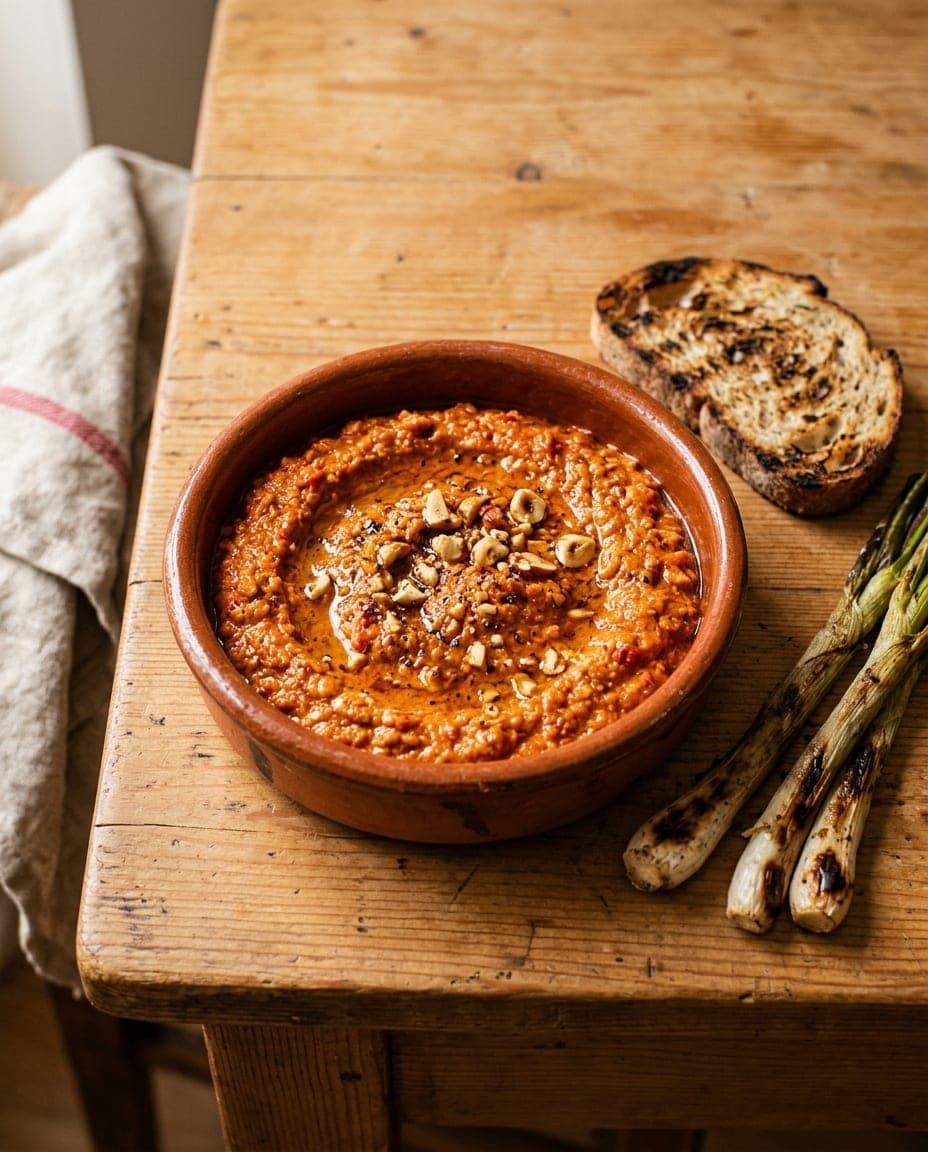
Romesco is a thick, textured sauce from Catalonia that has become one of the most distinctive flavours of Spain's Mediterranean coast. It is claimed by the city of Tarragona, where it is traced to El Serrallo, the fishermen's quarter by the port. There it began not only as a sauce but as a fish stew, romesco de peix, cooked by fishermen, and the name is still used for both.
The sauce is not smooth like a modern purée. It has a coarse, rustic texture, often described as standing up on a spoon rather than flowing off it. This body comes from the combination of toasted nuts and fried bread, which absorb the oil and create a dense, substantial consistency. Its colour is a deep brick-red, derived from the dried peppers that form its foundation.
While it began as a companion for fish caught in the nearby sea, Romesco has expanded its role significantly. Today it is a favourite partner for calçots, the sweet, mild onions of the Camp de Tarragona, and is equally at home with grilled vegetables, roasted lamb or chicken. The sauce acts as a bridge between the earthy taste of the nuts and the bright acidity of vinegar, binding them with the warmth of the peppers.
The story of the fishermen's pot
The history of Romesco is tied to the daily work of the coastal communities around Tarragona. In the port, where fresh fish was abundant, a robust sauce was needed to add depth to the meal. The method was practical: take what was available on board or in the market (dried peppers, nuts, garlic, bread) and combine them into a dish that could be made over an open fire.
The origin of the name is debated. The Catalan etymologist Joan Coromines considered it a survival of the old Mozarabic dialect of southern Catalonia, linked to the fishing villages south of Tarragona, rather than a word meaning "roasted". Whatever its root, the method is clear: the dried peppers were soaked to soften them, garlic and tomatoes were roasted, and nuts and bread were toasted or fried in olive oil, then everything was pounded together in a morter, a large mortar and pestle, or nowadays blended in a food processor.
It was a worker's meal, and the use of bread as a thickener made the sauce go further. Over time the recipe moved from the port to home kitchens and restaurants across the region, becoming a symbol of Tarragona's cooking.
What goes into it
There is no single official version of Romesco, and every cook in Tarragona has their own preference for the balance of ingredients. However, the building blocks remain consistent across the region.
- Ñora peppers (nyores in Catalan), small round dried peppers that are sweet rather than spicy, also called pebrot de romesco locally. They are soaked to soften and their flesh is scraped from the skin.
- Toasted almonds and hazelnuts, which provide the bulk and body of the sauce. The nuts are roasted until golden before being ground into a coarse paste.
- Garlic and tomato, both roasted to mellow their sharpness and add sweetness to the mix.
- Fried bread, usually stale or day-old bread, fried in olive oil and added to the mortar to thicken the sauce.
- Olive oil and vinegar, used to adjust the texture and acidity, creating a balance that cuts the richness of the nuts.
The texture varies from coarse to slightly smoother depending on how long it is pounded or blended. Some versions include a touch of chilli (bitxo) for extra heat, though the traditional base relies on the natural sweetness of the ñora.
How it is eaten
Romesco is traditionally served as an accompaniment rather than a main course. Its most famous pairing is with grilled or boiled fish and seafood from the Tarragona coast, where the acidity of the vinegar cuts through the oiliness of the fish. A local white wine from the region complements this combination well.
The sauce has become equally famous for its role with calçots. These are mild onions grilled over open flames until charred, then peeled to reveal a tender, sweet interior and eaten by hand, dipped in a bowl of sauce placed at the centre of the table. In Valls, the home of the calçot, the sauce is known as salvitxada. Eating calçots is a communal ritual, the calçotada, often held outdoors between late autumn and early spring.
The sauce also works well with other grilled items. It can be spooned over roasted vegetables, such as peppers or courgettes, or served alongside lamb and chicken.
Curious facts
- A disputed name. The word romesco is often said to mean "roasted", but Coromines traced it instead to the Mozarabic speech of the fishing towns south of Tarragona.
- A relative exists. Salvitxada is a close cousin of Romesco, often used interchangeably, though it may have a slightly different balance of ingredients or texture.
- A winter ritual. While available year-round, the sauce is in greatest demand during calçot season, when families and friends gather for calçotades.
- Sauce and stew. In Tarragona, romesco can also mean a fish stew cooked in the same pepper-and-nut base, the dish from which the sauce is said to descend.
Where to try it
The best place to experience Romesco is in Tarragona itself, particularly at a traditional fishermen's restaurant in El Serrallo, near the port. These establishments often serve the sauce with the day's catch, prepared simply to let the flavour of the fish and the sauce shine.
In calçot season, calçotades in the countryside around Valls and Tarragona take place in outdoor spaces or rustic dining rooms, where large platters of grilled onions and bowls of sauce are shared among groups. A glass of local wine from the Tarragona vineyards is the standard companion to this meal.
While the sauce is found throughout Catalonia, its heart remains in Tarragona. To taste it as intended, the best choice is a place where the focus is on local produce and the traditional methods of preparation.
Related: Calçots amb romesco, the grilled spring onions of Valls, romesco's best-known partner.
Where to try it
1 destination
 Boat Rentals
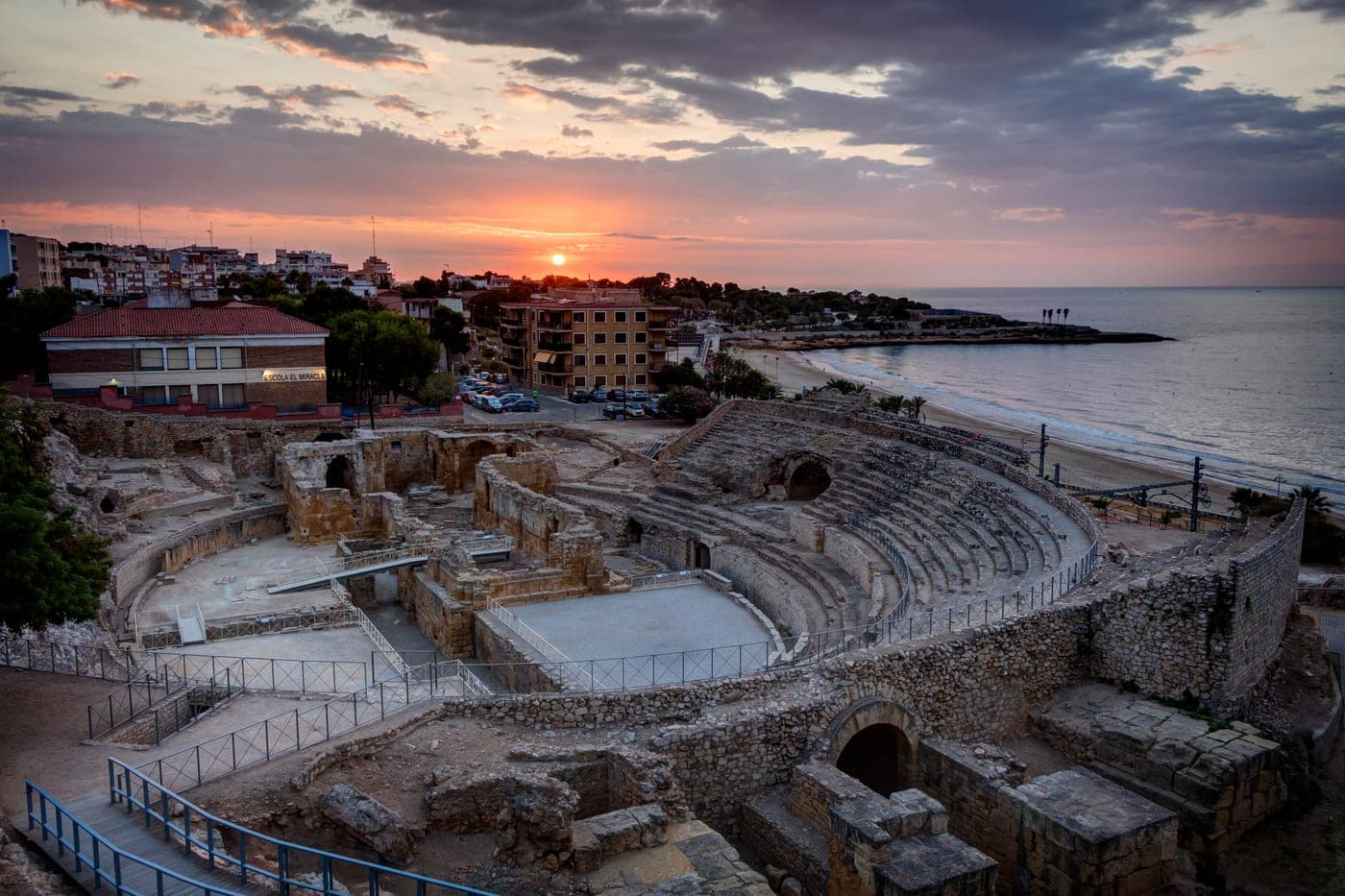
Tarragona
Historic Roman city with modern marina facilities and boat rentals on the Costa Daurada.
Boat RentalsHiking