Queso payoyo
A mountain cheese from one of Spain's rainiest sierras
- Vegetarian
- Local name
- Queso payoyo
- Served with
- Quince paste, bread
- Best eaten at
- A Grazalema venta
- Pairs with
- Fino sherry
What it is
Queso payoyo is a mountain cheese from the Sierra de Grazalema in the province of Cádiz, in Andalusia but far removed from the hot coastal plains. It is made from the milk of two local breeds, both officially listed as endangered: the payoya goat and the merina de Grazalema sheep. The survival of these animals is closely tied to the production of this cheese, which grew into a regional speciality from the late 1980s and 1990s onwards, when dairies in villages such as El Bosque and Villaluenga del Rosario began making it.
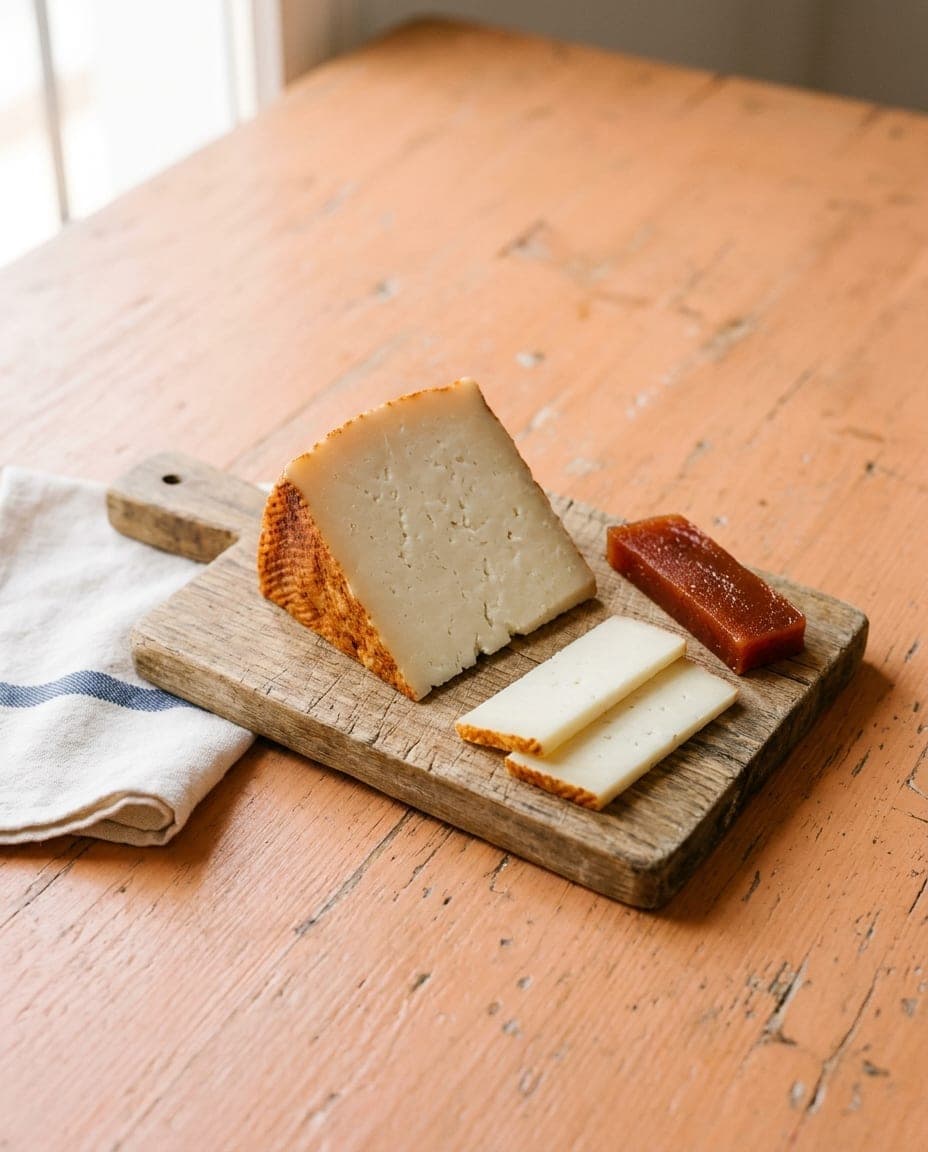
The cheese comes in several forms. Fresh versions are soft, moist and mild, while semi-cured cheeses become firmer with a sharper taste. Cured payoyo is dry, firm and distinctly goaty, with a texture that can be crumbly or dense depending on the age. Some versions are rubbed with paprika, bran, rosemary or olive oil, giving the rind a different colour and a hint of the herb or spice used. Wheels may be made from goat's milk alone, sheep's milk alone, or a blend of the two.
It is not a mass-produced item. Instead, it remains a regional speciality, produced in relatively small quantities by dairies that work closely with local herders, and it has won a string of awards at national and international cheese competitions.
How the sierra shaped the milk
The Sierra de Grazalema is famous as one of the rainiest places in Spain, with far more rainfall than most of the Iberian Peninsula. This high rainfall creates a lush landscape of oak woodland, Spanish fir, rocky cliffs and steep valleys where the payoya goat and merina de Grazalema sheep graze. The animals feed on wild herbs, grasses and the leaves of shrubs and trees, giving the milk a distinct character.
Because both breeds are rare, the success of queso payoyo has helped give herders a reason to keep them. The cheese became a way to sustain the breeds, as their milk gained a dedicated market.
The result is a cheese that tastes of the place where it was made. In wetter years the pasture grows more densely, while in drier periods the animals graze on tougher vegetation, and this variation can show in the flavour from season to season.
What goes into it
The ingredients are simple, as is typical for mountain cheeses:
- Milk from payoya goats and merina de Grazalema sheep, used together or separately depending on the cheese.
- Rennet, to set the curd.
- Salt, to draw out moisture and preserve the cheese.
- Optional coatings: some wheels are dusted with paprika, rolled in bran, rubbed with rosemary or brushed with olive oil before ageing.
The curd is cut, drained and pressed into moulds, then left to age for varying lengths of time. Fresh versions are eaten within days, while cured wheels spend several months in ageing rooms.
How to eat it
Queso payoyo is often eaten at a venta, a traditional roadside tavern found along the mountain roads of Andalusia. These small establishments serve simple meals and local produce, often in rustic rooms with stone walls and wooden tables. A typical spread might include a plate of sliced queso payoyo, thick slices of crusty bread and some membrillo, a sweet quince paste that cuts through the sharpness of the cheese.
A glass of fino sherry from nearby Jerez is a natural pairing. The dry, nutty notes of the sherry complement the earthy, goaty flavour of the cheese without overwhelming it. In summer, when the mountains are busy with hikers, the combination feels as if the food and drink have always belonged together.
The cheese appears on plates meant to be shared or savoured slowly, often alongside other local items like cured meats. The texture changes with age: fresh payoyo is soft and mild, while the cured version requires chewing and reveals layers of flavour that build up over time.
Curious facts
- Breeds kept alive by cheese. The payoya goat and merina de Grazalema sheep are both listed as endangered native breeds, and the demand for payoyo cheese gives herders a reason to keep them.
- A wet sierra. The Sierra de Grazalema is one of the rainiest places in Spain, creating an unusually green grazing environment for southern Spain.
- No protected label. Unlike many Spanish cheeses, queso payoyo does not hold a protected designation of origin, though it remains tied to its sierra.
- A brand and a type. "Payoyo" is both the name of the local goat breed and, today, a trade name used by at least one dairy, while several producers in the sierra make the same style of cheese.
- Village fair. Villaluenga del Rosario, the smallest municipality in the province of Cádiz, hosts an annual Andalusian artisan cheese fair.
Where to try it
The best place to taste queso payoyo is in the Sierra de Grazalema itself, at a venta along the mountain roads or in villages such as Villaluenga del Rosario, El Bosque and Grazalema. These taverns and shops serve the cheese from local producers, often alongside bread and quince paste. The experience is more about the place than the label, as the cheese reflects the conditions of the sierra where it was made.
Where to try it
1 destination
 Wine Tasting
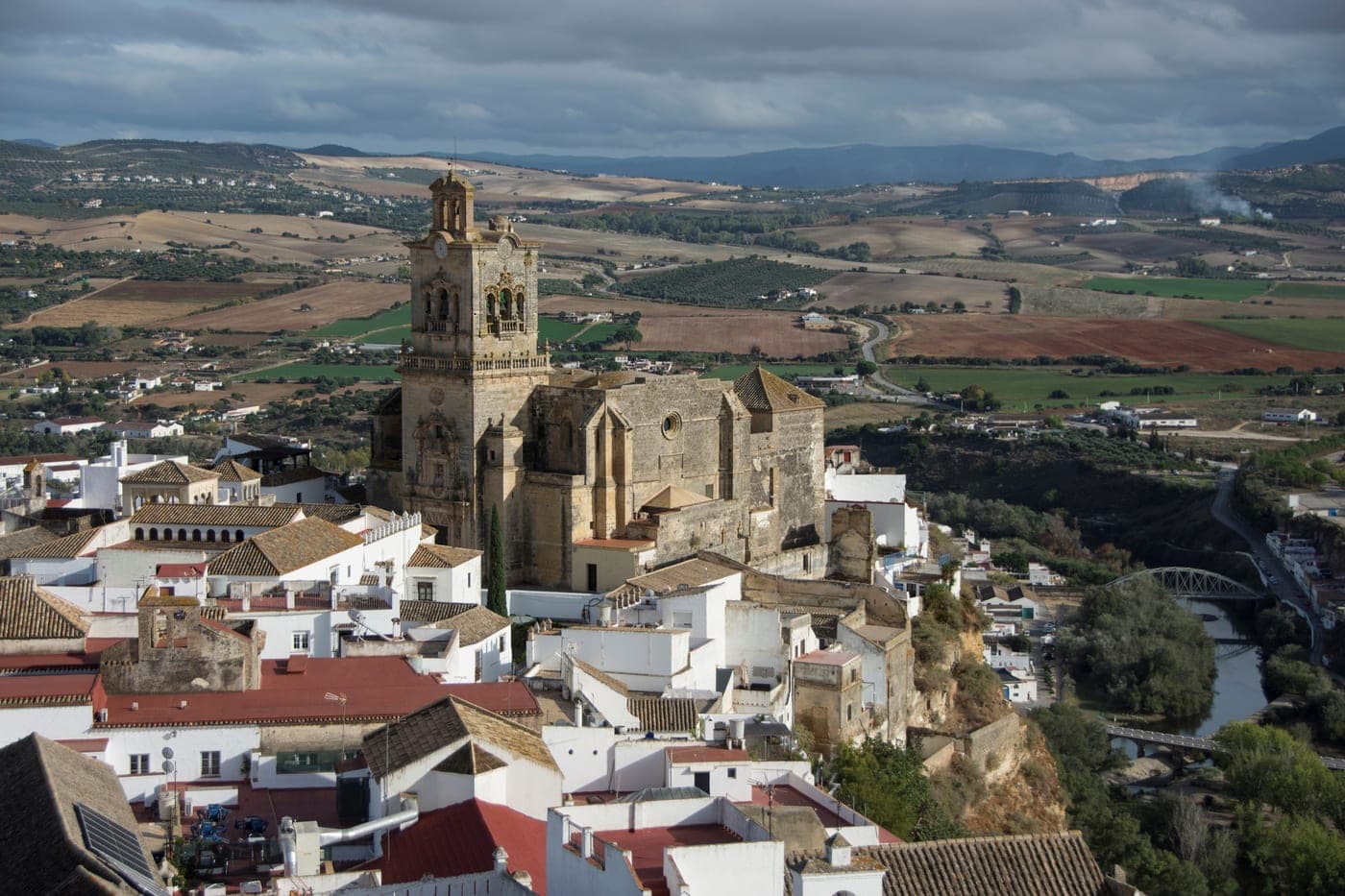
Arcos de la Frontera
Dramatic white hill town perched on a cliff above the Guadalete River.
Wine TastingHiking