Pisto manchego
A slow-cooked La Mancha stew of vegetables and olive oil
- Vegetarian
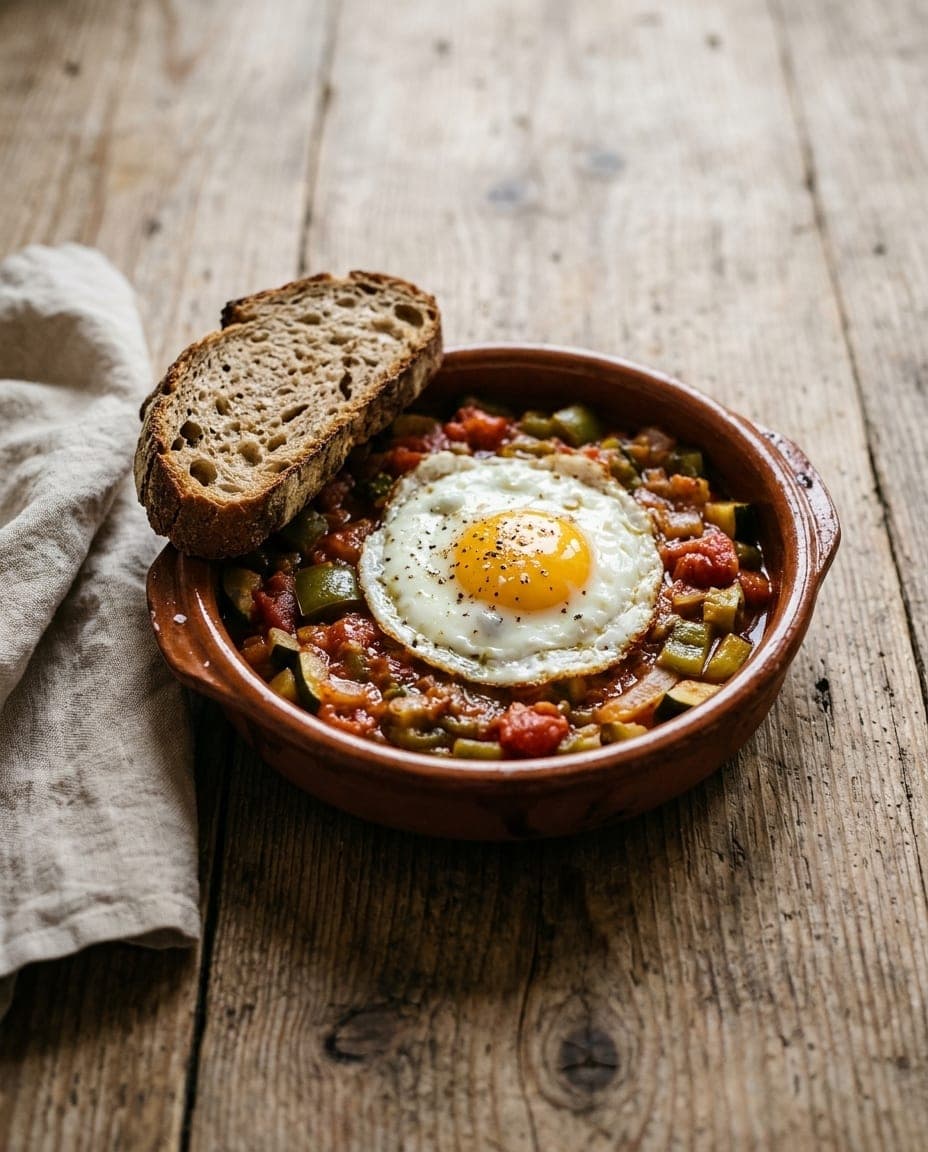
- Local name
- Pisto manchego
- Served with
- Fried egg, bread
- Best eaten at
- A La Mancha venta
- Pairs with
- Valdepeñas red
What it is
Pisto manchego is a fixture of the table in Castilla-La Mancha, a vast, flat region of central Spain known for its windswept plains and dry climate. It is a slow-cooked vegetable stew built from onions, green and red peppers, courgettes and tomatoes, all cooked down in generous amounts of olive oil until they lose their shape and merge into a soft, rich mass. Unlike the French ratatouille, where vegetables are often kept distinct and chunky, this dish is defined by its collapse; the ingredients soften until they become a single, thick sauce-like stew that coats the spoon.
The stew is deeply savoury, with a sweetness drawn from the long cooking time rather than added sugar. It is a dish of thrift and abundance, tied to the summer glut of vegetables in the region. The result is a thick, oily mixture that can be served hot or at room temperature, acting as a side dish, a main course, or a filling for other foods.
The roots of the stew
The name says where it belongs: manchego means from La Mancha. Similar stews are cooked across Spain, notably in Murcia and Extremadura, but the La Mancha version is the best known and the one that lends its name to the dish nationally. The vegetables used are those that thrive in the dry, sunny soil of the central plateau. Onions provide the base, while the peppers and courgettes contribute colour and texture, and the tomatoes bring acidity and liquid to the pan.
The cooking method is the true definition of the dish. The vegetables are usually added in sequence, starting with the onions and peppers, so that each releases its juices before the next goes in. They are then left to simmer slowly in the oil until they break down completely. This technique ensures that the final texture is not fresh or crisp but rather soft and deeply flavoured. The process requires patience, turning simple garden produce into something that feels substantial enough to stand alone as a meal.
How it is eaten
Pisto manchego is versatile in its role at the table. It is frequently served with a fried egg on top of the hot stew, the yolk running into the vegetables. The egg adds a richness that complements the oiliness of the dish without overpowering it. A slice of crusty bread is essential, used to scoop up the mixture or to mop the plate clean of the savoury oil.
In some households, the stew is also used as a filling for empanadas and empanadillas, pastries baked or fried until golden. It can be served alongside grilled meats or slices of cured ham, where the sweetness of the vegetables offsets the richness of the meat. The dish is equally comfortable as a light lunch on a warm day or a hearty dinner when the weather turns cooler.
A traditional setting for eating this stew is a venta, a roadside inn of the kind that once served travellers on the old routes across Spain. These establishments specialise in rustic country food, and the venta remains a place where the focus is on the food and the company rather than on decoration or fine dining.
What goes into it
The ingredients are simple and local, reflecting the produce of the region. There is no single official recipe, but the core components remain consistent across most kitchens:
- Onions, chopped and cooked until they become soft and sweet, forming the base of the stew.
- Green and red peppers, which add a mild bitterness and a deep colour to the mix.
- Courgettes, sliced or diced, which soften completely during the long cooking process.
- Tomatoes, peeled and crushed, providing the liquid that binds the vegetables together.
- Olive oil, used in generous quantities to slow-cook the vegetables and give the dish its characteristic sheen.
Some cooks add aubergine as well. The final texture is thick, with the vegetables losing their individual shapes to become a cohesive whole. It is not a fresh salad but a cooked preserve of summer.
Curious facts
- A dish of thrift. The stew is a classic way of using up the abundant vegetables of the summer harvest so that nothing goes to waste.
- The egg trick. Serving a fried egg on top is the most common way to turn a vegetable side into a complete meal for one person.
- Not cheese-related. Despite the name manchego, which also describes a famous sheep's milk cheese from the region, the stew has no connection to the dairy product; the name refers strictly to the geographical origin.
- Better the next day. The dish improves when made in advance and kept for a day or two, allowing the flavours to deepen and the oil to settle into the vegetables.
- A family of stews. Similar vegetable stews exist elsewhere in Spain and Europe, from pisto a la bilbaína to ratatouille, but La Mancha's version is the one most Spaniards picture when they hear the word pisto.
Where to try it
The best place to eat pisto manchego is in the heart of Castilla-La Mancha, particularly in the small towns and villages that dot the landscape. A traditional venta on a rural road offers the most characterful experience, and the area around the wine town of Valdepeñas, in the province of Ciudad Real, is a good place to look, where the dish is often accompanied by local wines.
In these places, the stew is often served in earthenware dishes or on large plates, ready to be shared. The combination of the warm vegetables with the runny yolk of a fried egg makes it a satisfying end to a day spent walking through the windswept plains. Pairing it with a glass of Valdepeñas red wine is a common practice, as the local wine balances the richness of the oil and the sweetness of the vegetables.
Where to try it
1 region
 Wine Tasting5 destinations
Castilla-La Mancha
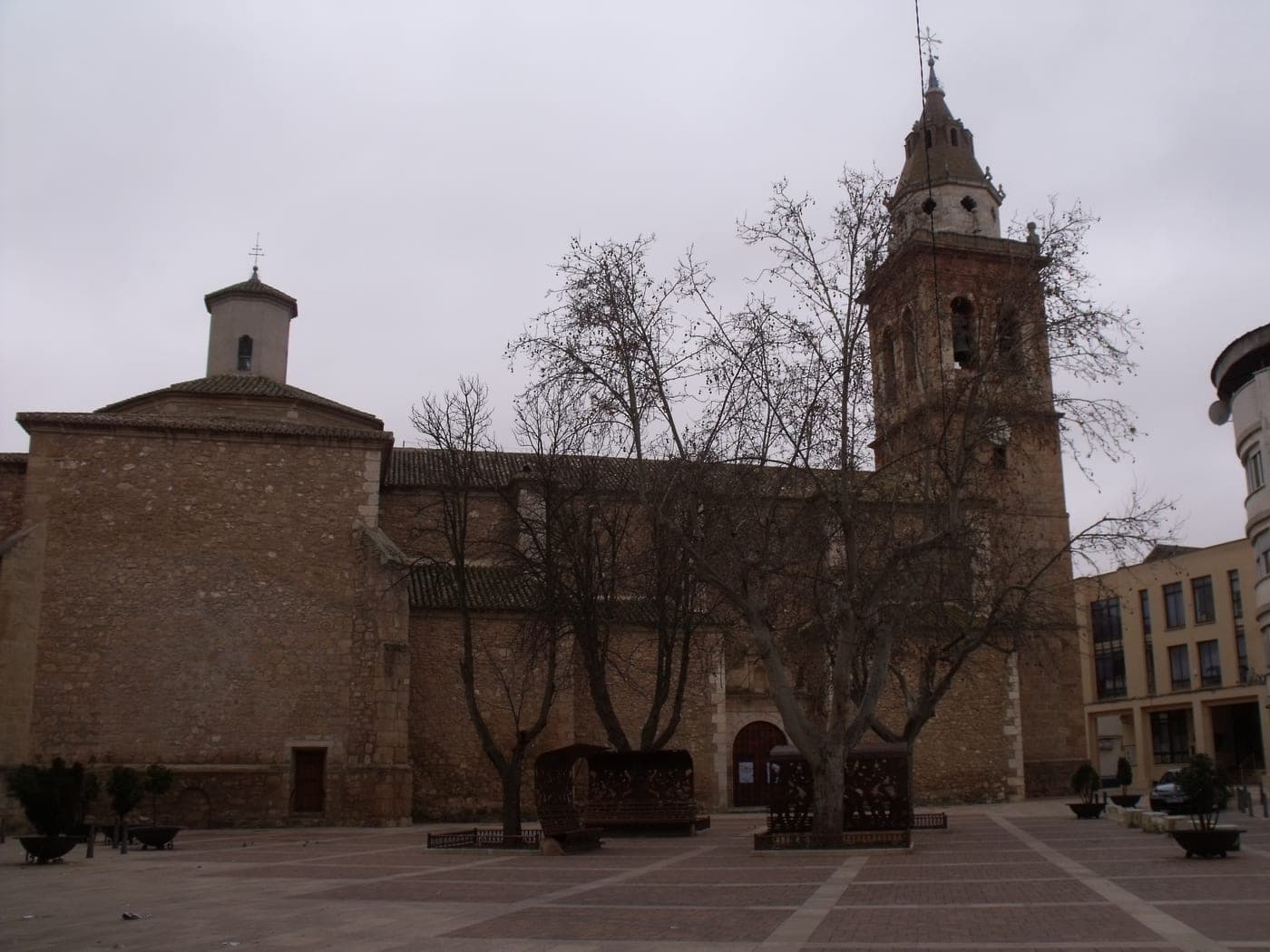
This is Spain's largest region, known for its vast plains and historic cities. Toledo, a UNESCO World Heritage site, showcases a blend of Christian, Muslim, and Jewish architecture, while Cuenca is famous for its hanging houses and modernist art. The region is also noted for its artisanal cheese, saffron production, and robust wines like Tempranillo. Scenic landscapes such as the Tablas de Daimiel National Park offer rich biodiversity. Explore the small towns of Alcázar de San Juan and Consuegra, where windmills dot the horizon, echoing the tales of Don Quixote. The region's festivals, particularly in spring and autumn, celebrate local traditions and gastronomy, providing deeper cultural connections.
Wine TastingHikingLocal Cuisine





