Pescaíto frito
Small fish, a dusting of flour, hot oil and lemon in Andalusia
- Local name
- Pescaíto frito
- Served with
- Lemon
- Best eaten at
- A Cádiz or Málaga freiduría
- Pairs with
- Fino or manzanilla
What it is
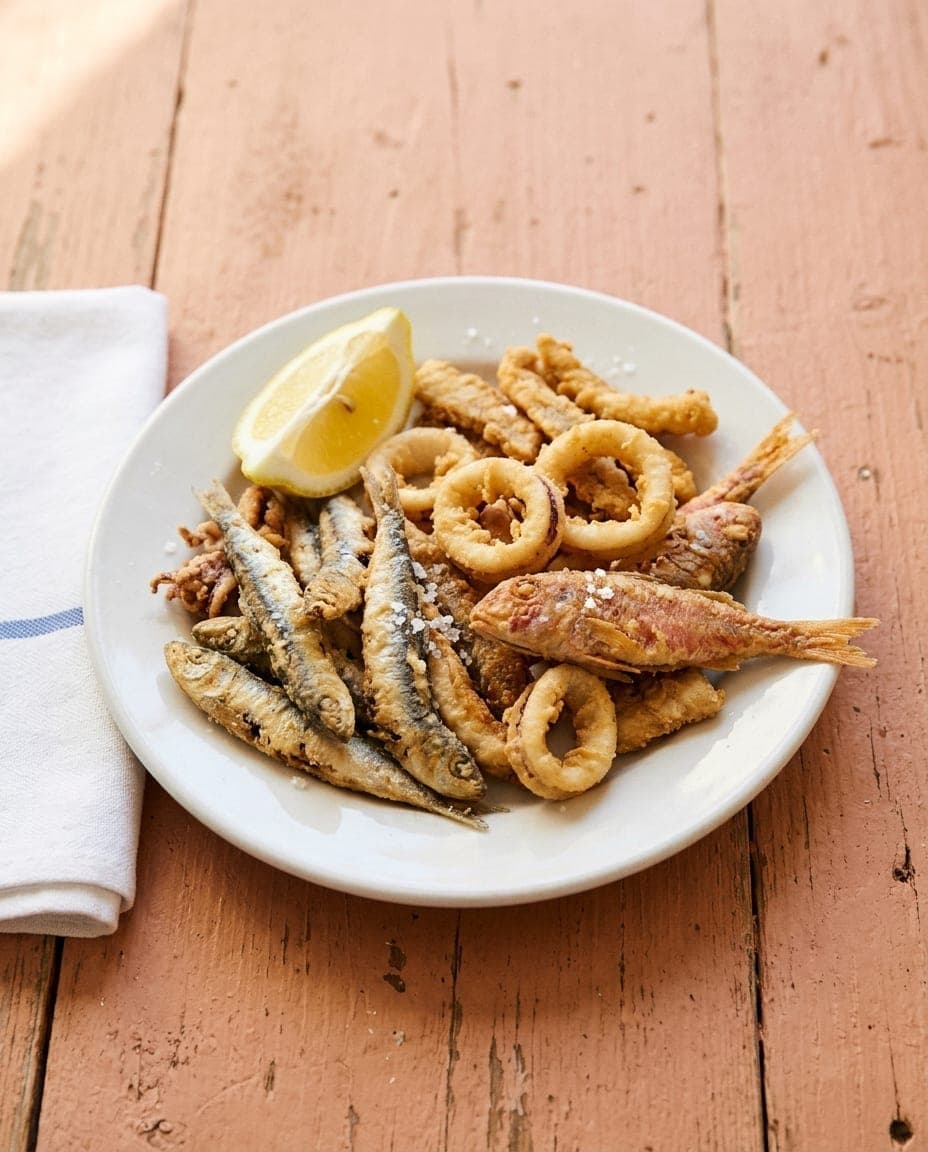
Pescaíto frito, literally "fried little fish", is the defining snack of Andalusia's coastal cities, particularly Cádiz and Málaga. It is not a formal course served on fine china, but a casual feast of small whole fish and pieces of seafood that have been lightly dusted in flour and dropped into plenty of very hot oil. The result is a golden, crisp coating that shatters when bitten, revealing tender flesh inside.
The dish relies on the quality of the catch and the temperature of the oil. The fish are not dipped in egg or beer batter. Instead, they receive a fine, dry dusting of a special frying flour (harina especial para freír), a coarse, semolina-like wheat flour; some cooks in Cádiz mix in chickpea flour. This method creates a thin, crackling coating that does not soak up oil. The goal is for the fish to taste of the sea, not of grease.
In Cádiz the fish traditionally comes in a paper cone (cartucho); elsewhere it is presented on a simple plate, with a wedge of lemon. It is meant to be eaten quickly, often with the fingers, standing at a counter or sitting at a simple table. The dish is available year-round, though the catch changes with the seasons.
The Andalusian freiduría
The home of pescaíto frito is the freiduría, an establishment dedicated to frying fish. In Cádiz and Málaga, these are often humble counters where the fryers work continuously. They are not fine dining rooms but places of efficient, communal eating, with the air thick with the scent of hot oil and brine.
Customers usually order at the counter, often by weight or by the portion, choosing from the fish of the day. The cook coats the catch in flour, shakes off the excess and lowers it into the oil in small batches, so that the temperature does not drop. Small fish take very little time to turn golden. They are drained and handed over straight away.
While fried fish exists across the Mediterranean, the Andalusian version is distinct in its restraint: no batter, no breadcrumbs and no heavy seasoning. The simplicity allows the natural flavour of the anchovy, the red mullet or the squid to shine through, which is why the freshest catch is essential.
The ingredients and the flour
The selection of fish defines the character of the meal. A mixed fry (fritura) usually contains small whole fish such as anchovy (boquerón) and red mullet (salmonete), alongside pieces of squid, baby squid (chopitos or puntillitas), cuttlefish and other local fish. In Cádiz, cazón en adobo, dogfish marinated in vinegar, cumin and paprika, then fried, is a classic of the freidurías.
The flour is the most critical element. The special frying flour gives a dry, light coating that clings thinly to the fish without turning doughy. The oil must be clean and very hot; olive oil is traditional, though many freidurías use other frying oils or blends.
Lemon is the essential accompaniment, squeezed over the hot fish just before eating to brighten the flavour.
How it is eaten
Pescaíto frito is often eaten without cutlery, especially the small whole fish. In the smallest fish, the fine bones are crisp after frying and are eaten along with the flesh.
The experience is social and lively. It is common to see groups standing shoulder-to-shoulder at a freiduría or sharing a cone on a bench nearby, squeezing lemon and eating while the fish is still hot and crisp.
The traditional drink pairing is either a cold beer or a glass of dry sherry, specifically fino or manzanilla. These pale, dry wines complement the saltiness of the fish without overpowering it. The combination of hot fish, lemon and chilled sherry is quintessentially Andalusian.
The coastal rhythm
The tradition of frying small fish in Cádiz and Málaga is bound up with the rhythm of the sea. Cádiz faces the Atlantic on the Gulf of Cádiz, while Málaga lies on the Mediterranean, and both have long fishing traditions centred on small, inexpensive species. Frying them quickly in oil was a cheap way to feed fishing families and workers, and over time it became a ritual of daily life.
In Cádiz, the old town has freidurías that have operated for generations. In Málaga, the tradition extends along the coast, from the port to the old fishing districts such as El Palo and Pedregalejo. The dish is not a luxury item but a staple, accessible to everyone from the local fisherman to the visitor passing through.
Other parts of Spain fry fish too, but this light flour coating, the paper cone and the glass of sherry belong to this corner of Andalusia.
Curious facts
- No batter, just dust. The coating is a light dusting of special frying flour, not a wet batter, which keeps the fish dry and crisp.
- Eaten with fingers. Cutlery is rarely used for the small whole fish; diners hold them by the tail or body.
- The paper cone. In Cádiz, fried fish is traditionally sold by weight in a paper cartucho to take away.
- A sherry companion. Dry fino or manzanilla is the traditional pairing.
- Year-round staple. Unlike many seasonal dishes, pescaíto frito is available throughout the year, though the species vary with the seasons.
Where to try it
The best place to eat pescaíto frito is a traditional freiduría in Cádiz or Málaga. In Cádiz, the old town has several long-established ones where locals gather. In Málaga, the area around the port, the historic centre and the beachside districts to the east offer numerous places serving the dish. Standing at the counter is the best way to watch the fish being fried and to eat it while still hot.
Where to try it
1 region
 Wine Tasting12 destinations
Andalusia
Andalusia stands as Spain's largest autonomous community, renowned for its diverse landscapes, from sun-soaked beaches to rugged mountains. The region is famed for its rich Moorish heritage, best exemplified in cities like Granada, home to the Alhambra, and Seville, known for its cathedral and flamenco culture. Cordoba boasts the stunning Mezquita, while Ronda captivates with its dramatic gorge. Unique local festivals such as Feria de Abril and Semana Santa highlight Andalusian culture. The region produces excellent wines, particularly from Jerez, and is the birthplace of tapas. Off the main tourist paths, towns like Grazalema and Mijas offer authentic experiences amid beautiful natural settings.
Wine TastingHikingLocal CuisineBoat Rentals