Percebes
The dangerous harvest of Galicia's wave-swept rocks
- Local name
- Percebes
- Best eaten at
- A Galician marisquería
- Pairs with
- Albariño
What they are
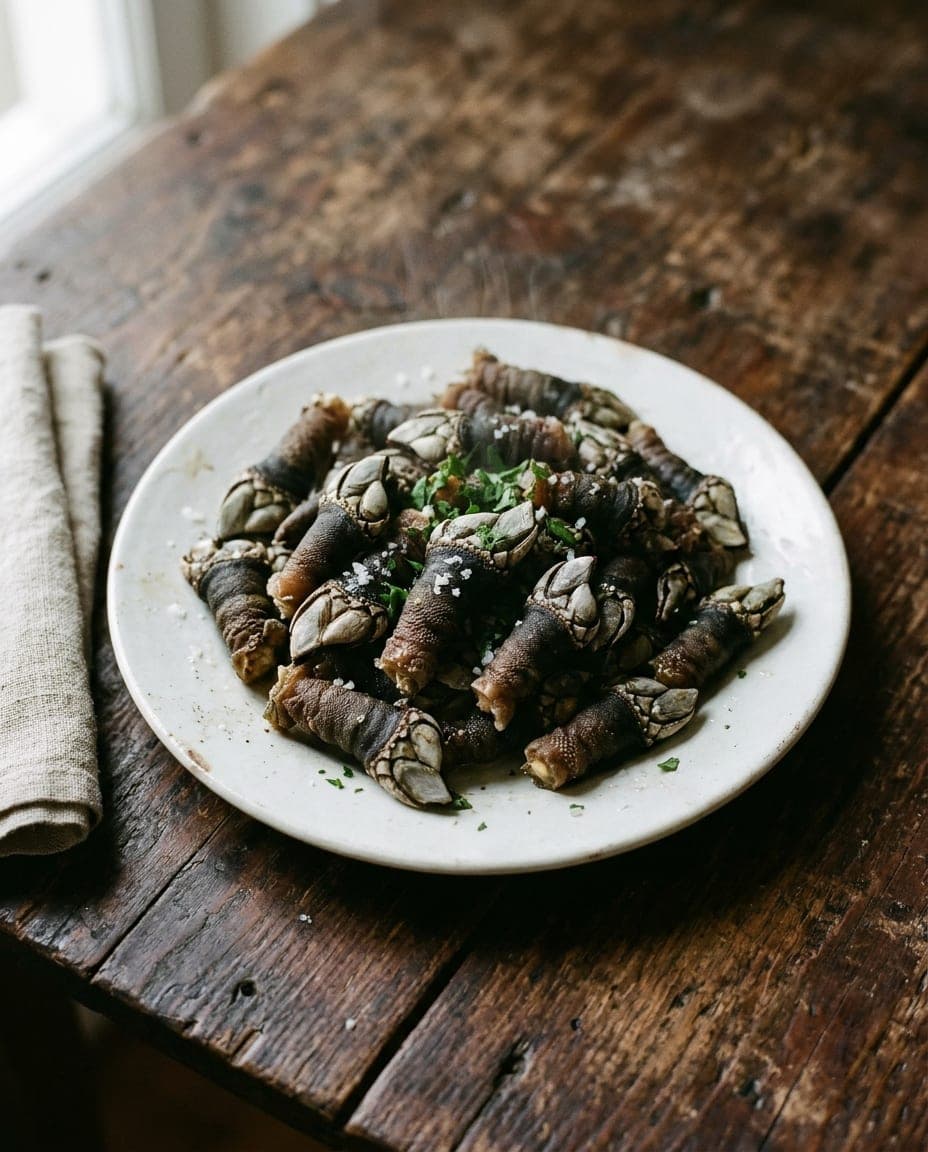
Percebes are the gooseneck barnacles that cling to the rocks along Spain's Atlantic and Cantabrian coasts, above all in Galicia. They look like small, dark hooves attached to leathery stalks, growing in dense clusters on wave-battered rocks where the sea is powerful. The name refers to the whole creature, including the hard "nail" at the tip and the stalk that anchors it to the stone.
They are harvested elsewhere on the northern coast and in Portugal too, but they are most closely associated with Galicia, especially the rugged stretches of the Costa da Morte, such as the rocks of Roncudo near Corme, and the waters around Cedeira. Here, the Atlantic meets the land with such force that the barnacles thrive in the surf. To eat them is to taste the raw power of the sea, a concentrated flavour unlike anything else on a Galician table.
The preparation is simple but demands precision. The barnacles are dropped into boiling, heavily salted water or seawater and cooked for only a minute or so after it returns to the boil. They are served hot or warm, often covered with a cloth to retain warmth.
How they are harvested
The story of percebes is defined by the people who gather them: the percebeiros. These harvesters work on steep, slippery rocks at low tide, often within reach of the breaking waves. They use an iron scraper to prise the barnacles loose, and some descend the cliffs on ropes.
It is dangerous work. The rocks are slick, the swell is unpredictable and there have been fatalities among percebeiros who lost their footing or were caught by a sudden surge of water. This risk, together with the scarcity of the barnacles and strict harvest rules, explains their high price.
The harvest is regulated through management plans approved by the Galician government and worked by the local fishermen's associations (cofradías), with daily catch limits and open days that vary from one stretch of coast to another; on the Roncudo, picking is allowed only around Christmas and in July. The best grounds are found where the currents are strong enough to keep the rocks clean and the barnacles well fed. The percebeiros know these spots by heart, a skill honed over generations.
Where they come from
Percebes are a speciality of Galicia's exposed coastline. They need open, wave-beaten rock and do not grow in sheltered waters. Summer festivals dedicated to the barnacle take place in coastal towns from Corme and Cedeira to Aguiño, A Guarda and Rinlo, near Ribadeo, at the mouth of the Eo River on the Cantabrian coast.
The local economy in these coastal villages has long revolved around the sea, and the percebeiros are respected figures who provide a delicacy that is rare elsewhere in Europe.
The taste of percebes reflects their environment. They feed on plankton carried by the strong currents, resulting in a flavour that is concentrated sea, salty and briny with a hint of sweetness.
What goes into it
There are no hidden ingredients or sauces. The dish consists entirely of the barnacle itself, prepared with minimal intervention.
- The barnacle: only the pink flesh inside the stalk is eaten.
- Salt and water: they are boiled in heavily salted water or seawater for a very short time; some cooks add a bay leaf.
- Heat: served hot or warm, often under a cloth.
The simplicity is intentional. Butter, garlic or spices would overwhelm the delicate taste that defines the dish. The texture is soft and slightly chewy.
How to eat them
Percebes are typically served as a starter or a shared plate in a Galician marisquería, a restaurant specialising in seafood. They are eaten with the fingers.
The method is specific. The diner holds the stalk, twists the "nail" and pulls away the tough outer skin, revealing the pink flesh inside, which is bitten off in one go. It is common for the barnacle to squirt seawater when twisted, so it is best to point it away from the table and other diners. The flavour is intense, a pure concentration of the sea that lingers on the tongue.
Albariño from the Rías Baixas region is the classic pairing. The crisp, citrusy white wine cuts through the saltiness and complements the briny depth of the barnacle. A glass of cold beer is also common.
Curious facts
- A dangerous profession. The percebeiros work on rocks in the surf at low tide, some descending the cliffs on ropes.
- Minimal cooking time. They are boiled for only a minute or so; overcooking makes them tough.
- A Galician icon. Percebes are harvested along several stretches of Europe's Atlantic coast, but Galicia's are the most celebrated.
- They squirt. When the stalk is twisted open, it often releases a jet of seawater.
- High value. The price reflects the danger, the limited supply and the strict harvest rules.
Where to try them
The best place to taste percebes is a Galician marisquería, particularly along the Costa da Morte, around Cedeira or near Ribadeo. These restaurants serve them simply boiled, often under a cloth to keep them warm.
A glass of Albariño completes the meal, balancing the salt with crisp acidity.
Where to try it
1 destination
 Panoramic Trains
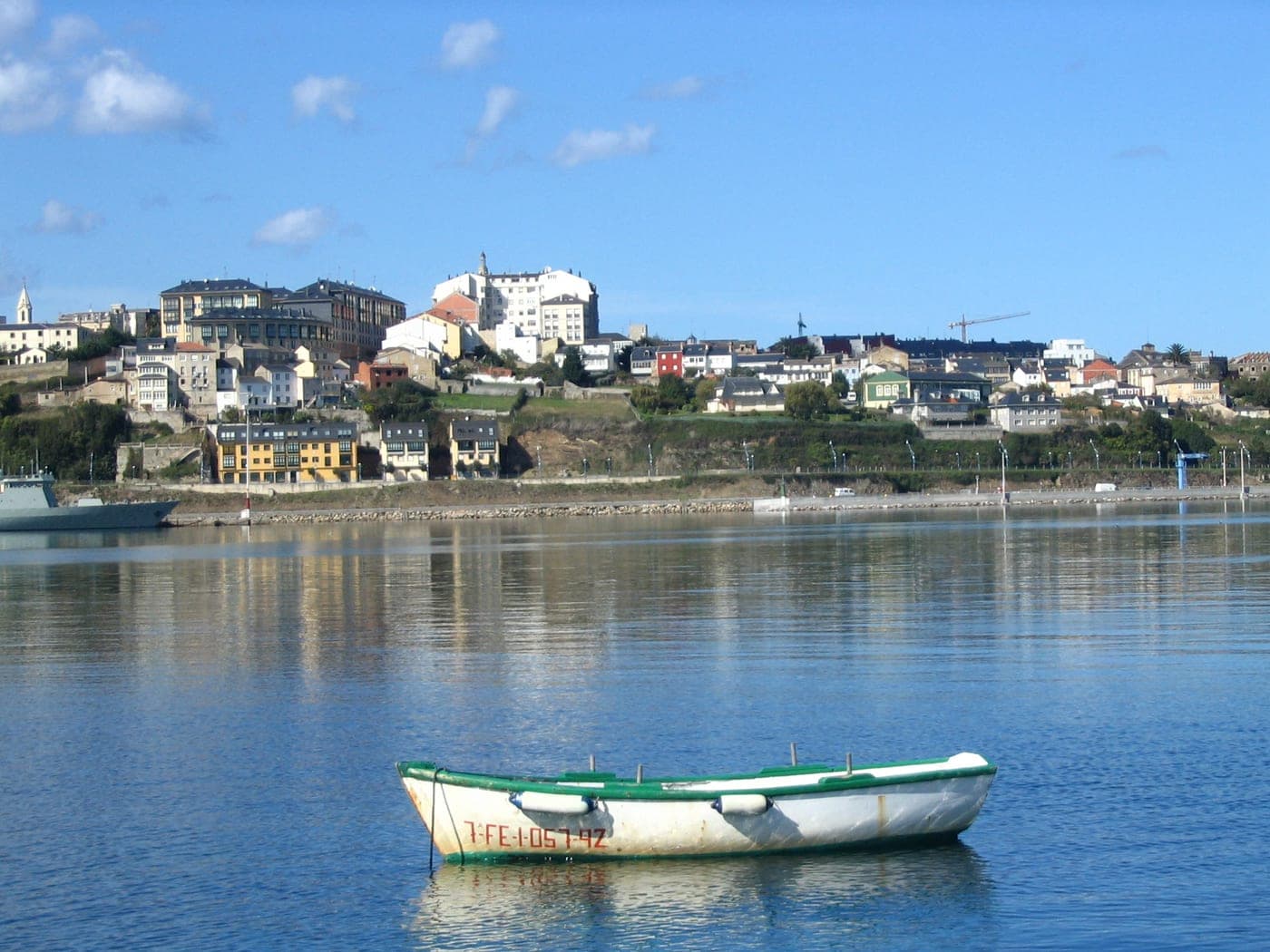
Ribadeo
Elegant port town on Galicia-Asturias border near Cathedrals Beach.
Panoramic TrainsHiking