Mojama de Barbate
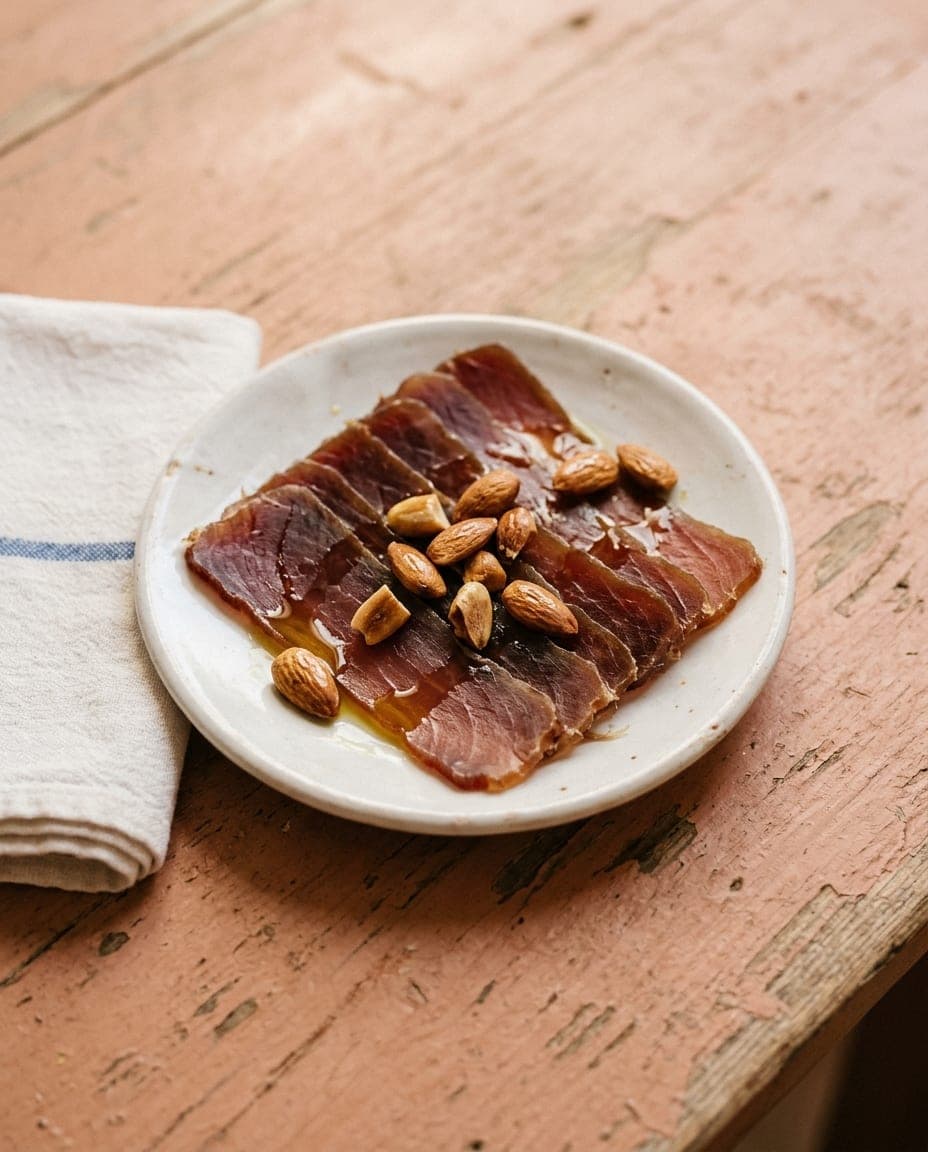
Salt-cured tuna loin from Barbate, sliced thin with almonds
- Local name
- Mojama de Barbate
- Served with
- Almonds, olive oil
- Best eaten at
- A Barbate tapas bar
- Pairs with
- Fino or manzanilla
What it is
Mojama de Barbate is a cured speciality from the southern coast of Andalusia, specifically the town of Barbate on the Atlantic coast of Cádiz. It consists of the loin of tuna, bluefin or yellowfin, that has been salted and then dried until it becomes dense and dark red-brown. The texture is firm yet tender, closer to a high-quality cured ham than to fresh fish. Since 2015 it has been a Protected Geographical Indication (PGI), produced in the municipalities of Barbate and neighbouring Vejer de la Frontera.
The mojama arrives as a solid piece which is sliced paper-thin at the table or on the counter. These delicate slices are often arranged on a small plate and dressed with a drizzle of local olive oil and a scattering of toasted almonds. It is not a cooked meal but a cold tapa, designed to be eaten slowly alongside a glass of dry sherry.
The history of salt and wind
The method behind mojama is ancient, rooted in the long tradition of preserving fish along the Cádiz coast. The word itself comes from Andalusi Arabic, ultimately from a classical Arabic term meaning "waxed", perhaps a nod to the cured loin's dark, glossy look, and a linguistic trace of centuries of Moorish presence in Andalusia. The salting of tuna on this stretch of coastline goes back to the Phoenicians and Romans, under whom fish-salting industries flourished in the province of Baetica.
Archaeological remains at Baelo Claudia, a Roman town near Tarifa, include the large tanks of fish-salting factories. While the specific form of the modern product evolved over time, the principle of salt and slow drying remains unchanged. The loins are first buried in sea salt for roughly a day to a day and a half to draw out moisture, then washed and left to rest before being dried. Drying may be natural, in sheltered facilities exposed to the coastal air, or in controlled drying tunnels, and lasts around two to three weeks, transforming the fresh tuna into a preserved delicacy.
The catch of the almadraba
The quality of mojama depends on the source of the fish. Barbate is famous for the almadraba, an ancient system of fixed nets and labyrinths set near the coast to intercept bluefin tuna during their spring migration from the Atlantic into the Mediterranean. The method, whose name also comes from Arabic, guides the fish through a maze of nets into a final enclosure without hooks or trawling.
The PGI requires loins from large wild tuna, either bluefin or yellowfin. Barbate, Zahara de los Atunes, Conil de la Frontera and Tarifa are the Cádiz towns where almadraba fishing still takes place, and bluefin caught on the migration is prized for its condition.
How it is eaten
Mojama is traditionally served as a tapa in a Barbate tapas bar. It is rarely eaten alone; the saltiness of the cured tuna calls for a counterpoint. The standard accompaniment is a cold glass of fino or manzanilla, the dry, pale sherries of nearby Jerez and Sanlúcar de Barrameda. The saline notes of the fish and the nutty, briny taste of the sherry complement each other.
The almonds and olive oil added to the plate soften the intensity of the salt and add richness to the lean meat. It is a dish meant for sipping and savouring rather than rushing through. A single portion often suffices as a starter or a light lunch, especially when paired with a few other small plates from the bar menu.
Curious facts
- The word is Arabic. Mojama comes from Andalusi Arabic, reflecting the deep historical layers of Andalusia.
- A Roman legacy. The ruins at Baelo Claudia show that fish salting on this coast was an industry in the Roman era, long before the Arabic name was adopted.
- The almadraba is a trap. This ancient net system uses a labyrinth of barriers to guide migrating bluefin into a final enclosure, a technique still used today.
- It is not smoked. The flavour comes from salt and drying alone; no smoke is used in the process.
- Two protected mojamas. Andalusia has two PGI mojamas: Mojama de Barbate in Cádiz and Mojama de Isla Cristina in Huelva.
Where to try it
1 destination
 Boat Rentals
Barbate
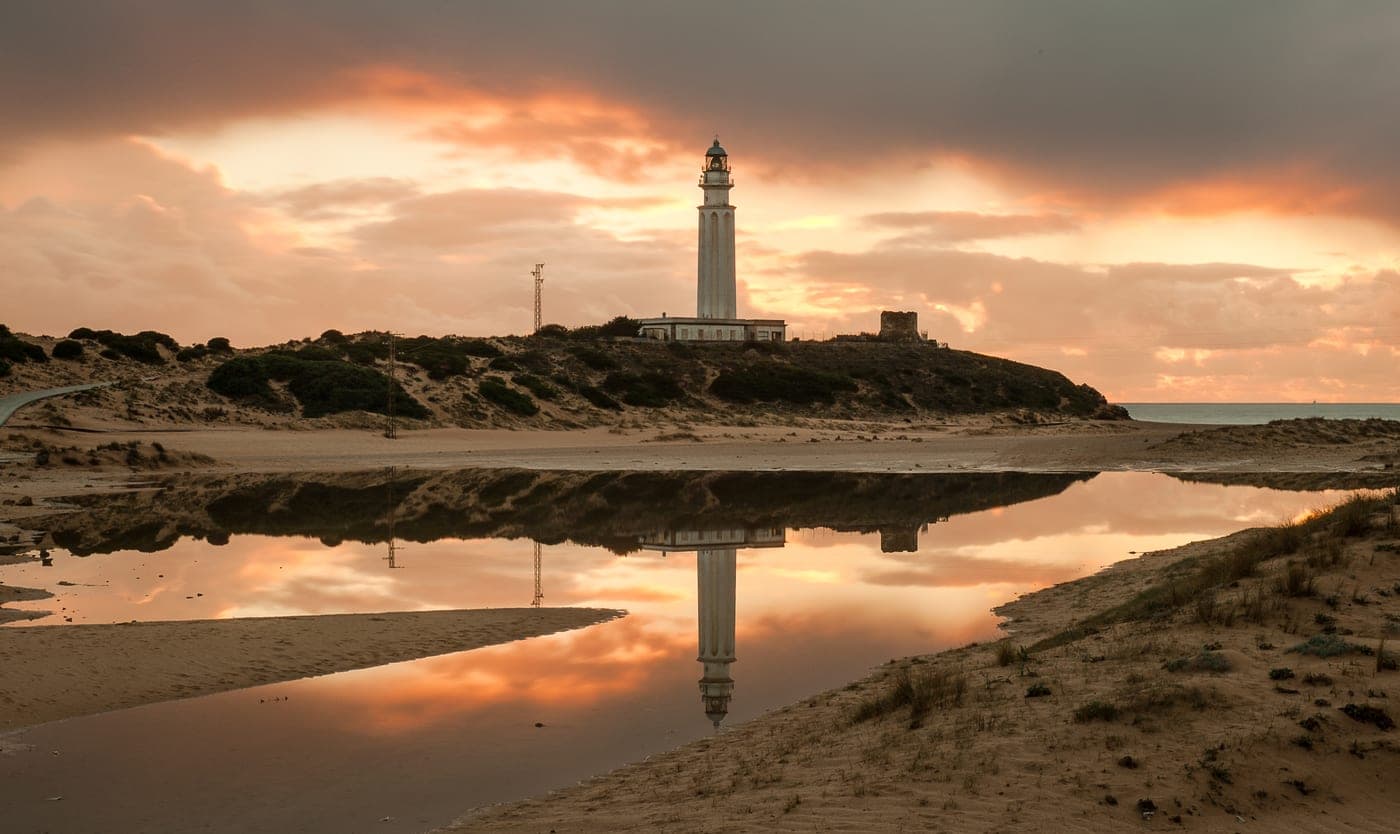
Traditional fishing town near Cape Trafalgar with marina and boat rental services.
Boat RentalsHiking