Merluza de pincho
Hook-caught hake from Spain's northern ports, grilled or in cider sauce
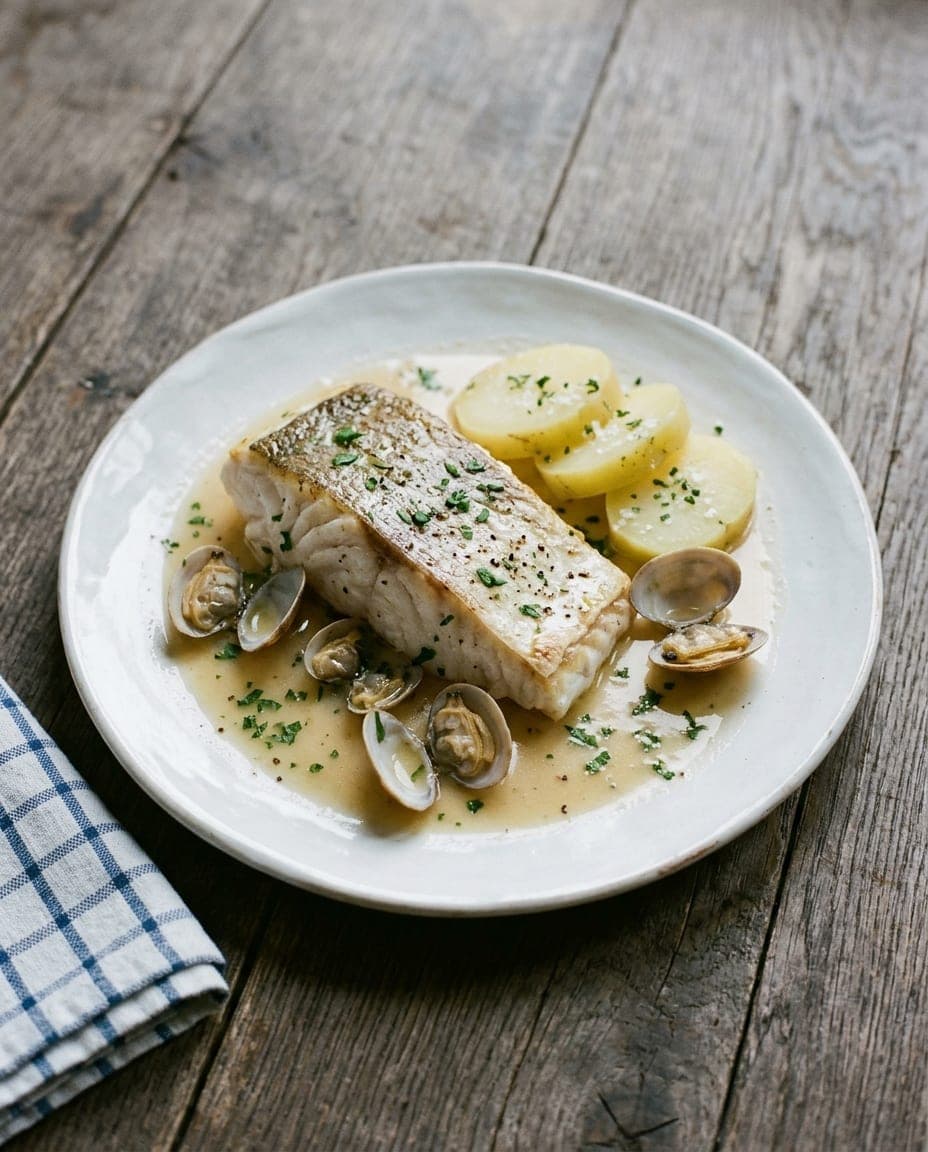
- Local name
- Merluza de pincho
- Served with
- Cider sauce, potatoes
- Best eaten at
- A harbour restaurant on the Cantabrian coast
- Pairs with
- Albariño
What it is
Merluza de pincho is a dish that turns a specific method of catching into a local culinary identity. It features hake from the Atlantic waters off Spain's northern coast, caught on hooks rather than dragged through nets. The term pincho refers to this hook-and-line fishing, in which the fish are landed one by one. This technique means the fish arrives in port unbruised, with firm flesh and clean skin, ready for immediate icing or cooking.
The dish is not a national staple but a speciality of the northern coast. The best-known landings are in the Galician ports of Burela and Celeiro, in the province of Lugo, and Asturian fishing towns such as Luarca also serve hake from the local boats. In its simplest form, it is a thick cut from the middle of the fish, grilled to keep the flesh moist. It is also often poached and served en salsa verde, a sauce made from garlic, parsley, white wine and often clams, while in Asturias the local classic is merluza a la sidra, cooked in natural cider. The result is a clean, savoury plate that highlights the quality of the catch rather than masking it with heavy spices or butter.
The catch and the method
The distinction between pincho hake and other catches lies entirely in how the fish is brought up from the sea. While trawlers drag large nets, longline boats off the Cantabrian coast use lines carrying hundreds of hooks. Each fish is taken individually, preventing the damage that can occur when fish are crushed together in a net.
This gentler method means the hake reaches the fish markets in prime condition, and it is sold under the pincho name at a premium over trawled fish. Because the fish is iced promptly after it is landed, the flesh remains firm and the skin intact, qualities that define the dish when it reaches the plate.
How it is prepared
The cooking of merluza de pincho respects the integrity of the fish. A thick steak from the centre of the hake is often grilled simply with a little oil and salt, allowing the natural sweetness of the meat to shine through. In many kitchens, however, the fish is poached in a sauce that complements its delicate texture without overwhelming it.
The salsa verde typically combines garlic, fresh parsley, white wine and often clams. The Asturian version, merluza a la sidra, uses the local cider with garlic and onion to create a tangy, aromatic sauce that clings to the fish and the accompanying potatoes. The potatoes are usually boiled or roasted alongside the sauce, serving as a neutral base for the savoury elements.
Where to eat it
The dish is at its best in a harbour restaurant that serves the local catch directly from the boats. These establishments are often modest in appearance but focus on the freshness of the ingredients. A table near the water gives a view of the small boats returning with their catch, connecting the meal to the source.
The dish is typically served as a main course, accompanied by the cider sauce and potatoes. It pairs naturally with a glass of Albariño, a white wine from Galicia's Rías Baixas that complements the briny notes of the hake and the acidity of the cider sauce. The meal is straightforward: the fish, the sauce, the potatoes and perhaps a slice of bread to soak up the remaining liquid.
Curious facts
- The hook matters. The name pincho refers to hook-and-line fishing, in which the hake are caught one at a time and arrive unbruised.
- A northern speciality. While hake is eaten all over Spain, line-caught pincho hake is a point of pride on the northern coast; Celeiro, near Viveiro, even holds a summer Festa da Merluza do Pincho.
- Sauce variations. The salsa verde often includes clams, adding a briny depth that matches the Atlantic catch.
- Cider connection. In Asturian versions, local cider replaces white wine, giving the dish a distinctive tang.
- Daily rhythm. The fish is landed fresh and cooked soon after, meaning the meal relies on the daily catch rather than frozen stock.






