Gazpacho
A chilled soup from Andalusia made of raw vegetables, bread and olive oil
- Vegetarian
- Local name
- Gazpacho
- Served with
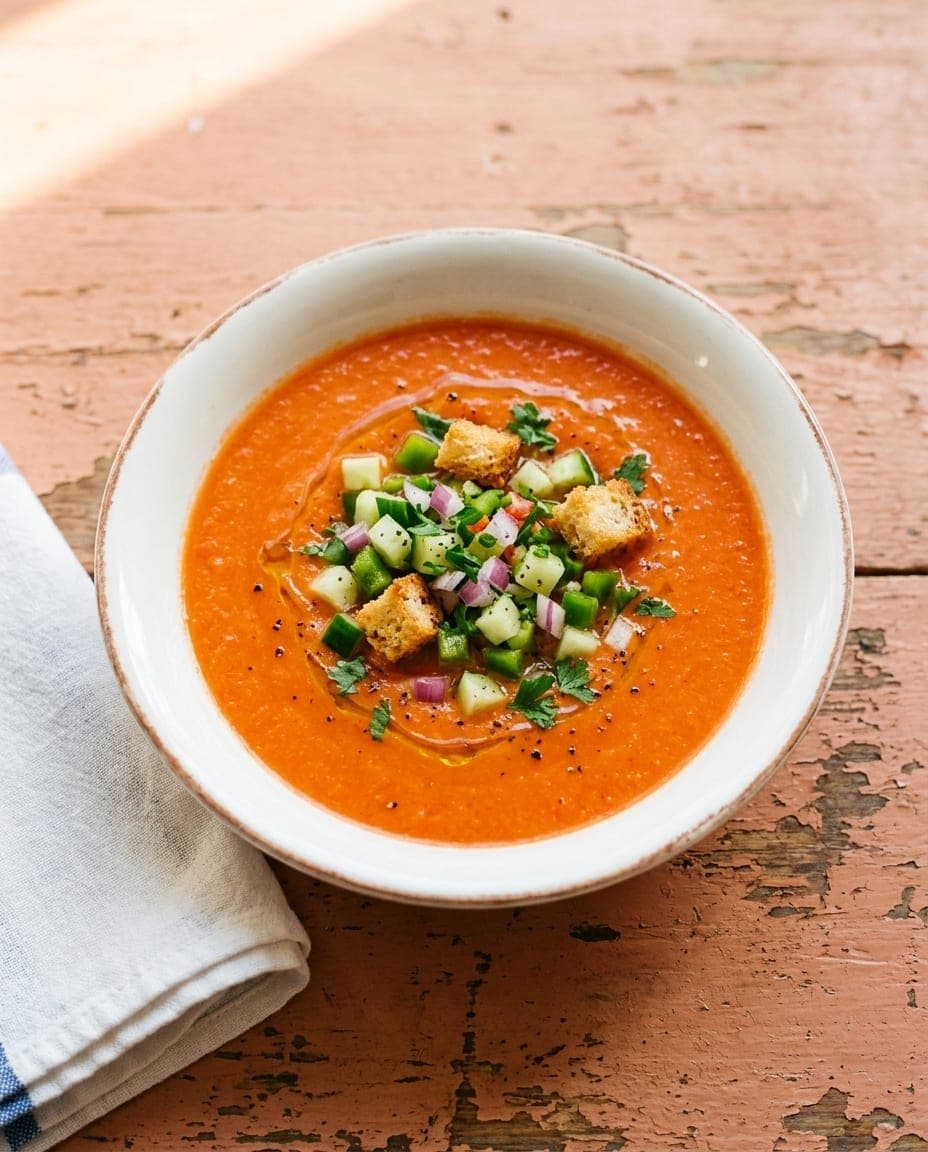
- Diced cucumber, pepper, croutons
- Best eaten at
- An Andalusian venta
- Pairs with
- Fino sherry
What it is
Gazpacho is the defining cold soup of Andalusia, a region in southern Spain where the summer heat often turns the air into a heavy haze. It is a refreshing, deeply savoury soup that can almost be drunk, made from raw ingredients that are blended until smooth and then chilled. The base consists of ripe tomatoes, green peppers, cucumbers, garlic, stale bread, olive oil and sherry vinegar, all emulsified into a cool liquid that is drunk from a glass or eaten with a spoon from a bowl.
While it is now one of the most famous cold soups in the world, its origins lie in the practical needs of farm workers rather than in the kitchen of a grand chef. The dish took shape in the fields of Andalusia, where labourers and shepherds needed something light and sustaining during the hottest hours of the day. It requires no cooking, making it an ideal solution for days when the heat makes standing over a stove unbearable.
The texture is key. A well-made gazpacho is neither watery nor thick like a stew; it sits somewhere between a juice and a creamy soup. The stale bread acts as a binder, giving the mixture body, while the olive oil provides a smooth, silky finish.
A history older than the tomato
The story of gazpacho begins long before the tomato arrived from the Americas. The earliest versions were simple mixtures of stale bread, garlic, olive oil, vinegar, salt and water, pounded together in a mortar. They were a frugal meal for peasants and shepherds with little else to eat, relying on the oil for energy and the vinegar for its sharp, refreshing bite.
The tomato reached Spain from the New World in the 16th century, but it only became a central ingredient of gazpacho in the 19th century. Together with peppers and cucumber, it turned the old bread-and-garlic soup into the sweeter, redder gazpacho known around the world today, while keeping the original method of emulsifying bread, oil and vinegar.
This evolution reflects the broader history of Andalusian agriculture. The region has long been a crossroads of cultures, from the Romans, who spread olive growing, to the Moors, who developed irrigated market gardens.
What goes into it
There are many cold soups in the gazpacho family across Andalusia, from the white ajoblanco of Málaga, made with almonds and garlic, to the thick, tomato-rich salmorejo of Córdoba. The classic red gazpacho relies on a specific set of ingredients that must be of high quality, as there is no cooking to mask any flaws in the raw produce.
- Ripe tomatoes: The foundation of the dish, providing sweetness and colour.
- Green peppers: Usually the long, mild Italian-type pepper, adding a fresh, grassy note.
- Cucumber: Adds a crisp, cooling element that balances the richness of the oil.
- Stale bread: Usually crusty white bread, soaked and used as the thickening agent.
- Garlic: Added sparingly to provide a sharp kick without overwhelming the other flavours.
- Extra virgin olive oil: The most critical ingredient, poured in generously to create the emulsion and add a fruity, peppery finish.
- Sherry vinegar: Provides the necessary acidity, with a distinctive nutty character.
Traditionally the ingredients were pounded in a mortar; today they are usually blended until smooth, and some cooks strain the soup to remove skins and seeds. It is then chilled for several hours before serving, allowing the flavours to marry.
How it is eaten
Gazpacho is served as a starter, a light main course or simply a refreshing glass on a hot afternoon. It is poured into glasses or bowls, and many locals drink it straight from the glass, treating it more like a beverage than a soup.
The surface is often topped with diced raw vegetables that mirror the ingredients inside. Small cubes of cucumber, green pepper and tomato are scattered over the top, adding crunch to the smooth liquid, along with croutons fried in olive oil. Some add chopped hard-boiled egg or cured ham.
A classic setting for a bowl of gazpacho is a venta, a roadside inn that historically served as a resting place for merchants and travellers moving between towns. Many still stand in the open countryside, offering shade and a simple midday meal.
Curious facts
- A drinkable soup. Gazpacho is often drunk from a glass rather than eaten from a bowl, blurring the line between soup and beverage.
- No cooking required. The entire dish relies on raw ingredients, pounded or blended, with no heat at any stage.
- The bread matters. Stale bread gives the correct body; fresh bread can make the soup gluey and heavy.
- A whole family of soups. Red gazpacho is the best known, but Andalusia also has the thicker salmorejo of Córdoba and the white, almond-based ajoblanco, among other relatives.
- A summer ritual. Gazpacho is above all a summer dish, appearing in homes and on menus when the heat demands a cooling solution and tomatoes are at their peak.
Where to try it
The best place to enjoy gazpacho is in the heart of Andalusia, particularly in the provinces of Seville, Córdoba and Málaga. Here, the dish is not a novelty but a staple of the summer months, and a roadside venta in the countryside or near the Sierra Morena offers an authentic experience, with the soup made fresh from local produce.
Many rural restaurants in Andalusia serve gazpacho alongside fried fish, cured meats and olives, and it is often at its best in small family-run taverns.
A true Andalusian gazpacho has a deep colour and a fresh, lively taste. A fitting accompaniment is a fino sherry, a dry, pale wine from Jerez that complements the acidity of the vinegar and the richness of the oil without overpowering the delicate flavours of the vegetables.
Where to try it
1 region
 Wine Tasting12 destinations
Andalusia
Andalusia stands as Spain's largest autonomous community, renowned for its diverse landscapes, from sun-soaked beaches to rugged mountains. The region is famed for its rich Moorish heritage, best exemplified in cities like Granada, home to the Alhambra, and Seville, known for its cathedral and flamenco culture. Cordoba boasts the stunning Mezquita, while Ronda captivates with its dramatic gorge. Unique local festivals such as Feria de Abril and Semana Santa highlight Andalusian culture. The region produces excellent wines, particularly from Jerez, and is the birthplace of tapas. Off the main tourist paths, towns like Grazalema and Mijas offer authentic experiences amid beautiful natural settings.
Wine TastingHikingLocal CuisineBoat Rentals





