Fresas de Huelva
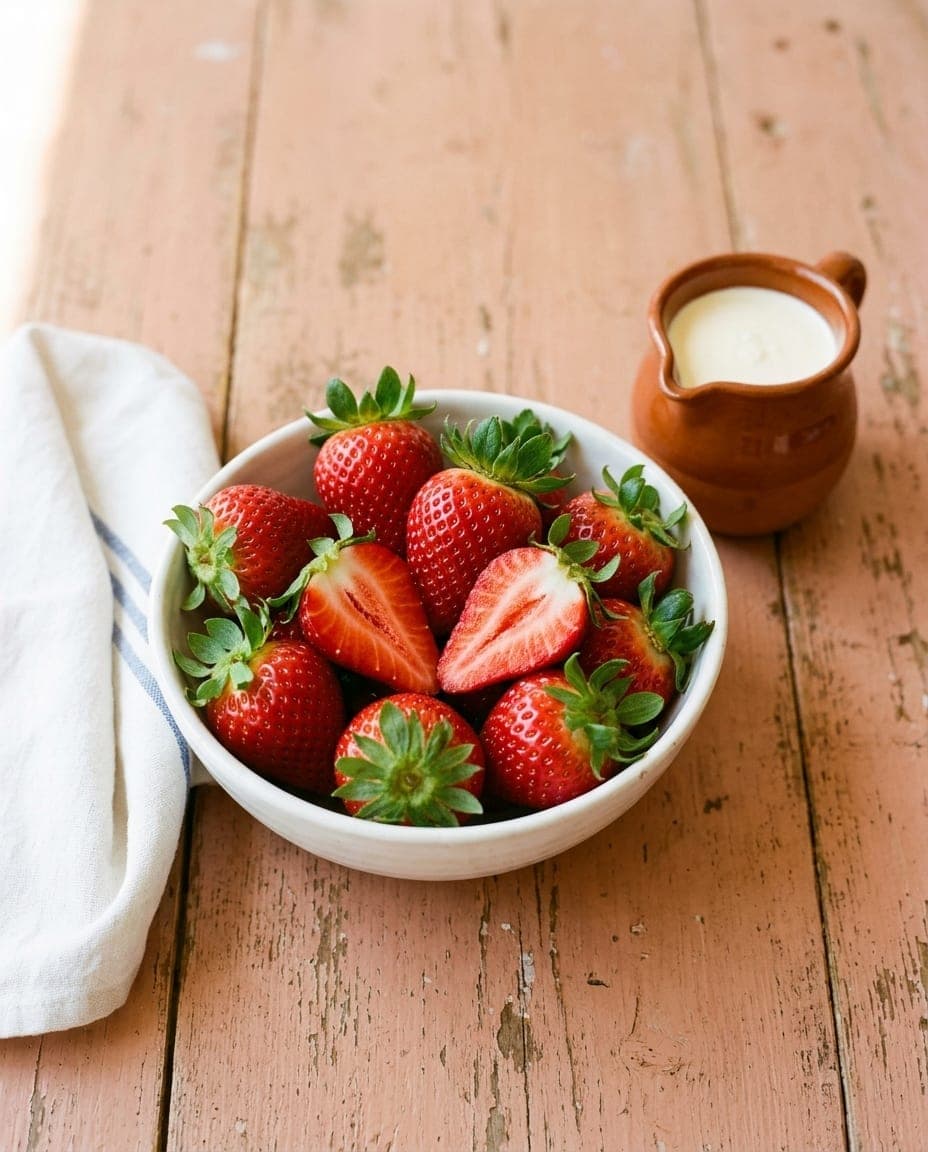
Huelva strawberries served with cream or orange juice
- Vegetarian
- Local name
- Fresas de Huelva
- Served with
- Cream or orange juice
- Pairs with
- Cava
What they are
Fresas de Huelva are not merely a fruit but a seasonal event that defines the rhythm of the Spanish south-west in late winter and spring. These strawberries come from the province of Huelva, in the far south-west of Andalusia between the Guadalquivir marshes and the Portuguese border. Huelva grows the overwhelming majority of Spain's strawberries — over 95% by some estimates — and is one of Europe's leading strawberry-growing areas.
The defining feature of these berries is their timing. Thanks to mild winters, plenty of sun and sea breezes, the harvest begins very early, often while much of northern Europe is still in the grip of winter. This allows the fruit to reach markets across the continent when other sources are scarce. Picking runs from about January to June, peaking in March and April.
The fields are concentrated in a handful of coastal and near-coastal municipalities, among them Moguer, Palos de la Frontera, Lepe, Cartaya and Almonte. In season the fruit on sale there is large, deep red and fragrant.
The landscape behind the harvest
The strawberry belt lies next to Doñana National Park, one of Europe's most important wetlands. The mild winters and abundant sunshine make the area well suited to early fruit.
The industry has grown enormously over recent decades and transformed the local economy. It is a landscape of flat fields where long rows of plastic tunnels and ground covers protect the plants and retain moisture, a white sheen stretching across the countryside between the towns.
The scale of production also brings attention to water. The crop relies on irrigation, and drawing water close to a protected wetland has made the aquifer that feeds Doñana a subject of long-running controversy, including disputes over illegal wells and irrigation rights. Balancing the harvest with the conservation of Doñana remains one of the region's central debates.
How they are eaten
Fresas de Huelva are mostly eaten fresh when in season, where their natural sweetness and texture take centre stage. Two simple preparations dominate the way locals and visitors enjoy them.
The most familiar is fresas con nata: a bowl of berries topped with whipped, lightly sweetened cream, the cold dairy complementing the intense flavour of the strawberries. It is found in cafés and restaurants across Spain during the spring months.
Equally popular is fresas con zumo de naranja, in which the berries are dressed with freshly squeezed orange juice rather than cream. The citrus adds a bright acidity that makes the dish feel lighter and more refreshing.
Occasionally they are simply macerated in sugar, though this is less standard than the cream or orange juice versions. The simplicity of these preparations keeps the quality of the strawberry in focus; if the fruit is not at its peak, it will not hold up to such minimal treatment.
A regional speciality
While strawberries are grown in other parts of Spain, Fresas de Huelva have a distinct identity tied to their origin. Much of the crop is exported, chiefly to Germany, France and the United Kingdom, but the experience of eating them fresh from the source during the harvest season belongs to Andalusia.
The growing towns of the coast are natural places to seek out the best of the harvest, whether in local markets or at roadside stalls near the fields. The connection between the land and the plate is visible here in a way that is less apparent in distant supermarkets.
In 2023 the Andalusian government and the growers' association Interfresa began the process of seeking a Protected Geographical Indication for Fresa de Huelva, a sign of how strongly the fruit is tied to its home province. It has become a symbol of the region's early arrival on the European market, celebrated for bringing the taste of summer to the end of winter.
Curious facts
- Early arrival. Huelva strawberries are among the first in Europe to ripen, often reaching northern markets while other regions are still cold.
- Mild winters. Sun, sea breezes and mild winters near the coast let the plants fruit early in the year.
- Two main styles. They are typically served with either cream or fresh orange juice, rarely both at the same time.
- Doñana proximity. The fields lie close to the Doñana wetlands, making water management a critical local issue.
- Seasonal window. The harvest runs from about January to June, with the peak in March and April.
- Export focus. A large share of the crop is sent abroad, so the freshest local experience comes from visiting during the season.
Where to try them
Markets in Huelva and the growing towns display the fruit in abundance during the spring months, often sold in small punnets or larger trays for sharing.
Cafés and restaurants along the coast serve the strawberries with cream or orange juice throughout the season, and they also appear as a dessert topping or mixed into yoghurt. The combination is a classic way to finish a meal in Andalusia in spring. Because the timing varies slightly from year to year, the local markets are the best guide to whether the harvest has begun.
Where to try it
1 destination
 Boat Rentals
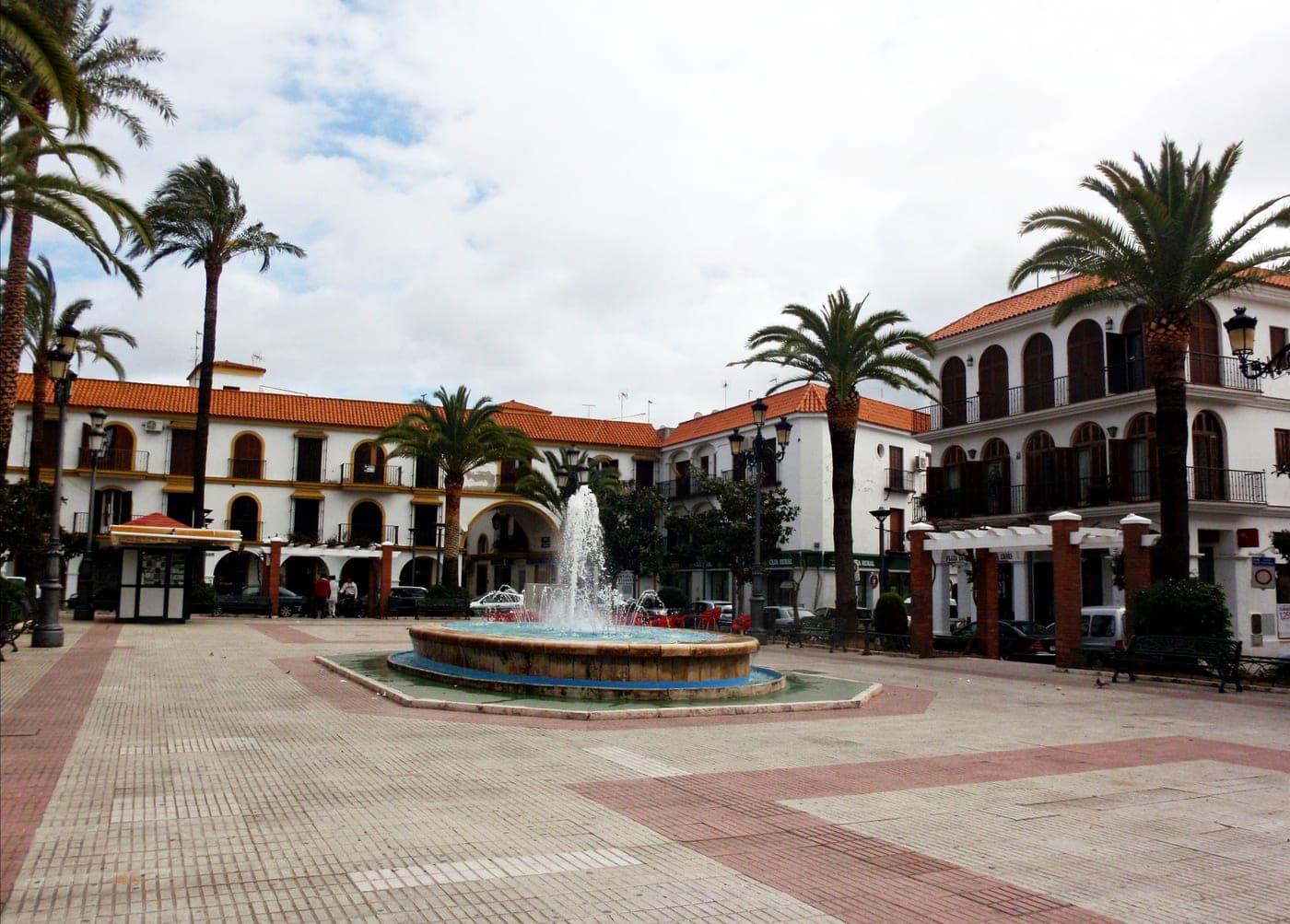
Lepe
Coastal town in Huelva with access to marinas and boat rentals near the Portuguese border.
Boat RentalsHiking





