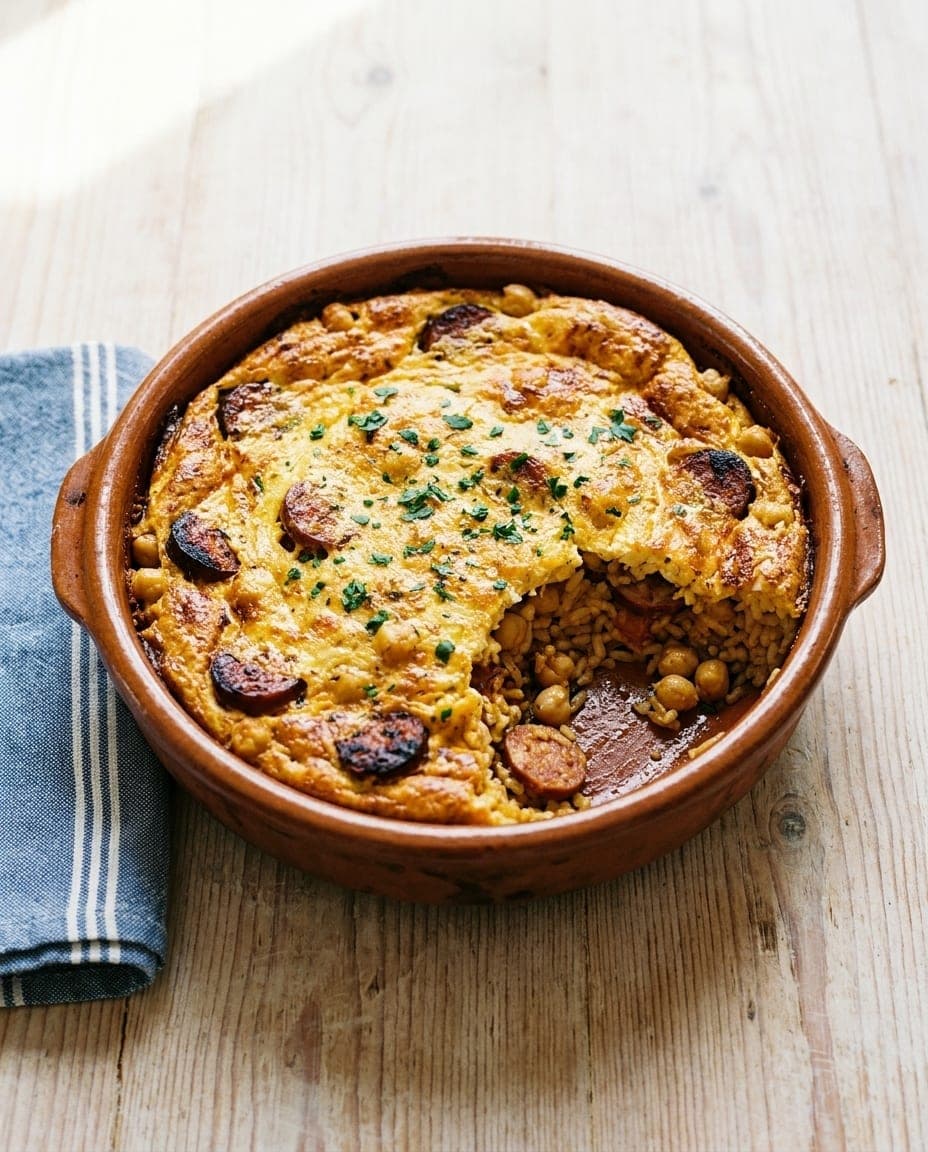
Empanada gallega
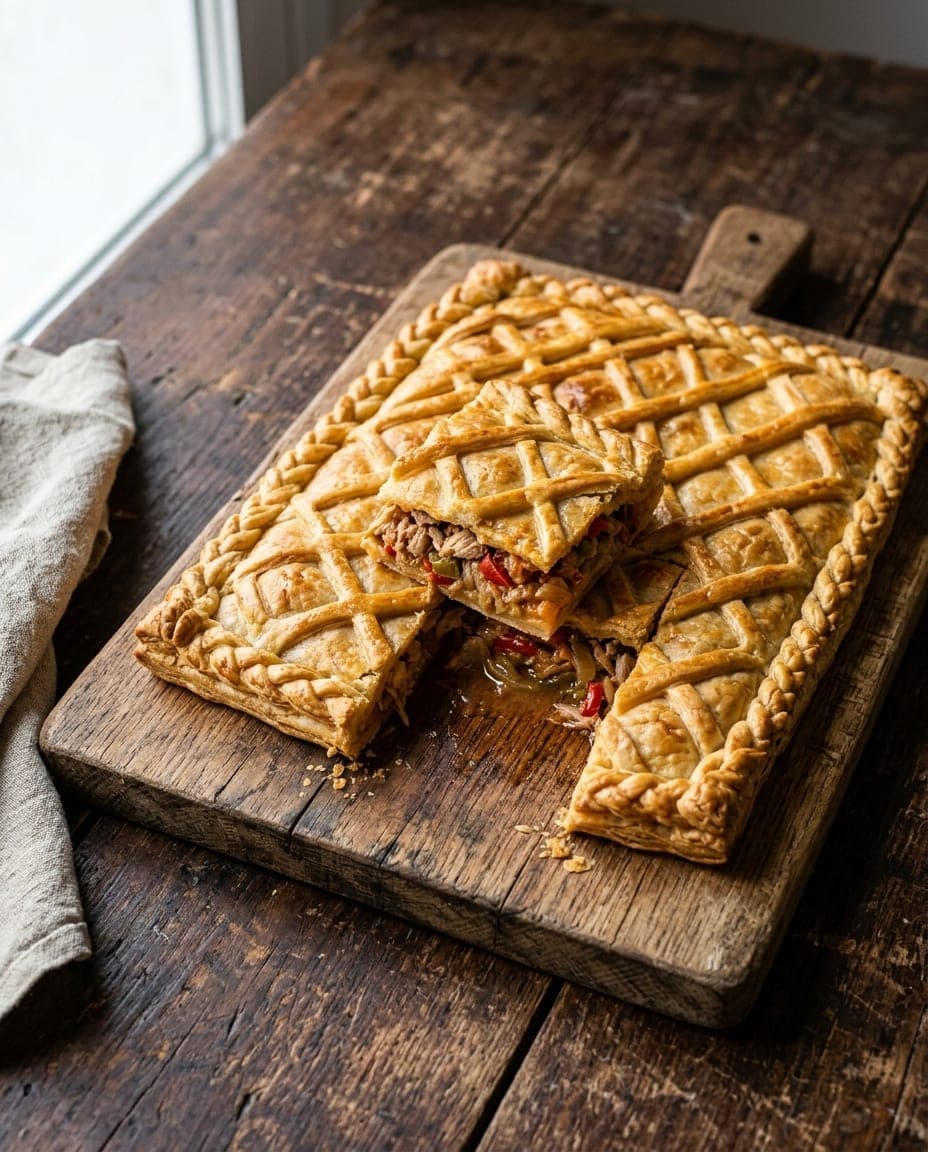
A large Galician pie of two crusts, baked in a tray and cut into portions
- Local name
- Empanada galega
- Best eaten at
- A Galician romería (pilgrimage fair)
- Pairs with
- Albariño or Ribeiro
What it is
The empanada gallega, known locally as the empanada galega, is a large, flat pie that serves as the centrepiece of many Galician meals and gatherings. Unlike the small, folded turnovers found in other parts of Spain or Latin America, this dish is baked as one wide pie in a large round or rectangular tray, then cut into portions before serving. It is a shared food, designed to be sliced and passed around.
The texture is distinct: a sturdy, golden crust that holds a moist, flavourful filling without becoming soggy. The top crust usually has a small hole or a decorative pattern in the centre to let steam escape during baking. While it is often eaten warm, the empanada gallega is equally popular cold or at room temperature, taken on picnics or served during long meals. The filling is as important as the pastry, and the two are meant to be enjoyed together in every bite.
Where it comes from
The empanada gallega is a regional speciality of Galicia, the north-western corner of Spain. Its heart lies in both the coastal districts and the rugged interior, where fishing and farming have long shaped the local diet.
The dish has deep medieval roots. A figure on the 12th-century Pórtico da Gloria at Santiago de Compostela cathedral is often cited as a sinner reaching for an empanada, held back by a rope around his neck. Whether that image really depicts an empanada or a similar pie is a matter of debate, but Galicia's association with the dish is centuries old.
The empanada became woven into the social fabric of Galicia through its association with romerías. These are local religious festivals and pilgrimages, mostly held in spring and summer and dedicated to local saints or the Virgin Mary. During a romería, families gather in the countryside for walking, music and eating. The empanada is the natural food for such occasions: it can be baked in advance, transported easily and shared among large groups without needing reheating. It remains a staple at these events today.
What goes into it
There is no single official recipe, and every baker in Galicia has their own version. The dough is usually made with wheat flour, though maize flour is used for some versions, especially those with small fish or shellfish. It is often enriched with the oil from the sofrito, olive oil or lard, and some bakers add a splash of white wine.
The filling begins with a sofrito, a base of onions and peppers cooked slowly in oil until soft and sweet. This is often seasoned with paprika, which gives the empanada its characteristic golden-red hue. Once the base is ready, the main ingredient is added. The most common version features tuna, mixed with the sofrito and sometimes a little tomato or hard-boiled egg.
Other popular fillings include sardines, cockles, scallops or salt cod. A version with salt cod often includes raisins to balance the saltiness of the fish. Meat versions are also common, filled with chicken or pork, such as zorza, the marinated minced pork used to make chorizo. Seafood versions dominate on the coast, while inland areas tend to favour meat.
How it is eaten
The empanada gallega is usually served as a substantial snack, starter or light main dish. It arrives on a large platter or wooden board, already cut into portions. Diners often take a piece and eat it with their hands. The pastry should be crisp on the outside and soft on the inside, holding the filling without breaking apart.
It pairs well with the region's white wines. A glass of Albariño, with its citrus notes and crisp acidity, cuts the richness of the oil and fish. A Ribeiro white is also a traditional companion.
At a romería, the empanada is a fixture of the picnic. Families bring large pies from home, and neighbours share pieces with one another. It is common to see the portions laid out on a tablecloth in the grass, surrounded by glasses of wine, cheese and bread. The pie is eaten cold or at room temperature, allowing the flavours of the sofrito and the filling to settle into a harmonious whole.
Curious facts
- The cut. Unlike folded turnovers, the Galician empanada is baked as one large pie and cut into squares or wedges, which makes it easy to share among a crowd.
- A medieval link. A 12th-century figure on the Pórtico da Gloria at Santiago de Compostela cathedral is often cited as an early depiction of an empanada, though historians debate the identification.
- The romería connection. The dish is closely linked to the village festivals and pilgrimages (romerías), where it is the perfect food for long days in the countryside.
- Dough variations. The pastry can be made with wheat or maize flour, enriched with oil or lard, and some bakers add white wine.
- A festival of its own. The parish of A Bandeira, in Silleda (Pontevedra), has held a festival dedicated to the empanada every August since 1974.
Where to try it
The best place to eat an empanada gallega is in Galicia itself, where bakeries in almost every town sell it by the portion or as a whole pie. During the spring and summer months, village romerías show the dish in its natural setting, and A Bandeira's empanada festival in August is a dedicated celebration of it.
For a quieter experience, a traditional bakery in the coastal towns of the Rías Baixas or the Rías Altas offers pies baked fresh daily, often with seafood fillings from the local catch. The empanada is not a dish that requires a fancy restaurant; it belongs to the neighbourhood bakeries and the open fields where people gather.
Where to try it
2 destinations
 Boat Rentals
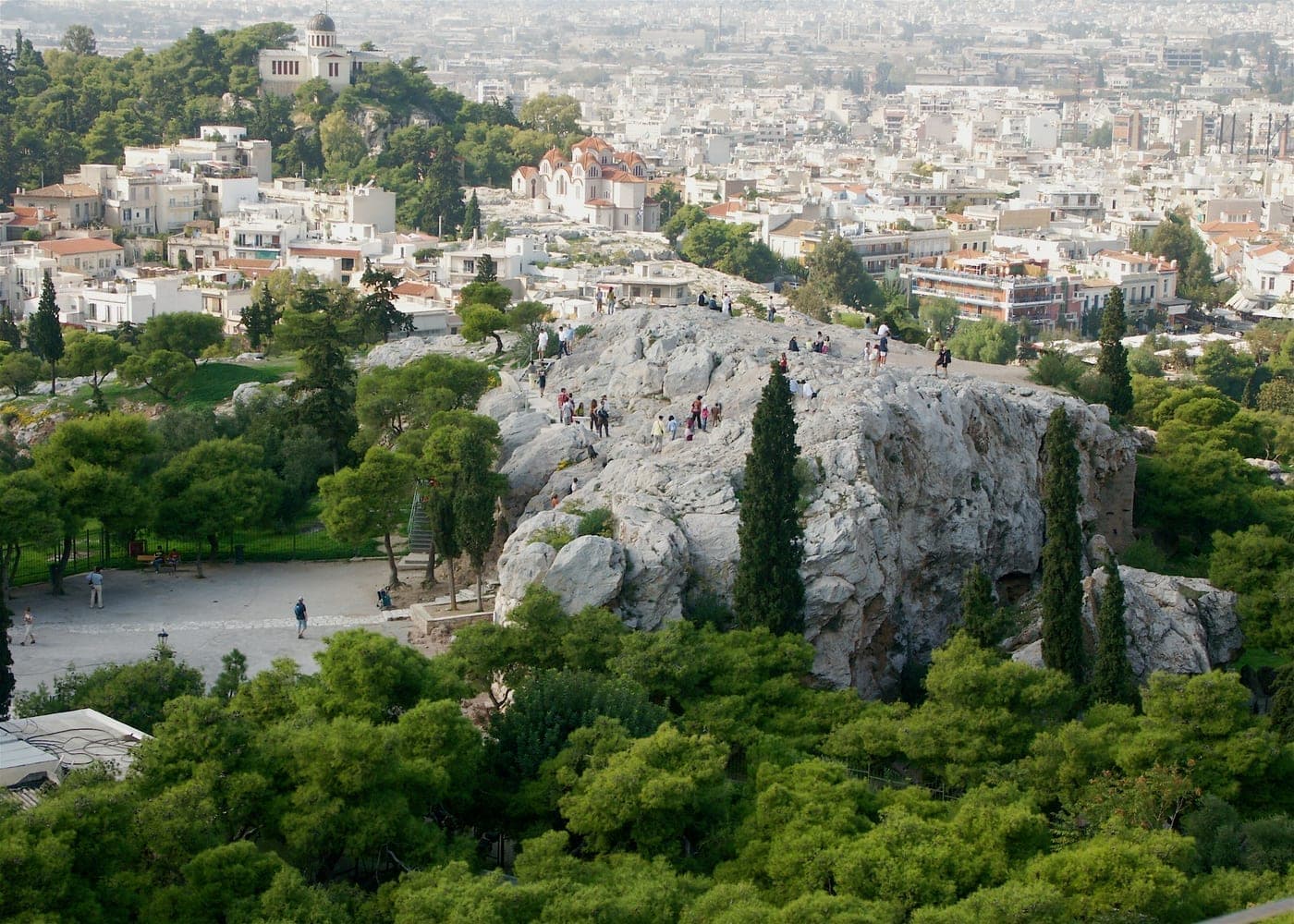
Ares
Coastal town in Galicia with marina facilities for exploring the Rías Altas.
Boat RentalsHiking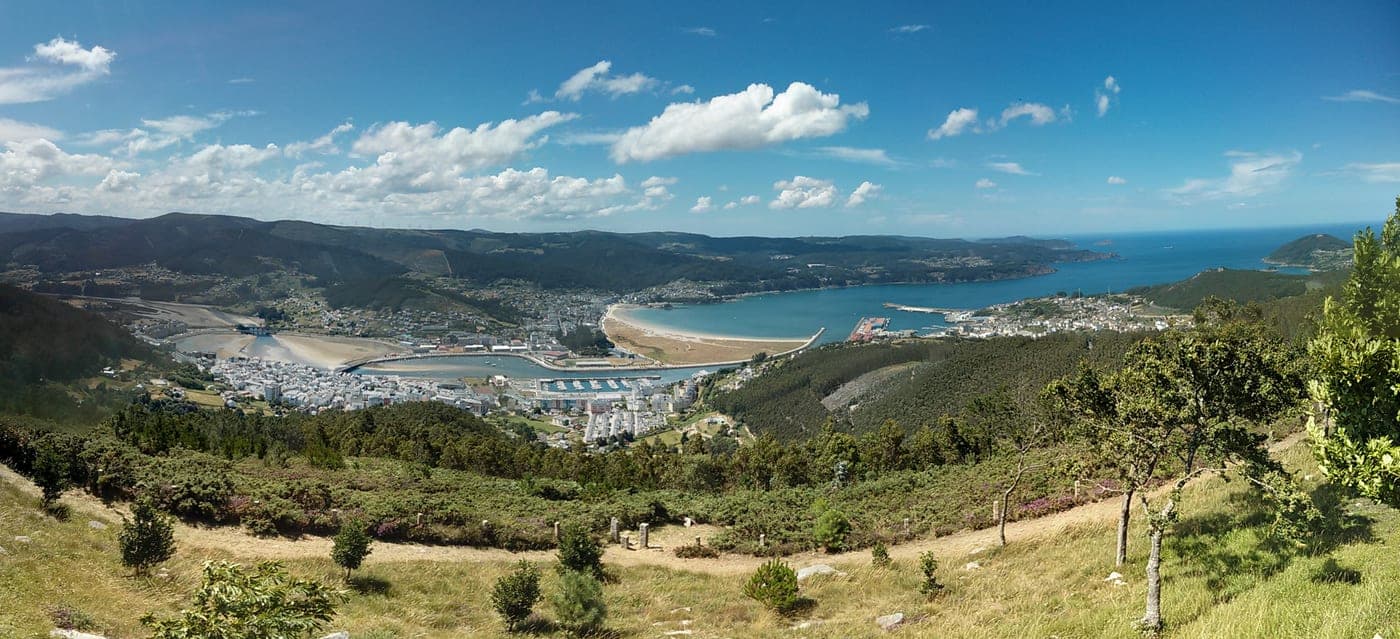 Panoramic Trains
Viveiro
Medieval walled town with beaches on Galicia's northern coast.
Panoramic TrainsHiking
1 region
 Panoramic Trains8 destinations
Galicia
This region is the largest in Spain, featuring a stunning coastline along the Atlantic Ocean. Known for its rich Celtic heritage, Galicia boasts historical towns like Santiago de Compostela, famous for its pilgrimage routes and the impressive cathedral. The Rías Baixas area is celebrated for its Albariño wine, while the rugged shores offer scenic beauty, including the dramatic cliffs of the Costa da Morte. Traditional crafts, such as pottery and weaving, reflect the local culture. Visitors can explore lesser-known villages like Combarro and O Cebreiro, which showcase ancient architecture and regional gastronomy. Unique festivals, such as the Romería de San Juan, highlight local traditions and community spirit, making this region a treasure trove for those seeking depth in their travels.
Panoramic TrainsHikingWine TastingLocal Cuisine