Coca amb tonyina
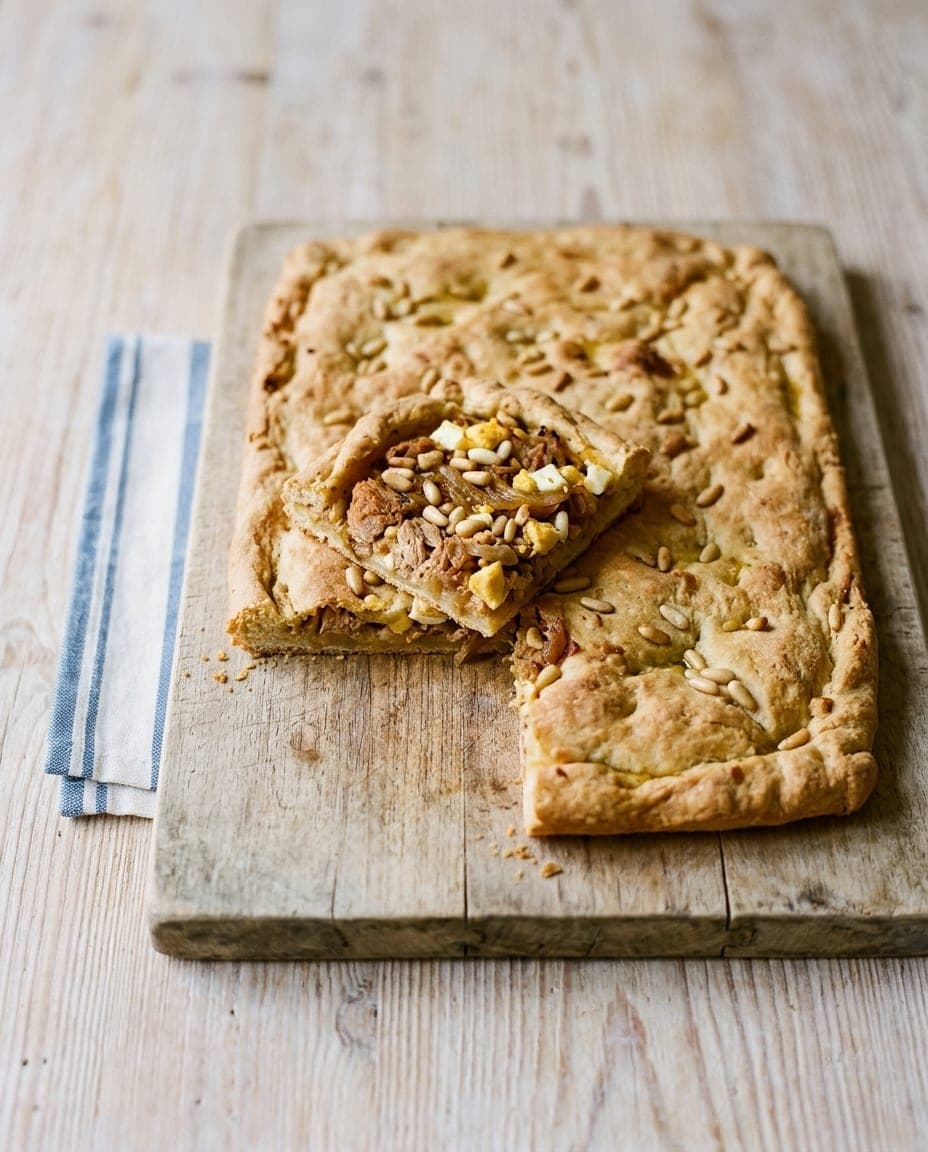
Covered pie of tuna, onion and pine nuts, eaten at Alicante's Fogueres
- Local name
- Coca amb tonyina
- Served with
- Bacores (early figs)
- Best eaten at
- Alicante's Hogueras de San Juan
What it is
Coca amb tonyina is a flat, covered pie from Alicante in eastern Spain. A thin base of dough made with flour, olive oil, water and a splash of anise is spread with a savoury filling of salted tuna, fried onion and pine nuts, sometimes with a little sweet paprika or tomato. A second, thin layer of dough goes on top, and the pie is glazed with egg and baked until golden. The crust is crisp and fragile, while the filling stays soft and rich.
This dish belongs to the wider family of coca, a term used in Valencian and Catalan for flat baked goods that can be sweet or savoury, open or covered. While similar pies appear across the Mediterranean, the tuna version is a hallmark of Alicante. It is not a nationwide staple but a local speciality tied closely to the city's midsummer traditions.
The dish is most famous as the food of the Hogueras de San Juan (Fogueres de Sant Joan), Alicante's Bonfires of Saint John festival. It is traditionally eaten on the night of the plantà, when the bonfire monuments are set up in the streets, and throughout the days of celebration that follow.
The festival context
The Hogueras de San Juan takes place in the second half of June, around the summer solstice. Each neighbourhood raises a large satirical monument of wood, cardboard and other materials, and the festival builds through parades, music and fireworks to the cremà, when the monuments are burned at midnight on the night of 24 June. In Alicante, this celebration is the most important event of the year.
Coca amb tonyina is eaten during these celebrations, often at the street barracas and racós run by festival groups. It is traditionally accompanied by bacores, the large early figs of the season, which provide a sweet, juicy counterpoint to the salty pie. Traditionally, those who helped plant the bonfire were treated to coca and figs.
The dish fits the outdoor nature of the event. It is easy to hold, cut into generous portions and designed for sharing among friends while standing or walking through the crowds. The oil-based dough holds up well in the warm June air, making it a practical choice for an evening festival.
What goes into it
The construction of coca amb tonyina relies on simple, local ingredients that are baked together until golden. The dough is made from flour and olive oil, often flavoured with anise, which gives it a tender, crumbly texture without the heaviness of bread.
The filling usually includes:
- Tuna, traditionally salted tuna belly that is soaked beforehand to reduce its saltiness, providing a salty, savoury core to the dish.
- Pine nuts, which add a nutty crunch and subtle sweetness.
- Onion, fried slowly until soft to form the base that binds the other elements.
- Paprika or tomato, added in some versions for colour and depth.
- Egg, beaten and brushed over the top crust for shine.
The result is a dish that balances salt, oil and nuttiness. It is not a light snack but a substantial bite that can serve as a meal. Many cooks hold that the thinner the dough, the better the coca.
How to eat it
Coca amb tonyina is usually served at room temperature, cut into squares or slices for sharing. In the context of the Hogueras de San Juan, it is eaten standing in the street, often with a few fresh figs. The pastry is sturdy enough to be held without plates, making it ideal for the festival atmosphere.
Outside the festival, the dish can still be found in traditional bakeries across Alicante, and in the run-up to June many bakeries sell it for days in advance. It is often eaten as a snack with drinks or as part of an informal supper.
Curious facts
- A regional identity. While flatbreads and pies exist throughout the Mediterranean, the tuna version is closely tied to Alicante and its festival traditions.
- The fig pairing. Coca amb tonyina and bacores are considered inseparable during the Hogueras; purists wait for the night of the plantà to eat them together.
- Seasonal availability. Though some bakeries sell it year-round, the dish is most abundant and celebrated in June.
- No single recipe. Every bakery has its own version of the filling ratios, with some adding more pine nuts or a touch of paprika.
- Anise in the dough. A splash of anise liqueur is a common addition to the oil-based dough, giving it a faint aromatic note.
Where to try it
The best place to eat coca amb tonyina is during the Hogueras de San Juan in Alicante, at the festival barracas and in the city-centre neighbourhoods where the bonfires are planted. Traditional bakeries across the city and province also sell it, especially in the weeks around the festival.
Where to try it
1 destination
 Boat Rentals
Playa San Juan
Charming coastal village known for its sandy beaches and stunning cliffs.
Boat Rentals