Żurek
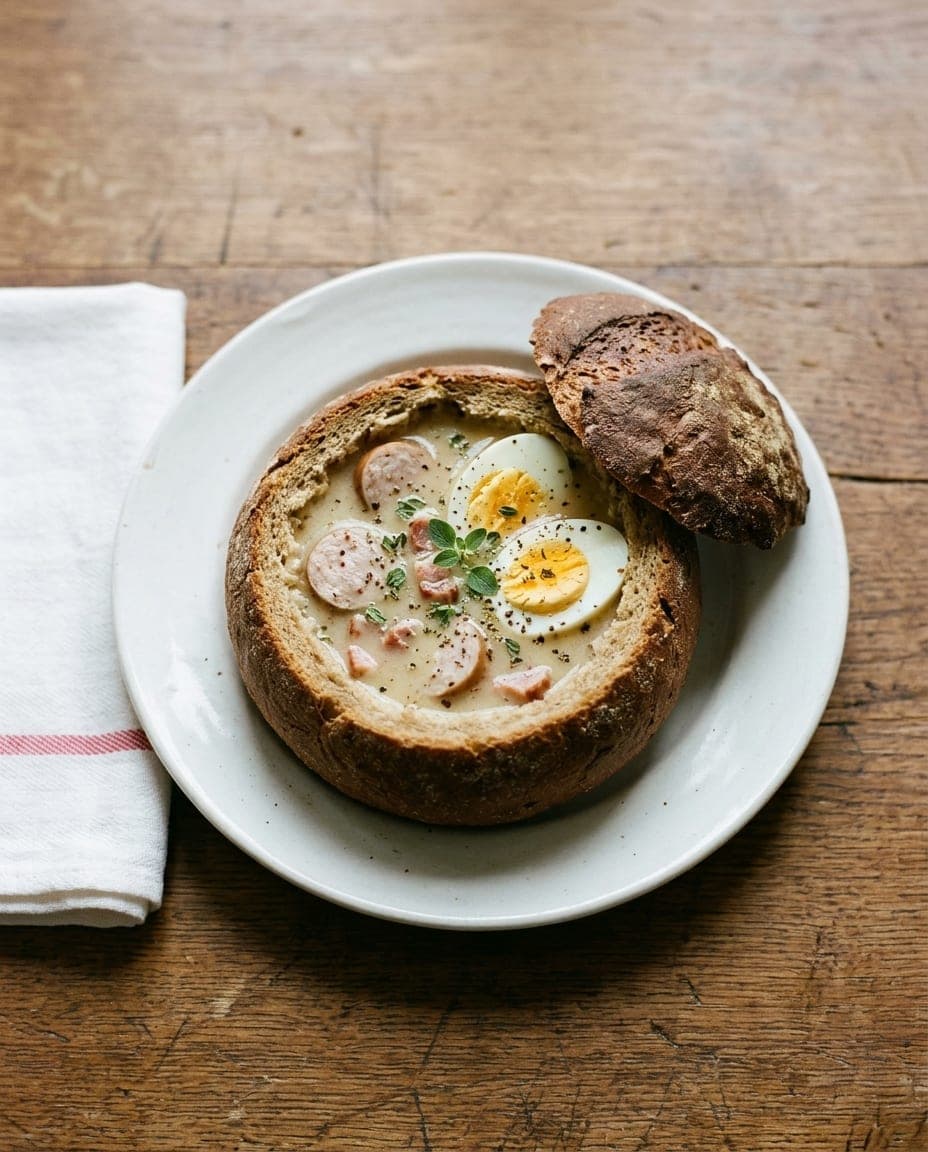
A sour rye soup, white sausage and egg served in a bread bowl
- Local name
- Żurek
- Served with
- Egg, white sausage, bread bowl
- Best eaten at
- A milk bar (bar mleczny)
What it is
Żurek is the name given to a distinctive sour soup that forms the heart of Polish Easter breakfasts and appears on menus across the country throughout the year. It is not a clear broth but a thick, creamy liquid with a sharp, tangy flavour derived from zakwas, a fermented rye starter. The soup combines this sour base with stock, marjoram, garlic, and often pieces of white sausage or bacon, finishing with a swirl of cream.
The most defining characteristic of the dish is how it is served. While at home in a private kitchen it arrives in a ceramic bowl, the version most familiar to visitors comes presented inside a hollowed-out round loaf of bread. This edible vessel holds the hot soup and sausage, offering a rustic alternative to the traditional bowl. The soup is usually accompanied by half a hard-boiled egg placed directly into the liquid, adding a smooth, creamy element to the sharp sourness.
Zakwas itself is simple: rye flour mixed with water is left to ferment for several days, developing a natural acidity through wild yeast and bacteria. This process creates a liquid similar in principle to a sourdough culture but used here as a soup base rather than a leavening agent for bread. It tastes sour and savoury at once, quite unlike the clear beetroot barszcz.
The Easter tradition
While żurek can be found on menus in winter and summer, its true home is during the Easter season. It is the soup of choice for Easter Sunday breakfast, eaten alongside the blessed food brought from church in a woven basket. This basket typically contains the hard-boiled eggs, white sausage, salt, horseradish, and bread, all of which find their way into the meal.
The timing is specific to the religious calendar. On Holy Saturday, families prepare the święconka, or Easter basket, where the food is blessed by a priest. The following morning, the family gathers to eat these blessed items, often with żurek as the main dish. The white sausage, known as biała kiełbasa, and the egg are essential components of this ritual, linking the soup directly to the celebration of the holiday rather than just being a seasonal menu item.
This connection to Easter explains why the white sausage is so prominent in the recipe. It is a mild, unsmoked pork sausage, often seasoned with garlic and marjoram, which complements the sour notes of the rye starter without overpowering them. The combination of the blessed egg and the sour soup creates a balance of textures and flavours that marks the beginning of the Easter break.
What goes into it
The ingredients of żurek are few but specific, relying on the quality of the zakwas to provide the foundation of the dish. There is no single official recipe, as every region and family has its own variation, but the core elements remain constant.
- Zakwas: The fermented rye flour and water mixture, often aged with garlic and bay leaves, which gives the soup its signature sourness.
- Stock: A clear or light meat stock, usually made from pork bones or chicken, to which the zakwas is added.
- White sausage: A mild, unsmoked pork sausage, sliced into rounds or chunks.
- Bacon: Often fried until crisp and added for texture and saltiness.
- Cream: Sour cream stirred in at the end to soften the sharp acidity and create a velvety consistency.
- Herbs and spices: Dried marjoram, garlic, and sometimes a pinch of pepper or bay leaf for depth.
The soup is finished with a hard-boiled egg, usually cut in half, which sits in the bowl. The bread bowl version serves as both a container and an edible side, allowing the diner to eat the soaked crust along with the rest of the meal.
How it is eaten
Eating it is straightforward; the presentation varies from region to region. In a milk bar (bar mleczny), a type of public canteen found throughout Poland, the soup comes in a ceramic bowl with the sausage and egg added to the broth. The diner uses a spoon to scoop up the creamy liquid, the soft pieces of sausage, and the tender white of the egg.
In restaurants catering to tourists or serving traditional meals, the bread bowl version is common. The hollowed loaf acts as a vessel for the soup, and the diner may use a spoon to eat the contents while also breaking off pieces of the crust to dip into the broth. The texture of the bread, softened by the hot liquid, adds a comforting element to the meal.
The soup is often accompanied by a slice of dark rye bread or a piece of the crust from the bowl itself. A glass of cold beer or a shot of vodka can accompany the meal, though the focus remains on the savoury, sour profile of the soup. It is a dish that demands attention to the balance of flavours, with the sourness of the zakwas cutting through the richness of the cream and egg.
Curious facts
- A fermented base: The zakwas relies on natural fermentation rather than vinegar or lemon juice to create its sour taste, a method shared with other traditional European soups.
- The bread bowl: Serving żurek in a hollowed loaf is a presentation style more common in restaurants than in private homes, where it is served in ceramic bowls.
- Easter connection: The dish is strongly linked to the Easter basket tradition, making it a staple of the morning meal rather than just a general soup.
- The wheat rival: A close relative called biały barszcz exists, made with a wheat-based sour starter instead of rye, but the two remain distinct in regional debates.
- Milk bar staple: The dish is a classic offering at bar mleczny, public canteens that serve affordable, traditional Polish food to locals and visitors alike.
Where to try it
The best place to experience żurek is in a traditional milk bar (bar mleczny), where the soup is served in its simplest, most authentic form. These establishments are found in cities across Poland, from Warsaw to Kraków, and offer a glimpse into everyday dining habits. In Łódź and Masovia, as elsewhere, many cooks still ferment their own zakwas.
For a more formal setting, many restaurants in major cities serve the bread bowl version as a signature dish, especially during the Easter season. The menus that carry it list it among the traditional soups or the Easter specials.
Where to try it
2 regions

Lodz
Lodz is a significant cultural hub in Poland, known for its rich textile industry history. It's the third-largest city in the country and features a unique blend of industrial heritage and modern art. The city is famous for being the birthplace of filmmaker Andrzej Wajda and has numerous museums, including the Museum of the Factory, which showcases its industrial past. The vibrant Piotrkowska Street, lined with eclectic architecture, is ideal for leisurely strolls. Nearby, the Lodz Hills Landscape Park offers scenic hiking trails. The region is also known for its street art scene, with murals that tell stories of the city's history. This area has a unique atmosphere, distinct from typical tourist destinations.
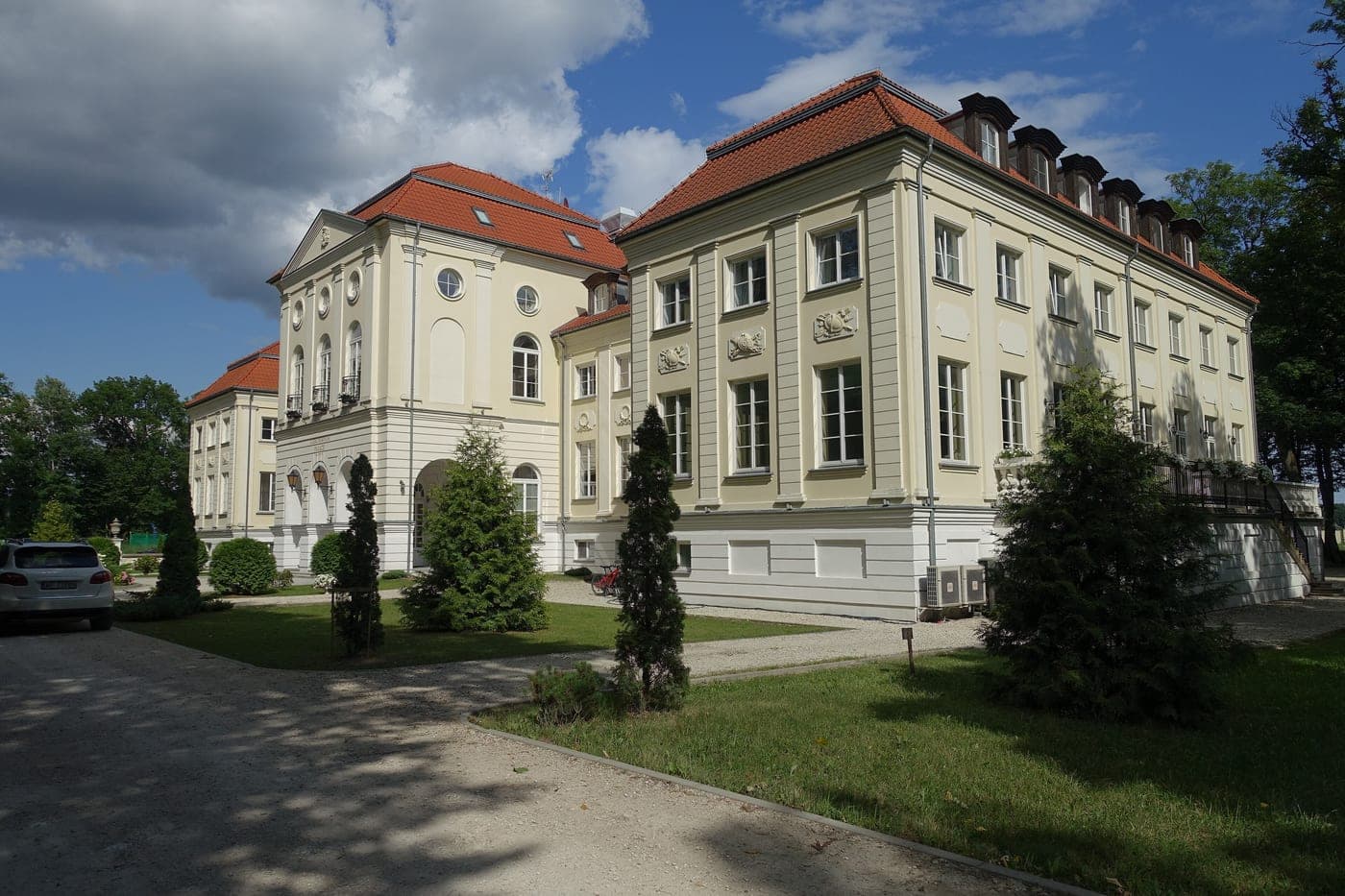 Castles1 destination
Masovia
Masovia, the largest region in Poland, is known for its rich history and cultural heritage. Warsaw, the capital city, showcases a blend of modernity and tradition, particularly in the UNESCO-listed Old Town, reconstructed after WWII. The region features picturesque landscapes, including the Vistula River and numerous parks. Off the beaten path, towns like Płock, with its historic cathedral, and the idyllic Kampinos National Park offer a quiet retreat. Masovia also hosts various local festivals celebrating traditional music and cuisine, such as pierogi and żurek. The region's rural areas are dotted with charming villages that highlight local craftsmanship and agriculture, making it a rewarding area for deep exploration.
Castles