Żubrówka (bison grass vodka)
Vodka infused with grass from Białowieża Forest
- Alcoholic
- Local name
- Żubrówka
- Served
- Apple juice (as szarlotka)
- Best eaten at
- A Polish wedding table
- Pairs with
- Pickles, herring
What it is
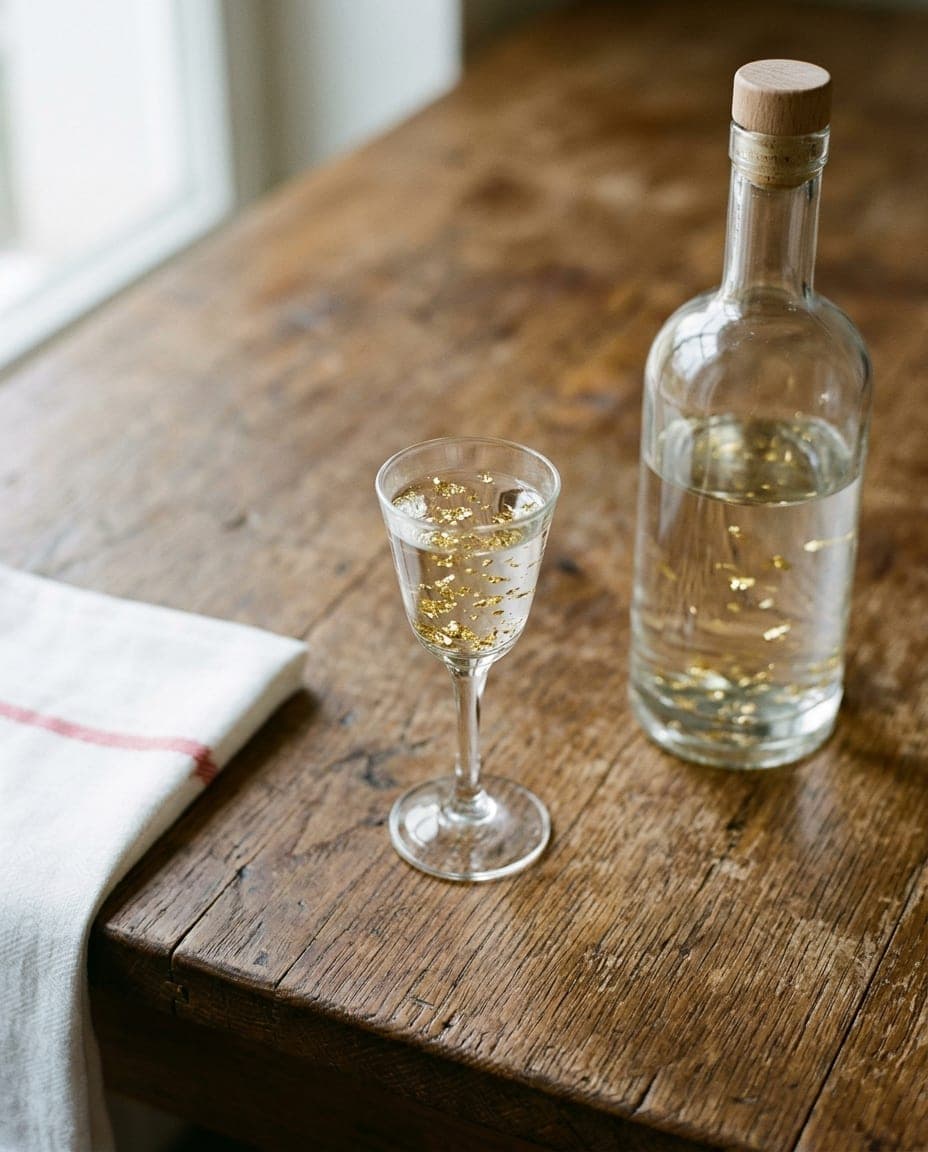
Żubrówka is a pale-gold spirit that carries the scent and flavour of the European bison's home. It is a rye vodka infused with the dried blade of żubrówka, or bison grass, which grows in the Białowieża Forest on the Polish–Belarusian border. The forest is one of the last remnants of the primeval lowland woodland that once covered Europe, and home to the best-known free-roaming herd of European bison. A single blade of the grass sits in every bottle, suspended in a pale yellow-green liquid.
The taste does not resemble aniseed or the sharp bite of some other spirits. Instead, it offers notes of fresh hay, vanilla, almond and a subtle sweetness that feels like dried fruit. The grass is the defining element; without it, the spirit would be a standard rye vodka. With it, the drink becomes something distinct to the Podlaskie region, where the tradition of flavouring vodka with the grass is said to go back centuries.
In Poland, the spirit is rarely treated as a mere aperitif to be chased in one gulp. It has a dual life: served neat and chilled alongside savoury foods, or mixed into a long drink known as szarlotka, where it meets cloudy apple juice. The result is a beverage that feels both rustic and refined, a liquid tribute to the bison and the ancient woods where the grass grows.
The origin of the bison grass spirit
The practice of infusing vodka with bison grass is said to date back to the 16th century or earlier, though the early history owes more to legend than to records. Commercial production began in 1928, under the Polish state spirits monopoly, Polmos. The grass itself is a type of Hierochloe odorata, which gains its characteristic aroma from coumarin, a compound that also gives sweet clover and tonka beans their scent.
For centuries, production remained a home-scale affair, limited to those who had access to the forest or knew how to trade for the dried blades. The drink is often said to have been popular with the Polish nobility, and its production survived wars, regime changes and shifting borders.
The name żubrówka comes directly from the local word for the bison, żubr. Today Żubrówka is a registered brand, while the style itself has been protected in the EU since 2003 as a geographical indication: herbal vodka from the North Podlasie Lowland aromatised with an extract of bison grass. Other regions may have their own herb-infused spirits, but none carry the same botanical link to the bison's home.
How the forest defines the flavour
The character of the drink is entirely dependent on the origin of the grass. The geographical indication ties the drink to the North Podlasie Lowland, the area around the Białowieża Forest, and the grass is said to be hand-picked there and dried naturally.
The infusion process is simple but requires patience. Rye vodka is aromatised with an extract of the dried grass, which gives it a pale yellow-green hue and the grass's full scent. The single blade stays in the bottle as a sign of what is in it, and is not meant to be eaten. The taste holds: hay, vanilla and almond, which carry even when the spirit is served ice cold.
Hierochloë odorata grows across much of the northern hemisphere, but the blades that go into the bottle are cut in Białowieża, which is what ties the drink to one corner of Poland rather than to a style.
How to drink it
In Poland, żubrówka is rarely taken as a quick shot. The most common way to enjoy it neat is to chill the bottle in a freezer until the liquid is very cold, then pour it into a small glass. It is served alongside pickles, herring or other savoury snacks that contrast with its sweet and grassy notes. This pairing turns the drink into a relaxed accompaniment to conversation rather than a fast-paced toast.
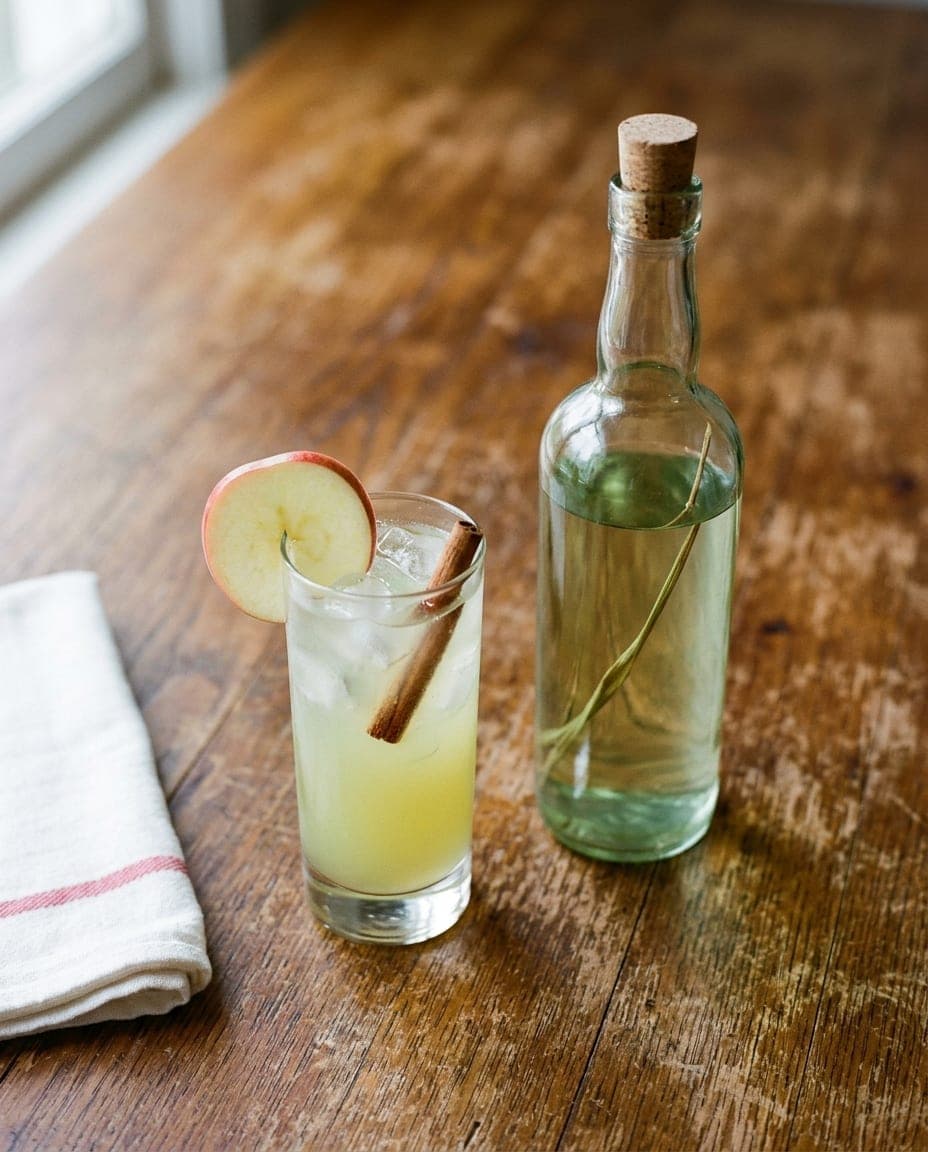
The more elaborate tradition involves the szarlotka, a long drink made by mixing chilled żubrówka with cold, cloudy apple juice. The mixture turns a soft pale green and takes on a flavour reminiscent of apple pie, with the vanilla and almond notes of the grass deepening the effect. It is a refreshing beverage that can be sipped slowly over an hour or more, often enjoyed at celebrations where people gather for hours.
At a Polish wedding table, the szarlotka often turns up. Guests are often offered a glass to accompany the meal, and the drink's sweetness makes it a popular choice for those who prefer something less sharp than plain vodka. The combination of grass-infused spirit and apple juice creates a harmony that feels traditional yet surprisingly modern in its approach to mixing.
Where it is made
Żubrówka is made by Polmos Białystok in the Podlaskie capital; the company was part of CEDC and later Roust, and has belonged to the Polish Maspex Group since 2022. Far from being a local secret, it is one of the best-selling vodka brands in the world and is sold in more than 80 markets.
Taverns and village halls keep a bottle of żubrówka with the other Polish spirits. The drink is often served in small quantities at celebrations, weddings and family gatherings. It is a staple of the region's hospitality, offered to guests as a sign of welcome and respect for their presence.
The connection between the spirit and the forest remains strong: the bison on the label and the blade in the bottle both point back to Białowieża.
Curious facts
- A blade in every bottle. Each bottle contains at least one dried blade of bison grass, which remains suspended in the liquid as proof of its origin. The grass is not meant to be consumed but serves as a visual marker of authenticity.
- The coumarin factor. The grass contains coumarin, a substance US food rules restrict, so the original was not legally sold in the United States until 2010; the American version is made to taste similar without it. In Poland, the traditional version remains unchanged.
- Brand and indication. Żubrówka is a trademark, while the style is protected as an EU geographical indication tied to the North Podlasie Lowland.
- The long drink tradition. The szarlotka mixture of vodka and apple juice is a Polish invention that turns the spirit into a refreshing, pie-like beverage rather than a sharp shot.
- A forest guardian. The grass used in the drink is tied to the Białowieża Forest, a UNESCO World Heritage site and one of the last primeval lowland forests in Europe.
Where to try it
The best place to experience żubrówka is in Podlaskie, particularly in towns near the Białowieża Forest where the tradition is still alive. Local taverns, village halls and family-run establishments often serve it neat or as a szarlotka. At a wedding it appears in both forms, neat and mixed.
In the cities it is on almost every shop shelf and bar list. However, the most authentic experience comes from the region where the grass grows and the tradition began. A visit to the Białowieża Forest itself, followed by a taste of the local spirit, offers a direct link to the history and landscape that define żubrówka.
Where to try it
1 region

Podlaskie
Podlaskie, the largest region in northeastern Poland, is characterized by its lush landscapes, diverse wildlife, and rich cultural heritage. The Białowieża Forest, a UNESCO World Heritage site, is home to the European bison and offers extensive hiking trails. The region's unique mix of Polish, Belarusian, and Lithuanian influences is evident in its architecture and local traditions. Cities like Białystok, the capital, feature historic market squares and vibrant parks. Notably, the area is known for its wooden Orthodox churches, and the nearby Tykocin offers a glimpse into the past with its well-preserved synagogue. Podlaskie's natural beauty is complemented by its traditional cuisine, including regional specialties like sękacz, a unique cake made from a rotating spit.