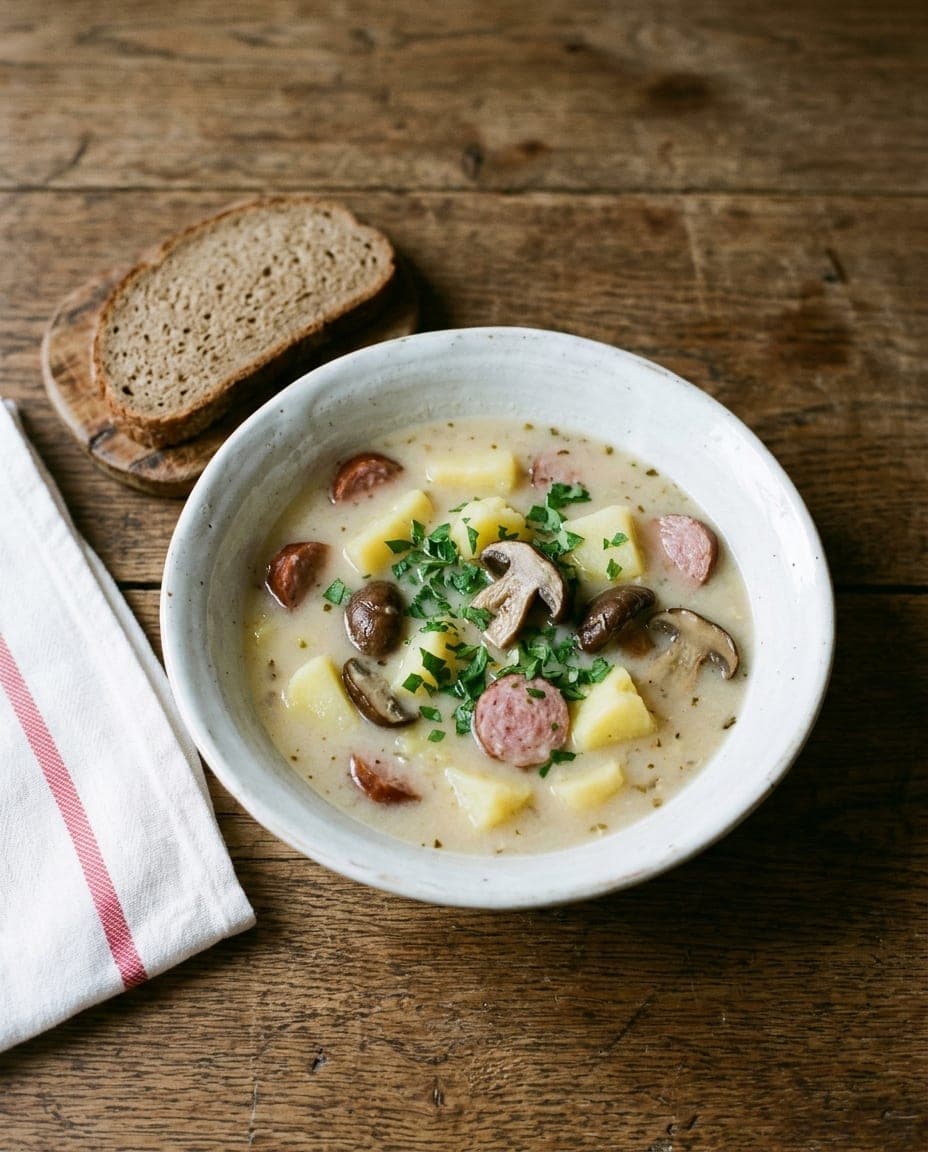
Zalewajka
A sour rye soup poured over potatoes
- Local name
- Zalewajka
- Served with
- Bread
- Best eaten at
- A Łódź-region home kitchen
What it is
Zalewajka is a sour soup central to the cuisine of the Łódź region and the nearby Świętokrzyskie hills in Poland. It shares its base with the more famous żurek, using the same fermented rye starter known as zakwas, but it is thinner, simpler, and far more everyday. While żurek often features a thick, creamy texture and elaborate sausages, zalewajka relies on potatoes to provide body, making it a dish of humble households rather than festive tables.
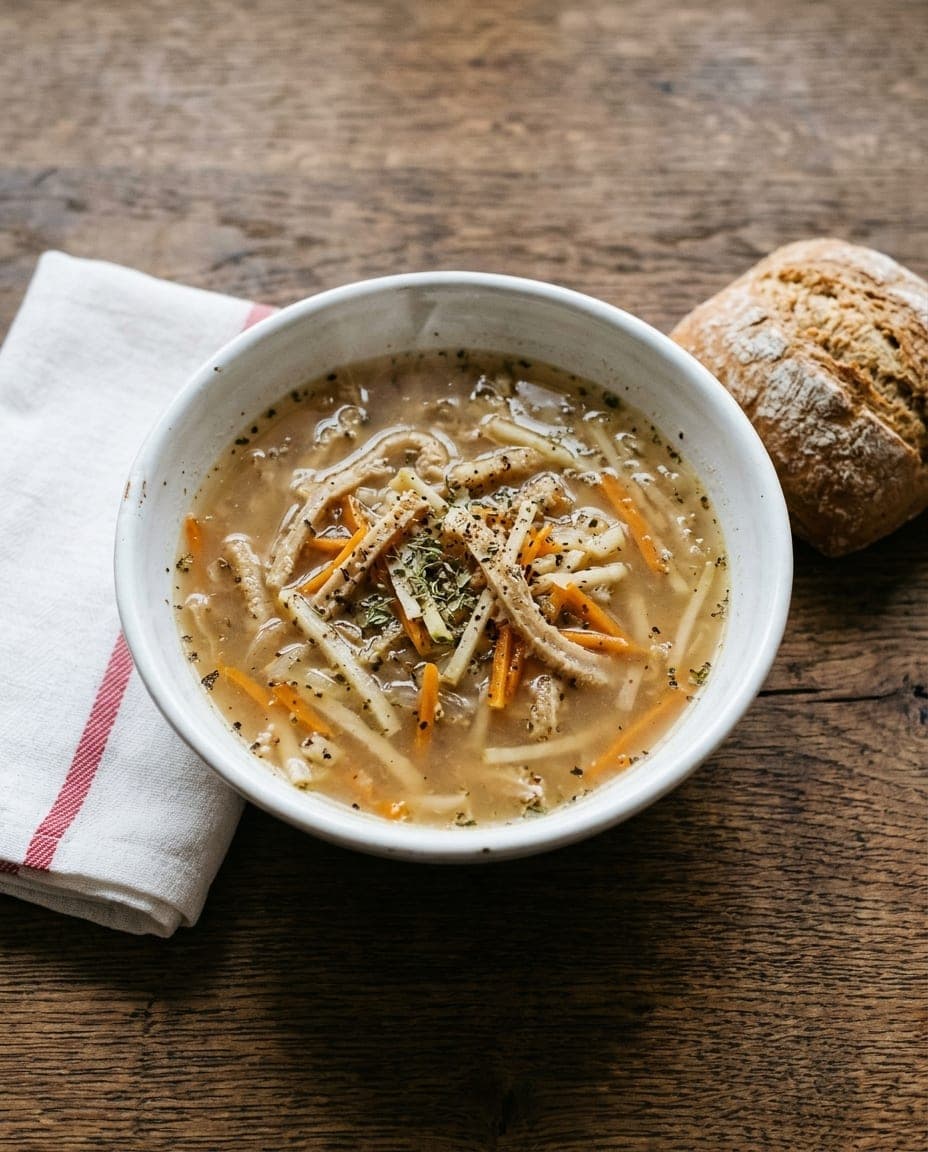
The name comes from the verb zalewać, meaning to pour over. This describes the method: a pot of sour rye liquid is poured over boiled potatoes, usually with fried onion and sometimes smoked bacon or sausage. The result is a sharp, tangy broth that feels warm and grounding on a cold day. It is a dish that appears in home kitchens throughout the year, though it remains rare on restaurant menus outside its native patch of central Poland.
The history of a poor man's soup
Zalewajka belongs to the tradition of country cooking in central Poland, where food was made from what was available in the pantry rather than for show. For generations, it served as a practical meal for farming families who needed something filling that could stretch ingredients over several days. The potatoes were often the main component, with the sour rye liquid acting as a preservative and flavour enhancer.
Unlike many regional dishes, zalewajka has no inventor attached to it. The ethnographer Jan Dekowski traced it to the Łódź area in the second half of the 19th century, from where it spread to the Kielce region and Kujawy; zalewajka świętokrzyska has been on Poland's List of Traditional Products since 2006. The dish is not tied to a religious festival or a royal decree but rather to the rhythm of rural life. In the Łódź area and the foothills of the Świętokrzyskie mountains, families would prepare it using whatever meat scraps they had on hand, or simply with fried onions and mushrooms if the household was observing a meatless period.
The soup's simplicity allowed it to survive when other regional dishes disappeared or became too elaborate for daily consumption. Even today, it is rarely found in city restaurants unless they are specifically focusing on traditional country food from that part of Poland. It remains a local speciality, known best by those who grew up eating it in the region.
How it is made
There is no single official recipe, and every cook guards their own version, but the building blocks are always similar:
- Fermented rye zakwas, the sour starter that gives the soup its sharp character and cloudy, pale colour.
- Potatoes, diced and boiled until tender, either in the soup or separately, to form the base of the dish.
- Onions, fried until golden to add sweetness and depth to the sour broth.
- Smoked bacon or sausage, often added for flavour, though the soup can be made without meat.
- Dried mushrooms, sometimes included to add an earthy note, particularly in versions that are meant to be meatless.
- Sour cream, stirred in at the end to soften the sharpness of the rye.
The process is straightforward: boil the potatoes, fry the onions and any meat or mushrooms, then pour the sour liquid over everything. The dish is often finished with a spoonful of sour cream, which balances the acidity without masking it. It is not a vegetarian dish by default, though versions without meat exist where the potatoes and mushrooms do the heavy lifting.
How to eat it
Zalewajka is usually served as a main course in a deep bowl, often with a side of crusty bread. The soup is best eaten hot, straight from the pot, as the warmth helps the sour flavours settle into the stomach. In a Łódź-region kitchen it comes with rye bread on the side, torn into the bowl.
The texture is key: the potatoes should be soft but not falling apart, and the broth should have a gentle sourness that does not overwhelm the palate. A glass of water or a light beer pairs well with the sharp taste, though the soup is often enjoyed on its own as a warming meal.
Curious facts
- The name describes the action. The word zalewajka comes directly from the verb meaning to pour over, referring to how the sour liquid is added to the potatoes.
- A thinner cousin of żurek. While both use fermented rye, zalewajka is less thick and more fluid than the famous żurek of the Easter table.
- Often meatless in origin. Historically, many versions were made without meat, relying on potatoes and dried mushrooms to provide substance.
- Rare outside its region. A menu in Warsaw or Kraków will not have it unless the kitchen has made central Polish country food its subject.
- A home kitchen speciality. The best version is usually found in a family kitchen in Łódź or the Świętokrzyskie hills, not in a commercial establishment.
Where to try it
The Łódź region and the hills of Świętokrzyskie, in a kitchen or a small restaurant that cooks regional food rather than national food. It is home cooking first, and the best versions are not on a menu at all.
Some restaurants in Łódź, Kielce and the smaller towns of both regions keep it on as a regional soup. Milk bars in the city sometimes have it, and the sour rye starter it depends on is sold in bottles in most Polish supermarkets.
Where to try it
2 regions

Lodz
Lodz is a significant cultural hub in Poland, known for its rich textile industry history. It's the third-largest city in the country and features a unique blend of industrial heritage and modern art. The city is famous for being the birthplace of filmmaker Andrzej Wajda and has numerous museums, including the Museum of the Factory, which showcases its industrial past. The vibrant Piotrkowska Street, lined with eclectic architecture, is ideal for leisurely strolls. Nearby, the Lodz Hills Landscape Park offers scenic hiking trails. The region is also known for its street art scene, with murals that tell stories of the city's history. This area has a unique atmosphere, distinct from typical tourist destinations.

Swietokrzyskie
Swietokrzyskie is a region in south-central Poland known for its unique landscapes and rich cultural heritage. Recognized for the Świętokrzyskie Mountains, it features the oldest mountains in Europe, offering diverse hiking trails and stunning natural vistas. The region's capital, Kielce, is home to historic sites such as the Palace of the Kraków Bishops. Additionally, the area boasts the intriguing Krzyżtopór Castle, which reflects the grandeur of its past. Local traditions include crafts like pottery and weaving, with festivals celebrating folk culture. Swietokrzyskie's natural parks, such as the Świętokrzyski National Park, provide opportunities for eco-tourism and immersion in local flora and fauna, making it a hidden gem for those seeking authentic experiences away from mainstream tourism.