Sękacz
A spit-baked cake layered like tree rings
- Vegetarian
- Local name
- Sękacz
- Served with
- Tea or coffee
- Best eaten at
- A Podlasie bakery
- Pairs with
- Tea
What it is
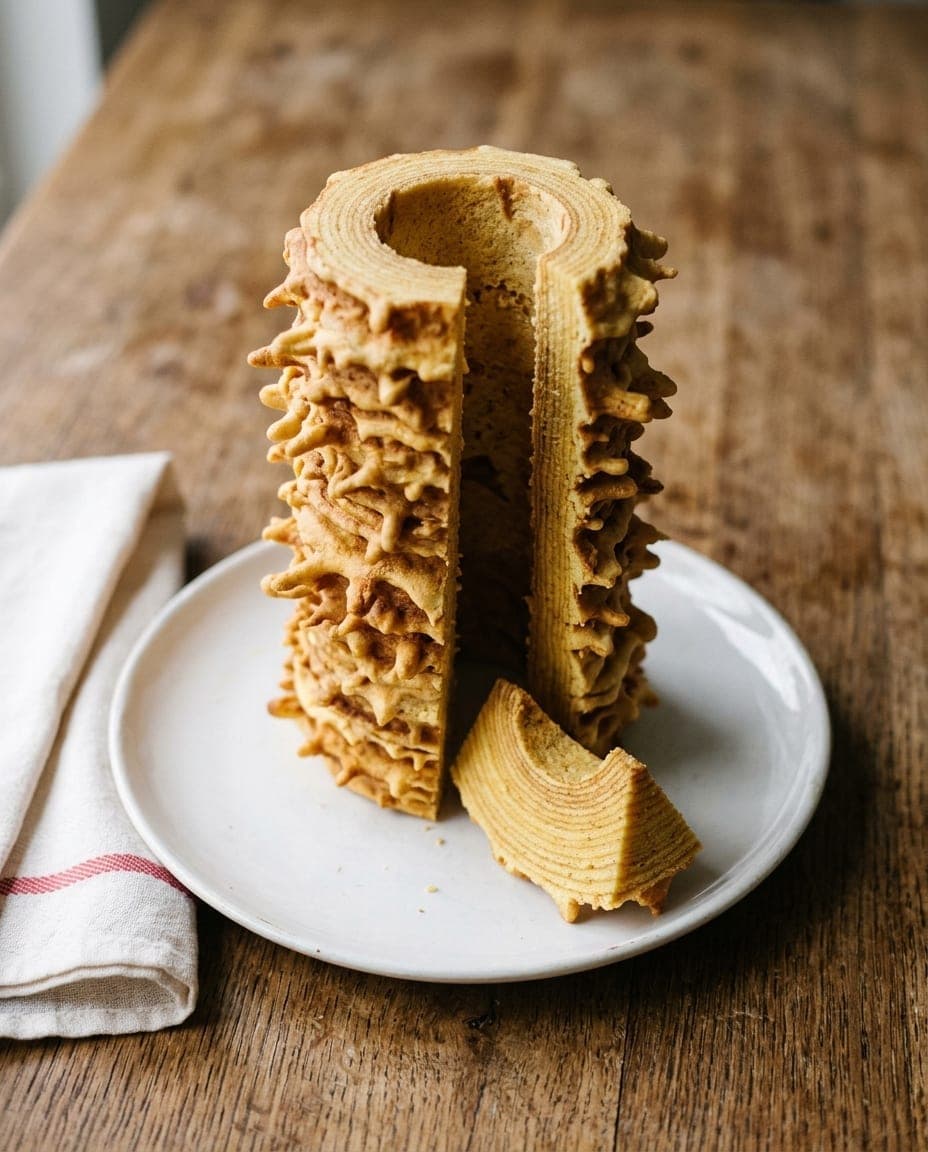
Sękacz is a tall, cylindrical cake baked on a slowly rotating spit over an open fire or in a specialised oven. Its surface is rough and jagged, covered in hardened drips of batter that form branch-like spikes, while the interior reveals perfect concentric rings of golden-brown pastry. The name comes from sęk, meaning a knot in wood, referring to the knobbly drips that cover the outside.
The spit-baked original is a regional speciality of Podlasie in north-eastern Poland. It shares a lineage with the Lithuanian šakotis ("branched") and the German Baumkuchen ("tree cake"), names that, like sękacz, point to trees, branches or knots. The process requires patience and skill, as the batter is ladled onto the turning spit layer by layer, each coat setting before the next is added. A large cake takes around an hour or more at the spit and may require dozens of eggs.
The result is a dense, sweet pastry with a texture that ranges from crisp on the outside to soft in the centre. It is traditionally sold by weight rather than by the slice, often appearing at weddings, christenings and major family gatherings. Its ability to keep for a long time without drying out makes it a practical gift, frequently wrapped in paper and given as a present to guests or neighbours.
The making of the tree cake
The creation of sękacz is a spectacle in itself, usually taking place in a dedicated bakery or at outdoor events in rural Podlasie. A long metal spit rotates slowly above a heat source, and the baker stands nearby, ladling a thick batter of eggs, butter, sugar, flour and often sour cream onto the rotating cylinder. The heat cooks each layer instantly, fusing it to the one below while the excess drips down to form the characteristic spikes.
The layers build up like the growth rings of a tree, creating a solid block that can weigh up to four or five kilograms. The baker must control the speed of rotation and the temperature of the fire to ensure even cooking without burning the outer crust. Once finished, the cake is removed from the spit and left to rest for several hours before being sliced into thick rounds. These rings display the alternating dark and light bands that define the dish.
Because the process is labour-intensive and requires specific equipment, the spit-baked sękacz remains a regional craft. It is most commonly found in small bakeries across Podlasie, where it is baked to order or kept fresh for daily sale. The taste is rich and buttery, with a sweetness that is balanced by the slight bitterness of the caramelised drips on the outside.
How it is eaten
Sękacz is typically served as a dessert or a sweet accompaniment to tea or coffee. In a Podlasie bakery it stands in large blocks, and the baker cuts thick slices to order. The texture is sturdy enough to hold its shape when lifted but soft enough to crumble slightly under the teeth.
It is common to pair the cake with a strong cup of black tea or a dark roast coffee, as the sweetness of the pastry complements the bitterness of the beverage. The cake is usually eaten on its own. The slices are substantial, usually meant to be shared among a small group rather than consumed in one sitting.
The aroma of caramelised sugar and roasted butter fills the air, and the visual contrast between the golden rings and the dark spikes is striking.
Curious facts
- A cross-border tradition. Sękacz shares its roots with Lithuania's šakotis and Germany's Baumkuchen; recipes appear in old Polish cookbooks such as Wincentyna Zalewska's Kucharka litewska.
- Sold by weight. Unlike most cakes sold in slices, sękacz is weighed and cut from large blocks, so the size of the piece is up to the buyer.
- A lasting gift. The cake keeps well without losing moisture, which is why it is served at weddings, christenings and first communions in Podlasie and often given to visitors.
- Layer by layer. Each of the dozens of layers is added individually as the spit rotates, creating the distinct concentric pattern seen in every slice.
- Regional focus. Factory versions are sold across Poland, but the spit-baked cake is a speciality of north-eastern Poland, with sękacz z Suchowoli among the Podlasie entries on the national List of Traditional Products.
Where to try it
The best place to find sękacz is in a traditional bakery in Podlasie, particularly around Białystok and in small towns such as Suchowola where the recipe is kept alive by local bakers. Some bakeries turn the spit on the premises, in sight of the counter.
Chain stores sell a machine version; the family bakeries of Podlasie are where the spit-baked one is made. When visiting a Podlasie bakery, ask for a fresh slice and pair it with a cup of local tea to experience the full tradition.
Where to try it
1 region

Podlaskie
Podlaskie, the largest region in northeastern Poland, is characterized by its lush landscapes, diverse wildlife, and rich cultural heritage. The Białowieża Forest, a UNESCO World Heritage site, is home to the European bison and offers extensive hiking trails. The region's unique mix of Polish, Belarusian, and Lithuanian influences is evident in its architecture and local traditions. Cities like Białystok, the capital, feature historic market squares and vibrant parks. Notably, the area is known for its wooden Orthodox churches, and the nearby Tykocin offers a glimpse into the past with its well-preserved synagogue. Podlaskie's natural beauty is complemented by its traditional cuisine, including regional specialties like sękacz, a unique cake made from a rotating spit.