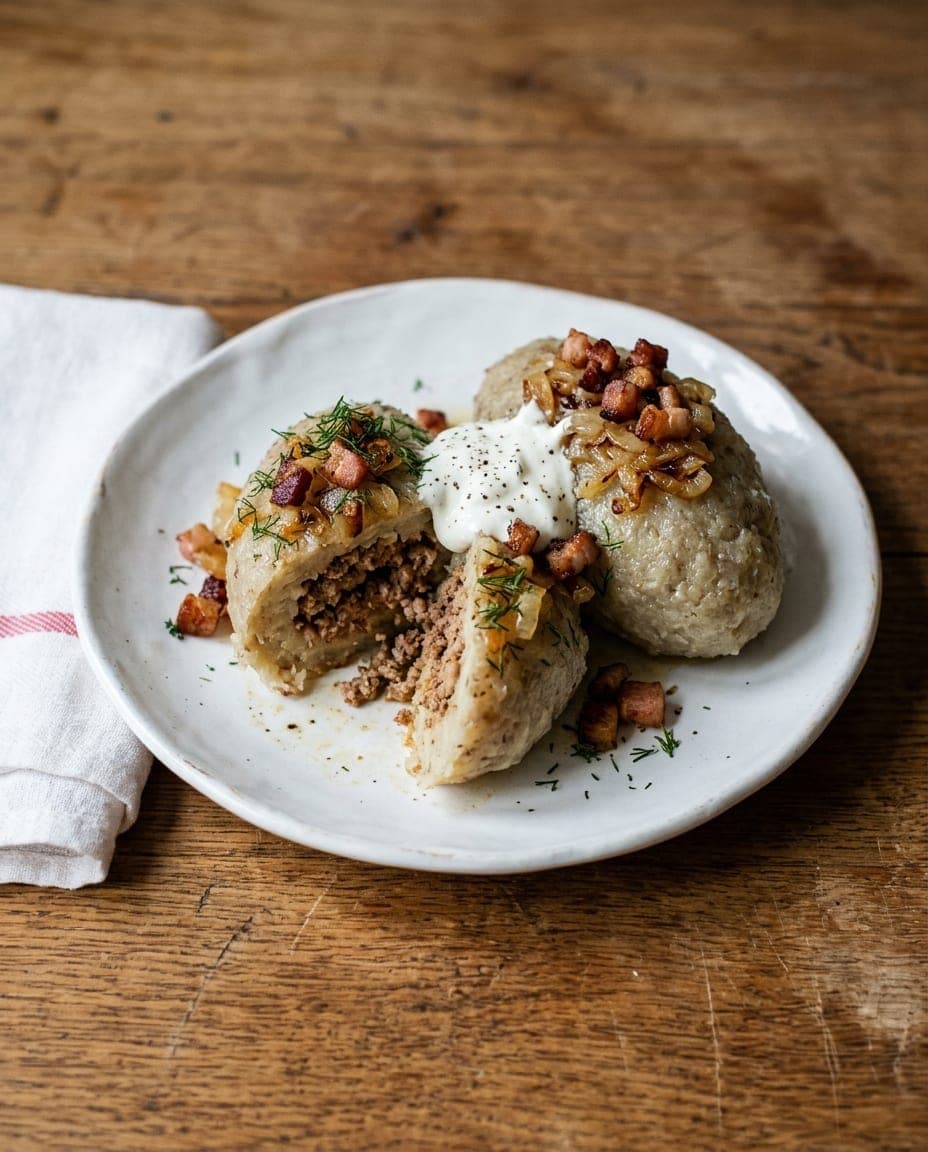
Prażucha (prażoki)
Potato and toasted-flour dumplings with cracklings
- Local name
- Prażucha
- Served with
- Cracklings and fried onion
- Best eaten at
- A Łódź-region country inn
- Pairs with
- Kefir or buttermilk
What it is
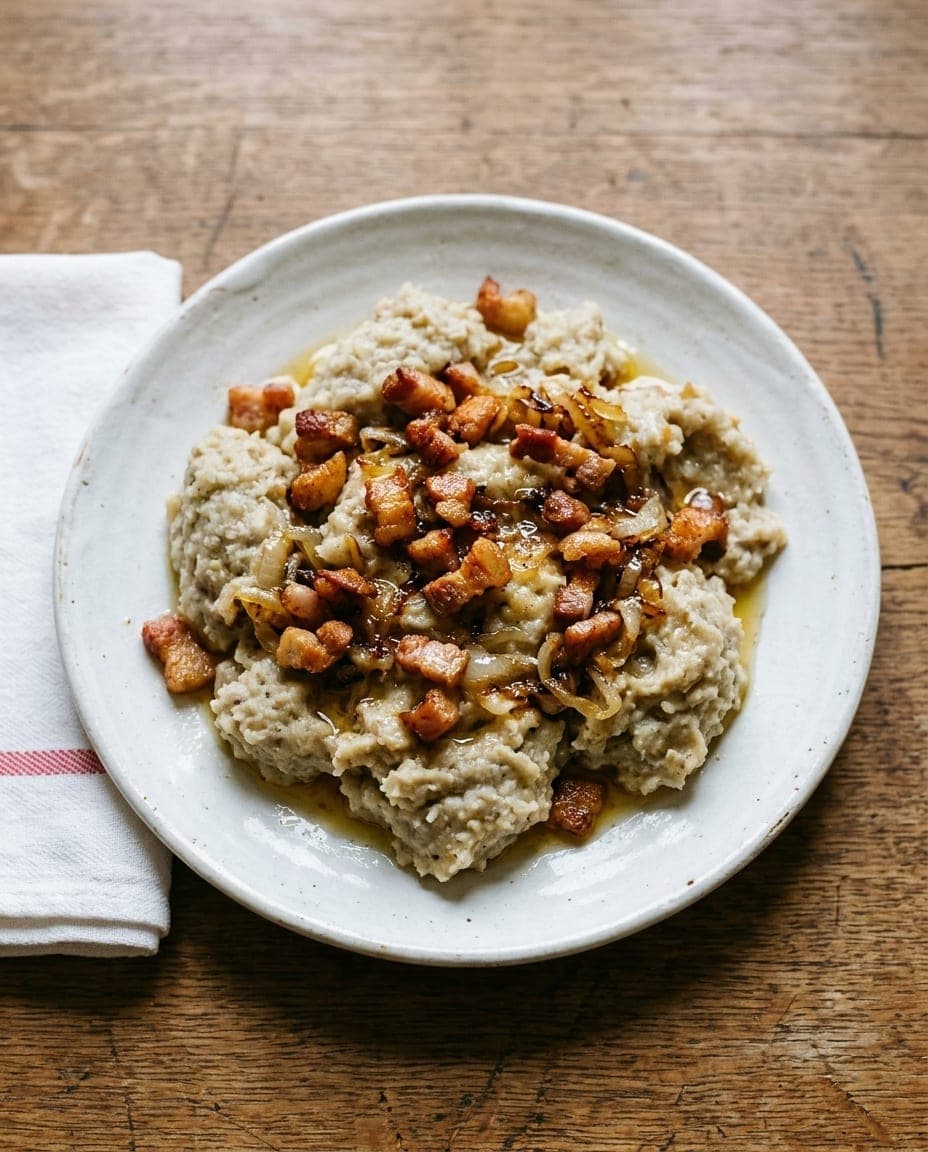
Prażucha, sometimes called prażoki, is a rustic dish from the Łódź region and the Kielce area of central Poland. It consists of a dense mash of boiled potatoes and flour, usually wheat flour that is often toasted dry in a pan first, cooked together briefly and then pounded with a wooden pestle until smooth. The mass is scooped into rough lumps and topped with hot fat, crispy bacon cracklings and fried onions.
The texture is unique: soft and slightly nutty from the toasted flour, contrasting with the salty crunch of the pork. It is a dish born from necessity, using home-grown potatoes and flour to stretch a meal during hard times. The name comes from the verb prażyć, meaning to toast or parch, describing the way the flour is treated.
The history of poverty food
In the countryside around Łódź and further south towards Kielce, this dish was a staple for those with little means. It required only potatoes, flour, salt, and whatever fat could be gathered from a small pig or a neighbour. There is no record of a specific inventor or a precise date when it first appeared on tables. It emerged as a practical solution to hunger, turning simple ingredients into something substantial.
Over time, the dish moved from everyday survival food to a regional curiosity. In the villages of the Kobiele Wielkie area near Radomsko it was eaten at least once a week, as kwosek z prażuchami, with a sour cabbage soup; today it is served mainly at home, at local festivals and fairs, and in traditional country inns that keep old recipes alive. Both the Łódź prażuchy and the Kielce prażoki are on Poland's List of Traditional Products. It is not found on menus in major cities or standard tourist restaurants, but rather in places where the focus remains on local tradition.
What goes into it
The preparation relies on a few basic elements, with the quality of the flour and the fat making the most difference. There is no single recipe, as each cook adjusts the ratio of potato to flour and decides whether to toast the flour first.
- Potatoes and flour: Boiled salted potatoes cooked briefly with wheat flour (rye or buckwheat in some homes), then pounded into a stiff dough.
- Bacon cracklings: Pieces of cured pork fat that have been rendered until crisp, providing the essential savoury flavour.
- Fried onions: Sliced and cooked in the same fat until golden, adding sweetness and texture.
- Buttermilk or sour milk: Drunk alongside the dish to balance the heaviness of the fried flour and pork.
The result is a heavy, filling meal that relies on the contrast between the soft potato dough and the salty meat. It is not a vegetarian dish, as the fat used for frying and the cracklings are essential components.
How it is eaten
Prażucha is typically served hot in a shallow bowl or on a plate, often in a rustic setting such as a country inn or a village hall during a local celebration. The mashed lumps are usually mixed thoroughly with the cracklings and onions so that every bite contains a bit of both.
It is common to drink a glass of cold buttermilk or kefir with the dish. The acidity of the sour milk cuts the fat of the dumplings and the pork. Around Kobiele Wielkie the lumps also go with kwosek, a sour cabbage soup.
It is usually eaten with a fork, as the texture can be dense and sticky if not well-cooked.
Curious facts
- A name from cooking. The word prażucha derives directly from the verb prażyć, meaning to toast or parch, describing how the flour is treated.
- Not a national dish. While known in central Poland, it remains a regional speciality of Łódź and parts of Kielce, not found widely across the country.
- A drink pairing. Buttermilk or kefir is a common accompaniment, which helps balance the heavy, fatty dish.
- Survival food origins. The dish was created to stretch scarce resources, using potatoes, flour and whatever fat was available during times of poverty.
- Regional festivals. Today it is often served at local fairs and village celebrations rather than as a daily meal for most people.
Where to try it
To eat an authentic version of prażucha, one must go to the Łódź region, specifically to small country inns or village establishments that serve traditional food. These places are often found outside the main towns, in rural areas where the tradition has been preserved.
A karczma — the country inn — is where it shows up on a menu at all. The dish is not typically advertised in guidebooks but may appear at local festivals or harvest celebrations. A visit to the countryside around Łódź offers the best chance to find it, perhaps alongside other regional dishes like żurek or bigos.
Where to try it
1 region

Lodz
Lodz is a significant cultural hub in Poland, known for its rich textile industry history. It's the third-largest city in the country and features a unique blend of industrial heritage and modern art. The city is famous for being the birthplace of filmmaker Andrzej Wajda and has numerous museums, including the Museum of the Factory, which showcases its industrial past. The vibrant Piotrkowska Street, lined with eclectic architecture, is ideal for leisurely strolls. Nearby, the Lodz Hills Landscape Park offers scenic hiking trails. The region is also known for its street art scene, with murals that tell stories of the city's history. This area has a unique atmosphere, distinct from typical tourist destinations.