Pasztecik szczeciński
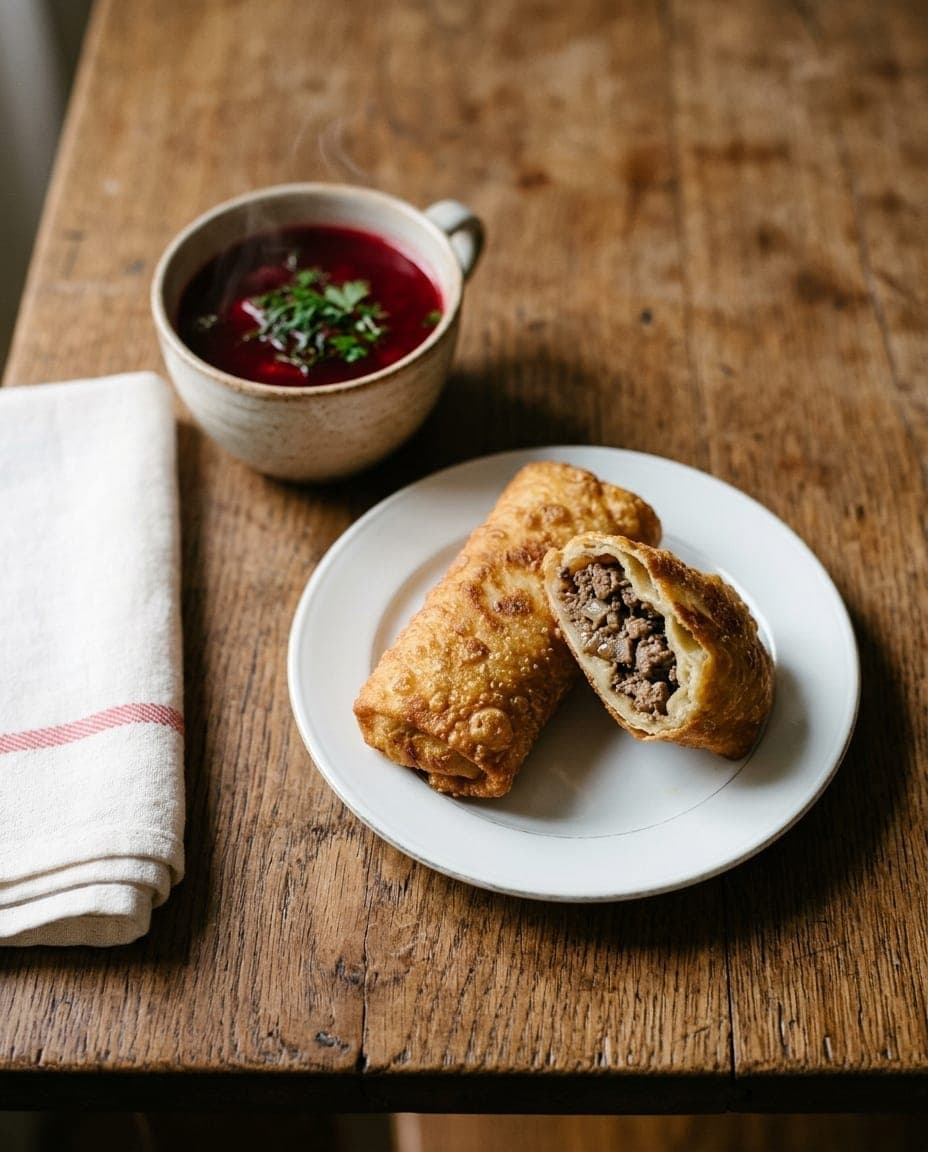
A deep-fried pastry served with red barszcz
- Local name
- Pasztecik szczeciński
- Served with
- Red barszcz
- Best eaten at
- A Szczecin pasztecik bar
What it is
The pasztecik szczeciński is a small, oblong pastry of deep-fried yeast dough, filled with minced meat, sauerkraut with mushrooms, or cheese. It is a staple of Szczecin's streets rather than a dish found in the kitchens of the wider country. The city lies on the Oder River in western Poland, close to the German border, and this pastry remains one of its most distinct culinary markers.
The form is simple: a golden-brown roll, crisp on the outside and soft within, sold hot from street-side hatches. It is not an item for a formal sit-down meal but a quick lunch or snack eaten standing up. The tradition dates to 1969, when the first pasztecik bar opened in the city. This history sets it apart from older regional recipes that trace their roots back centuries; the pasztecik is a product of its time and place.
How it arrived in Szczecin
The pastry's origins are tied to the industrialisation of food production in Poland after the Second World War. In 1969 the city's Społem food cooperative obtained a Soviet military machine built to make filled dough pockets, and its workers gave the product the Polish name pasztecik. The machine, which weighs over a tonne, shapes and fries the rolls on a continuous line, turning out hundreds an hour that are sold immediately. This method suited the needs of a working-class city recovering from conflict, offering a cheap, hot meal that could be eaten quickly while standing.
The dish is not found widely across Poland. While similar fried pastries exist elsewhere in Europe, the specific combination of yeast dough, the particular filling options, and the method of sale are unique to Szczecin. It is rare to find a true pasztecik szczeciński in Warsaw or Kraków. The city has guarded its claim to the dish, making it a local speciality rather than a national one.
What goes into it
The pastry consists of a simple yeast dough that is deep-fried until golden. The fillings are the defining feature, with two main versions dominating the counters:
- Meat filling: Seasoned minced meat, traditionally beef, the oldest and most popular choice.
- Cabbage and mushroom: Sauerkraut cooked with dried mushrooms, a meatless option.
- Cheese filling: Cheese, often mixed with mushrooms, a savoury alternative that appeared during the shortages of the 1980s alongside egg and fish versions.
The dough is formed into an oblong shape around the filling before frying. The result is a sturdy vessel that holds the filling well without becoming soggy, allowing it to be held in one hand while eating. The meat version is savoury and substantial, while the cheese option offers a softer, milder contrast. Both are served hot, straight from the fryer.
How to eat it
The traditional way to enjoy a pasztecik szczeciński is standing at the counter of a dedicated pasztecik bar. These small outlets, often with just a few hatches and a serving window, sell the pastries alongside cups of red barszcz. The soup is poured into a disposable cup for the diner to hold, while the pastry is taken in the other hand.
The combination is practical: the hot soup warms the hands and stomach, while the crispy pastry provides texture. It is common to eat one or two pastries with a single cup of soup, rather than a full meal. The setting is usually informal, with plastic stools available for those who wish to sit, though many prefer to stand and walk away with their food.
Curious facts
- A post-war invention. The dish did not exist before the late 1960s; it was created alongside the city's reconstruction and industrial food production efforts.
- Soviet machines. The specific shape and method of mass production came from Soviet-built equipment designed for continuous frying lines.
- Local only. It is genuinely difficult to find an authentic pasztecik szczeciński outside Szczecin, making it a true regional speciality.
- The soup pairing. Red barszcz, a beetroot-based soup, is the traditional accompaniment, served in a cup for easy handling on the street.
- Officially traditional. The pasztecik szczeciński was entered on Poland's List of Traditional Products for West Pomerania in December 2010.
Where to try it
The best place to eat a pasztecik szczeciński is in Szczecin itself, at any of the dedicated pastry bars that have operated for decades. These small establishments are often unassuming, with counters open to the street and signs indicating the available fillings. They are found throughout the city centre and near major transport hubs. It is not restaurant food: the stands that fry them through the day are the whole trade.
Where to try it
1 destination
 Boat Rentals
Szczecin
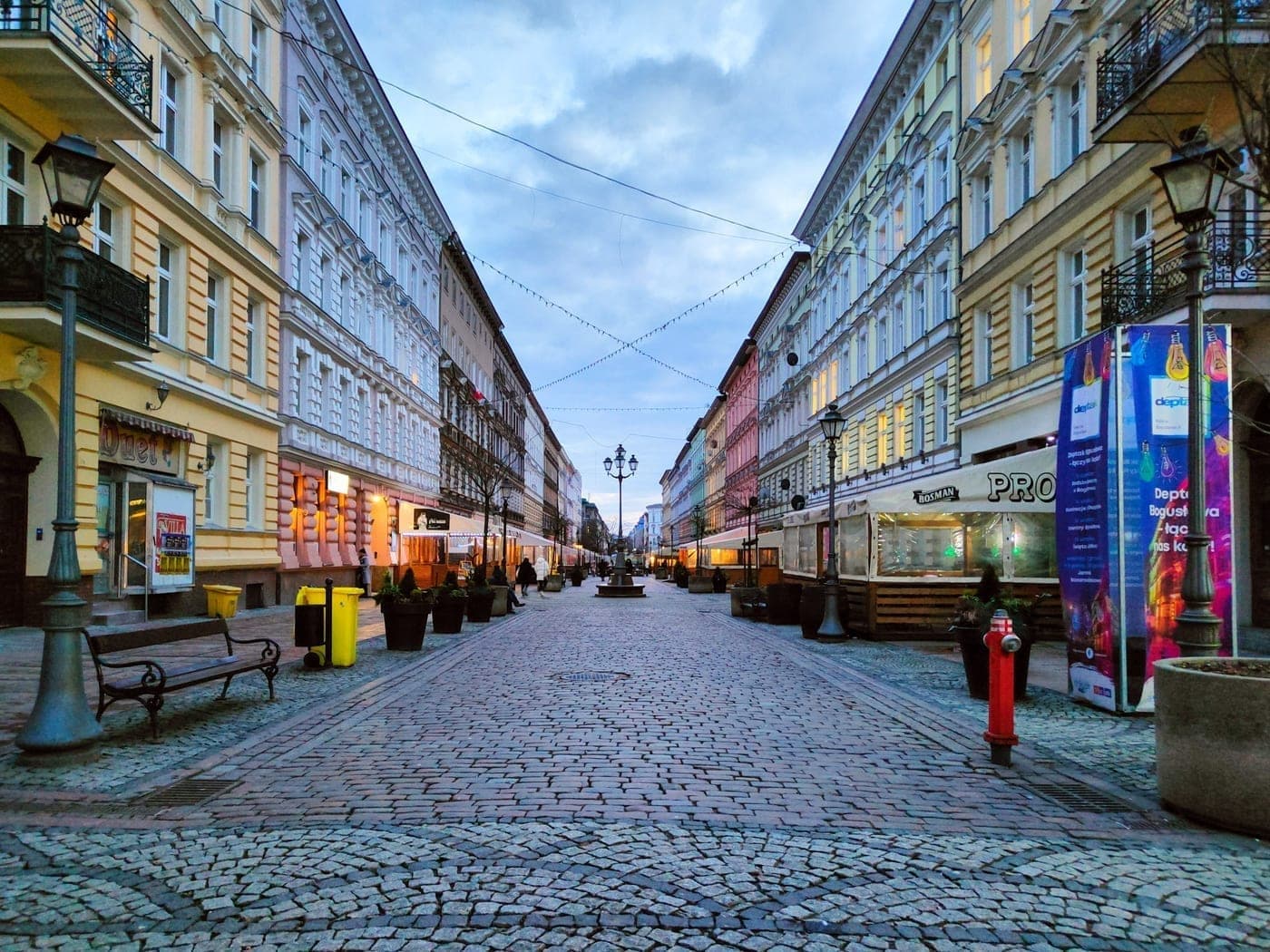
Historic port city known for its waterfront, Gothic architecture, and parks.
Boat RentalsHiking
1 region
 Boat Rentals2 destinations
West Pomerania
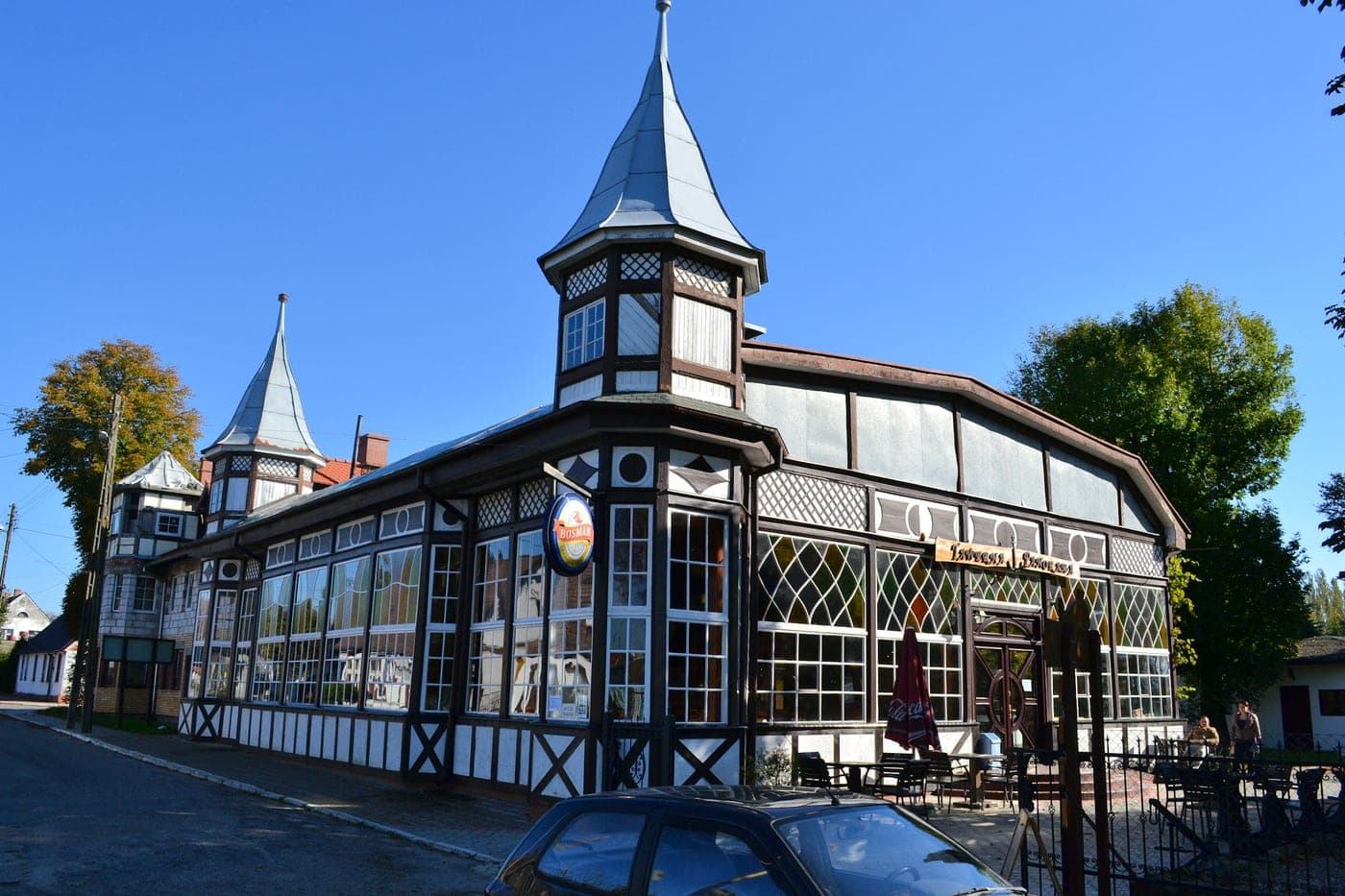
The only region in Poland with a coastline, West Pomerania features a diverse landscape of sandy beaches, forests, and lakes. Szczecin, the capital, is known for its maritime history and Gothic architecture, while the charming fishing town of Łeba offers access to the stunning Słowiński National Park, famous for its shifting sand dunes. The region also houses the historic Pomeranian Dukes' Castle in Szczecin and the picturesque village of Darłowo, known for its medieval castle and vibrant harbor. West Pomerania is rich in local gastronomy, including fresh seafood and regional specialties, making it a great spot for culinary exploration. Additionally, the area celebrates traditional festivals that highlight local culture and crafts, offering authentic experiences away from the typical tourist paths.
Boat RentalsHiking