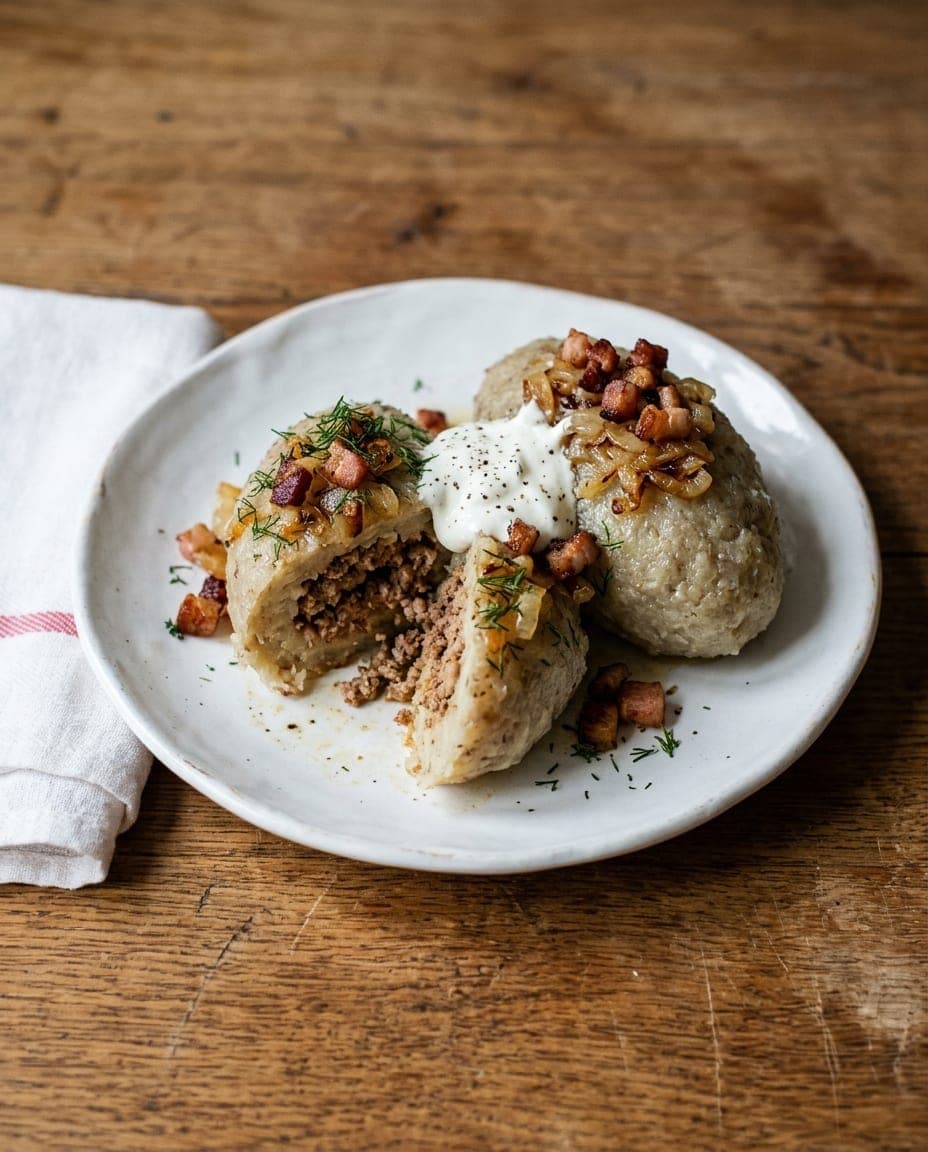
Kiszka ziemniaczana
Potato sausage from Podlasie, served with sour cream
- Local name
- Kiszka ziemniaczana
- Served with
- Sour cream, fried onion, bacon
- Best eaten at
- A Podlasie karczma (inn)
- Pairs with
- Polish lager
What it is
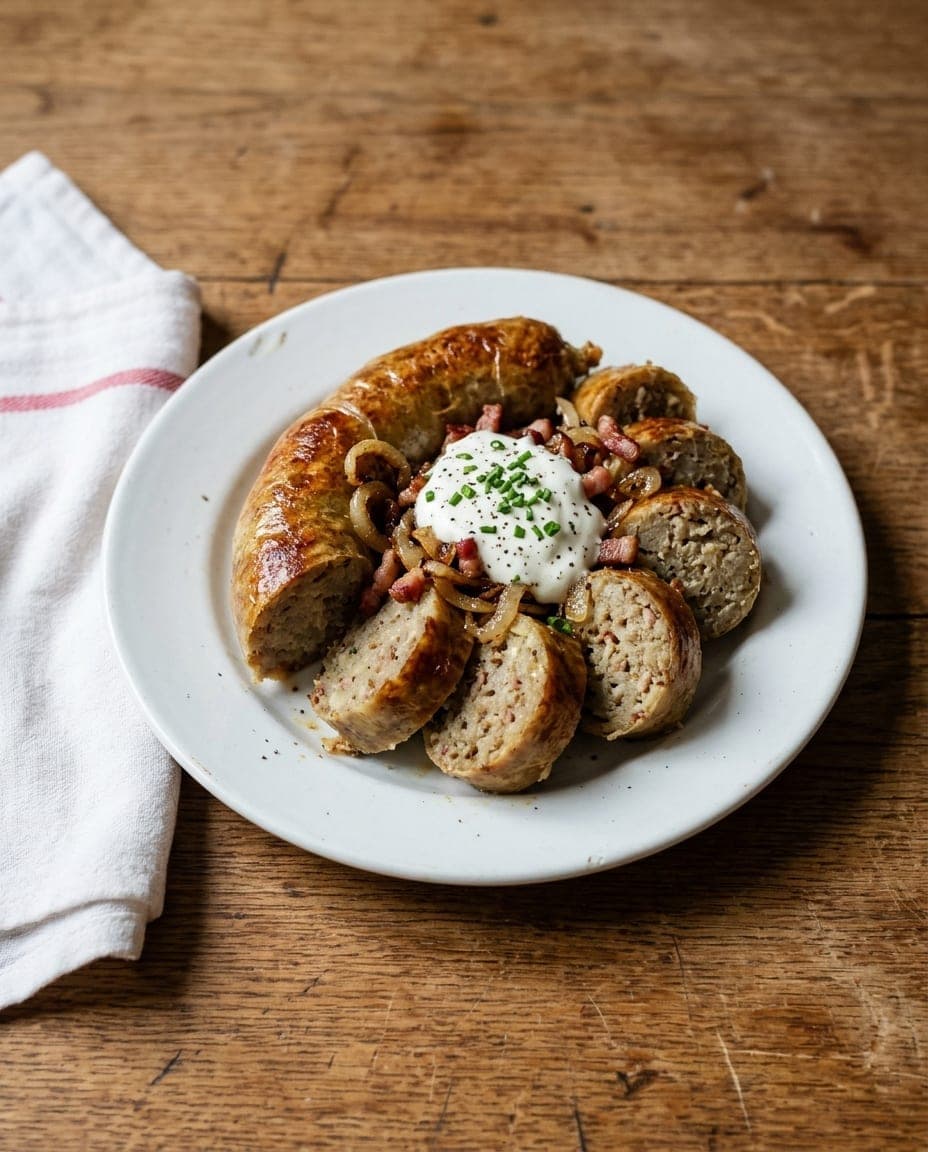
Kiszka ziemniaczana is a baked potato sausage from the Podlaskie region in north-eastern Poland. It consists of grated raw potato mixed with diced bacon or pork fat, onion, salt and black pepper, sometimes with a handful of groats such as buckwheat, all stuffed into a cleaned pork intestine and baked until the skin turns dark and crisp. The result is a dense, savoury sausage that sits somewhere between a meat product and a vegetable dish.
It is cut into thick slices and eaten as a main course, often accompanied by sour cream, fried onion or pieces of bacon. This is not a dish found on menus across the whole of Poland; it remains a regional speciality tied closely to the farms and inns of Podlasie. The texture is firm yet yielding, with the potato providing a soft interior that contrasts with the slightly chewy casing.
A borderland tradition
The north-east of Poland shares a culinary history with its neighbours Belarus and Lithuania. Kiszka ziemniaczana has close relatives across the border, such as the Lithuanian vėdarai, potato-stuffed pork intestine, and similar sausages in Belarus. It belongs to the category of farm food designed to be filling rather than delicate.
The region of Podlasie is a flat plain where agriculture has always been central. The local cuisine reflects the crops and livestock available on the land: potatoes, pork, and dairy. There are no records linking this dish to a specific inventor or a single historical event. It simply exists as part of the everyday cooking tradition of the area, passed down through generations of households that needed to stretch ingredients while keeping energy levels high for long days of work.
The casing makes the difference
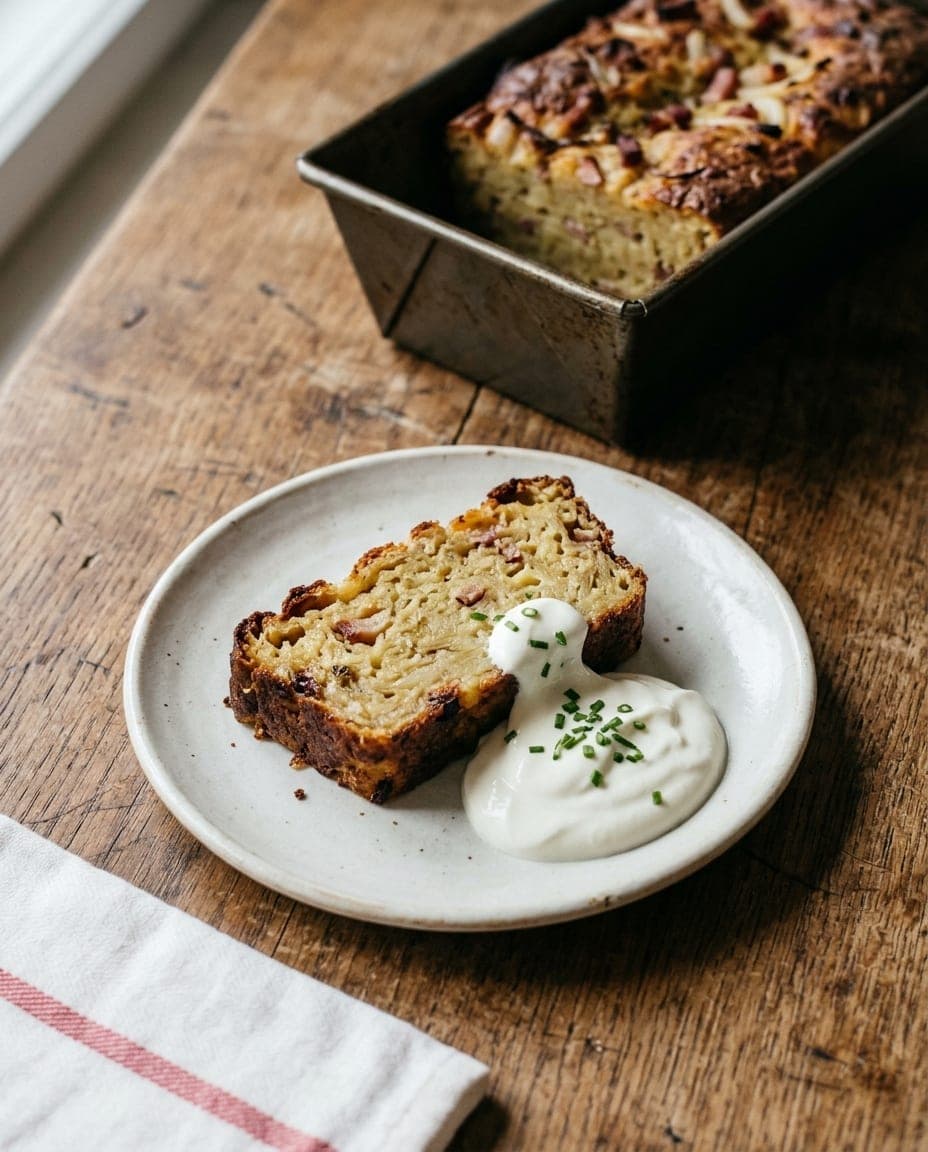
The defining feature of kiszka ziemniaczana is the natural casing used to hold the mixture. This distinguishes it from babka ziemniaczana, which uses the same combination of grated potato, bacon and seasoning but is baked in a dish rather than stuffed into a tube. The casing gives the sausage its characteristic shape and a skin that becomes dark and slightly crisp during the slow baking process.
The mixture inside is simple: raw potato grated finely and lightly drained so it cooks evenly within the casing, combined with diced bacon or pork fat for moisture, onion and salt. The casing is pricked before it goes in the oven so it does not burst. Black pepper goes in generously, against the fat. Once stuffed, the sausage is baked, typically for about an hour, until the exterior is firm and the interior is fully cooked. The result is a heavy, warming dish that feels substantial on the plate.
How it is eaten
Kiszka ziemniaczana is typically served as a main course rather than a starter. It arrives at the table in thick slices, often arranged on a wooden board or a simple ceramic plate. The traditional accompaniments are essential to the experience: a generous dollop of sour cream to cool the warmth of the potato, and a scattering of fried onion or crispy bacon pieces for texture.
Curious facts
- On the national list. Kiszka ziemniaczana was entered on Poland's List of Traditional Products for Podlaskie in 2005; the entry describes grated potato mixed with groats, baked in pork intestine and topped with bacon and onion.
- Not a sweet dish. Despite the use of potato, which can be associated with desserts, this is a savoury dish seasoned heavily with black pepper and salt.
- The casing matters. The natural intestine casing is what separates it from babka ziemniaczana, a baked cake that uses the same filling but lacks the tubular shape.
- Farm food origins. It belongs to Podlasie's tradition of cheap, simple potato dishes that stretched potatoes and a little pork fat into a filling meal.
- A borderland staple. Potato sausages of this kind are also eaten in Lithuania (vėdarai) and Belarus, reflecting the shared food history of the lands either side of the border.
Where to try it
To find authentic kiszka ziemniaczana, travel to the Podlaskie region, specifically to a traditional karczma or an inn in the countryside. It is not widely available in large cities outside of north-east Poland. The kitchens that have it generally carry the rest of the regional list too — bigos, sour rye soup, potato pancakes. The dish is available year-round, though it feels most appropriate during cooler months when a heavy, warming meal is desirable.
Where to try it
1 region

Podlaskie
Podlaskie, the largest region in northeastern Poland, is characterized by its lush landscapes, diverse wildlife, and rich cultural heritage. The Białowieża Forest, a UNESCO World Heritage site, is home to the European bison and offers extensive hiking trails. The region's unique mix of Polish, Belarusian, and Lithuanian influences is evident in its architecture and local traditions. Cities like Białystok, the capital, feature historic market squares and vibrant parks. Notably, the area is known for its wooden Orthodox churches, and the nearby Tykocin offers a glimpse into the past with its well-preserved synagogue. Podlaskie's natural beauty is complemented by its traditional cuisine, including regional specialties like sękacz, a unique cake made from a rotating spit.