Poffertjes
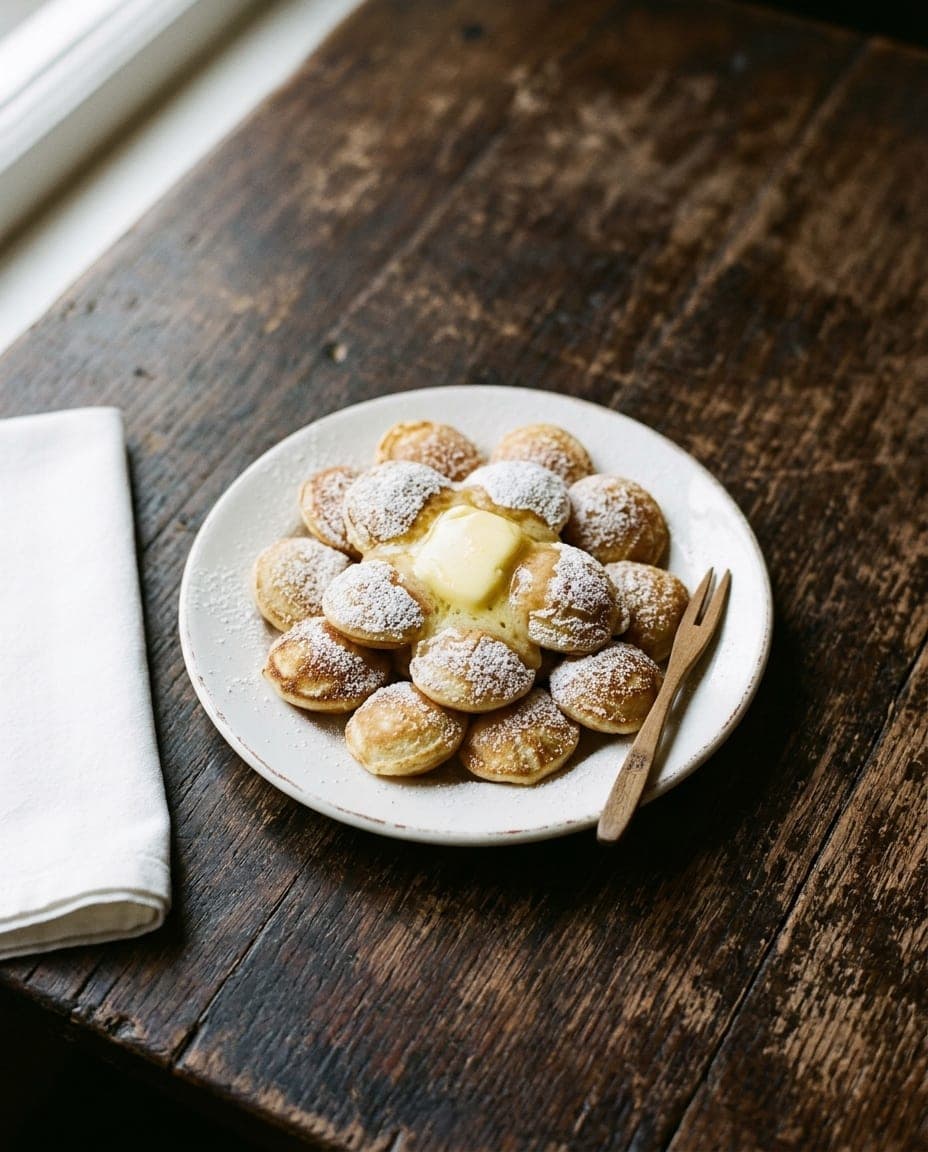
Mini yeasted pancakes with butter and icing sugar
- Vegetarian
- Local name
- Poffertjes
- Served with
- Butter, powdered sugar
- Best eaten at
- A Dutch market or fair stall
- Pairs with
- Coffee or hot chocolate
What it is
Poffertjes are small, thick, puffy pancakes that form the heart of many Dutch winter markets and summer fairs. They are not thin crepes or flat griddle cakes; they are distinct for their height, their soft, sponge-like interior, and the way they rise rapidly in a special cast-iron pan. The name comes from the Dutch word poffen, meaning to puff up or swell.
These pancakes are made from a batter that relies on yeast rather than baking powder to achieve their signature lift. Buckwheat flour, traditionally up to half of the flour, gives the batter a subtle earthiness and a slightly greyish hue before cooking. Once the batter hits the hot wells of the pan, it expands into a small, golden dome with a smooth, shiny surface. The result is a treat that feels almost like a sweet bun but has the texture of a light sponge cake.
They are typically served twenty or so on a single paper plate. A generous lump of butter is placed on top while the pancakes are still hot, melting instantly into the warm crevices. A heavy dusting of icing sugar follows, coating the butter and the surface in a snowy layer. The combination of warm batter, rich fat, and sweet powder creates a simple but satisfying contrast that has remained unchanged for generations.
How it is made
The magic of poffertjes lies in the equipment used to cook them. A traditional poffertjespan is made of cast iron and features dozens of shallow, round indentations. Each well is just large enough to hold a small amount of batter, which forces the mixture to rise upwards rather than spread outwards. The pan is heated on a gas burner, often with a flame that can be adjusted quickly as the cook works through the batch.
The batter itself requires patience and specific ingredients. It must rest for some time to allow the yeast to activate fully. This fermentation process is what creates the air pockets inside the pancake. While standard pancakes might use baking powder or egg whites, poffertjes rely on this slow rise. Buckwheat flour is mixed into the wheat flour, lending a nutty depth that balances the sweetness of the icing sugar.
Cooking happens in front of the customer at a poffertjeskraam, a market stall dedicated to the dish. The cook pours the batter into the wells, lets them set for a moment, and then uses a small fork to turn each one over in a single, swift motion. This technique ensures that both sides are cooked evenly without breaking the delicate structure. The process is rhythmic and continuous; as soon as one batch is finished, another is poured in. The smell of caramelising butter and toasted wheat fills the air around the stall, often drawing people from across the market square.
Where it comes from
Poffertjes are eaten across the whole country, and the earliest records point to Amsterdam, where they were sold at a fair in the mid-18th century. While variations of small yeast pancakes exist in other parts of Europe, the Dutch version is distinct for its specific use of buckwheat flour and the dimpled pan method.
The dish has a long history as fairground food. The first known recipe appeared in 1746, in an appendix to the cookbook Volmaakte Hollandsche keuken-meid, and street vendors went on to sell them at seasonal markets and fairs across the Netherlands. They were an affordable treat for workers and families, offering a warm, sweet comfort in cold weather. Over time, the poffertjeskraam became a staple of Dutch winter markets, standing alongside the oliebollen stalls.
Today, while they are still a market favourite, poffertjes have also found a place in permanent restaurants and cafes. The difference is the turning: at a stall the pancakes go from pan to plate in seconds, and a poffertje that has waited is a sad object.
What goes into it
The ingredients are simple and few, yet each plays a vital role in the final texture and flavour. There is no single official recipe, but the core components remain consistent across traditional preparations:
- Wheat flour, usually all-purpose or plain flour, which forms the base of the batter.
- Buckwheat flour, often as much as half the flour, for a nutty taste.
- Yeast, the essential leavening agent that creates the puffy texture through fermentation.
- Milk and egg, used to mix the batter into a smooth, pourable consistency.
- Butter, melted and poured over the hot pancakes immediately after they are cooked.
- Icing sugar, also known as powdered sugar, dusted generously over the top.
Some versions might include a pinch of salt or a splash of vanilla to enhance the sweetness, but these are optional additions. Traditional batters contain little or no sugar; the sweetness comes mainly from the topping. This approach ensures that the natural flavour of the wheat and buckwheat remains prominent until the moment the eater takes their first bite.
How to eat it
Poffertjes are best enjoyed at a Dutch market or fair stall, where they are cooked fresh to order. The traditional setting involves standing near the burner, watching the cook work, and receiving the paper plate immediately after the last pancake is turned. A small fork comes with the plate.
The method of consumption is specific. One does not simply scoop them up; the fork is used to pick up individual pancakes or small clusters. The heat from the pan has melted the butter into the warm sponge, creating a rich sauce that coats the sugar. Eating them while they are hot is essential, as the texture changes quickly once they cool.
They pair naturally with a cup of black coffee or a glass of hot chocolate. The bitterness of the coffee cuts through the sweetness of the icing sugar and the fat of the butter, while the warm milk drink complements the soft texture of the pancakes. This combination is a standard afternoon ritual in the Netherlands, particularly during the colder months when the markets are at their busiest.
Curious facts
- The buckwheat secret. The inclusion of buckwheat flour is what distinguishes poffertjes from other small yeast pancakes found in Europe, giving them a unique earthy note that balances the sugar.
- Twenty at a time. They are cooked in a pan of twenty or more wells at once and sold by the plate, not by the piece.
- Market tradition. While available in some permanent restaurants, the dish remains most authentic at seasonal fairs and winter markets, where the open flame cooking method is preserved.
- No fixed count. There is no official rule for the number of poffertjes per serving; a portion might contain twenty pancakes or thirty, depending on the size of the wells and the appetite of the customer.
- Fairground food first. The stalls follow the calendar of markets and fairs rather than the restaurant year, which is why they appear and disappear from a given square.
- A sweet topping. Unlike many pancakes that have sugar mixed into the batter, traditional poffertjes rely mainly on the icing sugar added after cooking for their sweetness.
Where to try it
A poffertjeskraam at a market or a fair, anywhere in the Netherlands, with the pan in sight and the butter going on at the last moment. Amsterdam's winter markets have them, and so does every village fair and funfair in the country through the summer.
Permanent pannenkoekenhuizen serve them all year on a plate, which is convenient and not the same.
Where to try it
1 destination
 Boat Rentals
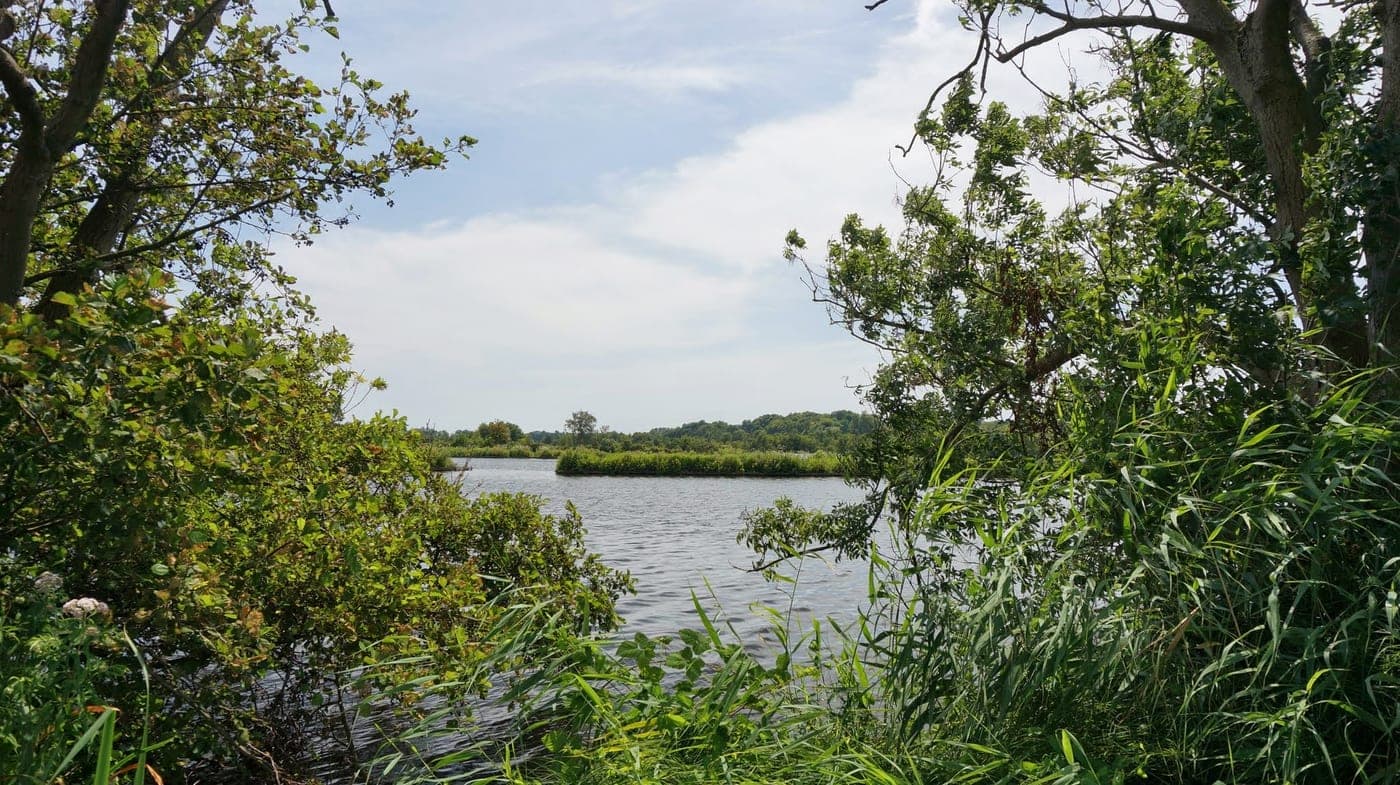
Loosdrecht
Famous for the Loosdrecht Lakes with extensive boat rental facilities.
Boat RentalsHiking
9 regions
 Boat Rentals2 destinations
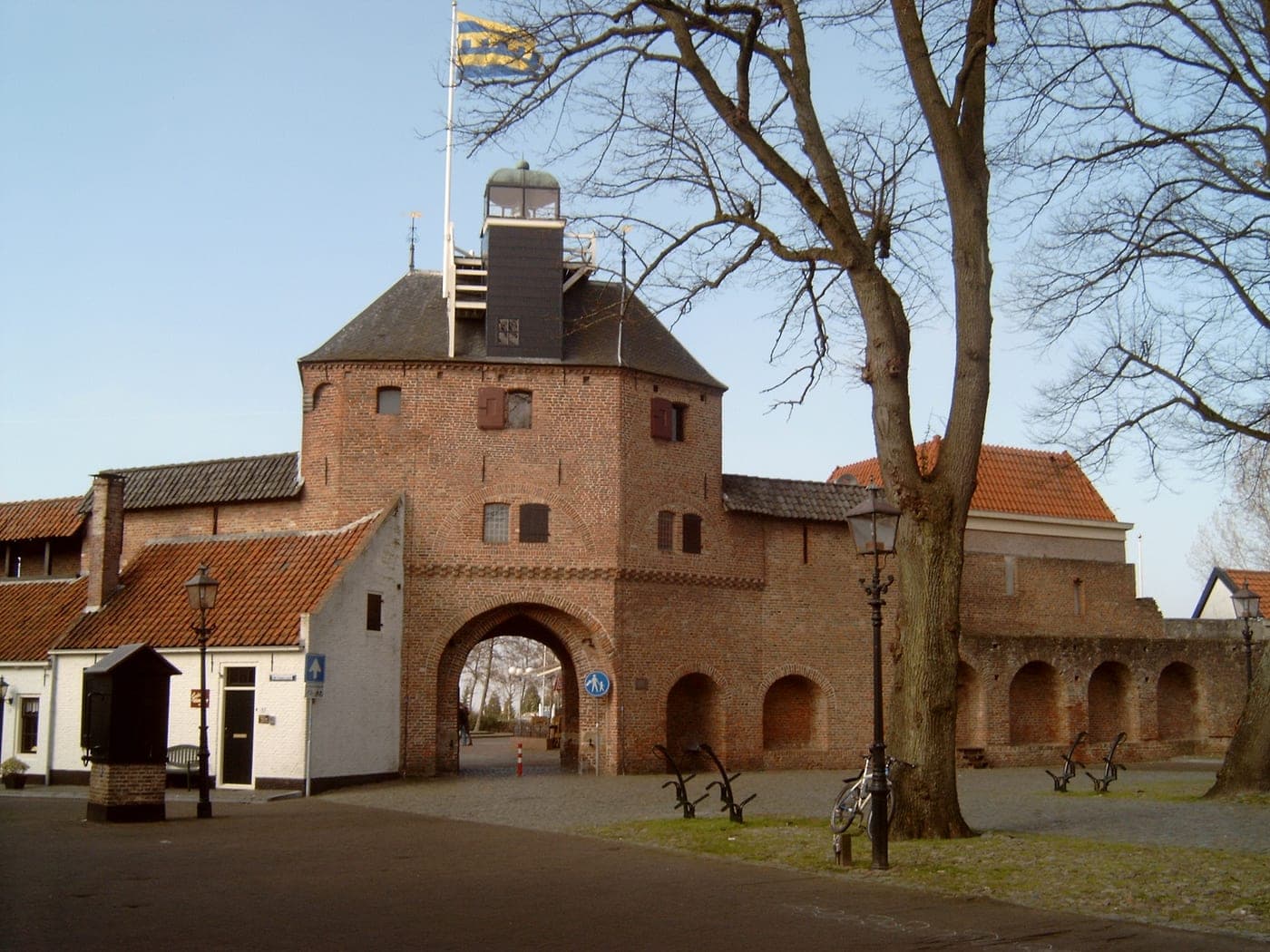
Gelderland
Gelderland, the largest province in the Netherlands, is known for its diverse landscapes, including vast forests, heathlands, and beautiful river valleys. The region is home to the historic city of Arnhem, famous for its pivotal role in World War II, featuring the Airborne Museum. Nearby, the Hoge Veluwe National Park offers extensive trails for walking and cycling amidst art installations and nature. The charming town of Nijmegen boasts ancient Roman history and vibrant cultural festivals. Gelderland is also notable for its traditional Gelderland horse breeding and local cuisine, featuring local cheeses and game dishes. Off the beaten path, explore the quaint villages of Bronkhorst, one of the smallest towns in the Netherlands, and Elburg, with its medieval harbor and preserved architecture.
Boat RentalsHiking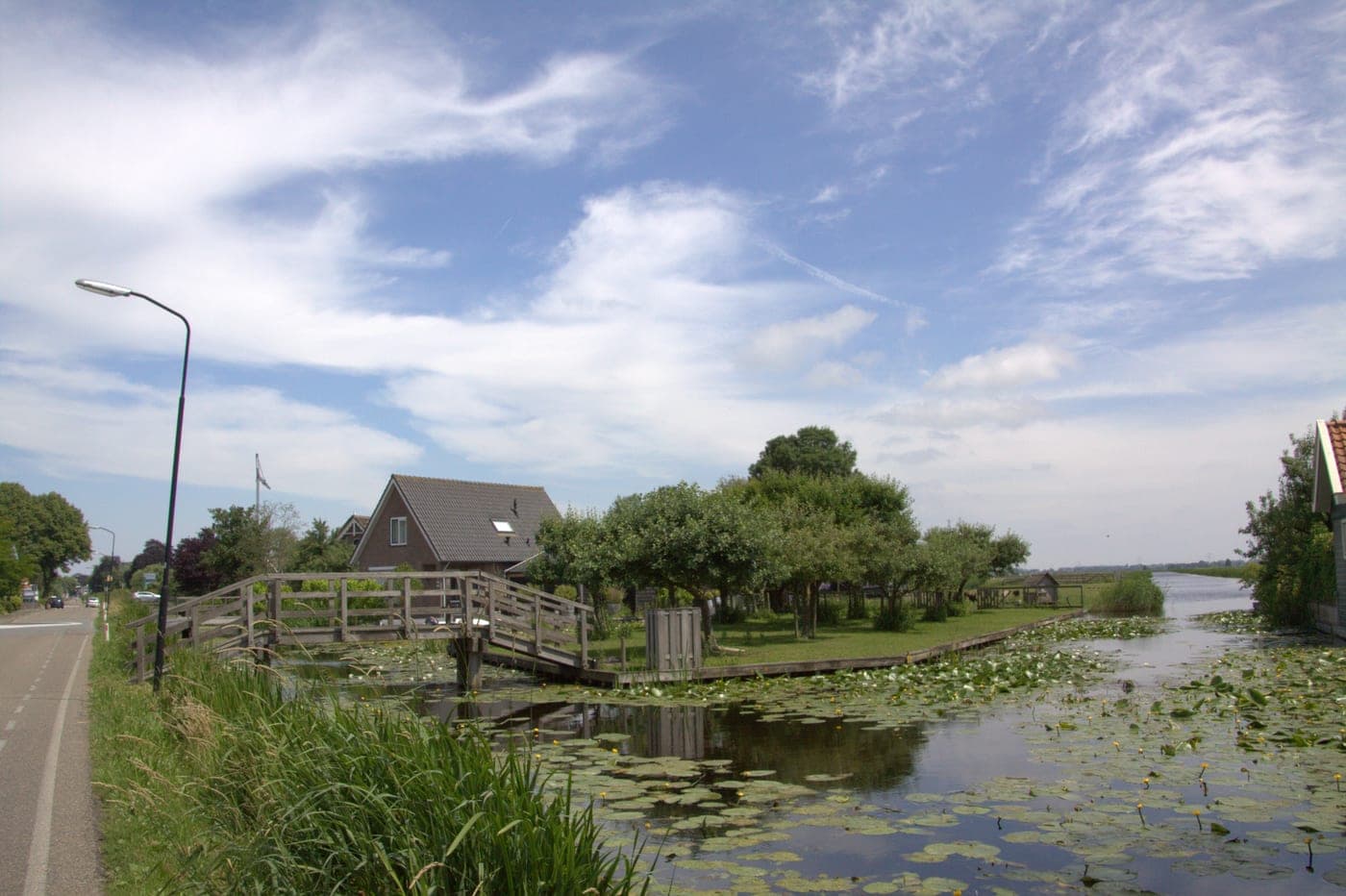 Boat Rentals3 destinations
Utrecht
Utrecht, situated in the heart of the Netherlands, is the country's fourth largest city and serves as a historical and cultural hub. The city is renowned for its medieval Old Town, characterized by unique wharf cellars along the canals. These cellars host cafes and shops, creating a vibrant riverside atmosphere. Utrecht boasts the iconic Dom Tower, the tallest church tower in the Netherlands, offering stunning views of the region. The region is also famous for its rich history, evident in its numerous museums and the Utrecht University, one of the oldest in the country. Beyond the city, the surrounding countryside features scenic cycling routes and charming villages like Amersfoort, known for its well-preserved medieval architecture. For those interested in local culture, Utrecht hosts various festivals throughout the year, including the Utrecht Early Music Festival, showcasing its artistic heritage.
Boat RentalsHiking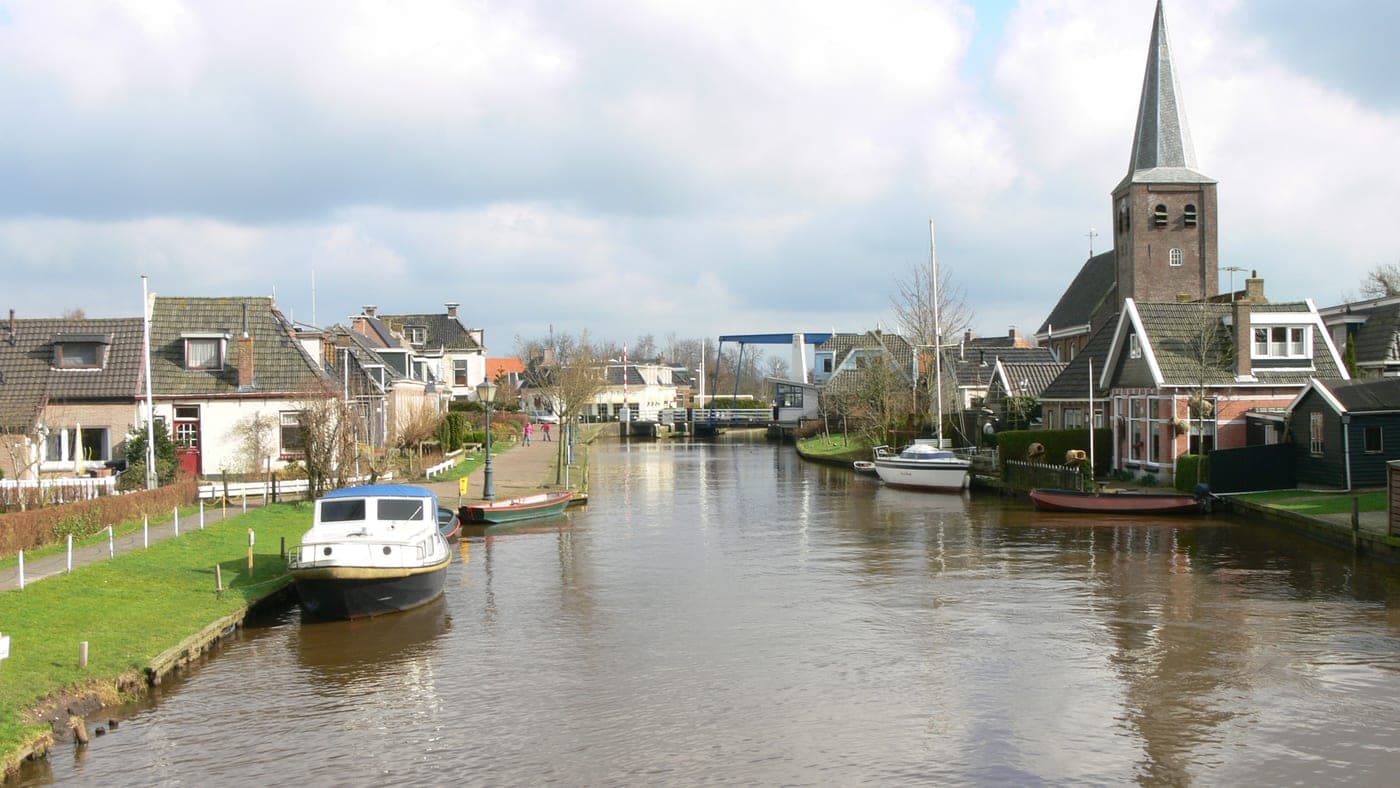 Boat Rentals12 destinations
Friesland
Friesland, known for its lakes and waterways, is the largest province in the Netherlands by area. The region features unique cultural heritage, with the Frisian language recognized alongside Dutch. Leeuwarden, the capital, boasts historical architecture and was a European Capital of Culture in 2018. Small towns like Dokkum and Sneek offer cobbled streets and traditional festivals. Friesland is famous for its dairy products, particularly Frisian cheeses, and the annual Elfstedentocht, a long-distance ice skating tour. Nature lovers can explore the Wadden Sea, a UNESCO World Heritage site, and the expansive Frisian Lakes, ideal for sailing and cycling.
Boat RentalsHiking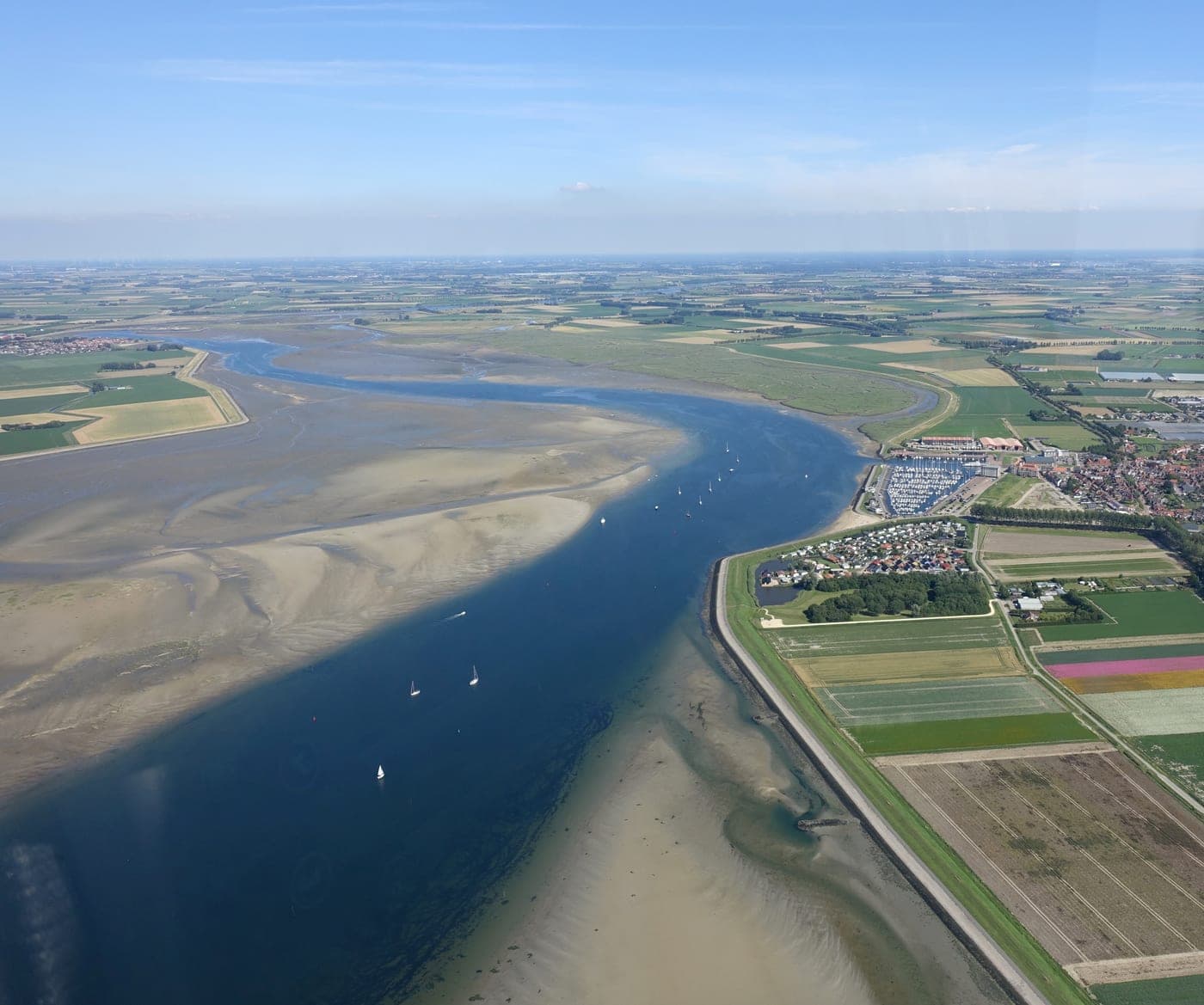 Boat Rentals3 destinations
Zeeland
Zeeland, the smallest province of the Netherlands, boasts a unique coastline and rich maritime history. Known for its dikes and natural reserves, this region is famous for the Delta Works, a series of dams and barriers that protect the land from the sea. Middelburg, the capital, features stunning Gothic architecture, while the town of Veere offers a glimpse into its trading past with its historic harbor. The area is also renowned for its seafood, particularly oysters and mussels. Zeeland's islands, such as Walcheren and Tholen, provide tranquil landscapes and opportunities for cycling and birdwatching, making it a haven for those looking to connect with nature and local culture.
Boat RentalsHiking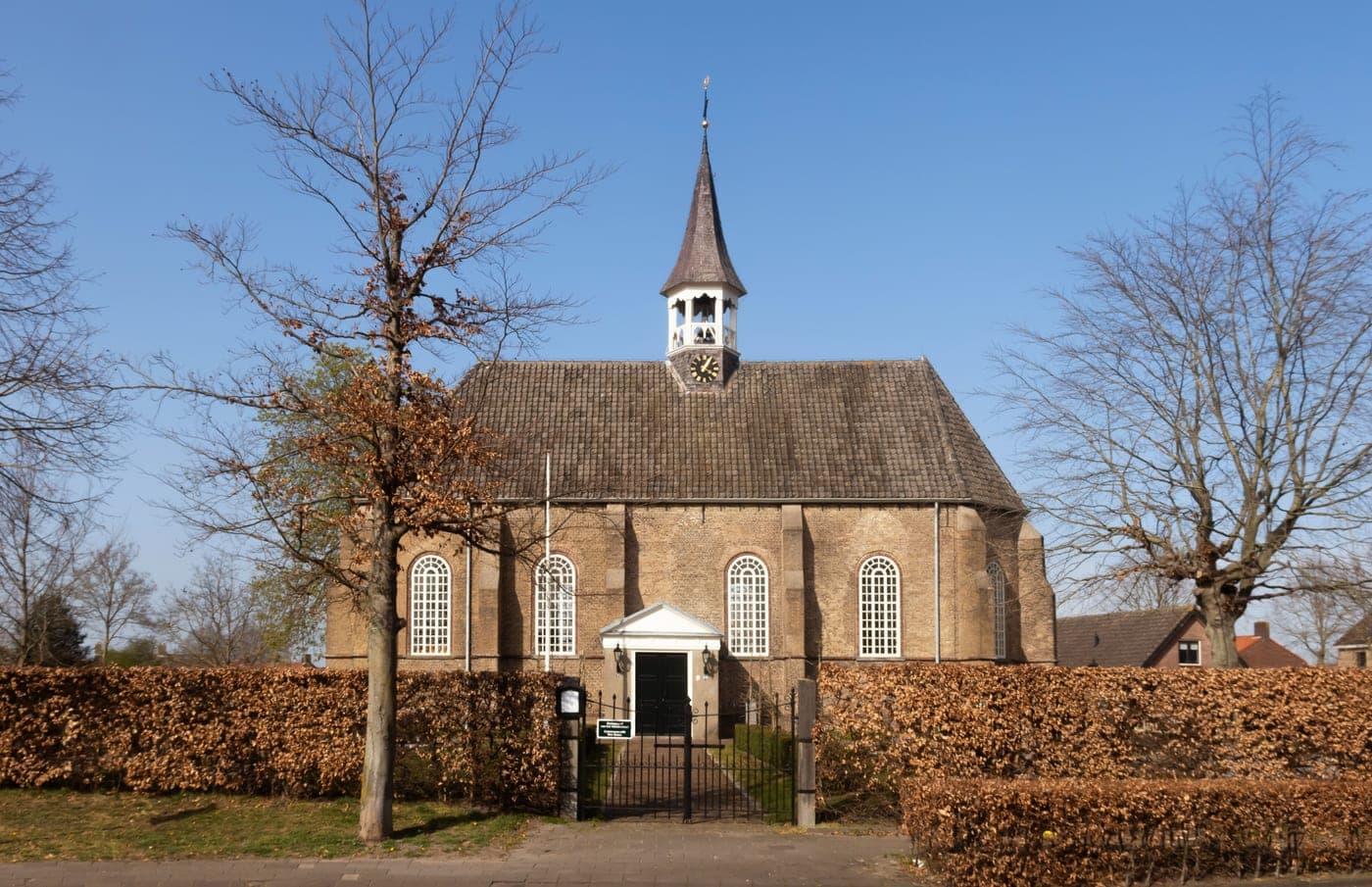 Boat Rentals3 destinations
Noord-Brabant
Noord-Brabant is the largest province in the Netherlands, and it wears that size lightly. South of the great rivers, the land flattens into polders and reclaimed marsh, cut through by canals that once moved peat, grain and beer to the cities. Windmills still stand along some of these waterways, and the flat terrain has made the region a natural home for cycling: quiet paths run along dikes, through pastureland, and between villages that rarely announce themselves with more than a church spire above the trees. Water shapes much of the province. In the north, the Biesbosch is one of the last extensive freshwater tidal wetlands in Europe, a maze of creeks, reed beds and willow groves that formed after a catastrophic flood in the fifteenth century reshaped the land. Herons and beavers now share the marsh with slow-moving boats, and the light here changes constantly with the tide. Further south and east, the terrain rises just enough to form the Loonse en Drunense Duinen, an inland dune landscape of bare sand and scattered pine that feels closer to a coastline than to the Dutch interior. The towns of Noord-Brabant carry their history in brick rather than grandeur. 's-Hertogenbosch, the provincial capital, grew up around its cathedral of St John, a Gothic building whose carved details reward slow looking. Its old center is threaded by the Binnendieze, a hidden network of canals that once ran openly through the streets and now pass partly under the houses themselves. Breda, to the west, centers on a fortified castle and a Gothic church whose tower still dominates the skyline; the town's squares fill with market stalls and outdoor cafés that make use of the flat, walkable center. Smaller places across the province, from Bergen op Zoom to the villages around the Biesbosch, keep the same rhythm: a market square, a brick church, canals or a river close by. Noord-Brabant's cultural identity runs deeper than its old town centers. Vincent van Gogh was born in Zundert, in the province's southwest, and spent his early years in the flat farmland and heathland that would later appear, transformed, in his paintings; the landscape around Zundert and Nuenen still carries traces of the fields and cottages he sketched. In sharp contrast, Eindhoven, once a modest textile and industrial town, has become one of Europe's centers for design and technology, its former factories converted into studios, galleries and workspaces. This mix of old agricultural rhythm and forward-looking design culture is part of what makes the province distinct within the Netherlands. Food and drink here lean toward the everyday and the well-made rather than the showy. Regional cheeses, smoked sausage, and local beers from small and long-established breweries fill the market stalls and pub menus alike. Carnival, celebrated with particular intensity across Noord-Brabant in February, turns the usually calm town squares into something loud and colorful for a few days, with brass bands, costumed processions and local nicknames for each town used only during the festival. What ties the region together is its pace and its openness to slow movement through open country. Cyclists cross from village to village on paths that follow old dikes and canal banks, past windmills, grazing cattle and reed-lined water. Boats drift through the Biesbosch at the speed the tide allows. Even the cities keep a manageable scale, their centers built for walking rather than driving, their canals and market squares still doing the quiet work they always have. Noord-Brabant rewards those willing to look closely at ordinary things: a brick façade, a windmill's turning sails, a heron standing still in the reeds.
Boat RentalsHiking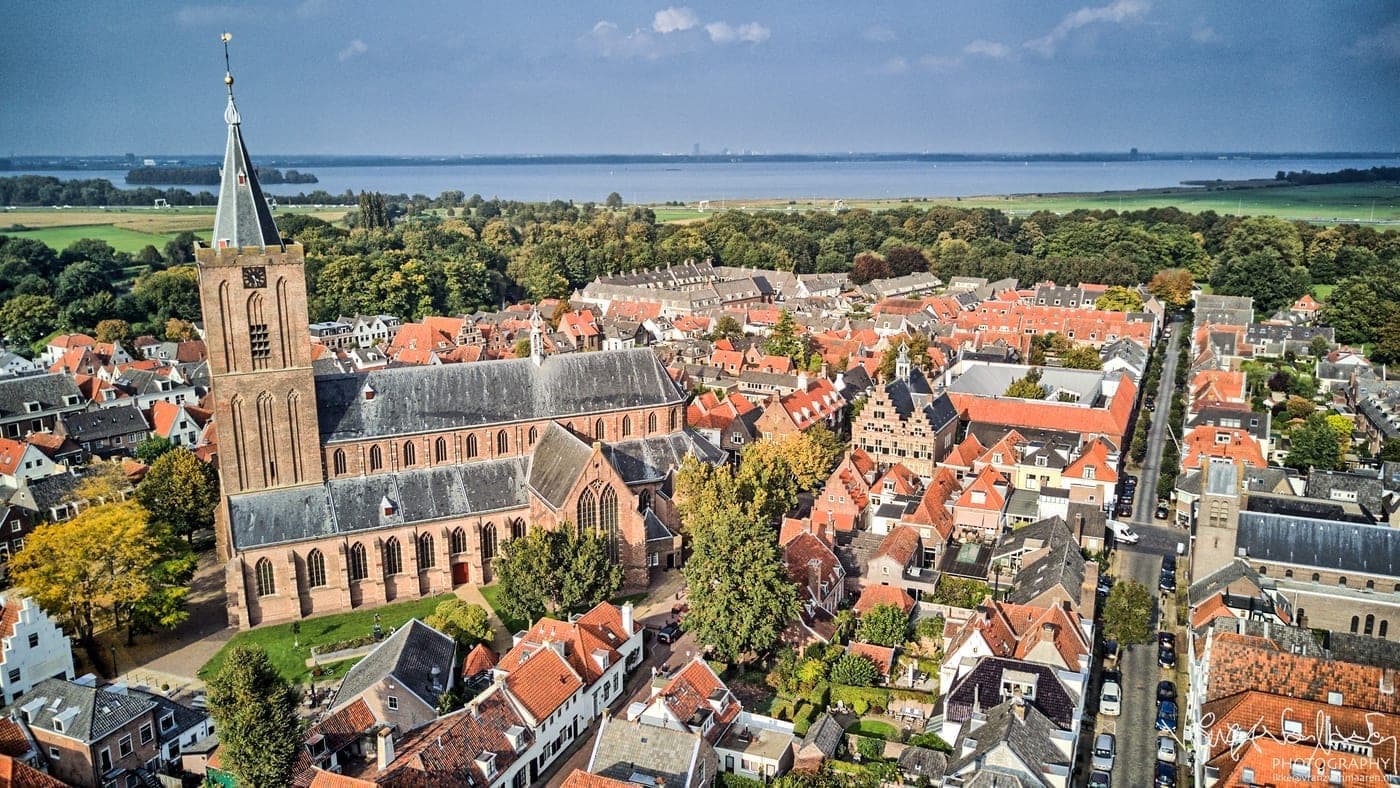 Boat Rentals11 destinations
Noord-Holland
North Holland is a diverse region located in the northwest of the Netherlands, known for its mix of urban and rural landscapes. Amsterdam, the capital, is the only major city, renowned for its canals and museums. Outside the city, the region boasts picturesque villages such as Edam, famous for its cheese, and Volendam, a traditional fishing village. The coastline offers beautiful beaches, particularly in Zandvoort and Bloemendaal, popular for windsurfing and beach walks. North Holland is also home to the UNESCO-listed Wadden Sea, a unique natural habitat. The region's rich history is evident in its historic windmills and vibrant tulip fields that bloom in spring, inviting exploration through serene countryside paths.
Boat RentalsHikingLocal CuisineCamper Van Rentals
Overijssel
Overijssel, a region in the northeastern Netherlands, is known for its diverse landscapes, from lush forests to winding rivers. The area is home to Zwolle, the capital, recognized for its medieval architecture and vibrant cultural scene. Nearby, the picturesque town of Giethoorn, famous for its canals and thatched-roof houses, offers a glimpse into traditional Dutch life. The region boasts several nature reserves, including De Weerribben-Wieden, ideal for hiking and cycling. Rich in history, Overijssel features remnants of Hanseatic trade, and its local cuisine is highlighted by traditional dishes and local cheeses. With fewer tourists, it provides an authentic experience of Dutch culture and nature.
 Boat Rentals2 destinations
Flevoland
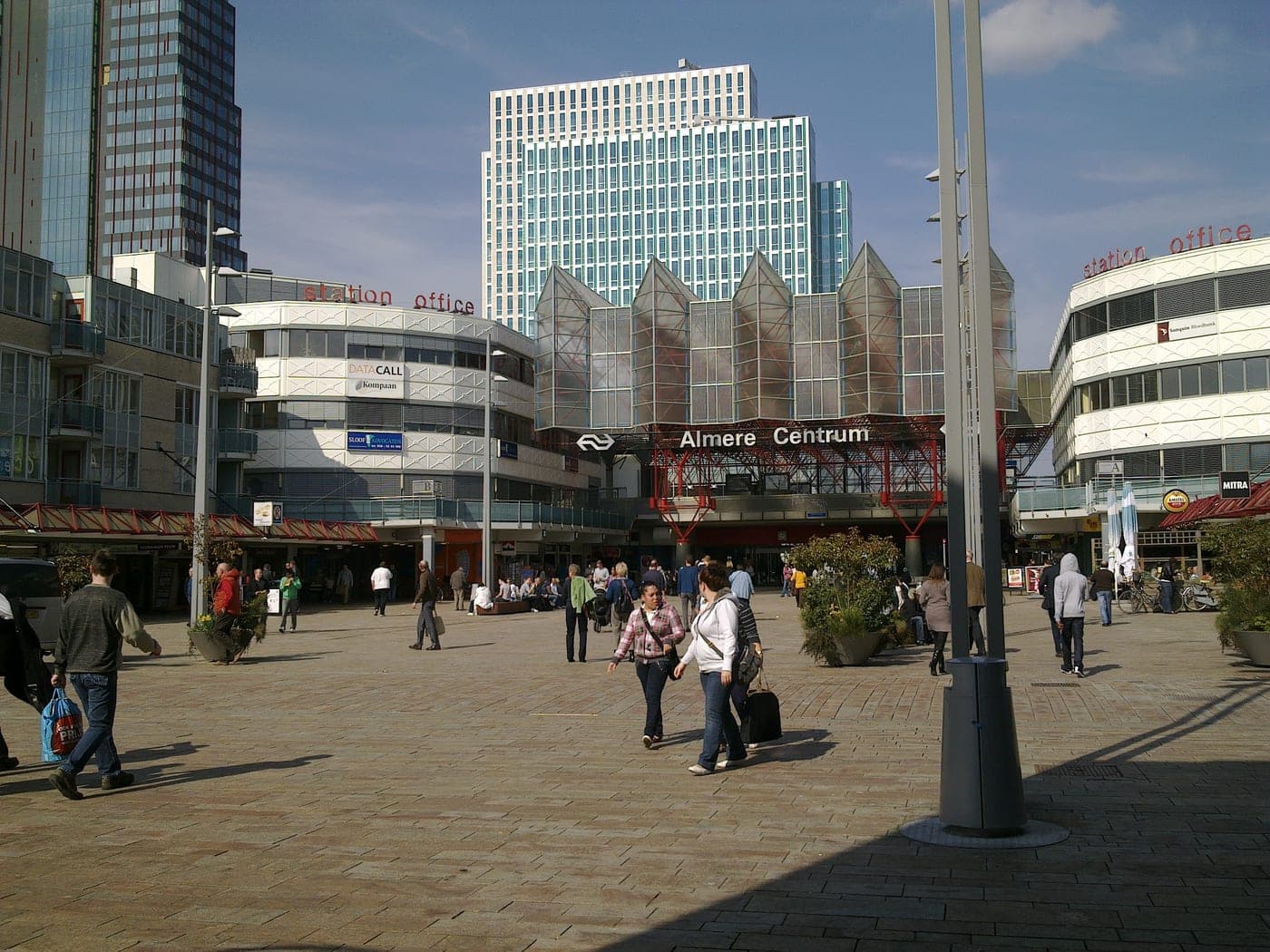
Flevoland, the youngest province in the Netherlands, was reclaimed from the Zuiderzee, showcasing innovative land reclamation techniques. Almere, the largest city, features modern architecture and a vibrant cultural scene, while Lelystad, the provincial capital, offers museums like the Batavialand, highlighting the region's maritime history. The area's unique landscapes include the Oostvaardersplassen nature reserve, home to diverse wildlife. Flevoland is also known for its agricultural practices, particularly in tulip cultivation. This province provides an opportunity to explore modern Dutch life alongside historical insights, making it a fascinating destination beyond typical tourist trails.
Boat RentalsHiking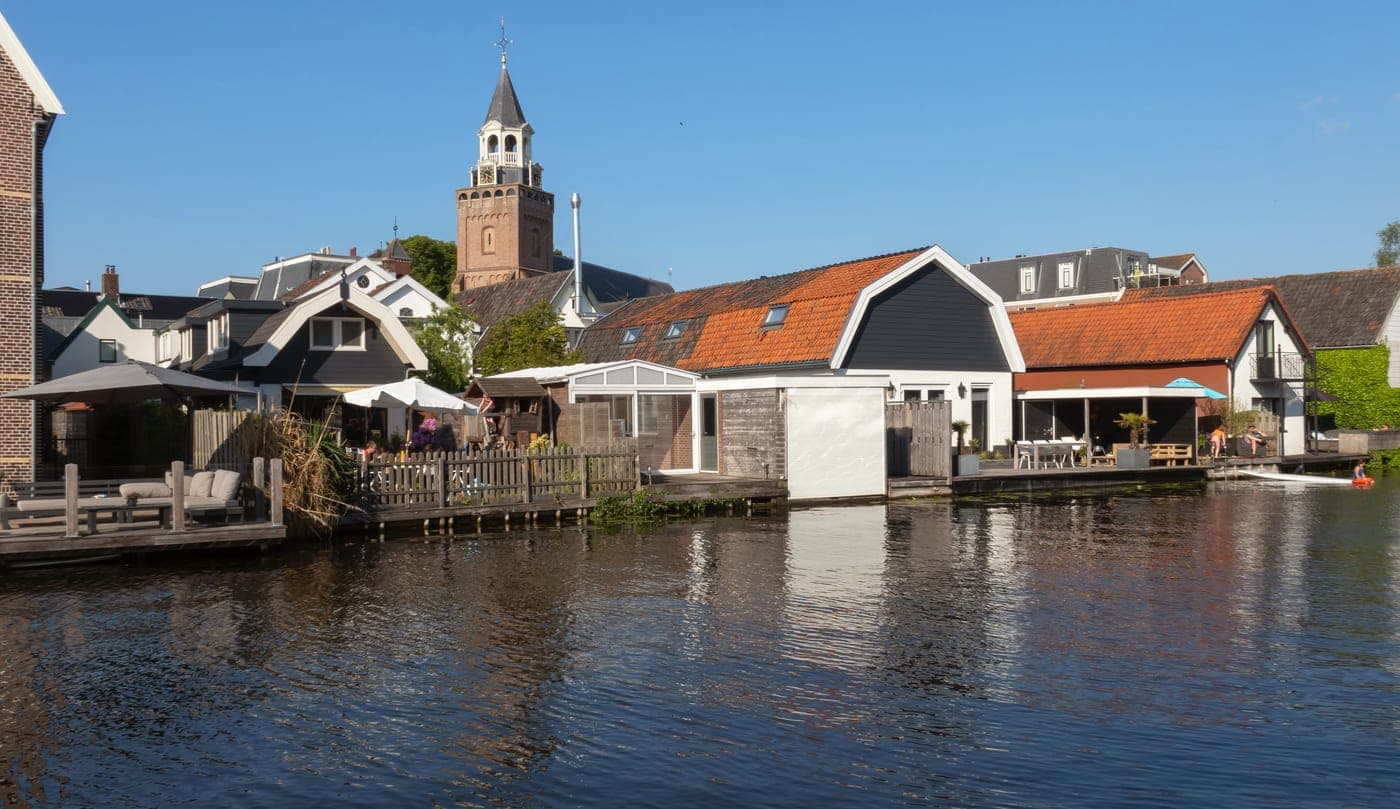 Boat Rentals5 destinations
Zuid-Holland
South Holland, the most populous region in the Netherlands, features a blend of urban and rural landscapes. The region's capital, The Hague, is known for its political significance and the stunning Mauritshuis museum, home to masterpieces like Vermeer’s 'Girl with a Pearl Earring.' Rotterdam, a hub for modern architecture, boasts an innovative skyline and vibrant cultural scenes. The coastline, stretching along the North Sea, offers picturesque beach towns like Scheveningen and Kijkduin. Explore the serene countryside dotted with historic windmills and charming villages such as Kinderdijk, famous for its UNESCO-listed windmills. South Holland is also renowned for its tulip fields, particularly in the Bollenstreek area, showcasing the region's floral heritage in spring. This diverse region invites travelers to experience its rich history, local markets, and culinary delights at a leisurely pace.
Boat RentalsHikingCamper Van Rentals