Vitello tonnato
Cold sliced veal in creamy tuna sauce, a Piedmontese summer classic
- Local name
- Vitello tonnato
- Best eaten at
- A Piedmontese trattoria
- Pairs with
- Arneis or Roero white
What it is
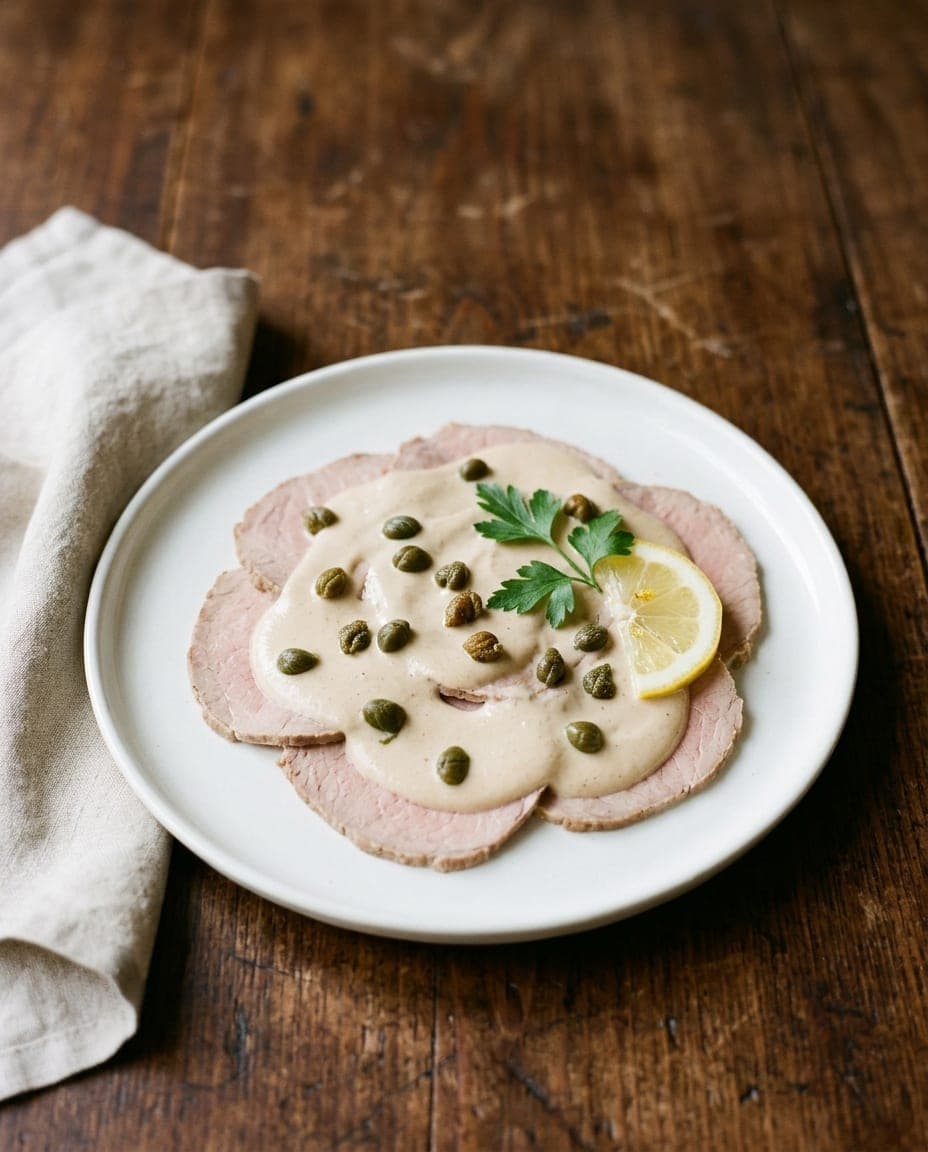
Vitello tonnato, vitel tonné in Piedmontese, is a dish of striking simplicity that has become the definitive cold starter of Turin and the wider Piedmont region. It consists of thinly sliced veal, usually from the girello or round cut, served cold and covered in a thick, pale sauce made from tuna, anchovies, capers and egg. The contrast between the delicate meat and the intense, savoury dressing is what defines the experience.
The dish is a summer favourite, often found on tables around Ferragosto on 15 August. In the heat of July and August, when the air in the Po Valley can feel heavy, there is little appetite for hot cooking, and the kitchen turns to preparations that can be made ahead and served chilled. Vitello tonnato fits this need perfectly, as it rests in the refrigerator before it reaches the table.
While it is now known across Italy, its heart remains in Piedmont, where it is a fixture of the trattoria menu. The sauce is often described as creamy or velvety, though it contains no cream. Its texture comes from the egg, oil and pounded fish.
Where it comes from
The history of vitello tonnato is less straightforward than its name suggests. Piedmontese cookbooks of the 18th century already paired veal with anchovy sauces, and 19th-century recipes from Lombardy and Ticino describe veal cooked and preserved in oil to imitate marinated tuna. Tuna and anchovies, preserved in salt or oil, were pantry staples that reached inland markets from the coast.
The name is also debated. One widely repeated theory, supported by Turin's tourist board, holds that tonné comes from the French tanné, "tanned", rather than from tonno, and that tuna was added only later in the 19th century. By 1891 Pellegrino Artusi was publishing a recipe for veal under a sauce of tuna, anchovies, capers, oil and lemon. Mayonnaise-based versions became common in the 20th century.
The dish also reflects the French influence on Piedmontese cooking. The House of Savoy maintained strong ties with France, and serving poached meat cold under a rich sauce sits comfortably within that tradition, while the tuna and capers give it a distinctly Italian character.
How it is made
The preparation begins with the veal, which is poached or braised gently, often with white wine and aromatics such as onion, carrot, celery, bay leaves and peppercorns. The goal is to cook the meat until it is tender but not falling apart. Once cooked, it is cooled completely so that it can be cut into thin, uniform slices.
The sauce is prepared separately by blending tuna in oil, salted anchovies and capers into a smooth cream. In older versions this is loosened with some of the cooking liquid and hard-boiled egg yolk; in the modern version it is bound with mayonnaise. The result is rich yet light enough not to overwhelm the delicate meat.
The sauce is spread generously over the sliced veal, and the dish is refrigerated for several hours, often overnight, so the flavours penetrate the meat. It is served on a large platter, sometimes with capers scattered on top.
What goes into it
There is no single official recipe, and each cook in Piedmont has a variation, yet the core components remain consistent:
- Veal from the girello: The round cut is preferred for its lean texture and ability to be sliced very thinly.
- Tuna: Usually packed in olive oil, it provides the body of the sauce.
- Anchovies: Salted anchovies deepen the savoury profile.
- Capers: These add a sharpness that cuts the richness.
- Egg: Hard-boiled yolks or mayonnaise give the sauce its creamy texture without dairy.
- White wine and aromatics: Used to poach the veal.
The final dish relies on the balance between the mild taste of the veal and the intense, salty punch of the sauce.
How it is eaten
Vitello tonnato is almost always served as an antipasto, at the beginning of a multi-course meal. In a traditional Piedmontese trattoria it arrives on a platter, the slices overlapping and lifted with a fork together with their sauce. It is most common in summer, but also appears at festive meals at other times of year.
It is best paired with crisp white wines from the region. A glass of Arneis from the Roero complements the salty sauce and the mild meat without overpowering them, its acidity refreshing the palate between bites.
Curious facts
- A sea flavour inland. Tuna and anchovies preserved in oil or salt have long been pantry staples far from the coast.
- No cream required. Despite its creamy appearance, the sauce contains no dairy.
- A summer favourite. It is a common sight on Ferragosto tables in August.
- The name debate. Tonné may come from the French tanné, "tanned", rather than from tonno, tuna, though this remains disputed.
- Not only Piedmontese. Some mid-20th-century cookbooks listed the mayonnaise version as a Lombard speciality, but the dish is most deeply associated with Turin and the Piedmontese countryside.
Where to try it
The best place to eat vitello tonnato is a traditional trattoria in Turin or its surrounding hills, where it is a standard antipasto, especially in summer. Restaurants specialising in regional cuisine are the most reliable choice.
Outside Turin, villages in the Roero and Langhe also serve excellent versions, and a rural agriturismo or family-run restaurant may offer a more rustic take, with the veal poached in a simple broth and the sauce prepared by hand. A slow lunch allows time to appreciate the interplay between the cold meat and the rich sauce.
Where to try it
1 destination
 Camper Van Rentals
Turin
Architectural gem with historic cafes, elegant squares, and rich chocolate tradition.
Camper Van RentalsThermal Spas
1 region
 Agritourism31 destinations
Piedmont
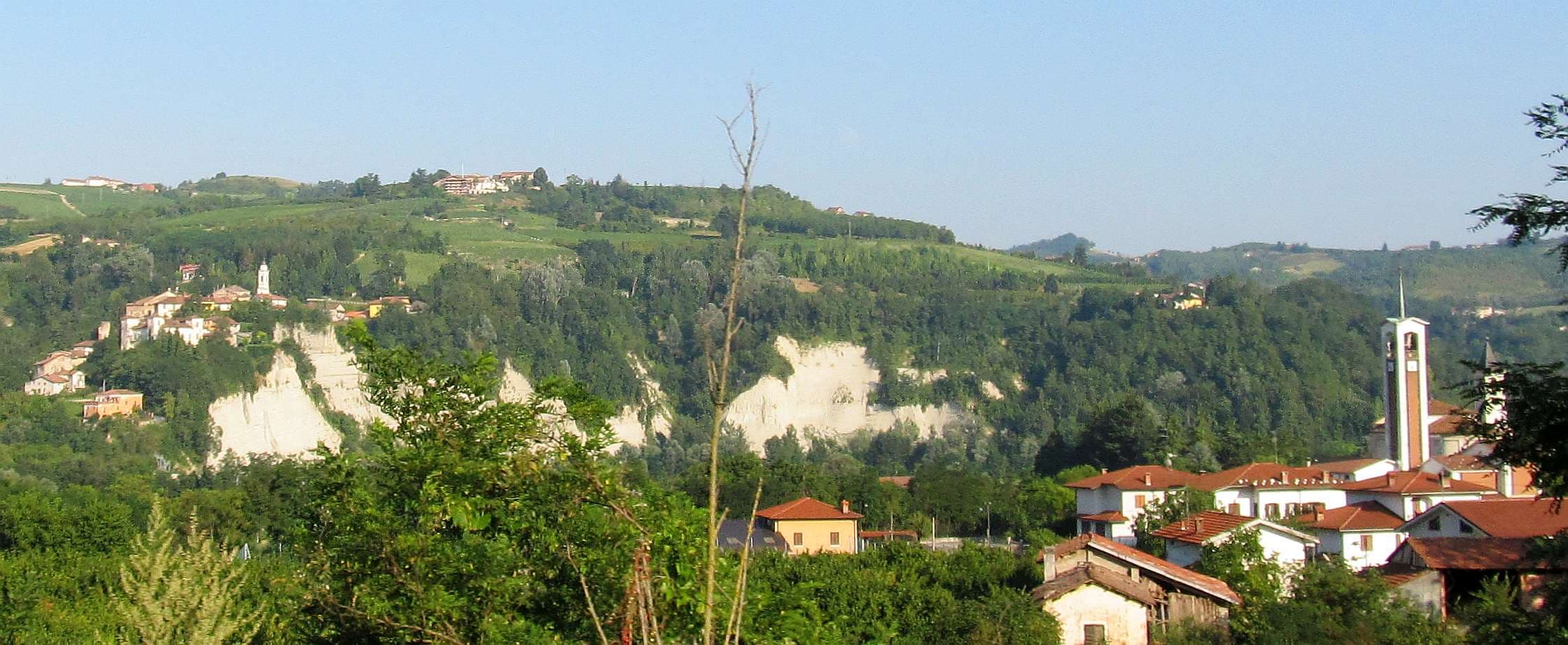
Piedmont is the second-largest region in Italy, bordered by the Alps to the north and characterized by its rich culinary and viticultural heritage. The region is famous for Barolo and Barbaresco wines, produced in the rolling hills of Langhe, a UNESCO World Heritage site. Turin, the capital, is known for its elegant architecture and historical cafes, while smaller towns like Alba and Asti offer vibrant local markets and truffle festivals. The region also boasts stunning landscapes, from the serene lakes of Orta and Maggiore to the majestic mountains. Its historical significance includes being the birthplace of the Italian unification. Authentic experiences can be found in local agriturismos and family-run osterias, away from typical tourist paths.
AgritourismWine TastingCastlesHiking





