Testaroli
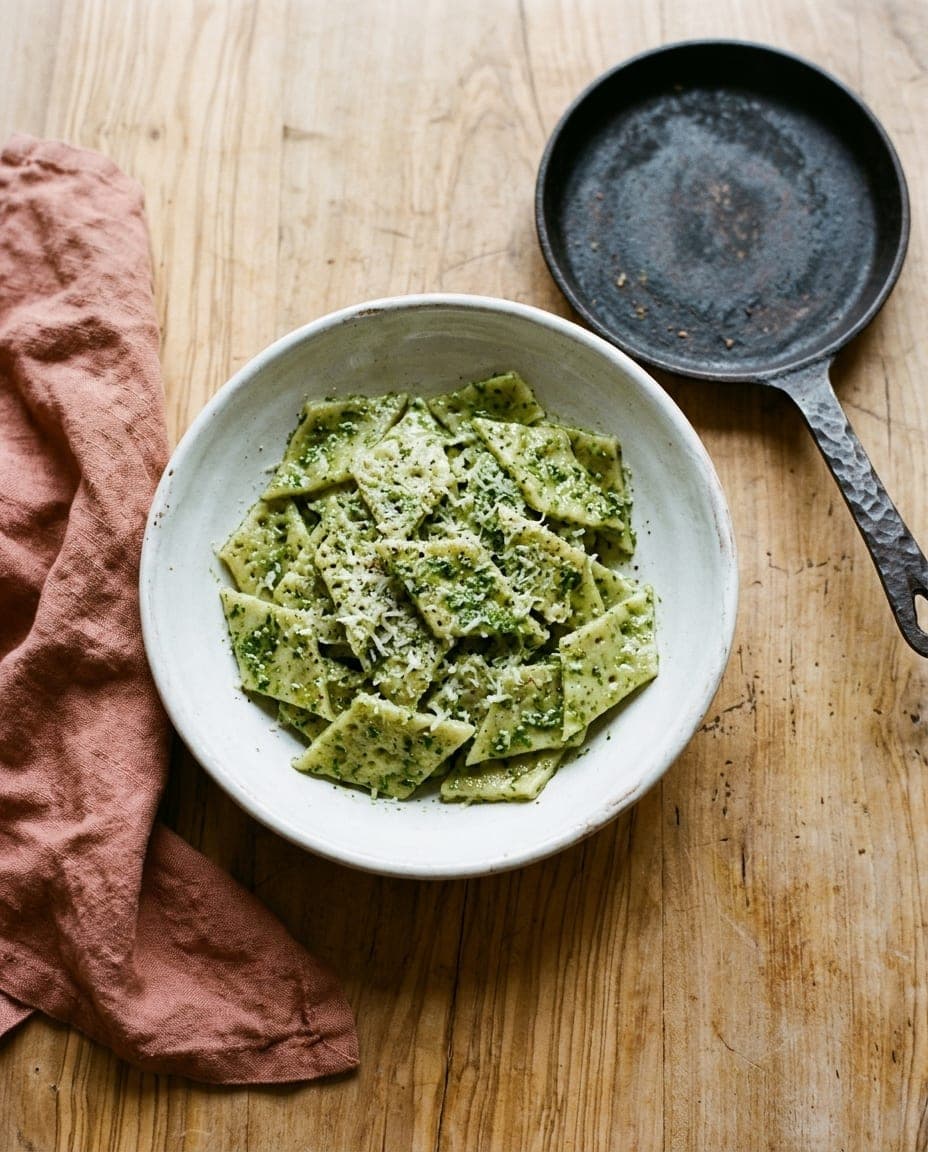
Testaroli from Lunigiana, cooked on an iron griddle and served with pesto
- Local name
- Testaroli
- Served with
- Pesto, Pecorino
- Best eaten at
- A Lunigiana trattoria
- Pairs with
- Vermentino dei Colli di Luni
What it is
Testaroli are flat, spongy pasta sheets that originate from the Lunigiana, the historic area where the mountains of northern Tuscany meet Liguria. They are not rolled or extruded like most Italian pastas. Instead, they are made by pouring a thin batter of flour, water and salt into a scalding-hot cast-iron or terracotta pan known as a testo. The batter cooks quickly into a large, thin disc that is then cut into diamond shapes.
This two-stage cooking process defines the dish. After the initial cooking in the testo, the pieces are cooled and then dropped into hot water for a few minutes to soften before serving. This second step transforms the griddle cake into a pasta rather than a bread, giving it a soft, porous texture that holds sauce with unusual efficiency. The result is a mild, earthy base designed to carry the flavours of local toppings.
Where it comes from
The dish is tied closely to the Lunigiana, a rugged valley straddling the border between Tuscany and Liguria. While the wider area shares similar traditions, Pontremoli in the province of Massa-Carrara is widely recognised as the heartland of testaroli, and the artisanal testarolo pontremolese is protected as a Slow Food Presidium. The name itself derives from the cooking vessel, the testo, which was once found in every household for baking bread and preparing this dish before modern stoves arrived.
The traditional testo comes in two parts: a base (sottano) and a lid (soprano), both heated over a beech or chestnut wood fire. The batter is poured into the hot base, cooks uncovered for a moment, and then the lid is set on top so it finishes cooking in a closed bell, producing a thin, round sheet around 35 to 45 cm across and full of tiny holes. The dish is often described as one of the oldest forms of pasta, and some writers link it to Etruscan or even earlier griddle breads, though such claims are hard to prove. It is a dish born of simplicity, turning flour, water and fire into a filling meal for mountain communities.
What goes into it
The batter for testaroli remains remarkably simple, reflecting the agricultural history of the area:
- Flour, typically wheat flour, which provides the structure for the thin sheets.
- Water and a pinch of salt to form a smooth, pourable consistency.
- Olive oil, basil and grated cheese, the traditional dressing: extra virgin olive oil, finely chopped basil and grated Parmigiano or Pecorino.
- Pesto, the most common modern accompaniment, made from basil, pine nuts, garlic, olive oil and hard cheese.
- Other sauces, such as a walnut sauce, which some cooks use as a local alternative.
The dish is rarely served plain. Its porous surface acts like a sponge, absorbing the oil and herbs of the sauce so that every bite carries a concentrated flavour. While pesto is the standard pairing in restaurants, the simplicity of the base allows it to work equally well with just olive oil and cheese in home-style settings.
How to eat it
Testaroli are usually served as a substantial first course (primo). In a traditional Lunigiana trattoria, they arrive piled high on a plate, coated in pesto and dusted with grated cheese. The texture is soft yet slightly chewy, offering a satisfying contrast to the sharpness of the basil sauce.
The combination of the mild pasta and the aromatic sauce creates a balanced meal that feels both rustic and refined.
Curious facts
- A pasta made as bread. Testaroli are cooked first as a griddle cake and only become pasta after being soaked in hot water, a rare method in Italian cuisine.
- The name comes from the pan. The testo is the cast-iron or terracotta vessel used to cook the batter, and the dish takes its name directly from this tool.
- Ancient roots. The dish is often called one of the oldest pastas, and some trace the technique to Etruscan times, although firm evidence is lacking.
- A regional speciality. Unlike many Italian dishes that spread nationwide, testaroli remain largely confined to the Lunigiana and its immediate surroundings.
- Sauce is key. The porous texture of the cooked batter holds sauce well, making it an ideal vehicle for pesto or olive oil and cheese.
Where to try it
1 destination
 Agritourism
Aulla
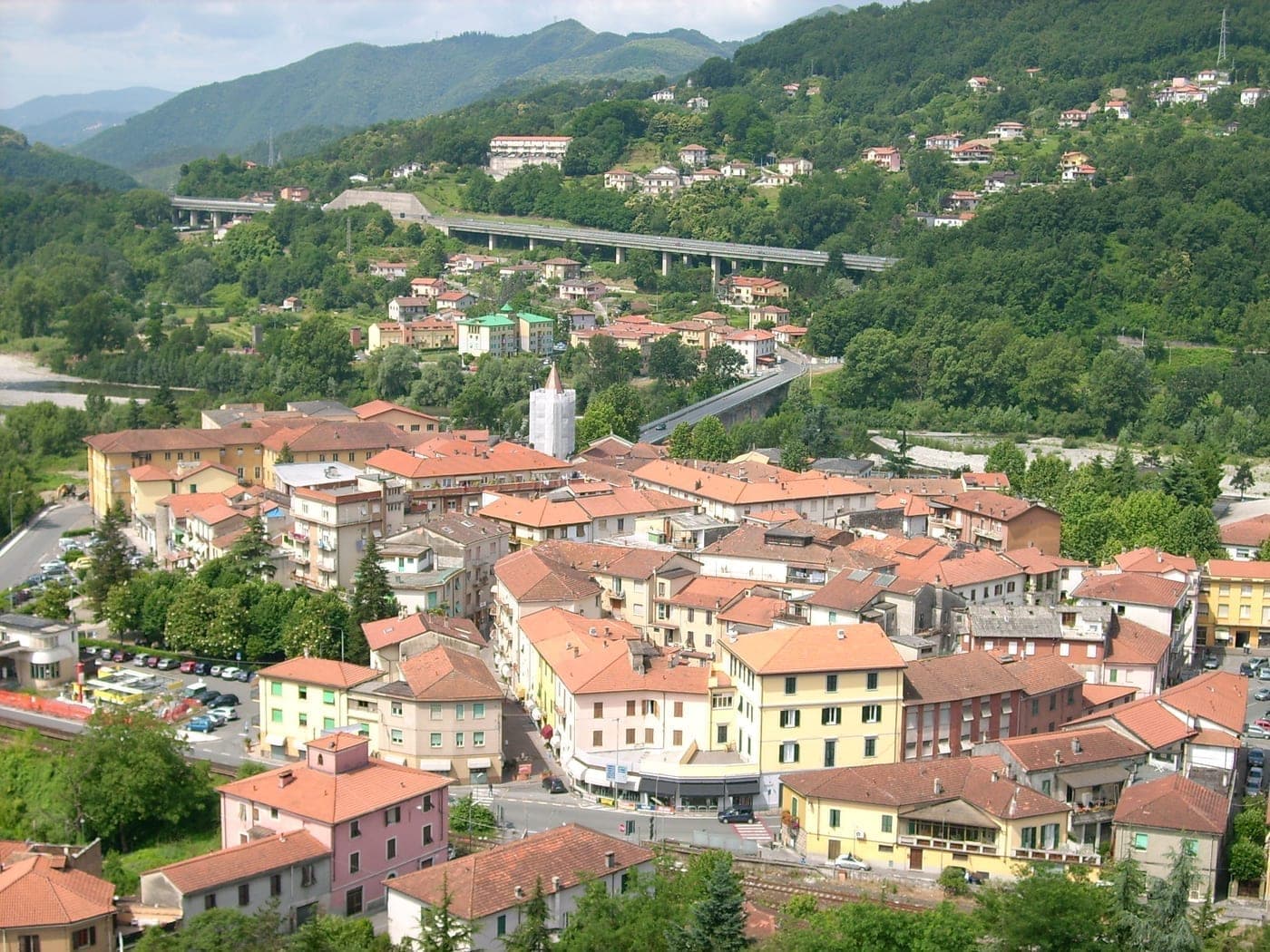
Lunigiana valley town with agriturismo offering chestnut cultivation, honey production, and hiking.
AgritourismHiking





