Taralli
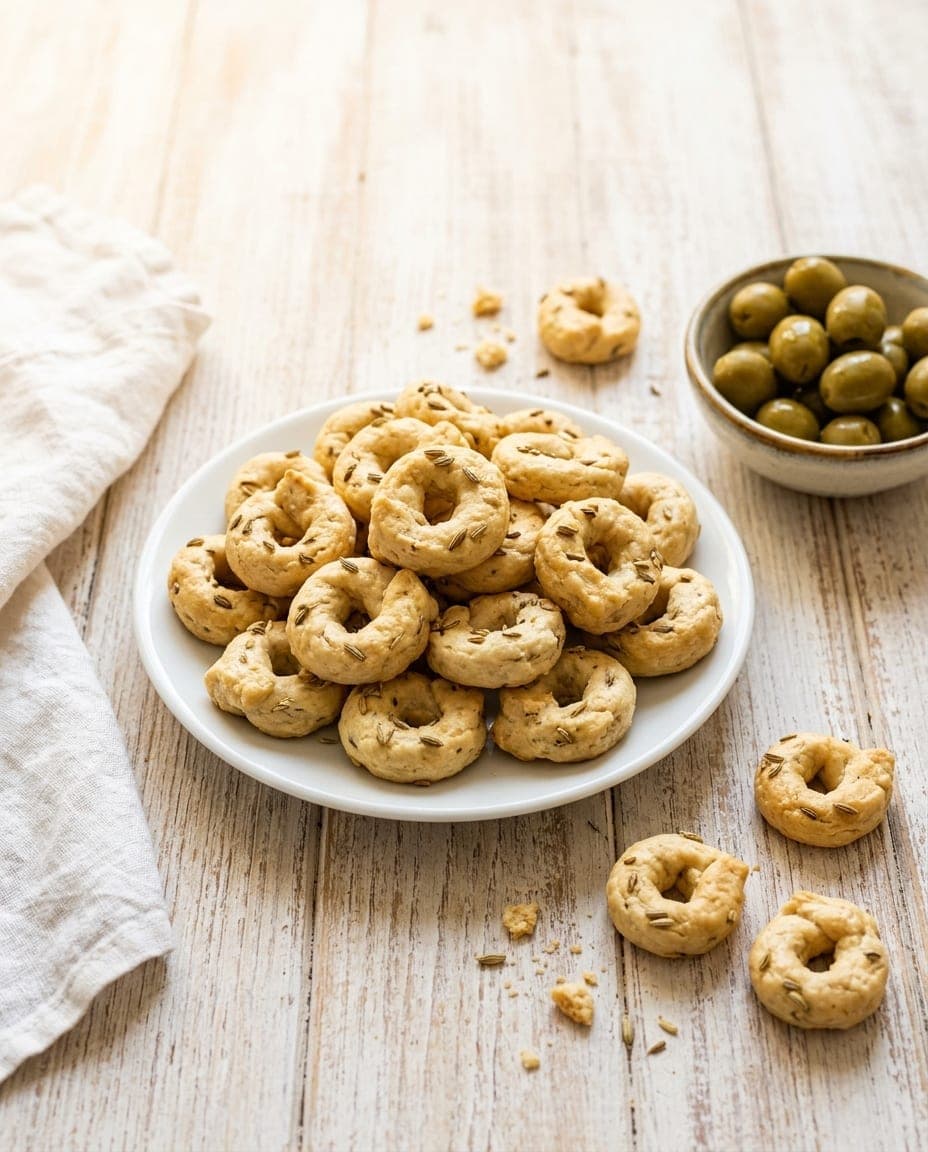
Crunchy ring-shaped crackers from Puglia, boiled then baked with fennel
- Vegetarian
- Local name
- Taralli
- Served with
- Olives, cheese
- Best eaten at
- A Puglian aperitivo
- Pairs with
- Puglian white or rosé
What it is
Taralli are small, ring-shaped savoury biscuits that form the backbone of Puglia's snack culture. They look like tiny bagels or pretzels, but their texture is entirely different: hard, crunchy, and crumbly rather than soft or chewy. These are not soft breads meant to be torn for sandwiches; they are lean store-cupboard snacks, broken with the fingers and eaten slowly.
The shape is simple, a small loop of dough, but the method creates a distinct surface. The rings are boiled briefly in lightly salted water until they float, then baked until golden. This two-step process gives a glossy, crisp exterior that snaps when bitten and a dense, dry interior that keeps for weeks without going stale. In Puglia they are a daily presence on tables, served in bowls like crisps and paired with wine or beer.
The history of the boiled ring
The technique of boiling dough before baking it appears in various forms across Europe, from Jewish bagels to Italian ciambelle. In Puglia, it produced a practical food for a largely rural region. The ingredients are humble: flour, olive oil, white wine, salt, and whatever local aromatics were available. No yeast or eggs are needed in the basic version, which kept them affordable even in lean times.
The origins of the ring shape are not recorded in any founding document, but the tradition is bound up with the rural life of southern Italy. Taralli were a durable food that could be stored for long periods without refrigeration. Over time, regional variations emerged based on local produce, and flavoured versions are now an essential part of Puglian culinary identity.
How they are made
The defining characteristic of taralli is the sequence of cooking: boil then bake. The dough, typically a stiff mixture of flour, olive oil, white wine and salt, is rolled into thin ropes and joined at the ends to form small rings. These are dropped into boiling water for a short time, which sets the surface starches that later turn into the crisp, shiny crust.
Once drained and dried on a cloth, the rings are baked until golden, which drives out the remaining moisture and locks in the crunch.
The most common flavouring is fennel seeds, which impart a subtle aniseed aroma. Other traditional variations include black pepper, chilli, onion and sesame. Sweet taralli also exist across southern Italy, flavoured with anise or cinnamon or covered in a sugar glaze, though the savoury varieties dominate in Puglia.
What goes into it
There is no single official recipe, and every baker or household has its own ratio of oil to flour, but the core components remain consistent:
- Flour, usually soft wheat flour, sometimes with durum wheat semolina.
- Extra virgin olive oil, which replaces lard used in some other regions and gives the rings their fruity note and short, crumbly bite.
- Dry white wine, which binds the dough and adds a subtle complexity to the flavour.
- Fennel seeds, the best-known addition, providing a gentle aniseed sweetness that pairs well with salty foods.
- Black pepper or chilli flakes, added for a sharper bite.
- Salt, essential for balancing the oil and enhancing the flavour of the wheat.
How they are eaten
In Puglia, taralli are rarely eaten alone. They are a fixture of the aperitivo, the pre-dinner drink ritual of the early evening. The rings are served in bowls on the table, often alongside green olives and local cheese such as burrata or pecorino, and washed down with a glass of wine.
They are broken rather than bitten whole, and this act of sharing a bowl is part of the social experience. The crunch provides a satisfying contrast to soft cheese or a cold drink. While they are often associated with wine, a cold beer is also a common companion, particularly in warmer weather.
In bars across the region, taralli are a staple on the counter, served alongside local wines or spritzes. They offer something to eat without spoiling the appetite before dinner, and the habit is so ingrained that it feels less like a snack and more like part of the daily rhythm in Puglia.
Where they come from
Similar rings exist elsewhere in southern Italy, from the lard-and-almond taralli of Naples to the larger scaldatelli of Calabria, but the boiled, olive-oil taralli with wine and fennel are closely identified with Puglia. The region's vast olive groves and wheat fields provide the exact ingredients needed for them.
They are baked all over the region, from the province of Bari to Salento, and packaged versions are now sold throughout Italy. They appear at every kind of gathering, from family celebrations to a casual glass of wine with friends. The combination of fennel, olive oil, and the crisp texture achieved through boiling creates a profile that is instantly recognisable to anyone who has visited the region.
Curious facts
- A shared technique. Boiling dough before baking it is also the secret of bagels, linking taralli to a broader family of boiled breads.
- The storage solution. Before refrigeration, taralli were valued because they could be kept for weeks in a dry place without spoiling.
- The ring shape. The thin, looped rope of dough dries out evenly in the oven, which helps make the taralli crisp all the way through.
- Many regional cousins. Campania, Calabria and Sicily all have their own taralli, but the olive-oil-and-wine version is Puglia's signature.
- The sweet twist. While savoury versions dominate, sweet glazed taralli exist too, often linked to holidays such as Easter.
Where to try it
To experience taralli in their truest form, Puglia is the place. They are sold in large bags at bakeries and markets and served in bowls on the counter of traditional bars, ideally fresh from a local bakery.
During the aperitivo hours, from late afternoon until early evening, they appear on almost every busy table. The experience is not about a single perfect bite but about the rhythm of breaking, eating, drinking, and talking, a simple pleasure that captures the slower pace of life in southern Italy.
Where to try it
1 region
 Boat Rentals20 destinations
Puglia
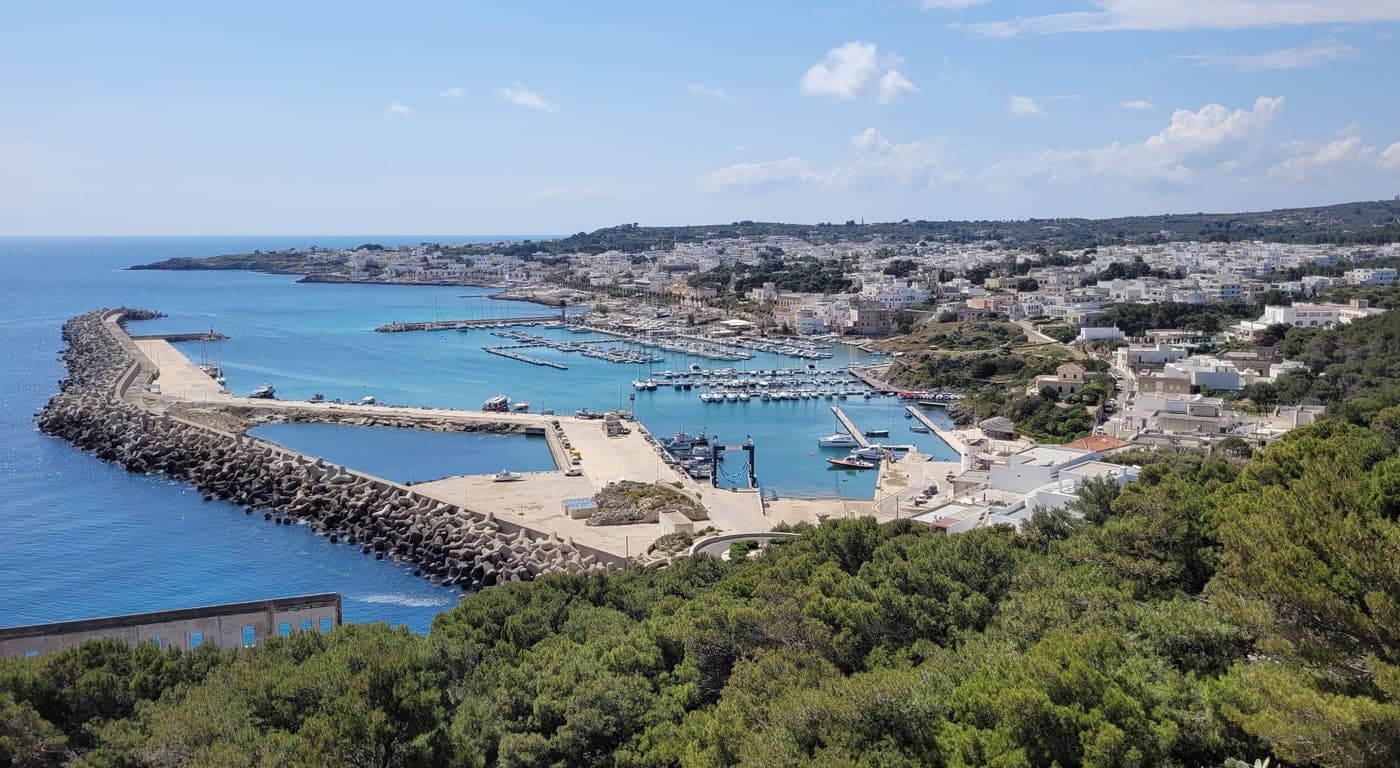
Apulia, the heel of Italy, is known for its unique trulli houses, especially in Alberobello, a UNESCO World Heritage site. The region features beautiful coastlines along the Adriatic and Ionian Seas, with picturesque towns like Polignano a Mare and Otranto offering stunning sea views and fresh seafood. Notably, Apulia is the largest wine-producing region in Italy, famous for robust Primitivo and fruity Negroamaro wines. History aficionados can explore ancient sites like the Romanesque cathedral in Bari and the medieval castles of Castel del Monte. With its rich culinary traditions, highlighted by orecchiette pasta and olive oil, Apulia offers a deep dive into Italy's cultural heritage.
Boat RentalsWine TastingHikingAgritourism





