Tagliatelle al ragù
Egg ribbons with slow-cooked meat sauce, the true 'bolognese'
- Local name
- Tagliatelle al ragù
- Served with
- Grated Parmigiano
- Best eaten at
- A Bologna trattoria
- Pairs with
- Sangiovese di Romagna or Lambrusco
What it is
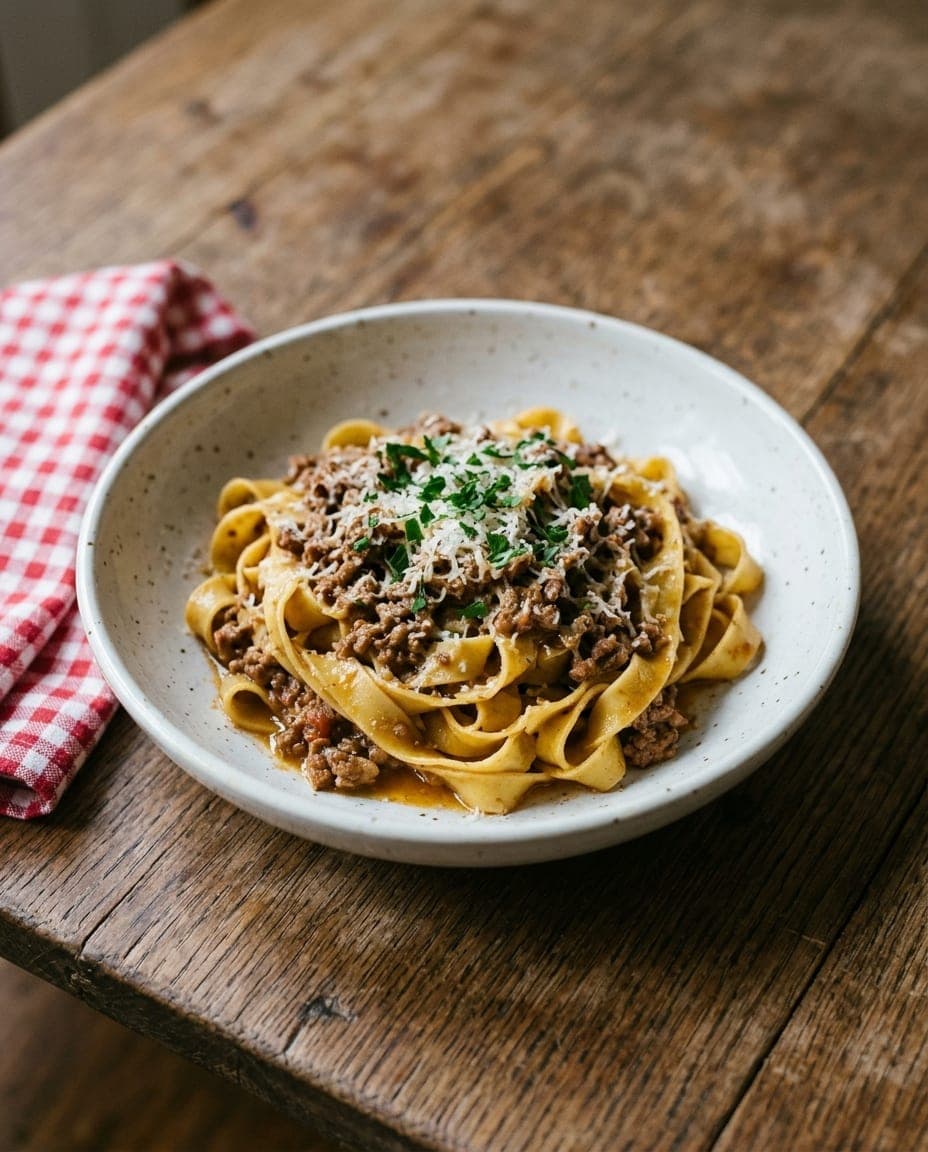
Tagliatelle al ragù is the definitive dish of Bologna, the capital of the Emilia-Romagna region. It consists of wide, flat ribbons of fresh egg pasta served with a slow-cooked meat sauce known as ragù alla bolognese. While the world often calls this combination spaghetti bolognese, the locals insist that such a pairing is incorrect. The dish relies on the texture of the pasta to hold the sauce, and the texture of the sauce to cling to it.
The sauce is not a tomato-based red sauce, as many international versions suggest. It is a meat sauce with a touch of tomato. The base consists of minced beef and pancetta, slowly cooked over low heat for hours until the mixture turns deep brown. A soffritto of onion, carrot and celery provides the aromatic foundation, along with a glass of wine and, traditionally, a little milk to soften the meat and balance the acidity. The result is a thick, savoury coating that clings to the rough surface of the pasta rather than sliding off it.
The pasta itself is fresh egg tagliatelle, rolled thin and cut into ribbons by hand or machine. The yellow colour comes from the eggs, and the porous surface grabs the sauce. When the dish is served correctly, there is no separate pool of sauce at the bottom of the bowl; the pasta is entirely coated in the meat mixture.
How it differs from the world's version
The gap between the Bolognese reality and the international imagination is wide. In many parts of the world, ragù has become synonymous with a tomato-heavy sauce served over long, thin strands of dried spaghetti. This combination is rejected by those who grew up eating the dish in Emilia-Romagna. The complaint is not merely about preference: smooth dried spaghetti holds a chunky meat sauce far less well than broad, porous egg ribbons, so the sauce tends to slip off.
In Bologna, fresh egg tagliatelle is the standard partner for the ragù, and serving the sauce with spaghetti is widely considered a mistake.
The history of the Accademia recipe
Families in Emilia-Romagna prepared their own versions of ragù for generations, with variations based on what meat was available. On 17 October 1982, the Accademia Italiana della Cucina deposited a reference recipe for ragù alla bolognese with the Bologna chamber of commerce, with the stated aim of giving tagliatelle a ragù worthy of them. The document was not an attempt to restrict home cooking but to record the essentials of a dish that was being diluted globally.
On 20 April 2023 the Accademia deposited a revised recipe. It calls for coarsely minced beef (a mix of beef and pork is allowed), fresh pancetta, onion, carrot and celery, red or white wine, tomato passata with a spoonful of concentrate, broth, and a glass of whole milk, which is now listed as optional. The order matters: the pancetta is melted in oil, the soffritto softened, the meat browned, the wine reduced, then the tomato and hot broth are added and the sauce simmers for two to three hours, with the milk stirred in halfway through.
The width of the pasta has its own record: the "golden measure" of the Bolognese tagliatella was filed with the same chamber of commerce in 1972.
What goes into it
The ingredients for ragù alla bolognese are simple, yet their combination requires patience. Minced beef forms the backbone of the dish, with pancetta for fat and flavour. A vegetable soffritto of onion, carrot and celery provides a sweet aromatic base that balances the richness of the meat.
Tomato plays a supporting role rather than dominating, so the sauce remains brown rather than red. Wine is used to deglaze the pot and add acidity, while milk softens the texture of the meat and mellows any sharp edges.
The pasta is equally specific. Fresh egg tagliatelle is made with flour and eggs, rolled out into thin sheets and cut into wide ribbons. When the dish is assembled, pasta and sauce are tossed together so every strand is coated.
How it is eaten
Tagliatelle al ragù is traditionally eaten at lunch or dinner in a Bologna trattoria as a primo, the pasta course. The pasta is tossed with the sauce so that the meat is evenly distributed among the ribbons; the two are never served separately.
The dish is finished with grated Parmigiano Reggiano, which adds a salty, nutty contrast to the rich meat and soft pasta. A glass of Sangiovese di Romagna or Lambrusco is a common companion, as these local wines cut through the richness without overpowering the flavours. The portion is generous, and it is a meal meant to be eaten slowly.
Curious facts
- The official recipe exists. In 1982 the Accademia Italiana della Cucina deposited a recipe for ragù alla bolognese with the Bologna chamber of commerce, and filed an updated version in 2023.
- Milk in the pot. The Accademia recipe includes whole milk, a step often omitted in international versions; in the 2023 update it became optional.
- Pasta width matters. The reference width of the Bolognese tagliatella was filed with the chamber of commerce in 1972.
- Not red, but brown. The sauce is a meat sauce with tomato, not a tomato sauce with meat, giving it a deep brown colour.
- Spaghetti is wrong. Serving the sauce with dried spaghetti is considered incorrect in Bologna.
Where to try it
The best place to eat tagliatelle al ragù is a traditional trattoria in Bologna itself. These establishments, often family-run and located in the historic centre or nearby neighbourhoods, keep it as a fixture of the menu.
In these kitchens, the sauce is often cooked in large batches over several hours, and the tagliatelle are frequently rolled by hand.
Similar versions can be found elsewhere in Emilia-Romagna, in towns like Modena or Parma, but Bologna remains the place where the recipe was codified. A meal here is a chance to understand why the dish is what it is, and why the locals care so much about the rules.
Where to try it
1 destination
 Camper Van Rentals
Bologna
Medieval city known for its towers, vibrant cuisine, and rich history.
Camper Van RentalsLocal Cuisine
1 region
 Wine Tasting9 destinations
Emilia-Romagna
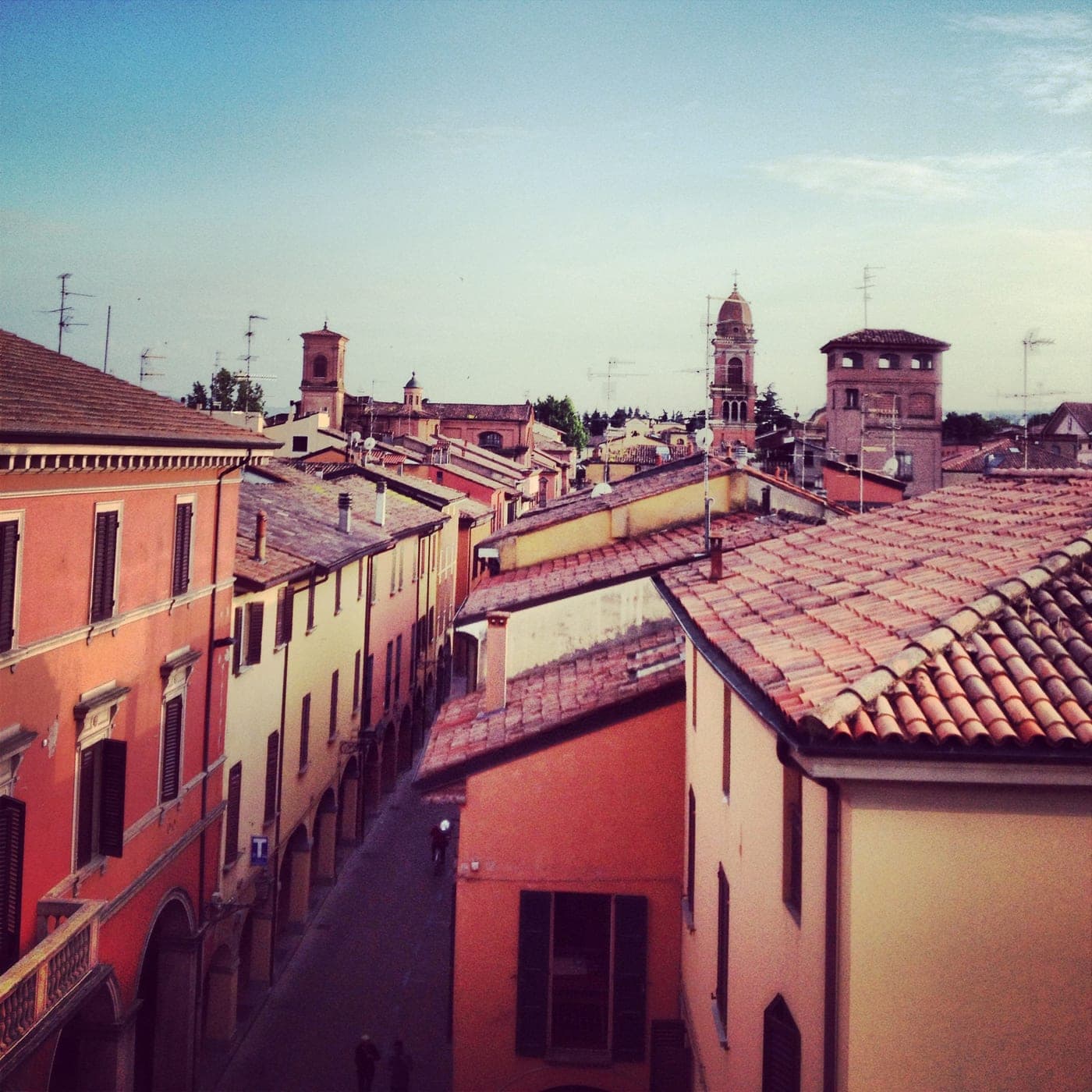
This region in Italy is renowned for its diverse landscapes, ranging from the Apennine Mountains to the Adriatic coastline. It is the only Italian region with a significant stretch of coastline, featuring vibrant seaside towns like Rimini. Bologna, the capital, is famous for its medieval architecture and culinary heritage, being the birthplace of tagliatelle al ragù. The region is also known for its rich history, with towns like Modena showcasing UNESCO-listed sites such as its cathedral and the renowned balsamic vinegar. Slow travelers can explore hidden gems like the medieval village of Dozza, known for its painted walls, or the thermal baths in Salsomaggiore Terme. Emilia-Romagna is the largest region in northern Italy, offering a blend of art, culture, and gastronomy that invites deeper exploration.
Wine TastingHikingCamper Van RentalsLocal Cuisine





